Photos: Lecce by Giuseppe Milo, CC BY 3.0, cropped; Sarajevo by Tumi-1983, CC0.
Lecce or Sarajevo?
Our verdict in twelve categories, each scored against the same fixed benchmark cities, and the climate month by month, so you can choose for your trip.
Choose Lecce for
- beaches
- families
- day trips
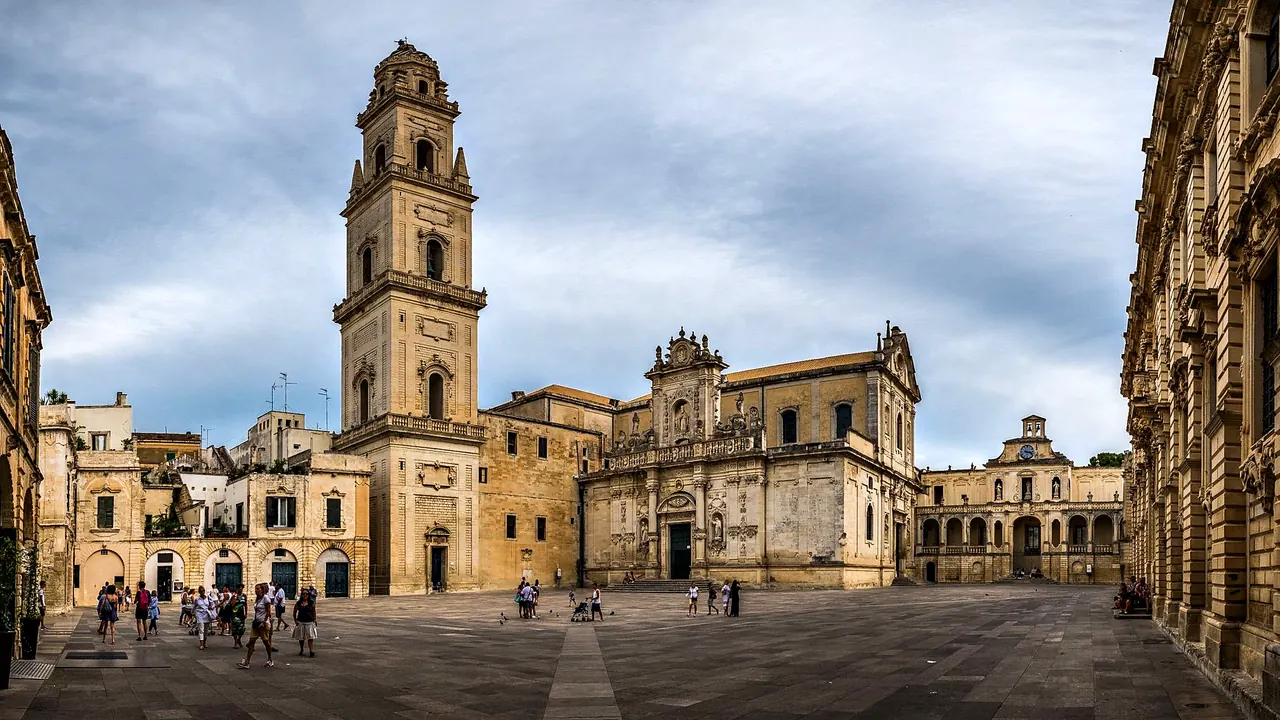
Lecce suits a slow southern Italian summer built around the sea. The town itself is a honey-coloured Baroque stage for evening walks, and the beaches of the Salento lie on two coasts within an easy drive. It is also the better base for touring a whole region of stone towns, and the gentler choice with young children.
Choose Sarajevo for
- nature and the outdoors
- prices
- getting around
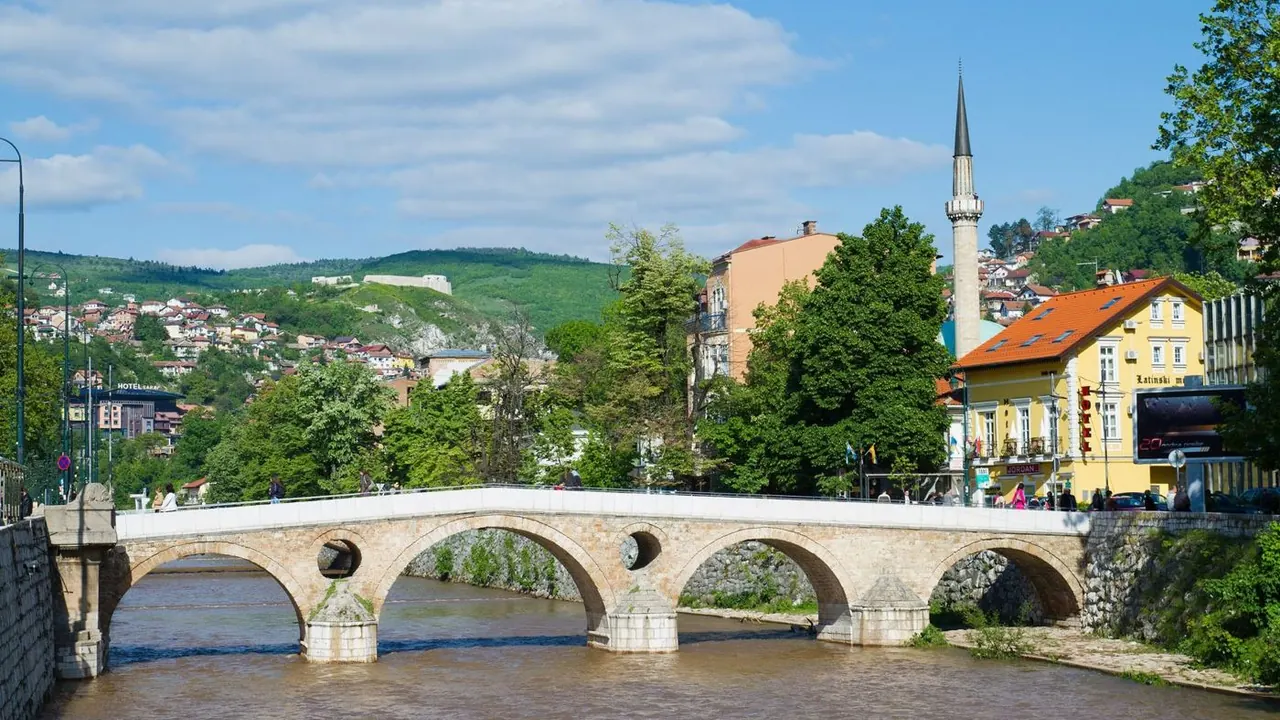
Sarajevo rewards travellers who want mountains, recent history and a low bill. Its Ottoman bazaar, Austro-Hungarian avenues and siege memorials pack a great deal into a few streets, peaks rise straight above the rooftops, and a tram line makes the city simple to manage without a car. There is no sea, but there is winter skiing, and money goes noticeably further here.
Scoreboard
Twelve categories on one fixed scale from 0 to 100. The shaded stretch is the gap between the two.
Your match
Pick a travel style or drag the sliders, and both match scores follow your weighting.
Wins on beaches and families with your weighting.
Wins on nature and the outdoors and prices with your weighting.
What matters to you?
Category by category
What the scores mean for a trip.
Beaches & swimming
This is where the two cities differ most. Lecce is inland, but the Salento gives it two seas: pale coves and sea stacks at Torre dell'Orso about half an hour south, and long shallow sands at Porto Cesareo and Punta Prosciutto to the west. In summer the beach can be the centre of the whole stay, as long as you have a car or catch the seasonal buses.
Sarajevo has no beach at all. Swimming means a cold mountain river, Jablanica lake or a pool, so a sea break means adding days on the Croatian or Montenegrin coast.
Food & drink
Both cities cook one regional tradition well and offer little beyond it, so the choice comes down to taste. Lecce's day runs from a warm pasticciotto and iced almond-milk coffee to chickpea-and-pasta ciceri e tria in the osterie, with dark Negroamaro and Primitivo wine at dinner.
Sarajevo eats grilled ćevapi in somun bread in Baščaršija, buys burek by weight from pita bakeries, and slows down for Bosnian coffee from a copper pot. Wine is the drink with dinner in Lecce, while Sarajevo's food is about grills, pastry and rakija.
Culture & sights
Lecce has the more complete townscape. Its old town is an almost unbroken run of carved Baroque limestone, from Santa Croce to the enclosed Piazza del Duomo at dusk, with a half-buried Roman amphitheatre under the main square. The pleasure lies in the whole streetscape rather than in its fairly modest museums.
Sarajevo's sights are smaller in scale but carry a heavier load of history. In a few hundred metres you pass a mosque, cathedrals and a synagogue, the Latin Bridge of 1914, and memorials to the 1990s siege such as the Tunnel of Hope. A visit here is more moving, while Lecce is the more beautiful.
Nightlife
Neither city is worth choosing for nights out, and both run on talk and drinks rather than dancing. Lecce's evening is a passeggiata, an aperitivo on the piazza and then a wine bar in the lanes, and in summer the late crowd drives to beach clubs around Gallipoli.
Sarajevo stays in town. Café-bars fill from the afternoon, cellar bars and small clubs keep students out past midnight, and drinks are cheap enough that many nights finish over rakija.
Nature & outdoors
Sarajevo is ringed by mountains you can reach from the city centre. The Trebević cable car leaves from the edge of the Old Town, and Jahorina and Bjelašnica offer skiing in winter and ridge walks or mountain biking in summer. There is also the shepherds' village of Lukomir above its canyon, and rafting on the Neretva.
Lecce's countryside is a flat plain of olive groves, better for cycling than hiking. Its outdoors is the coast: clifftop paths from Roca Vecchia towards Leuca, sea caves by boat, snorkelling, and birdwatching at Le Cesine.
Day trips
Lecce is the stronger base, with a dense web of rewarding towns around it. Otranto's walled centre and cathedral mosaic, island Gallipoli and frescoed Galatina are all close, and white Ostuni, the trulli of Alberobello and the Itria valley lie further north. With a car you can see a different place each day without long hours on the road.
Sarajevo has fewer outings, and they are further apart. The highlight is Mostar, about two hours away by a scenic train through the Neretva gorge, with Konjic and Tito's bunker on the way. Beyond Mostar, Blagaj's dervish house and hillside Počitelj make a natural add-on. Višegrad's bridge and Travnik each take a full day on slow, winding roads.
Good for families
Lecce is easier with children, mainly because of the sea. The shallow sandy beaches around Porto Cesareo suit small swimmers, and the car-free old town fills with families eating gelato in the evening. The catch is the midday summer heat, which means a long afternoon rest.
Sarajevo has some good outings: the cable car, carriage rides to Vrelo Bosne and a small zoo. But its main sights deal with war, its hillsides are steep, and grill smoke and winter smog are hard on young lungs.
Getting around
Sarajevo is the easier city without a car. Its long, narrow valley is served by a tram line from Baščaršija west to Ilidža, with trolleybuses climbing the slopes and plenty of cheap taxis. The ski mountains and the Tunnel of Hope still need a taxi or a tour.
Lecce's old town is flat and small enough to cross on foot, and fast trains leave for Bari. The Salento beyond is a different story: local trains are slow, beach buses run only in summer, and most visitors end up hiring a car.
Shopping & style
Neither is a shopping destination, and what you bring home is very different. Lecce's speciality is cartapesta saints and nativity figures from old-town workshops, along with small limestone carvings, Grottaglie ceramics and olive oil.
Sarajevo has more of a bazaar to browse. Coppersmiths still hammer coffee sets on Kazandžiluk, and the Bezistan sells kilims and filigree, though much of it is souvenir stock that needs a careful eye.
Affordability
Sarajevo is clearly the cheaper trip. Meals, coffee, museum entry, trams and central guesthouses all cost well below Western European levels, and only the Old Town and the summer film festival push prices up a little.
Lecce is fair value for Italy, with low-cost pastries, trattorias and palazzo bed and breakfasts for most of the year. August is the exception, when Italian vacationers fill the Salento and rooms, beach loungers and the near-essential hire car all add up.
Live music & performing arts
The two are broadly level, and their best moments fall in different seasons. Lecce's comes in summer, with pizzica tambourine music at village festivals and the huge Notte della Taranta in Melpignano in August. Its theatres offer only a small programme.
Sarajevo's National Theatre runs drama, opera and ballet through the season, and the city peaks in autumn with the MESS theatre festival and a November jazz festival. Sevdah love songs can be heard in its traditional restaurants.
Wellness & relaxation
Both offer sulphur springs rather than a bathing culture of their own, but in very different settings. Lecce's are at Santa Cesarea Terme, in grottoes and pools on cliffs above the sea, and quiet spa retreats in old masserie make the most of the long southern afternoon rest.
Sarajevo's waters are at Ilidža, at the end of the tram line, where people have bathed since Roman times, with a calm walk to Vrelo Bosne close by. In winter, though, smog in the valley makes the city less restful.
When should you go?
Pick your month. The climate figures are measured averages, not a forecast.
Lecce in July
Sarajevo in July
Daytime high, °C
Rainfall in the month, mm
Where the figures come from
Lecce's temperatures are measured 38 km from the centre, at Brindisi.
Lecce has no rain gauge within 25 km of the centre, so its rainfall comes from a gridded climate dataset read at the city rather than from a gauge further away.
Temperature and rainfall are climate normals, averaged over the years shown. Lecce: 1991-2020 (sunshine 1981-2010) normals, Brindisi (38 km from centre). Sarajevo: 1991-2020 (rainfall 1971-2000) normals, Sarajevo-Bejelave (2 km from centre).
Lecce is a warm-weather city with a long swimming season. From June to September the sea is comfortable, reaching about 25°C at its peak, and the long, dry summer is the sunniest stretch of the year. July and August bring highs around 30°C, too hot for sightseeing at midday, so May, June and September are the easiest months for combining the old town with the beach. Rain arrives with the autumn and peaks in November at about 102mm, and winters are mild but grey.
Sarajevo swings much further between the seasons. December and January highs are only about 4°C, which is cold for the streets but right for the ski slopes nearby, and the valley sees little sun in those months. Rain falls fairly evenly all year rather than in one wet season. Late spring through early autumn is the best time for walking and hiking, with summer highs near 28°C, a little milder than Lecce's heat.
Which traveller are you?
On a beach and sun trip, Lecce is the clear choice. Sandy Ionian beaches and Adriatic coves are each within an hour, and the sea stays warm from June into autumn. Sarajevo is three hours from the coast and offers only rivers, a lake and pools.
For an outdoors trip, Sarajevo has the edge. A cable car climbs Trebević from the Old Town, the Olympic mountains are under an hour away for hiking or skiing, and Lukomir and the Rakitnica canyon reward a long day out.
On a trip with a tight budget, Sarajevo goes much further. Ćevapi, burek and bazaar coffee cost very little, trams and taxis are cheap, and central guesthouses are well below Italian prices. Lecce is reasonable for Italy but expensive in August, and it usually needs a hire car.
Before you go
| Measure | Lecce | Sarajevo |
|---|---|---|
| Official language | Italian | Croatian, Serbian, Bosnian |
| Currency | Euro (EUR) | Convertible Mark (BAM) |
| Sockets | CFL230 V, 50 Hz | CF230 V, 50 Hz |
| Driving side | Right | Right |
| Time zone | UTC+1, UTC+2 in summer | UTC+1, UTC+2 in summer |
| Emergency number | 112 | 112 |
| Elevation | 49 m | 518 m |
| Main airport | Brindisi Airport (BDS)39 km from centre49 non-stop destinations | Sarajevo International Airport (SJJ)7 km from centre38 non-stop destinations |
| Public holidays this year | 13 days | 8 days |
By the numbers
| Measure | Lecce | Sarajevo |
|---|---|---|
| City population | 94,783 | 275,524 |
| People per km² | 393 | 1,947 |
| Museums within 10 km | 11 | 26 |
| UNESCO World Heritage sites within 50 km | 0 | 1 |
| Swim season, months above 21 °C | 4 months | - |
Where else could you go?
Every comparison below shares a destination with this one, so you can follow Lecce or Sarajevo somewhere new.