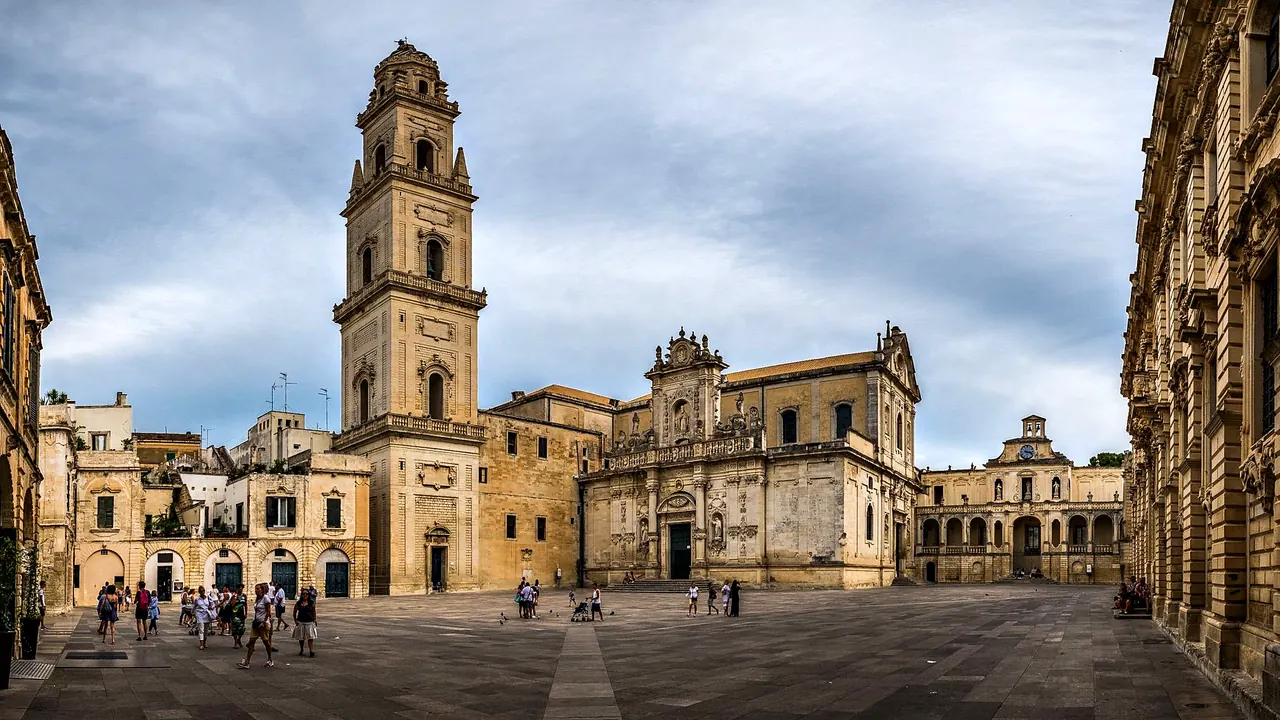
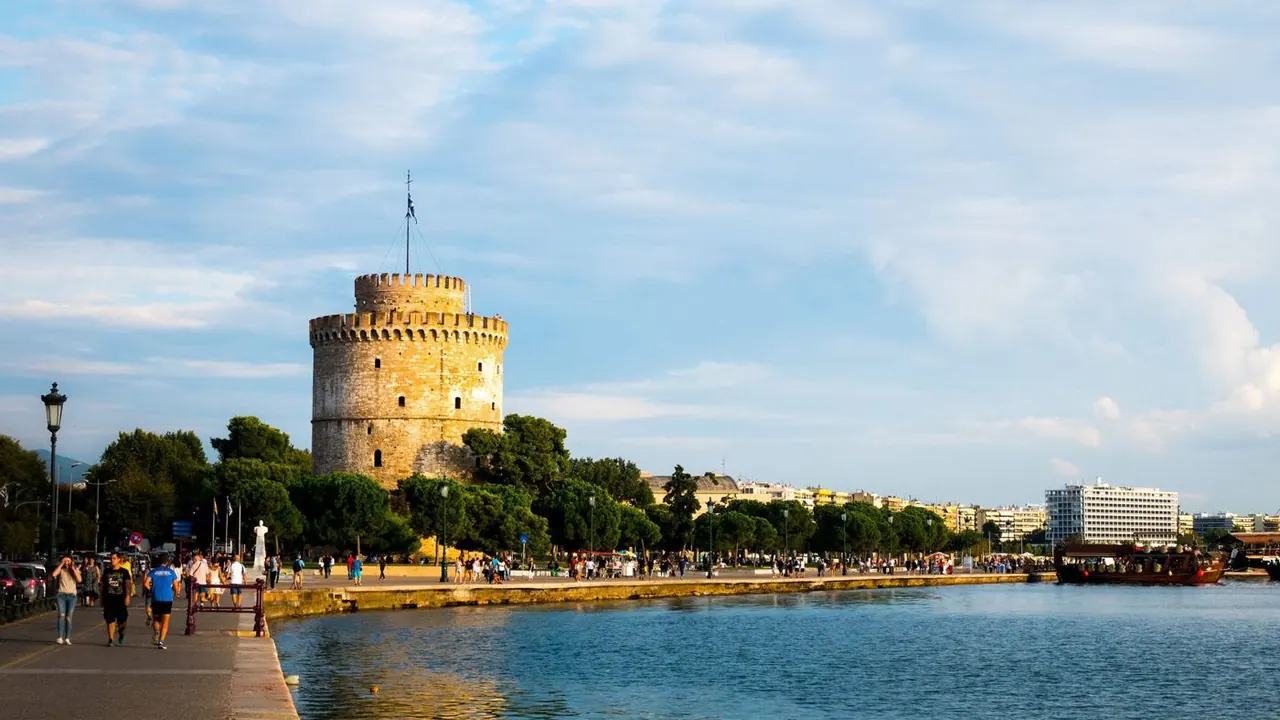
Photos: Lecce by Giuseppe Milo, CC BY 3.0, cropped; Thessaloniki by Destinygreece, CC BY-SA 4.0, cropped.
Lecce or Thessaloniki?
Our verdict in twelve categories, each scored against the same fixed benchmark cities, and the climate month by month, so you can choose for your trip.
Choose Lecce for
- beaches
- wellness
Lecce suits a slower, sunnier vacation where the sea is part of every day. Its Baroque old town is small enough to learn by heart, the sandy Ionian beaches and the cliffs and coves of the Adriatic are within half an hour or so, and the old farmhouse retreats and the sea-cave springs of Santa Cesarea make it the more restful of the two. Couples and anyone who wants beach mornings and quiet evenings on the piazzas will be happier here, as long as they hire a car.
Choose Thessaloniki for
- nightlife
- getting around
- shopping
Thessaloniki is the bigger, livelier city, and the better pick for travellers who care most about eating and going out. Its meze tables, working markets and late nights in Ladadika give it an energy Lecce doesn't have. Byzantine churches, two major museums and the royal tombs at Vergina give it serious depth too. The beaches are a separate outing to Halkidiki, so think of it as a city trip with the sea on the side.
Scoreboard
Twelve categories on one fixed scale from 0 to 100. The shaded stretch is the gap between the two.
Your match
Pick a travel style or drag the sliders, and both match scores follow your weighting.
Wins on beaches and wellness with your weighting.
Wins on nightlife and getting around with your weighting.
What matters to you?
Category by category
What the scores mean for a trip.
Beaches & swimming
Lecce has the beaches, and they easily fit into a city stay. The sand right by town is ordinary, but the pale coves and sea stacks of Torre dell'Orso are about half an hour away. The long, very clear Ionian beaches at Porto Cesareo and Punta Prosciutto take a little longer. You can swim in the morning and be back in the old town by evening.
Thessaloniki faces the sea, but nobody swims along its waterfront, and the nearby beaches at Perea are unremarkable. Halkidiki's coves are excellent, but Kassandra is about an hour's drive away, so most people treat them as a separate day out or a place to move on to.
Food & drink
Lecce cooks one cuisine and cooks it well: pasticciotto and almond-milk iced coffee in the morning, ciceri e tria and orecchiette with turnip tops in the osterie, and dark Negroamaro with dinner. It is distinctive and inexpensive, but after a few days there is little else to try.
Thessaloniki gives you far more range. Ottoman, Sephardic and Anatolian refugee influences mix in its kebabs, its many ways with peppers and aubergines, and the meze that arrives with tsipouro at the ouzeri. Add the Kapani and Modiano markets, Naoussa wines and the waterfront cafés, and a week of eating here never repeats itself.
Culture & sights
Both are rewarding, but in different ways. In Lecce the whole old town is the sight: honey-coloured limestone carved into one of Italy's most complete Baroque townscapes, from Santa Croce to the enclosed Piazza del Duomo at dusk, with half a Roman amphitheatre sunk below Piazza Sant'Oronzo. Its museums are modest.
Thessaloniki has the stronger monuments and museums, but they stand apart in a largely modern city. You get UNESCO-listed churches such as the Rotunda and Agios Dimitrios, the Arch of Galerius, Macedonian gold in the Archaeological Museum and the Museum of Byzantine Culture, with the Ottoman lanes of Ano Poli above.
Nightlife
Thessaloniki is the place for a night out. The large student population and the Greek habit of going out late keep the bars of Ladadika, the louder DJ bars around Valaoritou and the outdoor tables of the Bit Bazaar full until well past three, even on weeknights. In summer the crowds move to the waterfront and to big open-air clubs.
Lecce's evenings are gentler: a passeggiata, an aperitivo on the piazza, then wine bars in the old town's lanes. If you want to dance in summer, you have to drive to the beach clubs around Gallipoli.
Nature & outdoors
Thessaloniki has the bigger landscapes. The Seich Sou pine forest starts right behind Ano Poli. Mount Olympus, with the Enipeas gorge and hut-to-hut routes from Litochoro, is about an hour and a half away, and in winter there is skiing at Kaimaktsalan and Seli.
Lecce's outdoors is almost all coast, because the plain of olive groves and red earth is flat. What it does have is the clifftop paths and sea caves between Roca Vecchia and Santa Maria di Leuca, birdwatching at Le Cesine, and good snorkelling and kayaking. That suits a vacation spent on the water better than one spent on the mountains.
Day trips
Both make excellent bases, and in both a car makes the trips much easier. From Lecce the trips are about towns and stone: walled Otranto and its cathedral mosaic, Gallipoli's island old town, Galatina's frescoes, then white Ostuni and the trulli of Alberobello further north.
From Thessaloniki the theme is ancient Macedonia. You can visit the royal tombs at Vergina, Alexander's birthplace at Pella and the sanctuary at Dion below Olympus, then go further afield to the waterfalls of Edessa or take a boat along the Mount Athos coast.
Good for families
Neither city has much built for children, so families pick by the kind of day they want. Lecce's old town is largely free of traffic and the shallow sand at Porto Cesareo suits toddlers, but there is no zoo or aquarium of note.
Thessaloniki has the Noesis science centre, a small zoo and a seafront promenade with playgrounds. Against that, it has heavy traffic, cluttered pavements and steep Ano Poli, and many families stay in Halkidiki and visit the city on a day out.
Getting around
Thessaloniki is easier to get around overall. The main sights lie along a flat strip near the waterfront, a metro line runs under the centre, buses cover the rest and taxis are plentiful and inexpensive for the climb to Ano Poli.
Lecce's centre is smaller and lovely to walk, but outside it things get harder. The Salento's local trains are slow, the beach buses run only in summer, and for the coast and the villages most visitors end up hiring a car.
Shopping & style
Thessaloniki has more real shopping: Greek and international chains along Tsimiski, malls on the edge of the city, and the Kapani and Modiano markets for spices, loukoumi and tsipouro to take home.
Lecce has the better crafts but very little else. Papier-mâché saints from the old-town cartapesta workshops, small limestone carvings and Grottaglie ceramics are worth buying. Beyond those and the olive oil, you'll mostly find souvenirs.
Affordability
Both are kind to the budget, but in Lecce the calendar sets the price. From autumn to early summer a room in a converted palazzo and a day of pasticciotto, rustico and an osteria dinner with Negroamaro cost little for Italy. In August Italians on their own vacation fill the Salento, so rooms and a sunbed at a beach club climb steeply. The car you need for the coast is an extra in every season.
Thessaloniki is cheaper, and its prices change less through the year. Prices follow what students and local families pay, so an ouzeri dinner with tsipouro or a late round in Ladadika costs less than a similar evening in Lecce. Hotels stay reasonable except when a big event or the city's large trade fair fills them in autumn. The two share one extra cost: hiring a car for Vergina or Halkidiki.
Live music & performing arts
Thessaloniki has more to offer all year. The State Orchestra plays at the waterfront Concert Hall and the National Theatre of Northern Greece runs regular seasons, though nearly all theatre is in Greek. The best of it for visitors is rebetiko and laika played late in the tavernas.
Lecce's theatres, the Politeama Greco and the Paisiello, have only a modest programme. Its real draw is pizzica, the tambourine dance played at village festivals all summer, which peaks with the Notte della Taranta in Melpignano. Outside summer, there is little on.
Wellness & relaxation
Lecce is better for a restful stay. The sulphur springs of Santa Cesarea Terme flow into grottoes and pools on the sea cliffs, under an hour away, and fortified masserie on the plain have been turned into quiet spa retreats.
Thessaloniki's Bey Hamam is a monument, not a working bath, and Lagadas has only simple spring-fed pools. The city relaxes in its own way instead, with long hours over iced coffee by the sea and a slow evening walk along the promenade.
When should you go?
Pick your month. The climate figures are measured averages, not a forecast.
Lecce in July
Thessaloniki in July
Daytime high, °C
Rainfall in the month, mm
Where the figures come from
Lecce's temperatures are measured 38 km from the centre, at Brindisi.
Lecce has no rain gauge within 25 km of the centre, so its rainfall comes from a gridded climate dataset read at the city rather than from a gauge further away.
Temperature and rainfall are climate normals, averaged over the years shown. Lecce: 1991-2020 (sunshine 1981-2010) normals, Brindisi (38 km from centre). Thessaloniki: 1991-2020 normals, Thessaloniki Airport (14 km from centre).
Both cities are hot in July and August, but Thessaloniki is the hotter, with daytime highs around 32°C against roughly 30°C in Lecce. Lecce also gets more sun. Its sea is warm enough for comfortable swimming from June into October. Off Halkidiki the water warms on much the same timetable, but that is a day out from Thessaloniki, not part of the city. For walking the streets, May and late September are best in both places, when it is warm without the midday heat that empties the lanes in high summer.
The two part ways in autumn and winter. In Lecce the rain arrives in October and November is the wettest month at about 102mm, but the winters are mild and fairly bright. In Thessaloniki the rain is lighter and spread more evenly through the year. Its winters are colder, with highs near 10°C, and noticeably greyer, so it is better to visit in spring or early autumn than in midwinter.
Which traveller are you?
On a beach and sun trip, Lecce is the clear choice. The pale coves of Torre dell'Orso and the shallow, clear water at Porto Cesareo are a short drive away, so you can spend the day at the sea and still be back in town for the evening.
For a food and nightlife trip, Thessaloniki wins easily. Long meze evenings at the ouzeri, bougatsa for breakfast and the Kapani market cover the eating, and then the bars of Ladadika and Valaoritou stay full well past three, weeknights included.
On a relaxing and wellness trip, Lecce is the better fit. It has the sulphur springs of Santa Cesarea Terme in cliffside grottoes and quiet masserie with spas. Thessaloniki's Ottoman hammams are monuments, not working baths, so you can't use them.
Before you go
| Measure | Lecce | Thessaloniki |
|---|---|---|
| Official language | Italian | Greek |
| Currency | Euro (EUR) | Euro (EUR) |
| Sockets | CFL230 V, 50 Hz | CF230 V, 50 Hz |
| Driving side | Right | Right |
| Time zone | UTC+1, UTC+2 in summer | UTC+2, UTC+3 in summer |
| Emergency number | 112 | 112 |
| Elevation | 49 m | 6 m |
| Main airport | Brindisi Airport (BDS)39 km from centre49 non-stop destinations | Thessaloniki Macedonia International Airport (SKG)14 km from centre90 non-stop destinations |
| Public holidays this year | 13 days | 15 days |
By the numbers
| Measure | Lecce | Thessaloniki |
|---|---|---|
| City population | 94,783 | 309,617 |
| People per km² | 393 | 16,042 |
| Museums within 10 km | 11 | 32 |
| UNESCO World Heritage sites within 50 km | 0 | 1 |
| Swim season, months above 21 °C | 4 months | 5 months |
Where else could you go?
Every comparison below shares a destination with this one, so you can follow Lecce or Thessaloniki somewhere new.
- Materavs Lecce
- Barivs Lecce
- Tiranavs Lecce
- Skopjevs Thessaloniki
- Plovdivvs Thessaloniki
- Sofiavs Thessaloniki