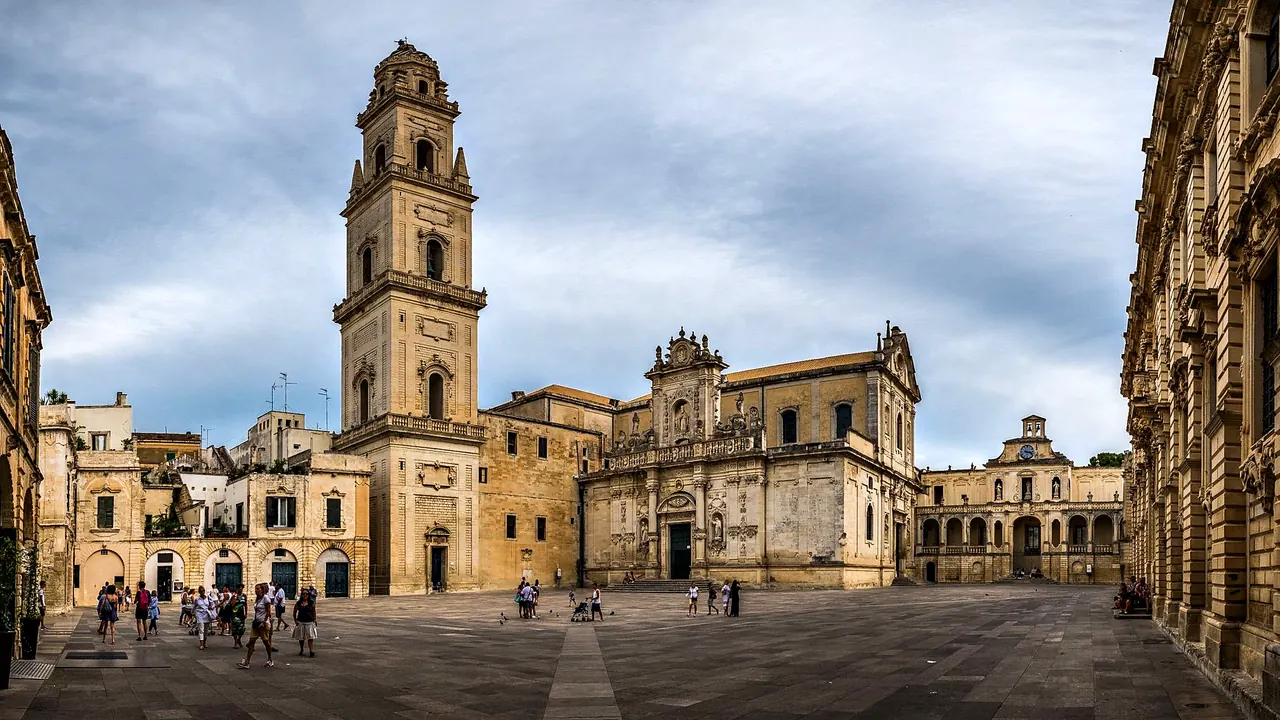
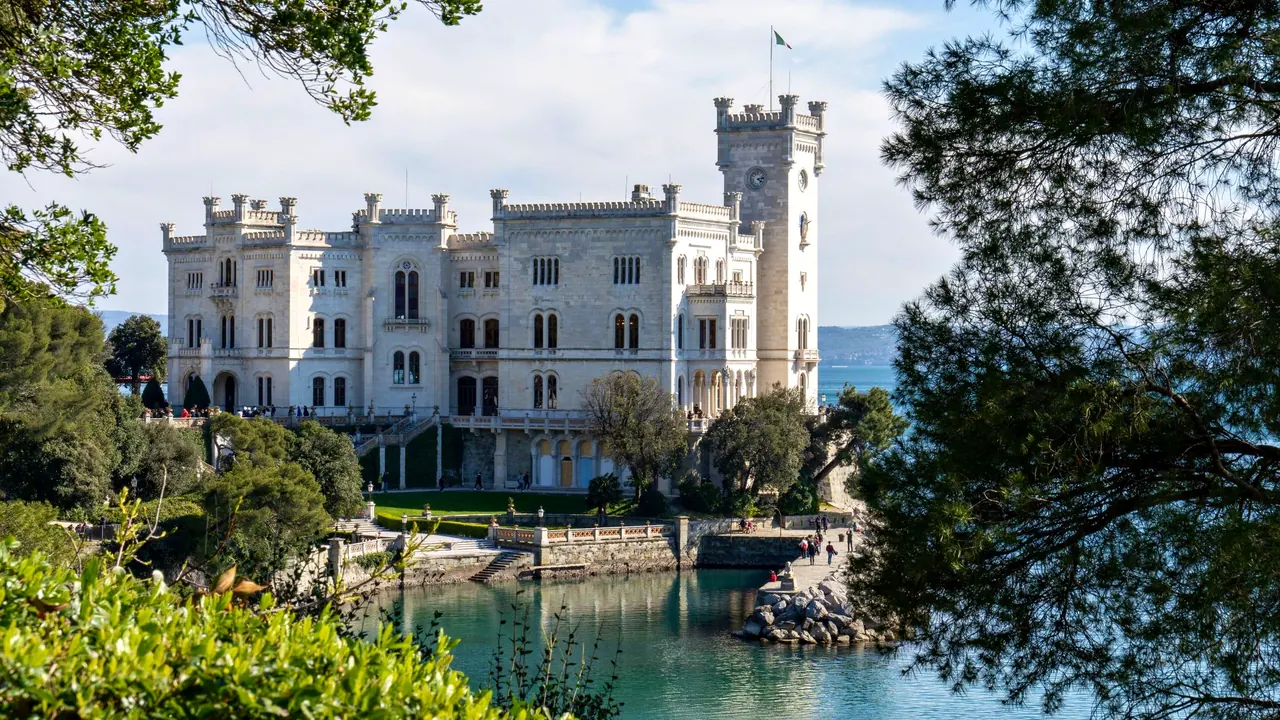
Photos: Lecce by Giuseppe Milo, CC BY 3.0, cropped; Trieste by Tibor Szabo, Pexels License.
Lecce or Trieste?
Our verdict in twelve categories, each scored against the same fixed benchmark cities, and the climate month by month, so you can choose for your trip.
Choose Lecce for
- beaches
- nightlife
- culture and sights
Lecce is the choice for a warm-weather trip built around sand and sea. Its Baroque old town makes a handsome, easy base for the evenings, and by day the Salento coast offers pale coves and long shallow beaches on two seas. Long, dry, sunny summers and simple, good-value Apulian cooking add to the case. It suits travellers who are happy to hire a car and spend the mornings on the beach and the evenings on the piazzas.
Choose Trieste for
- getting around
- live music and the arts
- nature and the outdoors
Trieste rewards a different kind of traveller: someone who likes to walk, look around and move about without a car. The Karst rises straight behind the city, caves and cliff paths are a bus ride away, and Friuli, Slovenia and even Venice are within a day's reach. Add a proper opera house and old coffee houses, and it makes a calmer, more varied base in late spring and early summer, before the autumn rains set in, as long as you are happy to swim off rocks rather than sand.
Scoreboard
Twelve categories on one fixed scale from 0 to 100. The shaded stretch is the gap between the two.
Your match
Pick a travel style or drag the sliders, and both match scores follow your weighting.
Wins on beaches and nightlife with your weighting.
Wins on getting around and live music and the arts with your weighting.
What matters to you?
Category by category
What the scores mean for a trip.
Beaches & swimming
Lecce has the better beaches, though none of them are in town. Half an hour away are the pale coves and sea stacks of Torre dell'Orso. On the Ionian side, Porto Cesareo and Punta Prosciutto have long, shallow stretches of fine sand that suit waders and small children.
In Trieste you swim straight from the city. Barcola's concrete platforms and lawns are a short bus ride away, and there are pebble coves at Sistiana and Duino. The trade-off is simple: Lecce gives you sand but you need a car, while Trieste gives you rocks and ladders but you can walk out in a swimsuit.
Food & drink
The two are evenly matched at the table but cook in different worlds. Lecce is southern and rustic: pasticciotto with iced almond-milk espresso for breakfast, ciceri e tria and orecchiette with turnip tops, and dark Negroamaro to drink.
Trieste eats like a Habsburg port. You get boiled pork carved at buffet counters with horseradish and sauerkraut, jota soup, strudel, and coffee with its own vocabulary. In season, the Karst osmize sell farm wine and cured meats. Neither city has much beyond its own cooking or many ambitious restaurants.
Culture & sights
Lecce has the stronger single townscape: a whole old town carved in honey-coloured limestone. The ornate facade of Santa Croce, the enclosed Piazza del Duomo at dusk and the half-buried Roman amphitheatre are best enjoyed by simply walking around.
Trieste's appeal is more varied. It has imperial grandeur on Piazza Unità, the Canal Grande and San Spiridione, mosaics and a castle on San Giusto, Miramare on the shore, and the sobering Risiera di San Sabba. It has more indoor sights, but less sheer beauty in its streets.
Nightlife
Neither city is somewhere to go for a big night out, but Lecce is a little livelier. Students fill the wine and cocktail bars in the old-town lanes at weekends, and in summer people drive to the open-air discos around Gallipoli. Trieste's evenings revolve around a spritz on Piazza Unità or at the Barcola kiosks, and on winter weeknights the streets are quiet by midnight.
Nature & outdoors
Trieste puts the outdoors right on your doorstep. The Karst rises behind the city, with the Strada Napoleonica above the gulf, the Rilke Path along the Duino cliffs, and climbing in Val Rosandra. Underground there are the Grotta Gigante and the Škocjan Caves, and the Julian Alps are close enough for longer days.
Lecce's surroundings are a flat plain of olive groves, so its outdoors is the coast. Cliffs and sea caves run from Roca Vecchia towards Leuca, the Alimini lakes are good for birdwatching, and the snorkelling and kayaking are fine. It is gentler, and much better in spring and autumn than in high summer.
Day trips
Both make good bases, but Trieste reaches further and more easily. Aquileia's mosaics, star-shaped Palmanova and the Collio vineyards are in Italy, Piran and Ljubljana are across the border in Slovenia, Rovinj is in Croatia, and Venice is a realistic day out by train.
From Lecce, the Salento's highlights are close by: Otranto's cathedral mosaic, island Gallipoli and the frescoes at Galatina. Ostuni and the trulli of Alberobello are further north. Most of these trips are far easier with a hire car.
Good for families
There is little between the two for families, but they suit different ages. Lecce works best with toddlers: the old town is largely free of traffic, the piazzas fill with families in the evening, and Porto Cesareo has sandy shallows. It has no attractions built for children, though, and the summer heat means a long afternoon rest.
Trieste suits older children better. They tend to be amazed by the Grotta Gigante, and the city has a waterfront aquarium, a science centre and the castle gardens at Miramare. The rocky swimming and stepped streets are harder going with small ones.
Getting around
Trieste is much easier to manage without a car. Its main sights sit on flat ground by the water, and a dense bus network runs out to Barcola, Miramare and the Karst. Boats cross the bay to Muggia, and the only real effort is the climb up to San Giusto.
Lecce's old town is just as walkable, but beyond the walls the local trains are slow and the beach buses run only in summer. To see the coast or the stone towns of the Salento, most visitors hire a car.
Shopping & style
Neither city is somewhere to go shopping, but what you take home differs. Lecce's craft is cartapesta, papier-mâché saints made in old-town workshops, along with small limestone carvings and ceramics from Grottaglie. In Trieste the best buys are coffee from its roasters and Karst honey and wine, and its antique shops are more fun to browse.
Affordability
Costs are similar in both cities, and both are easier on the budget than the famous Italian cities. Lecce's pastries, osterie and palazzo bed and breakfasts are cheap for most of the year, but August across the Salento is pricey, and a hire car adds to the bill. Trieste is fairly priced rather than cheap. Its buses are inexpensive and many of its best experiences are free, from Barcola to the Karst walks, but rooms get tighter around the autumn regatta.
Live music & performing arts
Trieste has the more serious stage. The Teatro Verdi on the waterfront has a full opera and ballet season, the city keeps up a Habsburg fondness for operetta, and in summer there are concerts in the courtyard of San Giusto castle.
Lecce's theatres have a more modest season. Its distinctive offering is pizzica, the tambourine dance played at village festivals all summer, which peaks at the Notte della Taranta in Melpignano in August. Come outside summer and there is little on.
Wellness & relaxation
The two are roughly level here, and both get by more on pace than on spas. Lecce has the better options nearby: the sulphur grottoes of Santa Cesarea Terme above the sea and country masserie turned into spa retreats. Trieste offers quieter pleasures, such as long sittings in its old coffee houses and sunset walks on the Molo Audace, but for thermal baths you have to leave the city.
When should you go?
Pick your month. The climate figures are measured averages, not a forecast.
Lecce in July
Trieste in July
Daytime high, °C
Rainfall in the month, mm
Where the figures come from
Lecce's temperatures are measured 38 km from the centre, at Brindisi.
Lecce has no rain gauge within 25 km of the centre, so its rainfall comes from a gridded climate dataset read at the city rather than from a gauge further away.
Temperature and rainfall are climate normals, averaged over the years shown. Lecce: 1991-2020 (sunshine 1981-2010) normals, Brindisi (38 km from centre). Trieste: 1991-2020 normals, Trieste (1.6 km from centre).
Lecce is the warmer and sunnier of the two all year. Its summer is long and dry, with highs around 30°C in July and August and the sea reaching 26°C, so swimming is easy from June into early October. Midday in high summer is too hot for walking the old town, which makes May, June and September the most comfortable months for combining beach and streets. The rain arrives in autumn and peaks around 102mm in November, but winters stay mild.
Trieste has a cooler, wetter climate and noticeably less sunshine. Its sea warms almost as much as Lecce's in July and August, but rain falls throughout the year and is heaviest from September to November, at around 125mm in November. Winters are colder, with January highs near 9°C. Late spring and early summer suit walking the city and the Karst best, and from October Lecce is the drier and brighter choice.
Which traveller are you?
On a beach and sun trip, Lecce is the clear pick. The Salento offers sandy coves at Torre dell'Orso and shallow Ionian beaches at Porto Cesareo, with a sunnier, drier summer than Trieste and its swimming ladders and concrete platforms.
On an outdoors trip, Trieste wins. The Karst plateau rises right behind the city, with the Napoleonica walk, the Val Rosandra gorge, the Grotta Gigante and serious sailing on the gulf. Around Lecce the land is a flat plain of olive groves.
For a short city break, Trieste is easier. Its sights sit close together on flat ground by the sea, and buses and boats cover the rest without a car. Lecce's old town is a lovely walk, but its coast and nearby towns really need a car.
Before you go
| Measure | Lecce | Trieste |
|---|---|---|
| Official language | Italian | Italian |
| Currency | Euro (EUR) | Euro (EUR) |
| Sockets | CFL230 V, 50 Hz | CFL230 V, 50 Hz |
| Driving side | Right | Right |
| Time zone | UTC+1, UTC+2 in summer | UTC+1, UTC+2 in summer |
| Emergency number | 112 | 112 |
| Elevation | 49 m | 2 m |
| Main airport | Brindisi Airport (BDS)39 km from centre49 non-stop destinations | Trieste Airport (TRS)31 km from centre32 non-stop destinations |
| Public holidays this year | 13 days | 13 days |
By the numbers
| Measure | Lecce | Trieste |
|---|---|---|
| City population | 94,783 | 198,417 |
| People per km² | 393 | 2,332 |
| Museums within 10 km | 11 | 33 |
| UNESCO World Heritage sites within 50 km | 0 | 5 |
| Swim season, months above 21 °C | 4 months | 4 months |
Where else could you go?
Every comparison below shares a destination with this one, so you can follow Lecce or Trieste somewhere new.