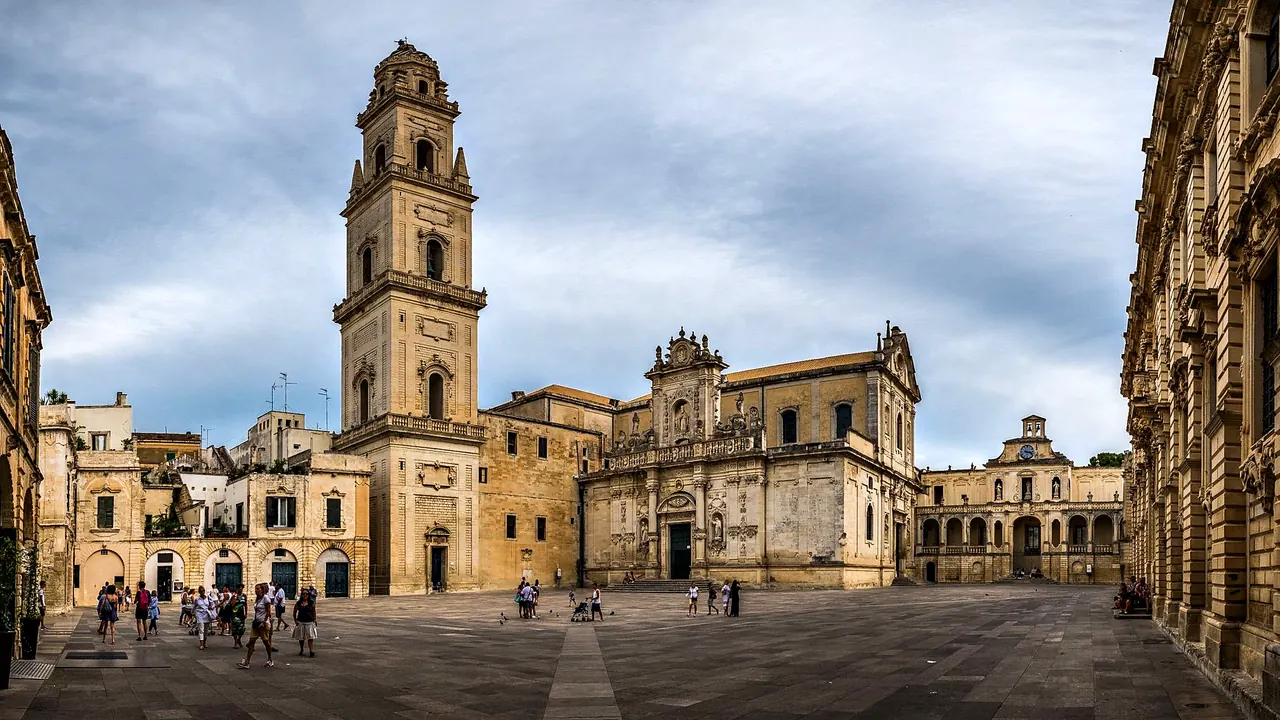
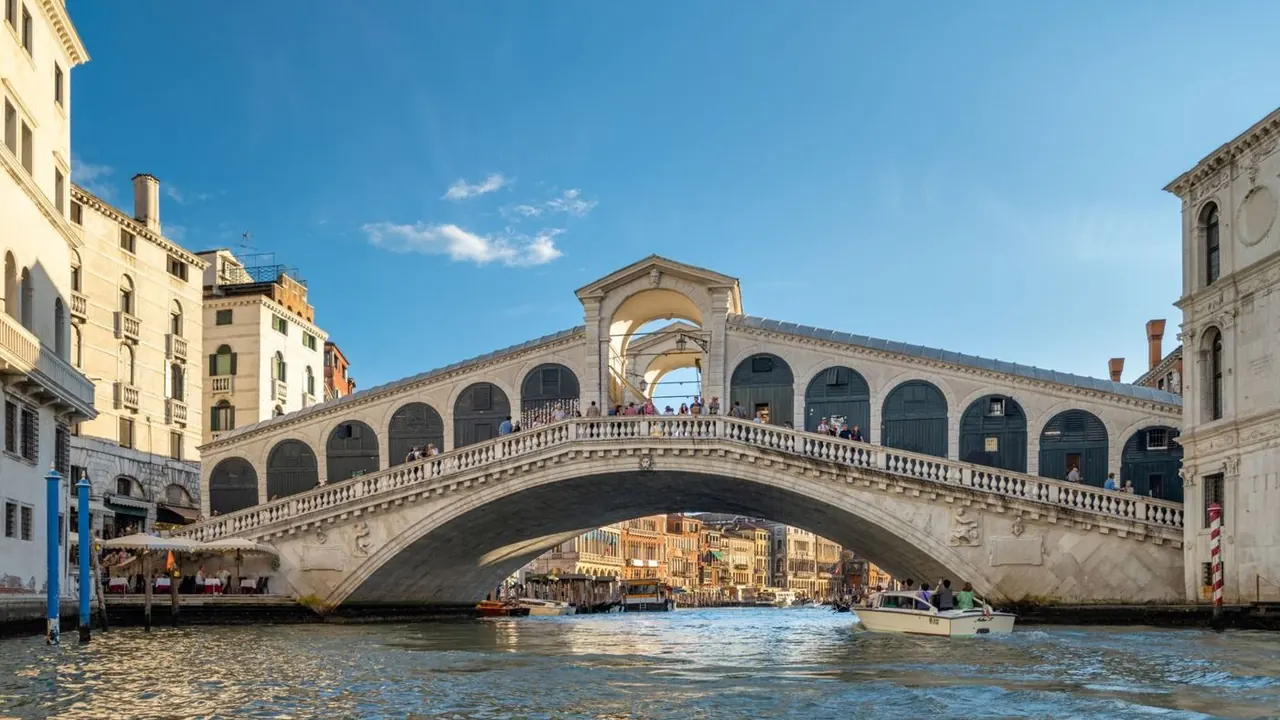
Photos: Lecce by Giuseppe Milo, CC BY 3.0, cropped; Venice by David Vives, Pexels License.
Lecce or Venice?
Our verdict in twelve categories, each scored against the same fixed benchmark cities, and the climate month by month, so you can choose for your trip.
Choose Lecce for
- prices
- beaches
- nightlife
Lecce suits a slower summer trip built around the sea. Its Baroque old town is a lovely place to come back to each evening, but the real point is the Salento coast on either side, with clear water, cliffs and sandy coves, and a car to reach them. It also costs far less, eats well in simple osterie and stays livelier after dark, so it rewards a week or more of beach mornings and long evenings on the piazzas.
Choose Venice for
- culture and sights
- live music and the arts
- getting around
Venice is the choice when the sights themselves are the reason to travel. Few places anywhere hold so much art and architecture in so small a space, and fast trains put Padua, Verona and Vicenza within easy reach. It asks a lot in return: high prices, crowded main routes and early, quiet nights. It is best for culture lovers who walk a great deal and don't mind paying for the privilege.
Scoreboard
Twelve categories on one fixed scale from 0 to 100. The shaded stretch is the gap between the two.
Your match
Pick a travel style or drag the sliders, and both match scores follow your weighting.
Too close to call, 1 point apart
Wins on prices and beaches with your weighting.
Wins on culture and sights and live music and the arts with your weighting.
What matters to you?
Category by category
What the scores mean for a trip.
Beaches & swimming
Lecce has the better sea, but you have to drive for it. The plain sands at San Cataldo are close, while the pale coves and sea stacks of Torre dell'Orso and the very clear, shallow water at Punta Prosciutto make the Salento a proper beach destination, where a summer stay can revolve around the sea.
Venice's beach is easier to reach, a short boat ride to the Lido, but the water is greenish and much of the sand sits under rows of cabanas. It works well for an afternoon off from sightseeing, and is gentle enough for small children, rather than as a reason to come.
Food & drink
The two eat about equally well in quite different ways. Lecce's food is the farm cooking of the Salento plain: pasticciotto and iced almond coffee for breakfast, ciceri e tria and fava purée at simple osterie, dark Negroamaro with dinner, and almost nowhere is touristy.
Venice is about the lagoon and the bar counter, with cicchetti and a spritz in the bacari of Cannaregio and Castello and black cuttlefish risotto made with fish from the Rialto market. Around San Marco you have to step past a lot of indifferent tourist restaurants first. Neither city offers much beyond its own regional cooking.
Culture & sights
Lecce's honey-coloured Baroque streets, with Santa Croce, the Piazza del Duomo and a half-buried Roman amphitheatre, make a fine place to wander for a couple of days. Its museums are modest, though, and the pleasure lies in the townscape rather than great collections.
Venice operates on another scale. The whole city is the monument, and behind its facades sit the Doge's Palace, the Accademia's Venetian painters, Titian in the Frari, Tintoretto at San Rocco and modern art at the Guggenheim, plus the Biennale. Lecce can be seen in a weekend, while Venice can fill a week.
Nightlife
Neither is a party city, but Lecce stays up later. After the passeggiata and aperitivo, its old-town wine and cocktail bars fill with students at weekends, and in summer the dancing moves out to beach clubs around Gallipoli.
Venice peaks at aperitivo time on the Fondamenta della Misericordia and then goes quiet, with only Campo Santa Margherita holding on past midnight. Its dark, silent canals are lovely for a late walk but no use for a night out.
Nature & outdoors
Lecce has more to do outdoors, nearly all of it on the coast. The cliffs and sea caves between Otranto and Santa Maria di Leuca, the pine woods of Porto Selvaggio and good snorkelling and diving give it real variety. Inland, the flat olive plain is good for easy cycling.
In Venice, the outdoors means the lagoon. Kayaking or rowing lessons among the marshes near Torcello, with herons and flamingos, are memorable, but there is little else beyond cycling the Lido's sea walls and a few small parks.
Day trips
Lecce is a good base for the Salento, with Otranto's mosaic floor, Gallipoli's island old town and Galatina's frescoes nearby, and the trulli of Alberobello within a long drive. Most of these trips need a hire car, though.
Venice offers more and makes it easier. Fast trains reach Padua's Scrovegni Chapel in about half an hour and Verona or Vicenza soon after, with no driving needed. Then there are the lagoon islands: glass on Murano, painted houses on Burano and Torcello's lonely cathedral, all by boat.
Good for families
The two are much the same for children, and neither has much built for them. Lecce's strengths are a traffic-free old town, piazzas full of local families in the evening and the very shallow sands of Porto Cesareo. Summer days there have to work around the midday heat.
Venice wins on novelty: boats instead of buses, glass-blowing on Murano and dinosaurs at the natural history museum. Its stepped bridges and packed summer routes make it harder with a pushchair, so it suits older children on shorter stays.
Getting around
Venice is easier for a car-free visit. Everything is reachable on foot or by vaporetto, trains arrive at the edge of the city and boats run out to the islands. The catch is the stepped bridges, which are hard work with heavy luggage.
Lecce's centre is small, flat and easy to walk, but beyond the walls the Salento's local trains are slow and the beach buses only run in summer. You really need a car to reach the coast and the stone towns.
Shopping & style
Venice offers more to buy. There is real Murano glass, Burano lace, handmade masks, marbled paper and furlane slippers from workshops in Dorsoduro and Castello, plus the big fashion names along Calle Larga XXII Marzo, though the fake glass on the main routes takes some sifting.
Lecce's equivalents are fewer and smaller: cartapesta saints from old-town workshops, carved limestone and Grottaglie ceramics. Beyond those, olive oil and taralli are the best things to take home.
Affordability
Lecce costs far less. Bed and breakfasts in old palazzi, trattoria meals and local wine are cheap for most of the year, and the main exception is August, when the Salento fills up and rooms, loungers and hire cars all get expensive.
Venice is costly in almost every way: central hotels, water transport, entry to churches and sights, and sitting down in a café on the piazza. Eating cicchetti at the counter, staying in Mestre and coming in late autumn or winter help, but it remains the bigger outlay.
Live music & performing arts
Venice has the stronger stage. La Fenice, where Verdi and Rossini premiered operas, runs a full season of opera, ballet and concerts, the Goldoni stages drama, and baroque concerts of Vivaldi play in churches most evenings.
Lecce's Politeama Greco and Teatro Paisiello have a modest programme. Its own draw is pizzica, the Salento's tambourine dance, played at village festivals all summer and peaking at the Notte della Taranta in Melpignano, so a summer visit is the time to catch it.
Wellness & relaxation
Both cities are restful in their own way rather than spa towns. Lecce's long afternoon closures and the masseria retreats on the plain set a slow pace, and the sulphur grottoes of Santa Cesarea Terme above the sea are under an hour's drive.
Venice offers hotel spas in palazzi and on the Lido. Its thermal mud and pools are an hour away at Abano Terme, and its calm is in the hushed early mornings of Castello and Giudecca, away from the crowds at San Marco.
When should you go?
Pick your month. The climate figures are measured averages, not a forecast.
Lecce in July
Venice in July
Daytime high, °C
Rainfall in the month, mm
Where the figures come from
Lecce's temperatures are measured 38 km from the centre, at Brindisi.
Lecce has no rain gauge within 25 km of the centre, so its rainfall comes from a gridded climate dataset read at the city rather than from a gauge further away.
Temperature and rainfall are climate normals, averaged over the years shown. Lecce: 1991-2020 (sunshine 1981-2010) normals, Brindisi (38 km from centre). Venice: 1991-2020 (sunshine 1971-2000, rainfall 1981-2010) normals, Venezia / Tessera (6.7 km from centre).
Lecce has the longer, drier and sunnier summer. June to August is hot and close to rainless, and the sea is warm enough to swim from June well into October. July and August reach 30°C, which makes midday walking in the old town hard going, so May, June and September are the easiest months for sightseeing and the beach together. Rain comes back in September and builds through autumn to a peak in November of about 102mm. Winters stay mild, but it is too cool for the sea.
Venice is colder at both ends of the year, with January highs around 7°C. Its rain is spread fairly evenly through the months, so summer there is no drier than spring, unlike Lecce's dry spell. The sea warms to the same summer level as Lecce's, but the swimming season is shorter and there is noticeably less sunshine all year. Late spring and September are the best months for walking, and winter suits museums and quiet streets more than time outdoors.
Which traveller are you?
For a beach and sun trip, Lecce is the clear pick. The Adriatic coves of Torre dell'Orso and the shallow Ionian sands of Porto Cesareo are within an easy drive, and its summers are drier and sunnier than Venice's.
On a culture and arts trip, Venice is in a different league. The Doge's Palace, the Accademia, Titian and Tintoretto in their original churches, opera at La Fenice and easy trains to Padua and Verona could fill a fortnight.
On a tight budget, Lecce stretches the money much further. Pastries, trattorias and local wine cost little and old-town bed and breakfasts are fairly priced, while Venice's hotels, boats and entry tickets keep even a frugal stay expensive.
Before you go
| Measure | Lecce | Venice |
|---|---|---|
| Official language | Italian | Italian |
| Currency | Euro (EUR) | Euro (EUR) |
| Sockets | CFL230 V, 50 Hz | CFL230 V, 50 Hz |
| Driving side | Right | Right |
| Time zone | UTC+1, UTC+2 in summer | UTC+1, UTC+2 in summer |
| Emergency number | 112 | 112 |
| Elevation | 49 m | 2 m |
| Main airport | Brindisi Airport (BDS)39 km from centre49 non-stop destinations | Venice Marco Polo Airport (VCE)7 km from centre103 non-stop destinations |
| Public holidays this year | 13 days | 13 days |
By the numbers
| Measure | Lecce | Venice |
|---|---|---|
| City population | 94,783 | 250,369 |
| People per km² | 393 | 602 |
| Museums within 10 km | 11 | 52 |
| UNESCO World Heritage sites within 50 km | 0 | 5 |
| Swim season, months above 21 °C | 4 months | 4 months |
Where else could you go?
Every comparison below shares a destination with this one, so you can follow Lecce or Venice somewhere new.
- Veronavs Venice
- Rovinjvs Venice
- Triestevs Venice
- Cortina d'Ampezzovs Venice
- Bolognavs Venice
- Materavs Lecce