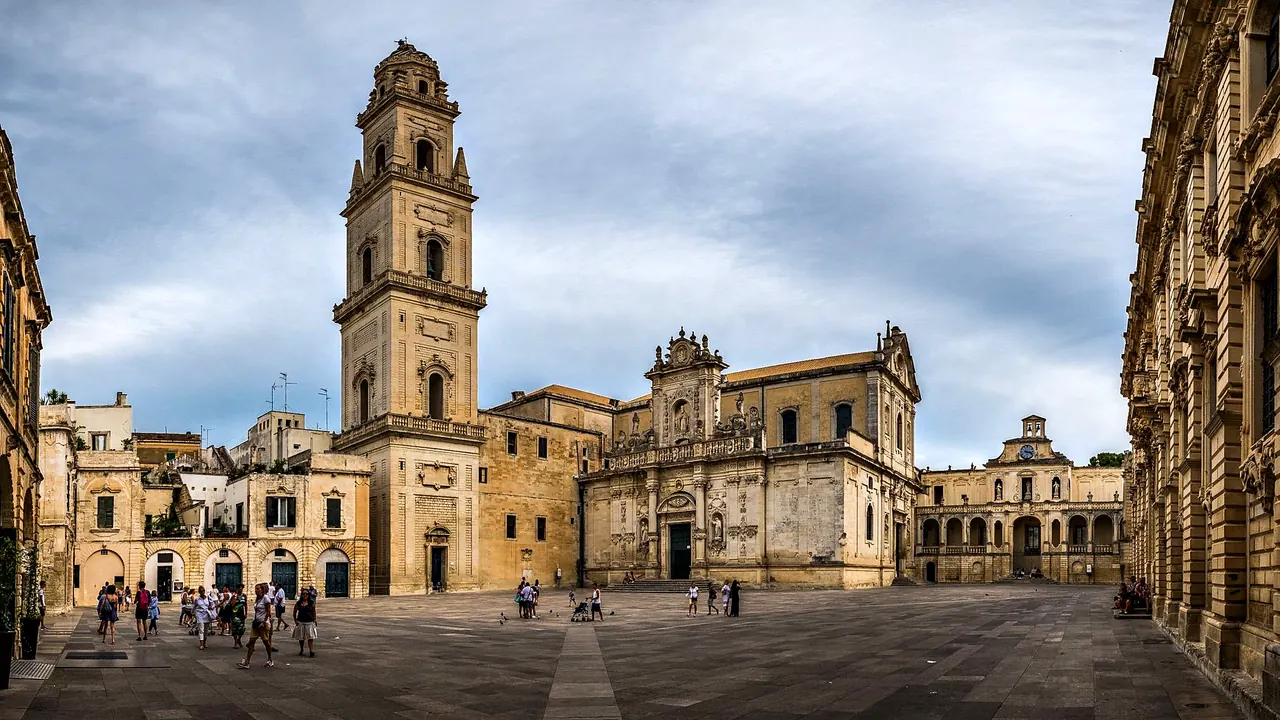
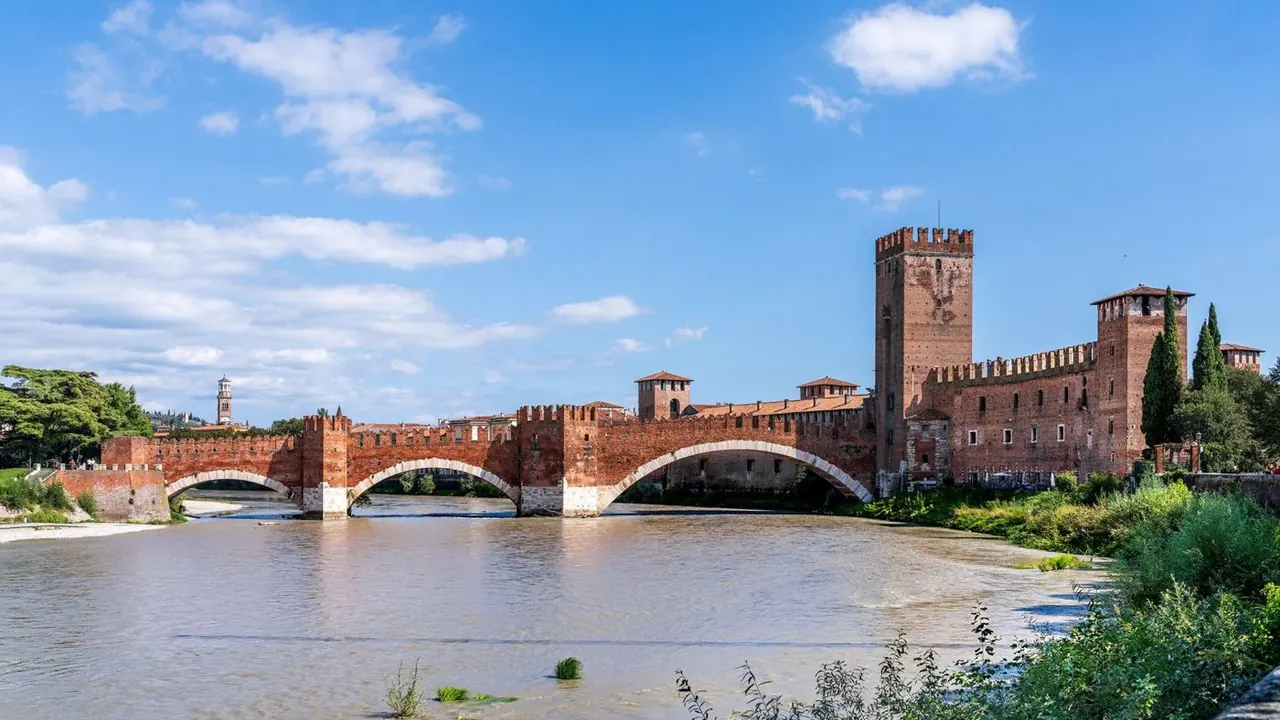
Photos: Lecce by Giuseppe Milo, CC BY 3.0, cropped; Verona by NorbertNagel, CC BY-SA 4.0, cropped.
Lecce or Verona?
Our verdict in twelve categories, each scored against the same fixed benchmark cities, and the climate month by month, so you can choose for your trip.
Choose Lecce for
- beaches
- prices
- nightlife
Lecce suits a slow, sunny summer trip where the sea comes first. The sandy Ionian beaches and the pale Adriatic coves of the Salento are an easy drive away, eating out costs little and tastes of nowhere else, and the honey-coloured Baroque lanes make every evening worth coming back for. It works best for travellers who will hire a car and stay in one place rather than tour.
Choose Verona for
- live music and the arts
- getting around
- day trips
Verona is the better choice for a trip built around seeing things. Its Roman, medieval and Renaissance city runs deeper than Lecce's single Baroque style, summer opera in the Arena is a reason to go on its own, and fast trains put Venice, Padua, Vicenza and Mantua within a day's reach. Families do better here too, with Gardaland and Lake Garda close by, though rooms cost more and the swimming is in a lake, not the sea.
Scoreboard
Twelve categories on one fixed scale from 0 to 100. The shaded stretch is the gap between the two.
Your match
Pick a travel style or drag the sliders, and both match scores follow your weighting.
Wins on beaches and prices with your weighting.
Wins on live music and the arts and getting around with your weighting.
What matters to you?
Category by category
What the scores mean for a trip.
Beaches & swimming
Lecce is much the better choice for swimming. Its own nearby sands are plain, but within about 40 minutes you reach two different seas: the cliffs, coves and sea stacks of the Adriatic at Torre dell'Orso, and the long, shallow, clear beaches of the Ionian at Porto Cesareo and Punta Prosciutto. The sea stays warm enough to swim from June into October.
Verona's swimming is in Lake Garda, about half an hour away. The water is calm and clean, but you lie on lawns, small pebble beaches or Sirmione's limestone shelves, and they fill up on summer weekends. It makes a pleasant afternoon out, but you would not choose Verona for the water.
Food & drink
The two eat about equally well, in very different ways. Lecce's day is set by its pastries: a pasticciotto and iced almond coffee in the morning, a rustico mid-morning, then poor-kitchen dishes such as ciceri e tria and fava purée with chicory, all cheap in the old-town osterie.
Verona's cooking belongs to the northern plain: Amarone risotto, bigoli with duck, and bollito with peppery pearà. Its wine country is the stronger of the two, with Valpolicella, Amarone and Soave on the doorstep, served by the glass with snacks at a counter. Neither city has much range beyond its own region, and Verona's tourist restaurants around the Arena need avoiding.
Culture & sights
Verona has more to see, and it spans more centuries. Its Arena is one of the best-preserved Roman amphitheatres anywhere, still in use, and around it stand the della Scala squares and tombs, the Romanesque San Zeno and Castelvecchio's art collection in Carlo Scarpa's setting.
Lecce has only half of its Roman amphitheatre uncovered, sunk below Piazza Sant'Oronzo. Its strength is a single style done completely: carved Baroque facades on Santa Croce and the enclosed Piazza del Duomo, best seen by walking at dusk. The museums are modest, so it rewards strolling more than sightseeing.
Nightlife
Neither city is a reason to go out late, and both evenings are built around the aperitivo on the piazza. The difference is where the late night goes. In Lecce it moves out of town in summer, to beach clubs and open-air discos near Gallipoli, which means someone has to drive. Verona's stays in the centre, in the student wine bars of Veronetta and in the opera crowd spilling out of the Arena near midnight.
Nature & outdoors
Verona has more varied country around it. The vineyard hills of Valpolicella begin just north of town, the Adige cycle route runs up the valley, and around Garda, Monte Baldo offers ridge walks and paragliding, with reliable wind for sailing at the lake's northern end. The Lessinia plateau adds beech woods and gorges.
Lecce's hinterland is flat olive country, good only for easy cycling. Its outdoors is the coast: clifftop paths from Roca Vecchia towards Leuca, boat trips into sea caves, wetlands at Le Cesine and Alimini, and better snorkelling and diving than anything near Verona.
Day trips
Verona is one of the best bases in Italy for day trips, and its railway does most of the work. Venice, Vicenza, Padua and Mantua are each about an hour away or less, and Garda's lakeside towns and the Valpolicella and Soave wine country are closer still.
Lecce has fine trips of its own: Otranto's cathedral mosaic, Gallipoli on its island, white Ostuni and the trulli of Alberobello further north. But they are smaller towns spread over a wide area, and most are far easier by car than by the slow local trains.
Good for families
Verona has much more for children, though most of it is outside the city. Gardaland, the Garda water parks and the drive-through safari at Parco Natura Viva are all about half an hour away, and the Arena itself tends to capture young imaginations.
Lecce gives families a relaxed, traffic-free old town, piazzas full of children in the evening and gently shelving sand around Porto Cesareo that is ideal for toddlers. Beyond the beach there is little aimed at them, and the summer heat means planning every day around a long midday rest.
Getting around
Both centres are flat and easy to cover on foot, so the difference lies beyond them. From Verona, frequent fast trains reach Venice, Milan and Peschiera on Garda, so you can see a great deal without a car, and you only need one for the Valpolicella villages and the Lessinia.
In Lecce, the trains north to Brindisi and Bari are good, but the local Salento railways are slow and sparse and the beach buses run only in summer. Most visitors end up hiring a car, and both old towns restrict driving inside the walls.
Shopping & style
Verona is the better place to shop, though neither is a destination for it. Via Mazzini's marble pavement is lined with Italian fashion labels, and the side streets add jewellers and shoe shops, but serious shoppers still go to Milan.
In Lecce it is mostly about crafts: cartapesta saints and nativity figures from old-town workshops, small carvings in local stone and Grottaglie ceramics. In both cities the best things to take home are edible, Amarone and pandoro from Verona, olive oil and taralli from Lecce.
Affordability
Lecce is the cheaper of the two, and the gap shows most at the table and in the room. Eating out costs less in Lecce. Verona's plain osterie are fair, but the tables around the Arena charge for the view. Outside high summer, a room in Lecce's old town costs less than a central hotel in Verona.
The two cities also get expensive at different times and for different reasons. In Lecce the price is seasonal: it jumps in August when the whole coast fills up, and almost every trip adds a hire car, so May, June and September give the best value. In Verona the cost is the bed all year, highest on summer opera nights and trade-fair dates. Fast trains and a walkable centre mean you rarely need a car, and staying across the river or near the station brings the bill down.
Live music & performing arts
Verona is far ahead here. Grand opera on the stone tiers of the Arena, played most summer evenings until close to midnight, is one of Europe's great nights out. The Roman theatre's summer festival of Shakespeare, dance and jazz and the Teatro Filarmonico's winter season fill the rest of the year.
Lecce's theatres, the Politeama Greco and the Paisiello, run a small season. What it has that Verona does not is pizzica, the Salento's fast tambourine dance, heard at village festivals all summer and at its biggest at the Notte della Taranta in Melpignano in August.
Wellness & relaxation
For a restful trip the two are about level, and both have thermal water within reach rather than in town. Near Lecce, the sulphur springs of Santa Cesarea Terme fill grottoes and pools on cliffs above the sea, and old fortified masserie on the plain now serve as quiet spa retreats. Near Verona, the springs are lakeside: Sirmione's long-established spa, the spring-fed thermal lake near Lazise and the Roman-era waters at Caldiero.
When should you go?
Pick your month. The climate figures are measured averages, not a forecast.
Lecce in July
Verona in July
Daytime high, °C
Rainfall in the month, mm
Where the figures come from
Lecce's temperatures are measured 38 km from the centre, at Brindisi.
Lecce has no rain gauge within 25 km of the centre, so its rainfall comes from a gridded climate dataset read at the city rather than from a gauge further away.
Temperature and rainfall are climate normals, averaged over the years shown. Lecce: 1991-2020 (sunshine 1981-2010) normals, Brindisi (38 km from centre). Verona: 1991-2020 normals, Verona / Villafranca (11.6 km from centre).
Lecce has a true dry summer. From June to August the rain almost stops. The sea is warm enough to swim from June, peaks at about 26°C in August and stays pleasant into early October. July and August reach around 30°C, too hot for walking at midday, so the day splits into beach mornings and evenings in town. Rain arrives with autumn and is heaviest in November, at about 102mm. Winter stays mild and fairly sunny, though, and is fine for walking the old town. For sightseeing and swimming together, May, June and late September are the best months.
Verona's rain falls the other way round. Winter is cold, around 7°C in January, but it is the driest season. Spring and summer are clearly wetter, with summer as wet as spring. Autumn is the wettest of all, with September near 85mm. Summer is as hot as Lecce's and heavy on the inland plain, so May and June are the most comfortable months for walking the centre and the hills, though a wet day is possible in any month. From November to February Verona gets far less sunshine than the south.
Which traveller are you?
For a beach and sun trip, Lecce is the obvious pick. Within an hour you reach the fine sand and clear shallows of Porto Cesareo and the coves at Torre dell'Orso, under a long dry summer, while Verona can only offer narrow lakeside lidos on Garda.
On a culture and arts trip, Verona gives more. The Arena, San Zeno and Castelvecchio make up a richer set of sights than Lecce's Baroque streets, summer opera fills the Roman amphitheatre, and Venice, Padua and Vicenza are each a short train ride away.
On a family trip with children, Verona has far more to fill the days. Gardaland, the water parks and the Parco Natura Viva safari zoo are all within half an hour, and Garda's calm water suits young swimmers. Lecce has gentle beaches but almost nothing built for children.
Before you go
| Measure | Lecce | Verona |
|---|---|---|
| Official language | Italian | Italian |
| Currency | Euro (EUR) | Euro (EUR) |
| Sockets | CFL230 V, 50 Hz | CFL230 V, 50 Hz |
| Driving side | Right | Right |
| Time zone | UTC+1, UTC+2 in summer | UTC+1, UTC+2 in summer |
| Emergency number | 112 | 112 |
| Elevation | 49 m | 59 m |
| Main airport | Brindisi Airport (BDS)39 km from centre49 non-stop destinations | Verona Villafranca Valerio Catullo Airport (VRN)10 km from centre96 non-stop destinations |
| Public holidays this year | 13 days | 13 days |
By the numbers
| Measure | Lecce | Verona |
|---|---|---|
| City population | 94,783 | 255,588 |
| People per km² | 393 | 1,285 |
| Museums within 10 km | 11 | 18 |
| UNESCO World Heritage sites within 50 km | 0 | 5 |
| Swim season, months above 21 °C | 4 months | - |
Where else could you go?
Every comparison below shares a destination with this one, so you can follow Lecce or Verona somewhere new.