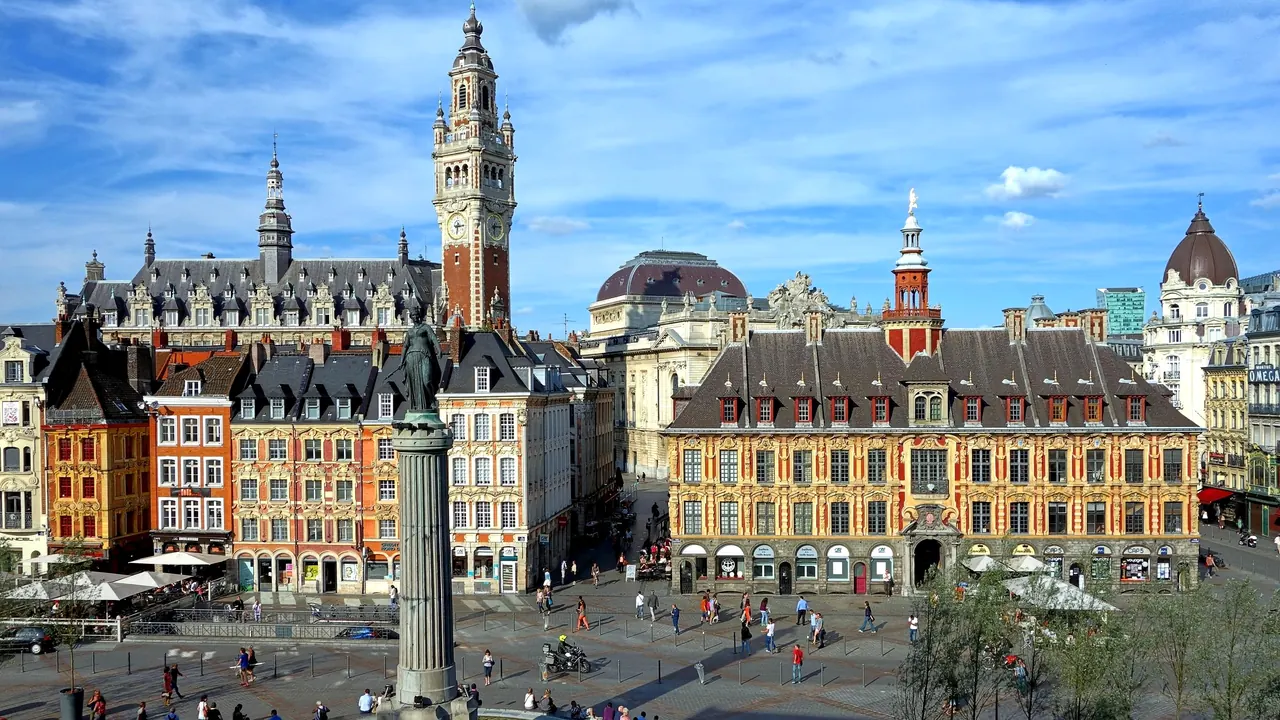
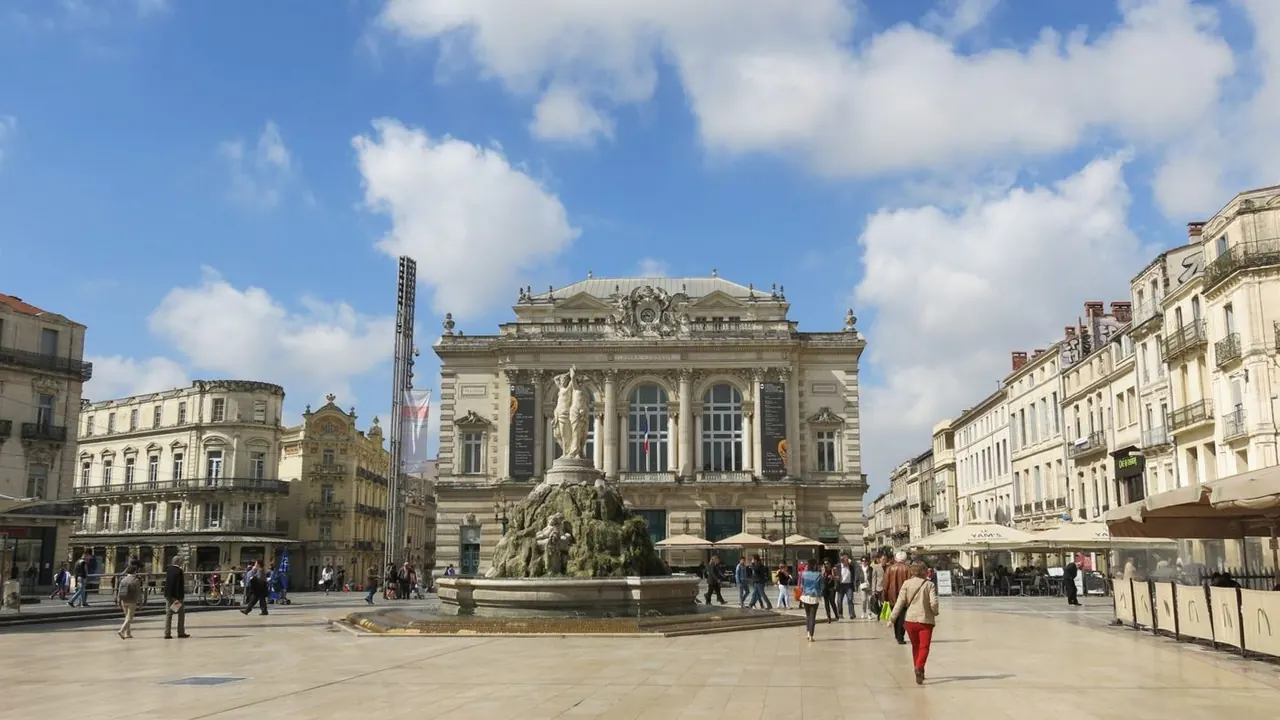
Photos: Lille by Velvet, CC BY-SA 3.0, cropped; Montpellier by Peter, CC BY 2.0, cropped.
Lille or Montpellier?
Our verdict in twelve categories, each scored against the same fixed benchmark cities, and the climate month by month, so you can choose for your trip.
Choose Lille for
- shopping
- day trips
- culture and sights
Lille suits a cooler-weather city break built around art, beer and trains. The Palais des Beaux-Arts and the Flemish baroque streets of Vieux-Lille fill a couple of days. After that, the two stations beside the old town put Brussels, Ghent, Bruges and Paris within easy reach, so Lille works best as a base for a wider tour of Flanders. It is also the better city for shopping, especially if the Braderie falls in your dates.
Choose Montpellier for
- beaches
- nature and the outdoors
- wellness
For sun, sea and open country, Montpellier is the clear choice. Sandy beaches are a short ride away, and the lagoons, the garrigue and the Hérault gorges are close. Families get calm, shallow water and more for children to do. Add a strong summer stage led by contemporary dance and day trips to the Roman towns of the Gard and Provence, and it makes a fuller warm-weather vacation than Lille can.
Scoreboard
Twelve categories on one fixed scale from 0 to 100. The shaded stretch is the gap between the two.
Your match
Pick a travel style or drag the sliders, and both match scores follow your weighting.
Wins on shopping and day trips with your weighting.
Wins on beaches and nature and the outdoors with your weighting.
What matters to you?
Category by category
What the scores mean for a trip.
Beaches & swimming
Lille has no beach life to speak of. Its nearest sand is Malo-les-Bains at Dunkirk, a cold, windy North Sea shore better for a bracing walk than a swim. The Opal Coast dunes further on suit sand yachting more than bathing.
Montpellier is not on the sea either, but the coast is only about 11km away. A long run of fine, gently shelving sand stretches from Palavas and Carnon to the wild dunes of l'Espiguette. The water is warm enough for proper swimming in late summer, so a few beach days fit easily into a stay.
Food & drink
Both cities eat well within their regional traditions, and the difference is one of character. Lille means beer and Flemish comfort food: carbonnade, waterzooi and the welsh in wood-panelled estaminets, with Maroilles cheese in almost everything and specialist beer bars for the evening.
Montpellier cooks the Languedoc instead. There is wine from Pic Saint-Loup at the city's edge, oysters from the Thau lagoon and tielle from Sète, eaten on warm terraces or at the counters of the Halles Laissac. Lille is the place for hearty cold-weather eating, Montpellier for markets, seafood and wine.
Culture & sights
The two are evenly matched. Each has a major painting collection and an old town that takes two or three days to see. Lille offers the Palais des Beaux-Arts and the Flemish baroque brick of Vieux-Lille, with the Vieille Bourse and the UNESCO-listed belfry, plus La Piscine in Roubaix and Vauban's citadel.
Montpellier's Musée Fabre also runs from the Flemish masters onwards, but the setting is southern stone. The city has the medieval lanes of the Écusson, the Peyrou terrace and its aqueduct, France's oldest botanical garden and Bofill's neoclassical Antigone.
Nightlife
Both are big student cities that go out more than their size suggests, and neither is a reason to travel in itself. Lille divides between the loud student bars of Rue Masséna and Rue Solférino and the calmer beer cafés in the brick cellars of Vieux-Lille. Serious clubbing has traditionally meant crossing into Belgium.
Montpellier's nights start on the terraces around Place Jean-Jaurès and in the squares of the Écusson, and the late crowd takes taxis out to clubs towards Lattes and the coast. In summer the evening moves outdoors and towards the beach towns, which Lille's climate rarely allows.
Nature & outdoors
Here Montpellier pulls well ahead. Within easy reach are flamingo lagoons, the Camargue, the limestone climb of Pic Saint-Loup and the Hérault gorges for canoeing. The Cirque de Navacelles lies a little further out, and the windy coast suits kitesurfing.
Lille is surrounded by flat farmland, so time outdoors means the Citadel park, level canal towpaths and short walks on the Monts de Flandre. Its real scenery is the cliffs of Cap Blanc-Nez on the Opal Coast, and getting there takes a long day.
Day trips
Both make excellent bases, but for different kinds of day out. Lille's trips are mostly to cities by fast train: Brussels, Ghent, Bruges and Antwerp in Belgium, and Paris in about an hour. On the French side there are Arras, Amiens and the First World War battlefields.
Montpellier's trips take in Roman and medieval southern France: Nîmes and the Pont du Gard, Arles, Avignon, Carcassonne, Aigues-Mortes and Saint-Guilhem-le-Désert. The big names are on the railway, but the villages and wine country are much easier with a car. From Lille, almost everything works without one.
Good for families
Montpellier is the easier choice with children, largely because nearby beaches slope gently into calm, warm water. In town there are the Lunaret zoo in its wooded park and the aquarium and planetarium at Odysseum, and the mostly pedestrian centre is easy to get round by tram with a pushchair. The one drawback is the July heat in the stone streets.
Lille manages well enough. It has the small zoo and playgrounds in the Citadel park and the Forum des Sciences, which you reach by metro. But its biggest draws, Pairi Daiza and Nausicaá, each need a day out, and the cobbles of Vieux-Lille are hard going with a pushchair.
Getting around
In both cities you can walk the centre, and the difference lies in the detail. Lille is flat, its two main stations stand right beside the old town, and the automated VAL metro and the tram reach out to Roubaix and Tourcoing, so a car is never needed.
Montpellier's Écusson sits on a low hill with slopes and uneven paving. The trams cover the wider city well, but the beaches take a tram and then a bus. For the hills, the gorges and the Camargue, a car makes things much simpler.
Shopping & style
Lille is the stronger shopping city. Vieux-Lille's narrow streets mix independent fashion, design shops and a few luxury labels. The chains fill Rue Neuve and Euralille, and each September the Braderie turns kilometres of street into a huge flea market.
Montpellier has pleasant boutiques and bookshops in the Écusson and the Polygone mall beside the Comédie, but no luxury street. The things most worth taking home are wine, olive oil and honey from its markets.
Affordability
Neither city is a bargain, and costs come out much the same: comfortable rather than cheap. In Lille the expensive times are the Braderie and the big trade fairs, when hotels fill up, while estaminet meals and beer stay fairly priced.
In Montpellier the student crowd keeps casual food and drink cheap, and lunch menus help. Rooms in town and on the coast cost more in July and August, and wine with a sit-down dinner is where the bill grows.
Live music & performing arts
Montpellier has the more serious stage, especially in summer. Montpellier Danse is one of Europe's most respected contemporary dance festivals, and the Radio France festival brings classical and jazz concerts, many of them free. The rest of the year, the Opéra Comédie and the Opéra Berlioz share a full season with the city's national orchestra.
Lille's programme is solid but not a reason to go. It has the Opéra de Lille, the Orchestre National de Lille, the Théâtre du Nord, dance in Roubaix and Tourcoing, and touring bands at the Zénith and the Aéronef.
Wellness & relaxation
Neither is a spa destination, but Montpellier is the easier place to unwind. Balaruc-les-Bains, a long-established thermal town on the Thau lagoon, is about half an hour away, and long lunches in shaded squares set an unhurried pace.
In Lille, the nearest thermal bath is at Saint-Amand-les-Eaux. Otherwise, rest means hotel spas and tea rooms in Vieux-Lille, which are pleasant but no reason to choose the city.
When should you go?
Pick your month. The climate figures are measured averages, not a forecast.
Lille in July
Montpellier in July
Daytime high, °C
Rainfall in the month, mm
Temperature and rainfall are climate normals, averaged over the years shown. Lille: 1991-2020 normals, Lille (7.8 km from centre). Montpellier: 1991-2020 normals, Montpellier (7.8 km from centre).
Lille is mild and often grey, and its rain falls fairly evenly through the year, heaviest in late autumn and early winter. Summer days reach about 24°C. That is pleasant for walking the streets but rarely warm enough to think about the sea. Winter is cold and dark, with little sunshine from November to February, so May to September is the best time to go.
Montpellier is much warmer and sunnier. July highs near 30°C can make the stone streets of the centre tiring at midday. That same heat and a sea of about 22°C in August make high summer the beach season, and June and September are good too. July is very dry, then the rain comes in heavy bursts in September and October, at around 90mm a month. Spring and autumn are best for walking in town and in the hills, and even in winter Montpellier gets far more sunshine than Lille.
Which traveller are you?
On a beach and sun trip, Lille falls short, since its nearest sea is an hour away and cold and windy even in August. Montpellier wins easily, with dry, sunny summers and sandy beaches close enough for an afternoon swim.
For an outdoors trip, Lille offers gentle cycling and short walks across flat, farmed country, and little more. Montpellier is the better base, with hills, gorges and wetlands close by and mild springs and autumns for exploring them.
On a shopping trip, Lille comes out ahead. Its old quarter is worth a day of browsing, and it pays to time a visit for the September flea market. Montpellier's shops are pleasant but would not fill a trip.
Before you go
| Measure | Lille | Montpellier |
|---|---|---|
| Official language | French | French |
| Currency | Euro (EUR) | Euro (EUR) |
| Sockets | CE230 V, 50 Hz | CE230 V, 50 Hz |
| Driving side | Right | Right |
| Time zone | UTC+1, UTC+2 in summer | UTC+1, UTC+2 in summer |
| Emergency number | 112 | 112 |
| Elevation | 17 m | 7 m |
| Main airport | Lille Airport (LIL)8 km from centre61 non-stop destinations | Montpellier-Méditerranée Airport (MPL)8 km from centre41 non-stop destinations |
| Public holidays this year | 11 days | 11 days |
By the numbers
| Measure | Lille | Montpellier |
|---|---|---|
| City population | 238,246 | 310,240 |
| People per km² | 6,846 | 5,452 |
| Museums within 10 km | 23 | 14 |
| UNESCO World Heritage sites within 50 km | 6 | 2 |
| Swim season, months above 21 °C | - | 2 months |
Where else could you go?
Every comparison below shares a destination with this one, so you can follow Lille or Montpellier somewhere new.
- Brugesvs Lille
- Ghentvs Lille
- Avignonvs Montpellier
- Brusselsvs Lille
- Antwerpvs Lille
- Marseillevs Montpellier