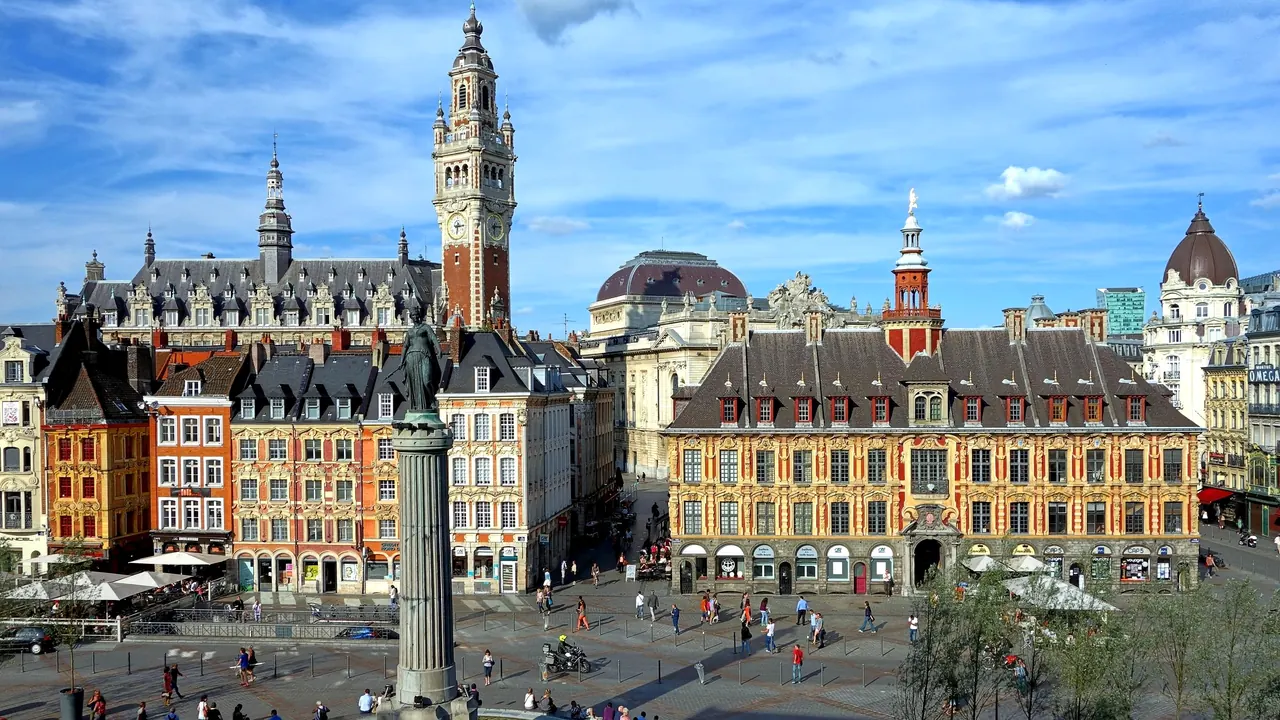
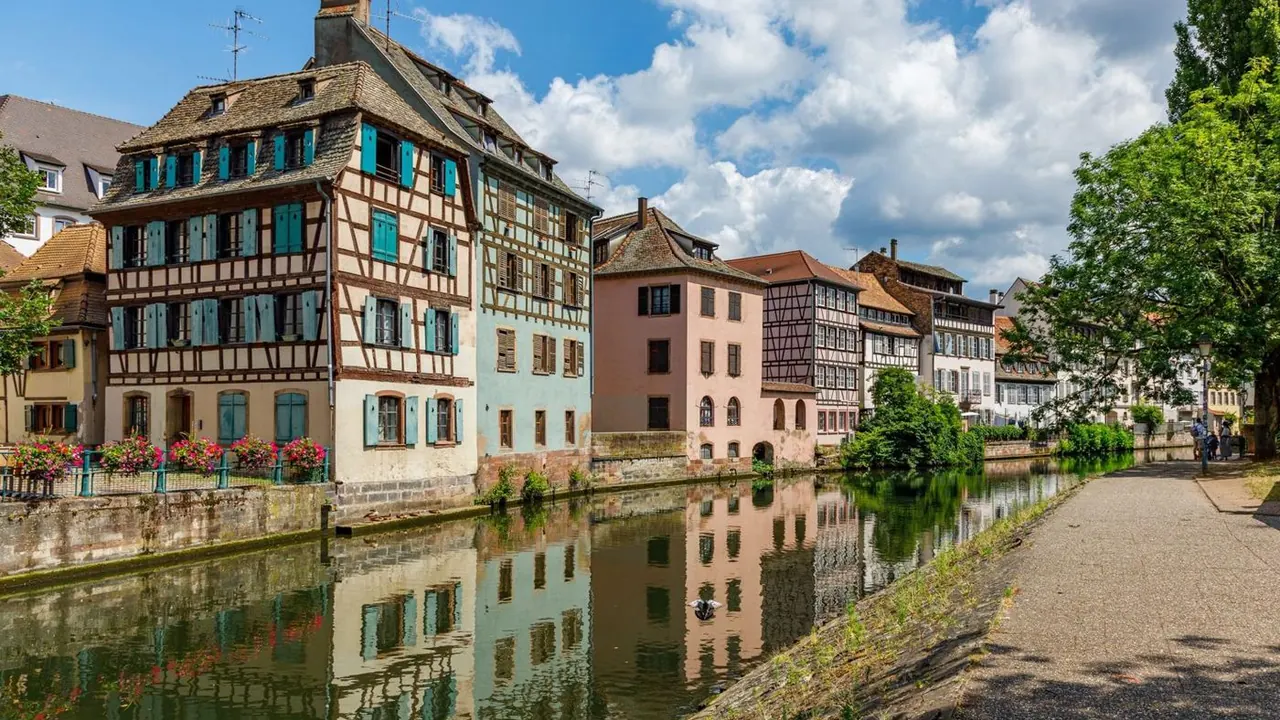
Photos: Lille by Velvet, CC BY-SA 3.0, cropped; Strasbourg by Edoardo Colombo, Pexels License.
Lille or Strasbourg?
Our verdict in twelve categories, each scored against the same fixed benchmark cities, and the climate month by month, so you can choose for your trip.
Choose Lille for
- nightlife
- day trips
- beaches
Lille suits the traveller who wants a city to go out from. Its two stations sit beside the old town, so Brussels, Ghent, Bruges and even Paris become easy days out. Its student bars and Vieux-Lille beer cellars also give it the livelier evenings of the two. Choose it for Flemish taverns, a great fine-art museum, the September Braderie and a trip that crosses borders by train.
Choose Strasbourg for
- nature and the outdoors
- wellness
- families
Strasbourg is the better pick if you want green space, a slower pace and children along. The Vosges and the Black Forest are close, the wine villages lie just to the south, and the thermal baths of Baden-Baden are across the Rhine. The cathedral and the island old town give it a slightly stronger set of sights, and its winstubs give it a slightly richer table.
Scoreboard
Twelve categories on one fixed scale from 0 to 100. The shaded stretch is the gap between the two.
Your match
Pick a travel style or drag the sliders, and both match scores follow your weighting.
Wins on nightlife and day trips with your weighting.
Wins on nature and the outdoors and wellness with your weighting.
What matters to you?
Category by category
What the scores mean for a trip.
Beaches & swimming
Neither city is a beach destination, but Lille at least has the sea within reach. The wide sands of Malo-les-Bains at Dunkirk are about an hour away by train, and the dune beaches of the Opal Coast are a little further. The North Sea stays cold, so these are bracing days by the sea rather than swimming days.
Strasbourg has no coast at all. In summer, swimming means the gravel-pit lakes such as the Baggersee, which you can reach by tram. These calm, lifeguarded lakes with grassy banks are pleasant on a hot afternoon, but they cannot stand in for the sea.
Food & drink
The two regional kitchens are close in spirit, and Strasbourg's is slightly richer. Lille's estaminets serve Flemish dishes cooked in beer, such as carbonnade and the welsh, with Maroilles cheese on almost everything. Beer is the drink, and there are pastries from Meert and the Wazemmes market as well.
Strasbourg's winstubs pour Riesling and Pinot Gris from vineyards a short drive away to go with choucroute, baeckeoffe and tarte flambée. Foie gras and a stronger fine-dining tier in the city and nearby villages give it the edge. Avoid the tourist menus around the cathedral.
Culture & sights
Strasbourg has the slightly stronger set of sights, and it is more of a whole: the pink sandstone cathedral with its astronomical clock, the Grande Ile, Petite France and the German-built Neustadt make up one UNESCO-listed townscape. The Palais Rohan's three museums add to it.
Lille's appeal rests more on one great collection. The Palais des Beaux-Arts, with its Flemish masters and relief maps, is set in Flemish baroque streets around the Vieille Bourse. La Piscine in Roubaix is a memorable extra. Each city takes about two or three days to see well.
Nightlife
Lille is the better city for going out. Its huge student population fills Rue Masséna and Rue Solférino on Thursday nights, and Vieux-Lille adds beer cafés and cocktail bars in old cellars. If you want to dance late, the Belgian clubs are close by.
Strasbourg's evenings are gentler. They centre on the Krutenau bars and the summer terraces along the quays, there are few clubs, and much of the city is quiet by midnight on weeknights.
Nature & outdoors
Here Strasbourg is far ahead. The Rhine plain forests with their storks and beavers, and long level cycle routes into Germany, start at the edge of the city. Within about an hour you can walk among the vineyard slopes and castle ruins of the Vosges or the fir-covered ridges of the Black Forest.
Lille's surroundings are flat and farmed. The Citadel park and the Deûle towpaths are good for an easy ride, and the Monts de Flandre give short walks. The chalk cliffs of Cap Blanc-Nez are the only real scenery, and they take a long day to reach.
Day trips
Both are excellent bases, but Lille's location is hard to beat. Fast trains put Brussels about half an hour away, Ghent and Bruges about an hour, and Paris around an hour. Closer to home there are Arras, Amiens cathedral, the Louvre-Lens and the First World War battlefields of Ypres and the Somme.
Strasbourg's trips are more rural. Colmar and the wine villages of the Alsace route lie to the south, and Baden-Baden, Freiburg and Heidelberg are across the Rhine. The villages are much easier with a car or a bike.
Good for families
Strasbourg is clearly the easier city with children. Its car-free island centre, the boat trips through Petite France, the stork nests and rowing lake in the Orangerie, and the hands-on Le Vaisseau all make for full days. Europa-Park and the Vosges monkey parks are within reach for bigger outings.
Lille manages well enough. The Citadel park has a small zoo and playgrounds, and the Forum des Sciences is good on a wet day. The bigger draws, Pairi Daiza and Nausicaá, are further out, and the Vieux-Lille cobbles are hard work with a pushchair.
Getting around
Both are easy to get around without a car, and both have compact, flat centres. Lille runs on the automated VAL metro, and its two stations stand right beside the old town, which makes leaving for day trips easy. Strasbourg relies on trams and bicycles instead, with separated cycle lanes, plenty of bike hire and a tram line across the Rhine to Kehl.
Shopping & style
Lille has a slight lead. Rue Neuve and the Euralille mall cover the chains, and Vieux-Lille's narrow streets hold independent fashion, design shops and a few luxury labels. The Braderie, held each September, is a city-wide flea market worth planning a trip around.
Strasbourg is better for things made in the region: Alsace wine, Soufflenheim pottery, printed linens and kougelhopf moulds. Its Christmas market makes December the high point for crafts, but there is little fashion of note.
Affordability
Costs are much the same: both are comfortable rather than cheap, as in most French regional cities. The difference is when hotel rooms get expensive. In Lille, that happens during the Braderie and the trade fairs. In Strasbourg, it happens during the Christmas market and the European Parliament sessions. Strasbourg's many free sights and its wine by the pichet help keep daily spending down.
Live music & performing arts
Both have solid seasons, with an opera house, a symphony orchestra and one of France's national theatres each. Strasbourg goes further into the new. The Musica festival makes it a centre for contemporary music, and it also has a jazz festival and experimental theatre. Lille's strengths are contemporary dance in Roubaix and Tourcoing and the bigger touring rock acts at the Zénith and the Aéronef.
Wellness & relaxation
Strasbourg is much the better choice for rest. The tiled pools, hammam and saunas of the Bains municipaux are in the city itself, and the Friedrichsbad and Caracalla baths in Baden-Baden are under an hour away. Canal-side walks fill the slower days.
Lille has no bathing culture of its own. Its famous Art Deco pool in Roubaix is now a museum, so relaxing there means hotel spas and tea rooms. The nearest thermal bath is at Saint-Amand-les-Eaux.
When should you go?
Pick your month. The climate figures are measured averages, not a forecast.
Lille in July
Strasbourg in July
Daytime high, °C
Rainfall in the month, mm
Temperature and rainfall are climate normals, averaged over the years shown. Lille: 1991-2020 normals, Lille (7.8 km from centre). Strasbourg: 1991-2020 normals, Strasbourg (9.1 km from centre).
Both cities have their best weather from late May to September, but Strasbourg's summers are warmer and sunnier. Lille's July and August highs reach about 24°C under a softer, more maritime sky. Strasbourg reaches about 26°C, which is warm enough for an afternoon at the gravel-pit lakes. Lille has no swimming weather to speak of, and its North Sea beaches stay cool even in August. Spring and early autumn are comfortable for walking in both, and Strasbourg warms up a little earlier in April and May.
Rain falls differently. Lille is damp all year and wettest in November and December, at about 76mm a month, under very short days. Strasbourg has drier winters, around 35mm in January, but its wettest month is May, at about 77mm, with summer thunderstorms after that. Winters are cold in both, and Strasbourg's coldest weeks are a little colder.
Which traveller are you?
On a food and nightlife trip, choose Lille. A long tavern dinner there can turn into a late night out among a big student crowd. Strasbourg's cooking is slightly richer, but its evenings wind down early, so dinner is often the whole night.
On a family trip with young children, Lille is fine for a day or two, but its best outings for children lie well beyond the city. Strasbourg keeps more within walking or tram distance, so there are fewer long journeys with tired children.
For an outdoors trip, Lille offers easy rides and short walks but little real scenery. From Strasbourg you can spend the morning in town and the afternoon in proper hills, with two mountain ranges in two countries less than an hour away.
Before you go
| Measure | Lille | Strasbourg |
|---|---|---|
| Official language | French | French |
| Currency | Euro (EUR) | Euro (EUR) |
| Sockets | CE230 V, 50 Hz | CE230 V, 50 Hz |
| Driving side | Right | Right |
| Time zone | UTC+1, UTC+2 in summer | UTC+1, UTC+2 in summer |
| Emergency number | 112 | 112 |
| Elevation | 17 m | 132 m |
| Main airport | Lille Airport (LIL)8 km from centre61 non-stop destinations | Strasbourg Airport (SXB)10 km from centre43 non-stop destinations |
| Public holidays this year | 11 days | 11 days |
By the numbers
| Measure | Lille | Strasbourg |
|---|---|---|
| City population | 238,246 | 293,771 |
| People per km² | 6,846 | 3,752 |
| Museums within 10 km | 23 | 21 |
| UNESCO World Heritage sites within 50 km | 6 | 3 |
Where else could you go?
Every comparison below shares a destination with this one, so you can follow Lille or Strasbourg somewhere new.
- Baden-Badenvs Strasbourg
- Colmarvs Strasbourg
- Brugesvs Lille
- Ghentvs Lille
- Brusselsvs Lille
- Stuttgartvs Strasbourg