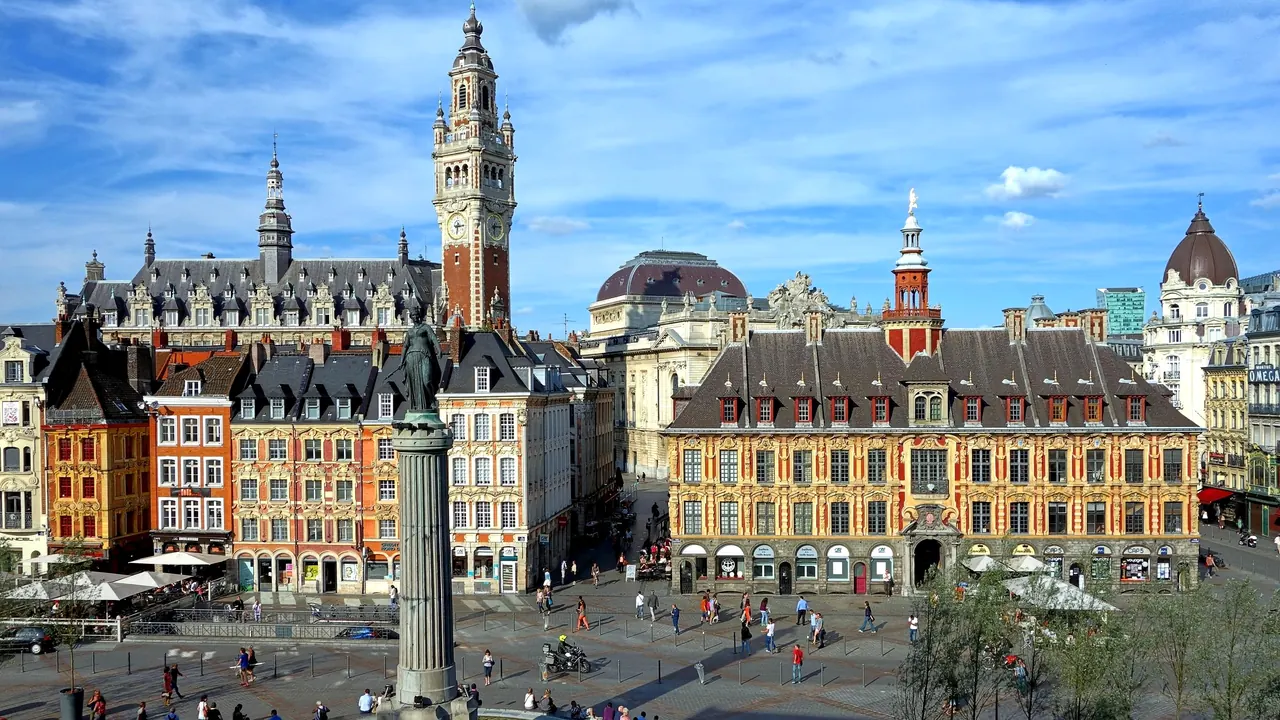
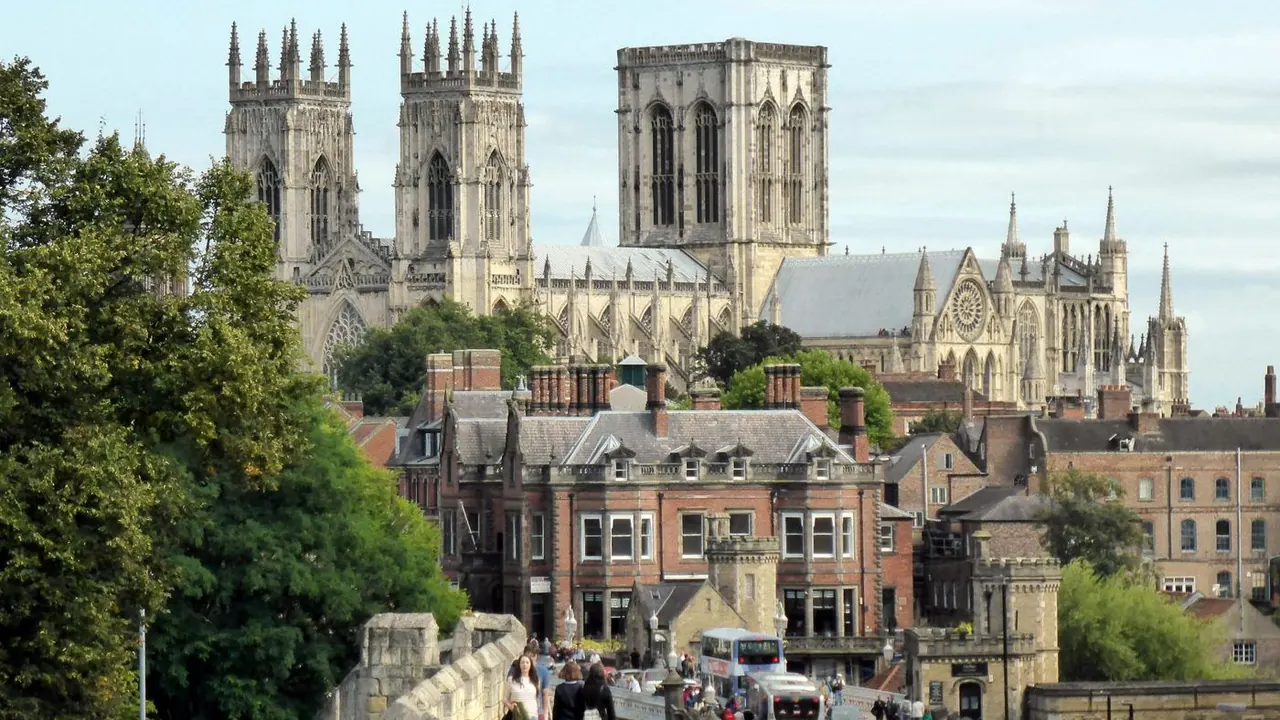
Photos: Lille by Velvet, CC BY-SA 3.0, cropped; York by PAUL FARMER, CC BY-SA 2.0, cropped.
Lille or York?
Our verdict in twelve categories, each scored against the same fixed benchmark cities, and the climate month by month, so you can choose for your trip.
Choose Lille for
- nightlife
- food and drink
- live music and the arts
Lille suits travellers who want a base as much as a destination. Brussels, Ghent, Bruges and Paris are all an easy train ride from stations beside the old town. Evenings bring Flemish taverns, Belgian ales and a student bar scene livelier than anything York offers. It is also the better pick for opera and concerts, and a stay costs a little less.
Choose York for
- nature and the outdoors
- families
- wellness
Choose York for history you can walk through and countryside close by. The Minster, the walls and the Roman and Viking layers give it the richer sightseeing core, and children have the railway museum and Jorvik. The moors and Dales offer real walking that the flat land of French Flanders cannot match.
Scoreboard
Twelve categories on one fixed scale from 0 to 100. The shaded stretch is the gap between the two.
Your match
Pick a travel style or drag the sliders, and both match scores follow your weighting.
Wins on nightlife and food and drink with your weighting.
Wins on nature and the outdoors and families with your weighting.
What matters to you?
Category by category
What the scores mean for a trip.
Beaches & swimming
Neither city is a beach destination, and from both the nearest sand is about an hour away by train. What differs is the kind of coast. From Lille you reach Malo-les-Bains at Dunkirk and the long, windy dune beaches of the Opal Coast and Belgium, which are better for walking and sand yachting than for swimming.
From York the day out is to Scarborough's two sandy bays, Filey or Whitby, which are traditional British seaside towns. The sea there is a few degrees colder still, so any swim is short.
Food & drink
Lille has the stronger food. Its estaminets in Vieux-Lille serve Flemish cooking with its own character: beer-braised carbonnade, potjevleesch, waterzooi and pungent Maroilles cheese in almost everything. The Belgian and northern French ales are taken as seriously as wine is elsewhere, and on Sundays the market at Wazemmes adds a multi-ethnic food market.
York's food is honest but narrower: afternoon tea with fat rascals, real ale in old pubs, Sunday roasts and pies from the Shambles Market. Beyond a few good modern British kitchens using Yorkshire game, the choice thins quickly, and many places around the Minster serve tourist fare.
Culture & sights
York has the edge for sightseeing because so much history is packed into a small walled centre. The medieval glass of the Minster, the circuit of the walls, the Shambles, Jorvik on its excavated Viking street and the National Railway Museum cover two thousand years within a twenty-minute walk.
Lille's strength is narrower but excellent. The Palais des Beaux-Arts, with its Flemish masters and Goya, is a major art collection, and the Flemish baroque of the Vieille Bourse and Grand Place is handsome. Lille is the better trip for painting and York for layered history. Each fills two or three days.
Nightlife
Lille goes out harder. A large student population fills the bars of Rue Masséna and Rue Solférino, Vieux-Lille adds cocktail and beer bars in brick cellars, and the clubs across the Belgian border are close for a late night.
York's evenings revolve around its centuries-old inns on Micklegate, Stonegate and the riverside, which make a fine pub crawl. Weeknights end early, though, weekends bring stag and hen parties, and serious clubbing means taking the train to Leeds.
Nature & outdoors
York is far better placed for the outdoors. The North York Moors begin about 40km away and the Yorkshire Dales, with their limestone scars and waterfalls, are an hour west. The Cleveland Way runs along the sea cliffs at Robin Hood's Bay, although a car makes most of this much easier.
Around Lille the land is flat and farmed. Canal towpaths, the Citadel park and the low Monts de Flandre make gentle outings. The real scenery, the chalk cliffs of Cap Blanc-Nez and Cap Gris-Nez, is a long day away.
Day trips
Both make excellent bases, but Lille reaches further. Fast trains put Brussels, Ghent, Bruges and Antwerp within about an hour, and Paris is an hour away by TGV. On the French side there are the squares of Arras, the cathedral at Amiens and the First World War battlefields.
York's day trips stay in the north of England and are superb on their own terms: Durham's cathedral and castle, Harrogate, Castle Howard, Fountains Abbey and the Brontë village of Haworth. Many of its abbeys and country houses need a car or a coach tour, whereas Lille's major cities are all on the rail network.
Good for families
York is the easier place to take children. The hall of locomotives at the National Railway Museum, Jorvik, the Victorian street in the Castle Museum and walking the walls all turn history into an outing, and the centre is largely free of traffic.
In Lille, the Citadel park's small zoo and playgrounds fill a pleasant morning, and a hands-on science centre is a metro ride away. The biggest family draws, Pairi Daiza and the Nausicaá aquarium, mean a trip out of town, and the cobbles of Vieux-Lille are hard going with a pushchair.
Getting around
Both centres are flat and easy to walk, and neither needs a car. Lille's edge is its automated VAL metro and the tram to Roubaix and Tourcoing, along with two main stations side by side next to the old town.
York has no metro, which matters little inside the walls, where much of the centre is pedestrianised and cycling is easy. The difference shows on trips into the countryside, where sparse buses push visitors towards hire cars or tours.
Shopping & style
Lille offers more choice: chains on Rue Neuve, the Euralille mall by the stations, and independent fashion and design in Vieux-Lille. Each September the Braderie turns the whole city into a vast flea market.
York's shopping is charming rather than deep, with boutiques, bookshops and antiques dealers along Stonegate and Petergate. The Shambles leans towards souvenirs and luxury fashion barely features. Its Christmas markets are the main seasonal draw.
Affordability
Lille is easier on a budget. Hotels are reasonably priced for most of the year outside the Braderie and the big trade fairs, estaminet meals and beer are fairly priced, and the metro costs little.
York is dearer. Rooms inside the walls are in heavy demand, and rates climb steeply at weekends, on race days and at Christmas. Free sights such as the National Railway Museum and the walls help, as does staying midweek or just outside the centre.
Live music & performing arts
Lille has the fuller programme. Its opera house stages opera and dance, the Orchestre National de Lille plays a full symphonic season, the Théâtre du Nord is one of France's national theatres, and the Zénith and Aéronef host touring bands.
York has no opera company or orchestra of note, but it has pleasures of its own: the Theatre Royal, one of England's oldest, early music in a medieval church, free choral evensong at the Minster, and the Mystery Plays, revived from time to time on wagons in the streets.
Wellness & relaxation
Neither city is a place to come for rest, but York does slightly better. Harrogate's Royal Baths, with a Victorian Turkish bath in Moorish tiles, are half an hour away by train, and early mornings on the walls or in the Museum Gardens are peaceful.
Lille's nearest thermal bath is in the small spa town of Saint-Amand-les-Eaux. Otherwise, relaxing there means hotel spas and long afternoons in Vieux-Lille's tea rooms and on its café terraces.
When should you go?
Pick your month. The climate figures are measured averages, not a forecast.
Lille in July
York in July
Daytime high, °C
Rainfall in the month, mm
Where the figures come from
York has no rain gauge within 25 km of the centre, so its rainfall comes from a gridded climate dataset read at the city rather than from a gauge further away.
York's sunshine is measured 48 km from the centre, at Leeming.
Temperature and rainfall are climate normals, averaged over the years shown. Lille: 1991-2020 normals, Lille (7.8 km from centre). York: 1991-2020 normals, Linton-On-Ouse (14.9 km from centre).
Winters are much the same in both, with daytime highs around 7°C, grey skies and short days, so walking the streets means wrapping up. Summer is where they part. Lille gets noticeably warmer, reaching about 24°C in July and August with more sunshine. York peaks nearer 21°C, which is comfortable for sightseeing and ideal for long walks on the moors. Neither gets warm enough for lazy beach days.
Rain falls through the year in both, but in different patterns. York's spring is unusually dry, at around 40mm a month from February to May, which makes April and May a good time to go. Lille's wettest stretch is late autumn and early winter, peaking at 76mm in December. For both cities, late May to September is the most pleasant time for a city break.
Which traveller are you?
For a food and nightlife trip, Lille is the clear choice. Beer-braised Flemish dishes in Vieux-Lille's estaminets lead on to Belgian ales, cellar bars and student streets that stay busy. York's evenings centre on old pubs and go quiet early on weeknights.
On an outdoors trip, York wins easily. Heather moors, the limestone and waterfalls of the Dales and the cliff-top Cleveland Way are all within an hour or so. Around Lille the land is flat farmland and canal towpaths, and real cliffs are a long day away.
On a family trip with children, York is the easier choice. The locomotives at the National Railway Museum, Jorvik's Viking street and the city walls keep children busy in a largely pedestrianised centre. Lille's biggest family attractions are outside the city.
Before you go
| Measure | Lille | York |
|---|---|---|
| Official language | French | English |
| Currency | Euro (EUR) | Pound Sterling (GBP) |
| Sockets | CE230 V, 50 Hz | G230 V, 50 Hz |
| Driving side | Right | Left |
| Time zone | UTC+1, UTC+2 in summer | UTC, UTC+1 in summer |
| Emergency number | 112 | 112 or 999 |
| Elevation | 17 m | 25 m |
| Main airport | Lille Airport (LIL)8 km from centre61 non-stop destinations | Leeds Bradford Airport (LBA)39 km from centre69 non-stop destinations |
| Public holidays this year | 11 days | 8 days |
By the numbers
| Measure | Lille | York |
|---|---|---|
| City population | 238,246 | 208,400 |
| People per km² | 6,846 | 766 |
| Museums within 10 km | 23 | 24 |
| UNESCO World Heritage sites within 50 km | 6 | 2 |
Where else could you go?
Every comparison below shares a destination with this one, so you can follow Lille or York somewhere new.