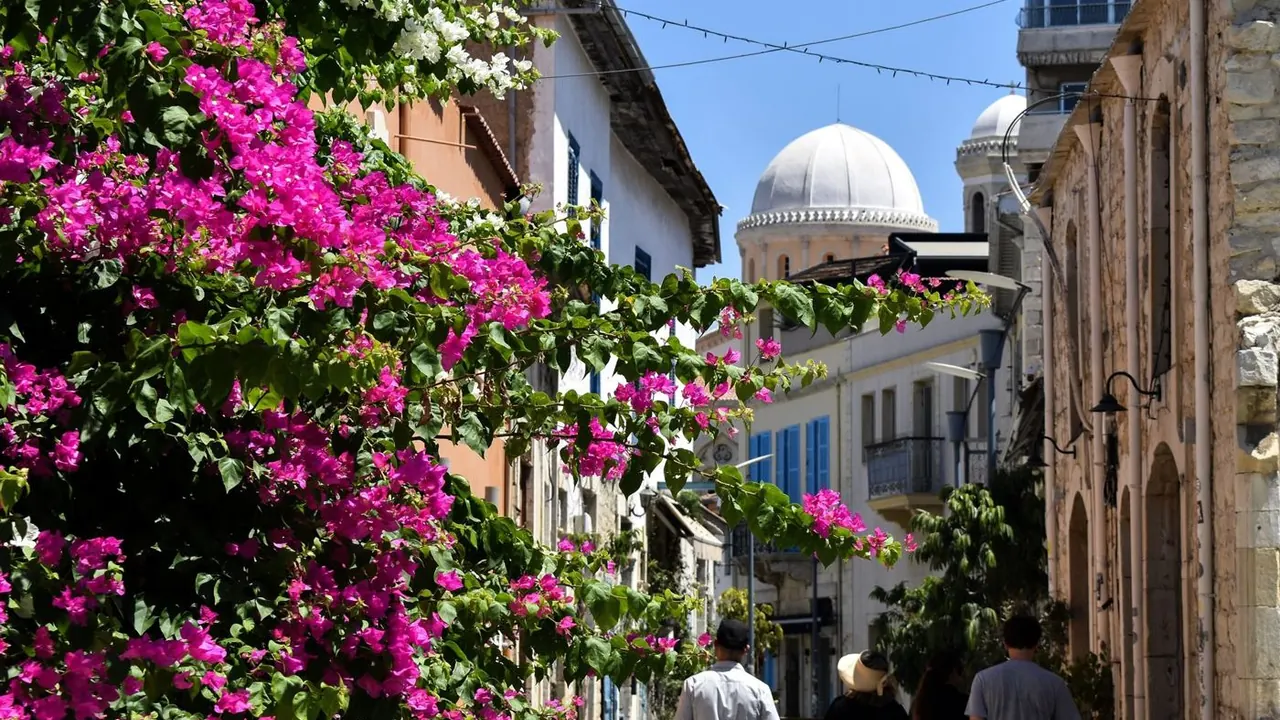
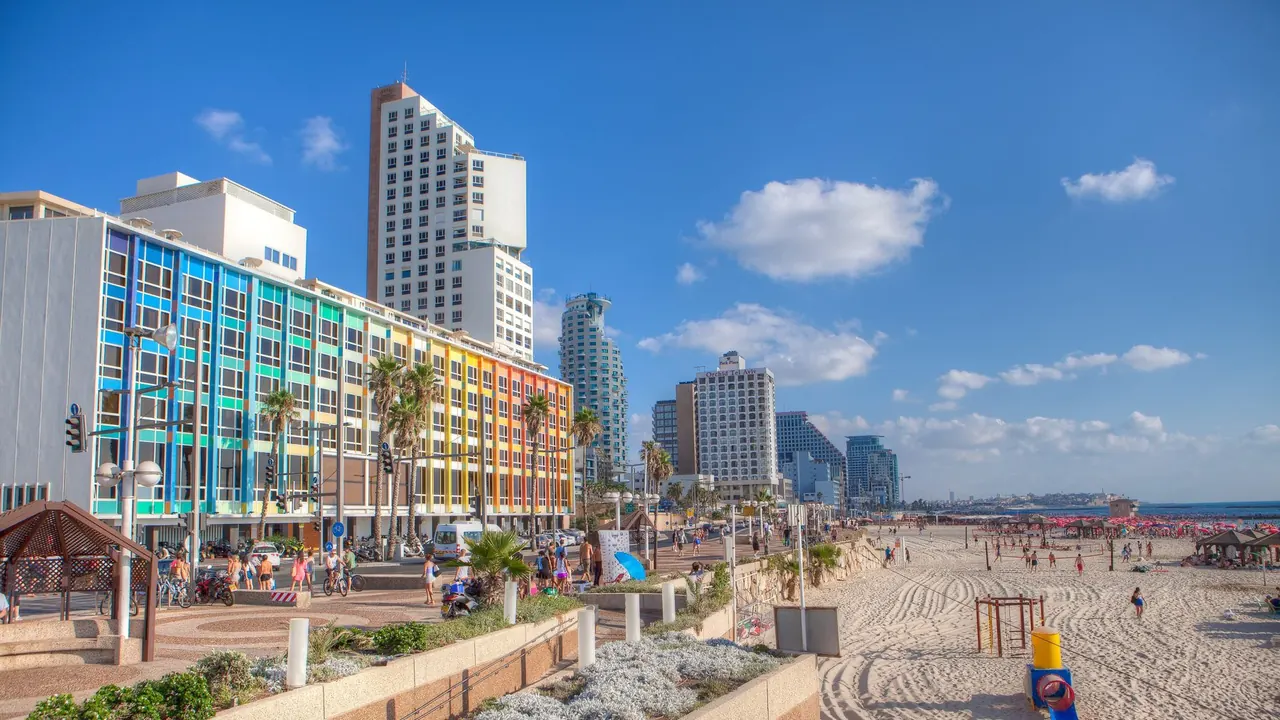
Photos: Limassol by Julian Lupyan, CC0; Tel Aviv by israeltourism, CC BY-SA 2.0, cropped.
Limassol or Tel Aviv?
Our verdict in twelve categories, each scored against the same fixed benchmark cities, and the climate month by month, so you can choose for your trip.
Choose Limassol for
- prices
- nature and the outdoors
- wellness
Limassol suits a slower sun-and-sea trip, where the beach, a long meze lunch and drives to Kourion or into the Troodos mountains matter more than city life. It costs noticeably less, its resort hotels make spa days and family stays easy, and the pine-covered hills behind it give walkers real landscape close by, which Tel Aviv lacks.
Choose Tel Aviv for
- live music and the arts
- nightlife
- getting around
Travellers who want a city as much as a beach will be happier in Tel Aviv. The sand runs along the whole centre, the food and nightlife go far deeper, and the Philharmonic, the opera and Batsheva give evenings substance. Jerusalem is a short train ride away. The catch is cost, since this is one of the most expensive places in the region.
Scoreboard
Twelve categories on one fixed scale from 0 to 100. The shaded stretch is the gap between the two.
Your match
Pick a travel style or drag the sliders, and both match scores follow your weighting.
Wins on prices and nature and the outdoors with your weighting.
Wins on live music and the arts and nightlife with your weighting.
What matters to you?
Category by category
What the scores mean for a trip.
Beaches & swimming
Limassol's city beaches are grey sand or fine shingle, practical rather than pretty, and the best swimming means a drive to Governor's Beach, Kourion or the cove at Pissouri. Lady's Mile gives a quieter stretch west of town.
Tel Aviv comes out ahead because there the beach is the city: a continuous strip of pale sand from the old port to Jaffa, within walking distance of almost any central hotel, with breakwaters and lifeguards along it. Expect crowds at weekends and strong currents away from the guarded spots.
Food & drink
Limassol's strength is the meze, best eaten in family tavernas in the old town and the hill villages, plus its own wine country, with Xynisteri, Maratheftiko and the sweet Commandaria. The food is good, but the range is narrow.
Tel Aviv offers far more variety: Yemenite, Iraqi and Bukharan cooking alongside sabich and hummus counters, a chef-led restaurant scene, cafés that stay full all day and grazing in the Carmel and Levinsky markets. Plan around Shabbat, when many kitchens close.
Culture & sights
Limassol's own sights fill a day: the castle with its medieval museum, the old mixed quarter of mosques and churches, and the ruins of Amathus at the city's edge. Most of the area's heritage lies outside town.
Tel Aviv has more to see within the city, though it is no museum capital either. Walking the UNESCO-listed Bauhaus streets of the White City, climbing through old Jaffa and visiting the Museum of Art and ANU make for several full days.
Nightlife
Limassol's evenings are pleasant and fairly late. They centre on the old-town bars around Saripolou Square and the cocktail lounges at the marina, with a few clubs open on the tourist strip in summer.
Going out is central to life in Tel Aviv. Thursday nights run to dawn, wine bars spill onto the pavements of Rothschild and Lilienblum, and there is basement techno and one of the most open gay scenes in the region. For a serious weekend out, Tel Aviv wins easily.
Nature & outdoors
Limassol has real mountains behind it. Within about an hour, the Troodos offers black pine forest, the circuit around Mount Olympos and the path to the Caledonia waterfall, and the Akrotiri salt lake draws flamingos in winter.
Tel Aviv is flat and built up, so outdoor life there means the seafront path, surfing and kitesurfing, and Yarkon Park. The Carmel ridge and Ein Gedi are a drive of an hour or more. On the coast of both cities, midsummer is too hot for walking.
Day trips
Both are strong bases. Limassol's outings are close and varied: Kourion and Kolossi, the Paphos mosaics, the painted Troodos churches, Lefkara, and Nicosia, where you can cross the Green Line. Nearly all are easier with a hire car.
Tel Aviv's list has more major sites, starting with Jerusalem half an hour away by fast train, then Caesarea, Haifa's Baha'i Gardens, Acre and a long day to Masada and the Dead Sea. The trains help, but for trips on a Saturday you need a car or a tour.
Good for families
Both suit families, with calm beaches and a local culture that welcomes children in restaurants late into the evening. The difference is in kind: Limassol is a resort vacation built around hotel pools, kids' clubs, a waterpark and the sea, while Tel Aviv adds city outings such as Luna Park in Yarkon Park, the Ramat Gan Safari and the Children's Museum in Holon for days off the sand.
Getting around
Limassol is long and thin, and only the old town, the old port and the marina are close enough to walk between. Buses run along the coast, but beaches beyond the city and the mountains really need a car or taxis, and the island has no railway.
Tel Aviv's flat, compact centre is easy on foot or by bike-share, with light rail, buses and fast trains to Jerusalem and Haifa. Its weak point is Shabbat, when most public transport stops.
Shopping & style
Neither city is a shopping destination. Limassol has the high-street chains on Anexartisias, a few marina boutiques and some malls, and its best buys are edible or handmade: halloumi, carob syrup, Commandaria and Lefkara lace.
Tel Aviv gives browsers more: Israeli designers on Dizengoff and Sheinkin and in Neve Tzedek, the Nahalat Binyamin crafts fair and the Jaffa flea market, with spices, Judaica and Dead Sea cosmetics to take home.
Affordability
Limassol is expensive by Cypriot standards, and the seafront and marina charge resort prices in summer. Taverna meals, buses and entry to the sites stay reasonable, though, and rooms get cheaper outside the peak season.
Tel Aviv costs a great deal more. Hotels are expensive at every level, and a restaurant meal or a round of cocktails costs as much as in the priciest Western European capitals. Street food, the free beaches and walking the White City are what keep a stay affordable.
Live music & performing arts
Limassol's performing arts are small: Greek-language drama at the Rialto and Pattihio theatres, summer concerts on the seafront, and ancient plays in the theatre at Kourion at sunset, which is the one most worth planning around.
Tel Aviv has the major institutions: the Israel Philharmonic, the Israeli Opera, Habima and, above all, contemporary dance from Batsheva and at the Suzanne Dellal Centre. Rock, jazz and Mizrahi pop fill clubs in the south, although most theatre is in Hebrew.
Wellness & relaxation
Neither city has a bathing tradition of its own, so both rely on the spas of large hotels. Limassol makes for the calmer stay, with its slower Mediterranean pace, long lunches and the cool pine air of the Troodos villages within easy reach.
Tel Aviv is loud and fast through the week, and its quiet moments come from Shabbat and early walks on the seafront. For real restorative bathing, you need the mud and mineral pools of the Dead Sea, about an hour and a half away.
When should you go?
Pick your month. The climate figures are measured averages, not a forecast.
Limassol in July
Tel Aviv in July
Daytime high, °C
Rainfall in the month, mm
Where the figures come from
Limassol has no rain gauge within 25 km of the centre, so its rainfall comes from a gridded climate dataset read at the city rather than from a gauge further away.
Limassol's sunshine is measured 59 km from the centre, at Larnaca Airport.
Temperature and rainfall are climate normals, averaged over the years shown. Limassol: 1998-2020 (sunshine 1991-2020, rainfall 1991-2020) normals, Akrotiri (11.6 km from centre). Tel Aviv: 1991-2020 normals, Bet Dagan (9.5 km from centre).
Both cities share the eastern Mediterranean pattern of long, dry, hot summers and a short wet winter. In each, the sea is warm enough to swim from May into November and peaks in August, at 27°C off Limassol and about 28°C off Tel Aviv. July and August bring highs in the low thirties in both, too hot for walking the streets in the middle of the day. That makes May, October and early November the best months for sightseeing and swimming on the same trip. April is pleasant for walking, but the sea is still too cool for most swimmers.
Limassol has a very sunny dry season, and its winters are mild enough for coastal and hill walks, with about 90mm of rain in January. Tel Aviv is a degree or two warmer through most of the year and has the wetter winter, with about 140mm in January, so it loses more days to rain between December and February.
Which traveller are you?
On a food and nightlife trip, Tel Aviv is the clear choice. Hummus counters, Carmel Market and chef-led dining rooms lead into late nights on Rothschild and techno clubs in the south. Limassol offers relaxed drinks around Saripolou Square.
For a trip on a tight budget, Limassol is far easier. Family tavernas serve generous meze at fair prices and rooms get cheaper outside summer. Tel Aviv is expensive at every level, and only street food keeps daily spending down.
On an outdoors trip, Limassol has the edge. The pine trails around Mount Olympos are about an hour away, and there are flamingos at Akrotiri and cliff walks at Cape Aspro. Tel Aviv's outdoor life is mostly the seafront path and water sports.
Before you go
| Measure | Limassol | Tel Aviv |
|---|---|---|
| Official language | Turkish, Greek, Modern Greek | Hebrew |
| Currency | Euro (EUR) | New Israeli Sheqel (ILS) |
| Sockets | G240 V, 50 Hz | CHM230 V, 50 Hz |
| Driving side | Left | Right |
| Time zone | UTC+2, UTC+3 in summer | UTC+2, UTC+3 in summer |
| Emergency number | 112 | Police 100, fire 102 |
| Elevation | 10 m | 5 m |
| Main airport | Larnaca International Airport (LCA)58 km from centre112 non-stop destinations | Ben Gurion International Airport (TLV)13 km from centre111 non-stop destinations |
| Public holidays this year | 17 days | - |
By the numbers
| Measure | Limassol | Tel Aviv |
|---|---|---|
| City population | 107,970 | 467,875 |
| People per km² | 2,405 | 8,998 |
| Museums within 10 km | 2 | 98 |
| UNESCO World Heritage sites within 50 km | 3 | 2 |
| Swim season, months above 21 °C | 6 months | 7 months |
Where else could you go?
Every comparison below shares a destination with this one, so you can follow Limassol or Tel Aviv somewhere new.