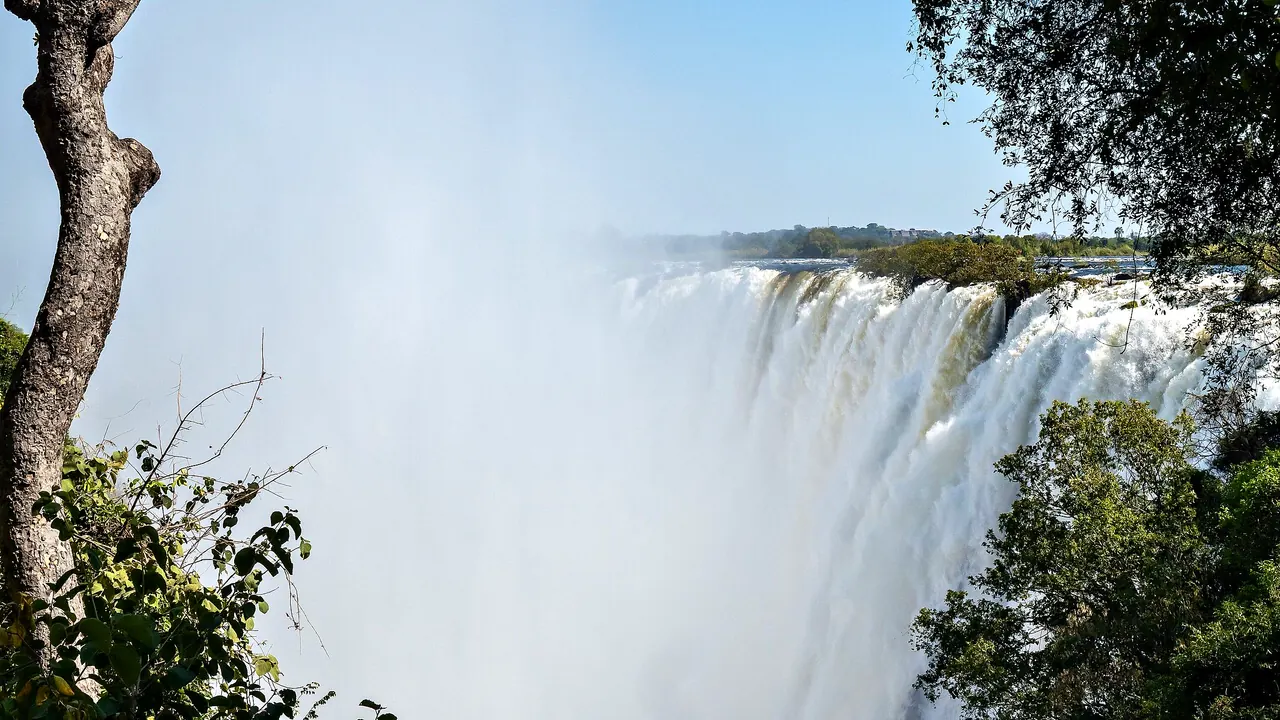
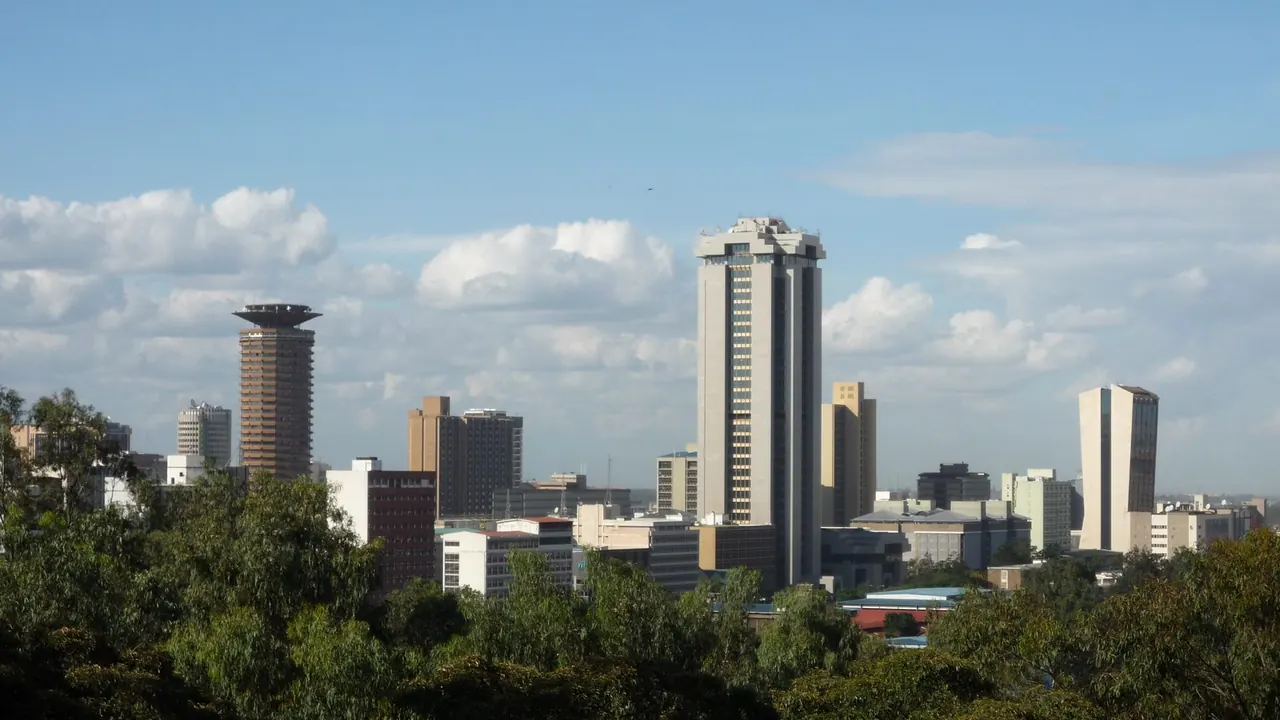
Photos: Livingstone by Matti Blume, CC BY-SA 4.0, cropped; Nairobi by Lmwangi, CC BY-SA 3.0, cropped.
Livingstone or Nairobi?
Our verdict in twelve categories, each scored against the same fixed benchmark cities, and the climate month by month, so you can choose for your trip.
Choose Livingstone for
- wellness
- nature and the outdoors
- getting around
Livingstone suits a trip built around one overwhelming natural sight and the river that makes it. Victoria Falls, the Batoka Gorge rapids and the upper Zambezi's hippos and elephants are on the doorstep, and a quiet lodge upstream gives restful days between outings. The town itself has little else to offer, so come for the water, the wildlife and the adrenaline, and expect early nights.
Choose Nairobi for
- nightlife
- shopping
- food and drink
Choose Nairobi if you want wildlife alongside a real city. Lions and rhinos graze inside the national park within sight of office towers, and the city adds nyama choma afternoons, late weekends in Westlands, live benga and jazz, and craft markets worth a morning. It also works better with young children, thanks to the giraffe and elephant centres in Karen and Langata. The price is traffic, which turns every crossing of the city into a long car ride.
Scoreboard
Twelve categories on one fixed scale from 0 to 100. The shaded stretch is the gap between the two.
Your match
Pick a travel style or drag the sliders, and both match scores follow your weighting.
Wins on wellness and nature and the outdoors with your weighting.
Wins on nightlife and shopping with your weighting.
What matters to you?
Category by category
What the scores mean for a trip.
Beaches & swimming
Neither city has a beach, and the difference is in the small extras. In Livingstone, the river is off limits for ordinary swimming because of crocodiles and hippos, but when the water runs low later in the year guided groups can swim in Devil's Pool and Angel's Pool right on the edge of the falls. In Nairobi, you swim in a hotel pool and nowhere else. The Kenyan coast is a flight away, so beach time there means adding a separate stretch to the trip.
Food & drink
Nairobi gives you far more to eat. Charcoal-roasted goat with ugali and kachumbari is a weekend ritual, the long-settled South Asian community has made Indian cooking a real strength, and coffee grown just outside the city is served fresh across Westlands, Kilimani and Karen.
Livingstone's eating happens mostly in lodges and on a short strip of town restaurants. Whole grilled Zambezi bream and nshima with relishes are worth trying, but the meals people remember are dinners above the river rather than the cooking.
Culture & sights
Both towns were born of the railway and each keeps a railway museum, so neither has an old quarter to explore. Nairobi has a little more depth. The National Museum's early human fossils and galleries on Kenya's peoples are a real draw, the Karen Blixen farmhouse is on the city's edge, and contemporary African art galleries add another stop.
Livingstone's sights fill about an afternoon: Zambia's oldest museum with David Livingstone's letters, a row of verandaed colonial buildings and the steel arch of the Victoria Falls Bridge spanning the gorge.
Nightlife
Here the two are furthest apart in spirit. Nairobi goes out late from Thursday to Saturday, with Westlands rooftop bars and clubs playing gengetone and bongo flava until morning, quieter wine bars in Kilimani and packed football pubs elsewhere. You will need a ride-hailing car between them.
Livingstone's evening peaks at sunset with a drink on a river cruise. Apart from a couple of lively hostel bars and local taverns, most people are in bed early before a dawn rafting trip or game drive.
Nature & outdoors
Both are outstanding, but Livingstone has the bigger centrepiece. Victoria Falls drops more than 1.7km wide into a basalt gorge only 10km from town, the Batoka Gorge rapids run below it, and upstream there are canoe trips past elephants, rhino walks in Mosi-oa-Tunya and a day in Chobe's elephant country across the border.
Nairobi's strength is how close the wild is to the city. Its national park, with lions and rhinos, starts at the southern suburbs, Karura Forest has trails inside the city, and within two hours you can be cycling through Hell's Gate or hiking Mount Longonot's crater rim in the Rift Valley.
Day trips
Neither is a base for touring towns, but Nairobi's outings are slightly easier because none of them involves a border. You can spend a half-day among the Limuru tea estates or drive to Olorgesailie, where stone hand axes lie where they were found.
From Livingstone, the main outing means crossing the bridge into Zimbabwe for Victoria Falls town and its colonial hotel, which needs a visa. Otherwise there is a guided visit to Mukuni village, whose chief is the falls' traditional custodian, or Kasane in Botswana as a safari gateway.
Good for families
Nairobi caters much better for small children. At the Giraffe Centre they can feed Rothschild's giraffes, at the Sheldrick orphanage they can watch baby elephants playing in mud, and a game drive in the national park takes only a morning. Staying in Karen or Langata avoids most of the tiring traffic.
Livingstone is better saved for teenagers, who can join the rafting, gorge swings and rhino walks. With minimum ages on many activities, malaria all year and punishing heat before the October rains, it is much harder with toddlers.
Getting around
Livingstone is the easier of the two, mainly because its distances are short. Most activities include a pick-up, taxis are plentiful, and the falls are a short ride from the small town centre. The one oddity is that elephants on the park edges make roadside walking unwise.
In Nairobi, the giraffes, the orphanage and the Westlands nightlife sit in different suburbs, linked by some of Africa's most congested roads. A short hop at rush hour can take an hour. Matatus are fun to look at but hard to use, so most visitors rely on ride-hailing or a driver.
Shopping & style
In Livingstone, shopping means the curio stalls in town and by the falls entrance, with carvings, baskets and copper pieces to bargain over. A length of bright chitenge cloth from a fabric shop makes a better souvenir than most of them, and beyond a small mall there is no fashion or design shopping.
Nairobi has much more choice. The Maasai Market moves to a different part of the city each day of the week, with stalls of beadwork, kiondo sisal baskets and kikoy cloth, and in Karen you can watch glass being blown and beads being made in workshops. Fresh Kenyan coffee makes an easy gift, and the large malls cover everything else.
Affordability
Nairobi comes out cheaper because a good deal of the trip is ordinary city life at local prices. In Livingstone, almost every reason to go is a paid excursion priced for foreigners. Staying in town and walking the falls paths costs little. Rafting, helicopter flights, Devil's Pool, Chobe safaris, visas and riverside lodges are what add to the bill, and a full programme of them gets expensive fast.
In Nairobi, roadside nyama choma, beer, coffee and ride-hailing cars all stay cheap. The secure hotels in Westlands or Karen and the non-resident fees for the national park cost more, so the city is not a budget destination, but a careful traveller can keep the total moderate.
Live music & performing arts
Nairobi has a real live scene. Bands play benga, rumba and jazz in clubs and gardens at weekends, the Bomas of Kenya stages dances from the country's many communities, and the National Theatre puts on plays in English and Swahili, alongside spoken-word and comedy nights.
In Livingstone, performance means drum and dance troupes at cultural centres or lodge dinners, sometimes with masked Makishi dancers. Beyond that, the Lwiindi ceremony is the main event on the traditional calendar.
Wellness & relaxation
Livingstone is the more restful place, provided you pick a quiet lodge on the upper river away from the adrenaline crowd. Dawn birdsong, decks over the Zambezi and long empty hours between a morning walk and an evening cruise give it a slow rhythm.
Nairobi's noise and traffic work against relaxing. Calm is found mainly in the garden hotels and veranda breakfasts of Karen and Langata, with cool highland mornings, and many visitors save their rest for the safari lodges.
When should you go?
Pick your month. The climate figures are measured averages, not a forecast.
Livingstone in July
Nairobi in July
Daytime high, °C
Rainfall in the month, mm
Temperature and rainfall are climate normals, averaged over the years shown. Livingstone: 1991-2020 (sunshine 1981-2010) normals, Livingstone (6.5 km from centre). Nairobi: 1991-2020 normals, Nairobi ACC/FIC/RCC/MET/COM/ (13.3 km from centre).
Livingstone has one long dry season and one wet one. From April to October there is hardly any rain and the sun shines most of the day. June and July are the easiest months for walking, with highs around 26°C. The heat then builds until October reaches about 35°C, which is hard going before the rains arrive in November and last until March. Go from March to May to see the falls in full spray. Later in the dry season the flow thins, and the gorges and Devil's Pool come into their own.
Nairobi's altitude keeps it mild all year, with daytime highs between 24°C and 28°C, so no month is too hot or too cold for being outdoors. It has two rainy seasons: the long rains of April and May, with about 126mm in April, and the short rains of November. June to September is the driest stretch, but it is also the greyest, which is the reverse of Livingstone, where those are the brightest months. January and February are Nairobi's sunniest months and still fairly dry.
Which traveller are you?
On a food and nightlife trip, Nairobi is the clear choice. Slow-roasted nyama choma, strong Indian and Ethiopian cooking and a big café culture fill the day, and Westlands keeps playing Afrobeats and amapiano until dawn. In Livingstone, evenings end soon after dinner on a lodge deck.
On a family trip with young children, Nairobi works better. Children can feed giraffes and watch baby elephants being bottle-fed, and a game drive needs only a short morning. Livingstone's headline activities carry minimum ages, and malaria is present there all year.
For white-water rafters and adrenaline seekers, Livingstone has no equal here. The Batoka Gorge below the falls offers some of the world's toughest one-day rafting, as well as bungee, gorge swings and the swim at the falls' edge in Devil's Pool. Nairobi's outdoors is gentler, with cycling at Hell's Gate and walks on volcano rims.
Before you go
| Measure | Livingstone | Nairobi |
|---|---|---|
| Official language | English | English, Swahili |
| Currency | Zambian Kwacha (ZMW) | Kenyan Shilling (KES) |
| Sockets | CG230 V, 50 Hz | G240 V, 50 Hz |
| Driving side | Left | Left |
| Time zone | UTC+2 | UTC+3 |
| Emergency number | 991 or 999 | Police 112/999, ambulance 112/999, fire 112/999 |
| Elevation | 931 m | 1,661 m |
| Main airport | Harry Mwanga Nkumbula International Airport (LVI)6 km from centre6 non-stop destinations | Jomo Kenyatta International Airport (NBO)13 km from centre60 non-stop destinations |
| Public holidays this year | 16 days | 10 days |
By the numbers
| Measure | Livingstone | Nairobi |
|---|---|---|
| City population | 177,393 | 5,545,000 |
| People per km² | - | 7,967 |
| Museums within 10 km | 2 | 4 |
| UNESCO World Heritage sites within 50 km | 1 | 0 |
Where else could you go?
Every comparison below shares a destination with this one, so you can follow Livingstone or Nairobi somewhere new.
- Victoria Fallsvs Livingstone
- Arushavs Nairobi
- Mombasavs Nairobi
- Kigalivs Nairobi
- Johannesburgvs Livingstone
- Windhoekvs Livingstone