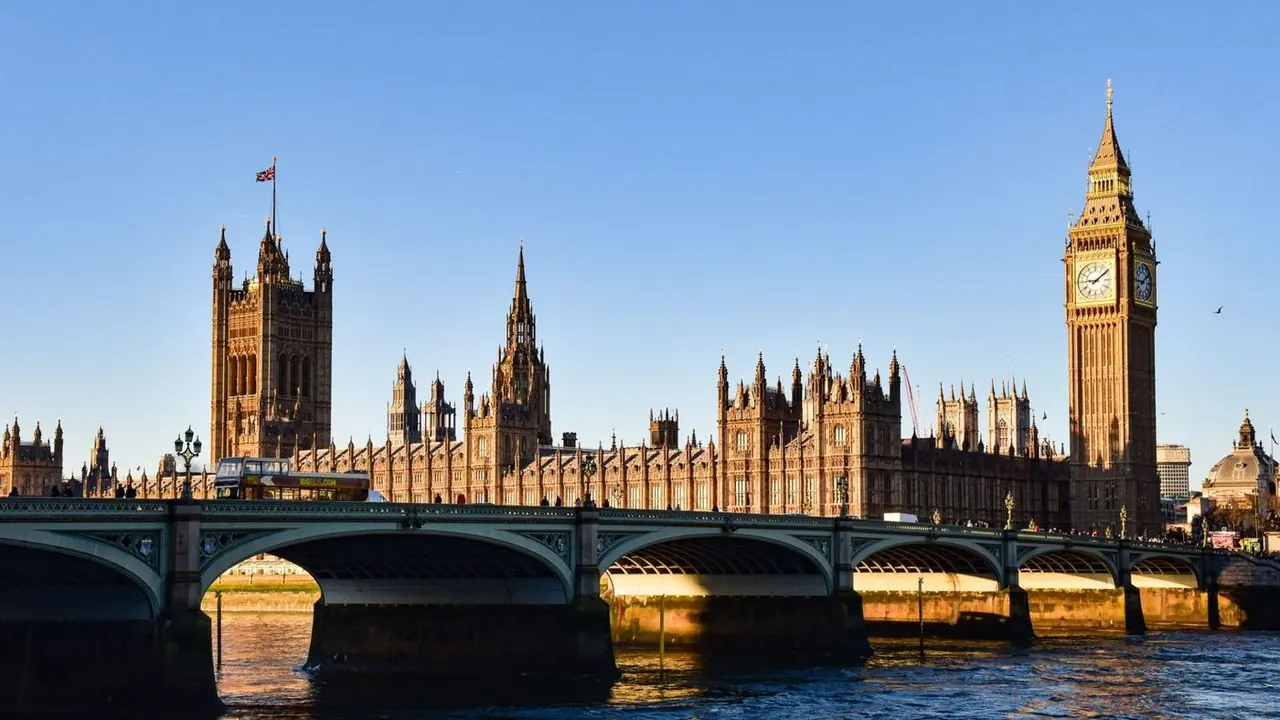
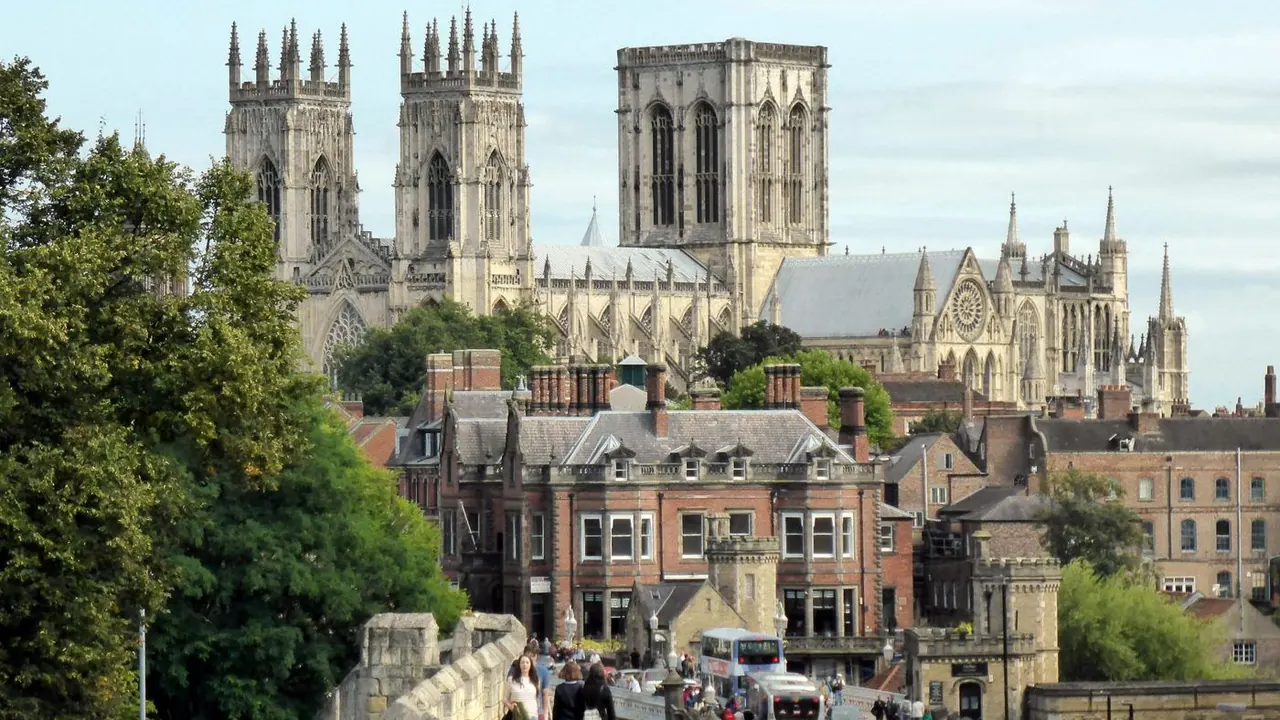
Photos: London by AXP Photography, Pexels License; York by PAUL FARMER, CC BY-SA 2.0, cropped.
London or York?
Our verdict in twelve categories, each scored against the same fixed benchmark cities, and the climate month by month, so you can choose for your trip.
Choose London for
- live music and the arts
- nightlife
- shopping
London suits a traveller who wants depth and range: the great national collections, a play, opera or concert every night, food from every corner of the world and shopping from Savile Row to Columbia Road. It rewards a week or more. Everything except the museums costs more, though most of the museums are free.
Choose York for
- prices
- nature and the outdoors
Pick York for a slower, closer look at English history, where the Minster, the medieval walls and the Roman and Viking remains are all a short walk apart. It costs less than London, a long weekend is enough to see it properly, and it makes a natural base for the Moors, the Dales and the Yorkshire abbeys. Evenings there mean old pubs rather than late clubs.
Scoreboard
Twelve categories on one fixed scale from 0 to 100. The shaded stretch is the gap between the two.
Your match
Pick a travel style or drag the sliders, and both match scores follow your weighting.
Wins on live music and the arts and nightlife with your weighting.
Wins on prices and nature and the outdoors with your weighting.
What matters to you?
Category by category
What the scores mean for a trip.
Beaches & swimming
Neither city is a place for a beach vacation, but London has more for swimmers. The lidos at Brockwell Park and Parliament Hill and the Hampstead Heath ponds give it a real fresh-water swimming culture. Brighton's pebble beach and the sandier Kent shores at Margate and Whitstable are an easy train ride away.
York has nowhere to swim in the city. Its seaside is the North Yorkshire coast, with the sandy bays of Scarborough about an hour away and Filey and Whitby beyond. The North Sea there is colder than the Channel off Brighton, so any dip will be short.
Food & drink
London is far stronger for eating, because its range comes from the communities that live there: Bangladeshi cooking on Brick Lane, Punjabi food in Southall, Caribbean and West African kitchens south of the river. On top of that come a deep fine-dining scene and weekend markets in old yards and railway arches.
York's pleasures are narrower and more traditional: afternoon tea with a fat rascal, Yorkshire pudding with the Sunday roast, cheese and pies at the Shambles Market, and Yorkshire ale in old pubs. It satisfies for a few days, but there is little international cooking, and the streets around the Minster lean towards tourist menus.
Culture & sights
London has far more depth. The British Museum, the National Gallery, the V&A and the two Tates are each worth a day and mostly free, and the landmarks, from the Tower to Wren's St Paul's, need a week just to begin.
York wins on concentration rather than scale. The Minster's medieval glass, a circuit of the walls, Jorvik's excavated Viking street and the abbey ruins in the Museum Gardens show you two thousand years of history in a centre you can cross in twenty minutes.
Nightlife
The gap here is wide. In London you choose a whole district: Soho for late cocktail bars and its long-established gay scene, Shoreditch, Hackney and Dalston for clubs and warehouse parties, and Brixton and Peckham for big venues and rooftop bars.
A night out in York means working your way through centuries-old inns on Micklegate, Stonegate and the riverside, which is a pleasure in itself. Weekends bring stag and hen parties, weeknights end early, and clubbers take the train to Leeds.
Nature & outdoors
The two are broadly level, but the green is of a different kind. London's nature is inside the city: the skyline views from Hampstead Heath, the deer of Richmond Park, Kew and the Thames Path. The gentle Chilterns and the Downs are an hour or so away by train.
York's own green spaces are modest, mostly riverside paths and the open Strays, but wilder country lies close by. There is the heather of the North York Moors, the sea cliffs at Robin Hood's Bay and the limestone scars and waterfalls of the Dales, though most of it is easiest to reach by car.
Day trips
Both are good bases, but London's rail hub reaches further. Oxford, Cambridge, Windsor, Bath, Canterbury and Brighton are all simple train rides, enough for several very different outings in a single week.
York's outings are good too, from Durham's cathedral and spa-town Harrogate by train to Castle Howard and Fountains Abbey by road. More of them, though, depend on a car or a coach tour.
Good for families
London keeps children busy for longer. The dinosaur halls of the Natural History Museum, the Science Museum and the Young V&A are free, and the parks have playgrounds and boating lakes. The zoo in Regent's Park, the London Eye and the theme parks outside the city add more. The drawbacks are long distances and the stairs at many Tube stations.
York is smaller and easier with a buggy, since much of its centre is pedestrianised. The National Railway Museum's locomotives, Jorvik and the walls fill two or three good days, and Scarborough and the bigger attractions are an hour away.
Getting around
London's network does more. The Tube, the Elizabeth line, buses with top-deck views and the Thames riverboats reach nearly everywhere on one contactless payment, though trips across a city this size take time and rush hour is packed.
York needs almost no transport inside the city: the flat centre is easy to walk, and the station is about fifteen minutes from the Minster on foot. The limits start beyond the walls, where buses to the moors and country houses are sparse.
Shopping & style
London is in another class. It has the luxury houses of Bond Street, the flagships of Oxford Street, bespoke tailoring on Savile Row, the historic department stores, and independent shops from Marylebone to Spitalfields and the antiques of Portobello Road.
York is good for an afternoon among the independent boutiques, bookshops and antiques dealers of Stonegate and Petergate, and its Christmas markets are a draw in their own right. Luxury fashion barely features, and the Shambles leans towards souvenirs.
Affordability
York is easier on the wallet, though not cheap by British standards. Staying midweek or just outside the walls cuts costs, pub meals are the best value, and walking everywhere costs nothing.
London is more expensive at almost every turn, from small central hotel rooms to theatre seats and pub rounds. Its saving grace is the free national museums. In York, by contrast, the Minster, Jorvik and the castle museums all charge for entry.
Live music & performing arts
London is one of the world's two great theatre cities. It has the West End, the National Theatre, the Globe and the Royal Court, the Royal Opera House, five major orchestras and the Proms at the Royal Albert Hall, so there is serious choice every night.
York's programme is steady but local: drama and the famous pantomime at the Theatre Royal, touring shows at the Grand Opera House, early music in a medieval church and free choral evensong at the Minster. Its distinctive extra is the periodic revival of the medieval Mystery Plays, performed on wagons in the streets.
Wellness & relaxation
Neither city is a restful retreat, and both send serious bathers out of town, London to Bath and York to Harrogate's Victorian Turkish bath, which is much closer. London has a little more within the city: surviving Turkish baths in Bayswater and Islington, spas in the grand hotels, and cold dips at the lidos and the Hampstead ponds.
York's calm comes from its pace rather than its facilities: early mornings on the walls, the riverside paths and a long afternoon tea, as long as you avoid the packed summer and December weekends.
When should you go?
Pick your month. The climate figures are measured averages, not a forecast.
London in July
York in July
Daytime high, °C
Rainfall in the month, mm
Where the figures come from
York has no rain gauge within 25 km of the centre, so its rainfall comes from a gridded climate dataset read at the city rather than from a gauge further away.
York's sunshine is measured 48 km from the centre, at Leeming.
Temperature and rainfall are climate normals, averaged over the years shown. London: 1992-2020 (sunshine 1991-2020, rainfall 1991-2020) normals, London Weather Centre (1.3 km from centre). York: 1991-2020 normals, Linton-On-Ouse (14.9 km from centre).
Both cities have the cool, damp English climate, so neither works for a beach trip in any month. London is a couple of degrees warmer and clearly sunnier through the summer, reaching about 23°C in July against about 21°C in York. June to September are the comfortable months for long days outdoors in either city. York's summer is also the wetter of the two, and August is its rainiest month after October, so bring a waterproof for the Moors.
Winter is cold and grey in both, with highs of around 7°C in York in December and January and very short, dull days. Late autumn brings the heaviest rain in each city. Spring and early autumn are mild enough for long days on foot, and from April onwards London gets noticeably more sunshine than York.
Which traveller are you?
For a food and nightlife trip, London is the clear choice. You can eat curry on Brick Lane, graze at Borough Market or have Turkish grills in Dalston, then go on to Soho's cocktail bars or a warehouse night in Hackney. York has fine ale houses, but serious clubbing means a train to Leeds.
On a trip on a tight budget, York goes further. Rooms cost less than in central London, the compact centre costs nothing to walk, and the walls, the Museum Gardens and the National Railway Museum are free. London's free museums help, but beds and meals soon add up.
For a short city break, York fits two or three days almost perfectly. The Minster, the Shambles, Jorvik and the walls are all within a twenty-minute walk, so no time goes on transport. In London, a long weekend barely gets you started.
Before you go
| Measure | London | York |
|---|---|---|
| Official language | English | English |
| Currency | Pound Sterling (GBP) | Pound Sterling (GBP) |
| Sockets | G230 V, 50 Hz | G230 V, 50 Hz |
| Driving side | Left | Left |
| Time zone | UTC, UTC+1 in summer | UTC, UTC+1 in summer |
| Emergency number | 112 or 999 | 112 or 999 |
| Elevation | 4 m | 25 m |
| Main airport | London Heathrow Airport (LHR)23 km from centre224 non-stop destinations | Leeds Bradford Airport (LBA)39 km from centre69 non-stop destinations |
| Public holidays this year | 8 days | 8 days |
By the numbers
| Measure | London | York |
|---|---|---|
| City population | 8,799,728 | 208,400 |
| People per km² | 5,598 | 766 |
| Museums within 10 km | 216 | 24 |
| UNESCO World Heritage sites within 50 km | 4 | 2 |
Where else could you go?
Every comparison below shares a destination with this one, so you can follow London or York somewhere new.