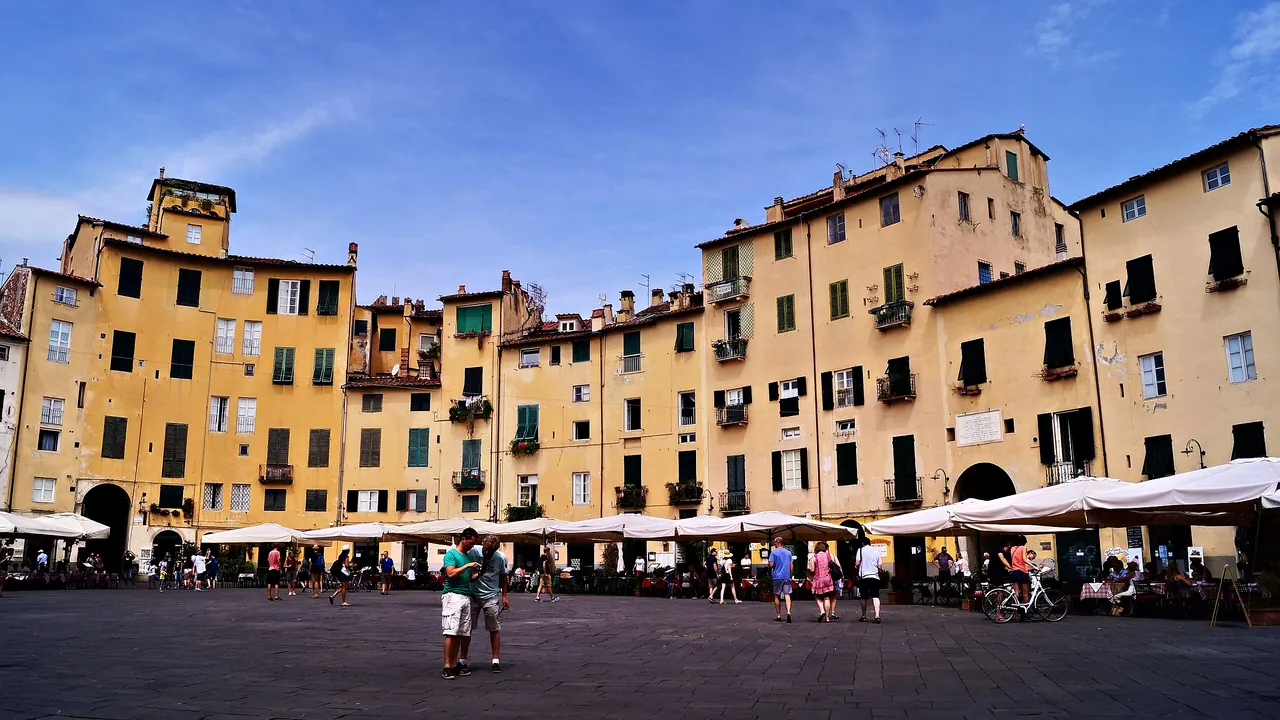
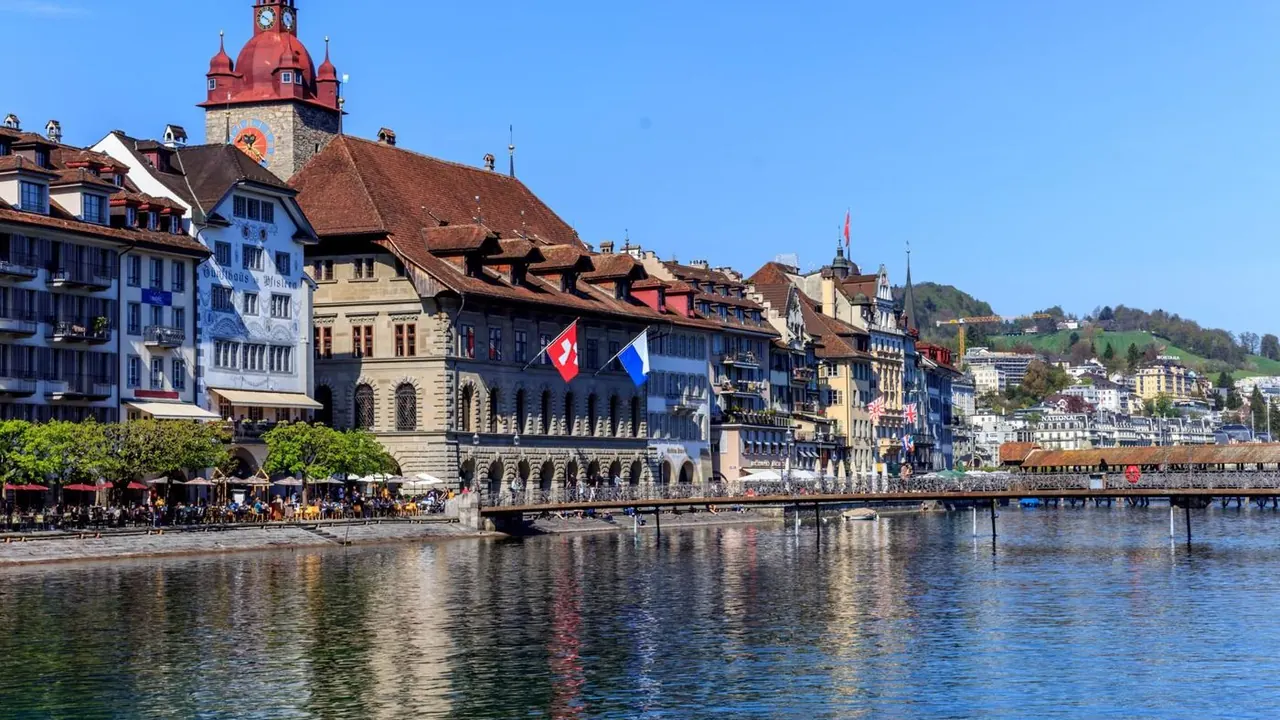
Photos: Lucca by Stefano Sansavini, CC BY-SA 4.0, cropped; Lucerne by ILOVESwitzerland, Pexels License.
Lucca or Lucerne?
Our verdict in twelve categories, each scored against the same fixed benchmark cities, and the climate month by month, so you can choose for your trip.
Choose Lucca for
- prices
- food and drink
- beaches
Lucca suits travellers who want Italy at an easy pace and a fair price: a walled town to cycle round, Romanesque churches, rustic Tuscan cooking and a sandy beach within half an hour. Its greatest strength is as a base, with Pisa, Florence and the Versilia coast all on a short train line, so it works especially well for a week of art, food and the occasional swim.
Choose Lucerne for
- nature and the outdoors
- getting around
- live music and the arts
Choose Lucerne for the mountains and the lake. Pilatus, Rigi and the paddle steamers are on the doorstep, and they run so smoothly that you never need a car. Families and serious classical music lovers do well here too. The trade-off is cost: it is one of the most expensive stops in Europe, and the food and beach life don't come close to Lucca's.
Scoreboard
Twelve categories on one fixed scale from 0 to 100. The shaded stretch is the gap between the two.
Your match
Pick a travel style or drag the sliders, and both match scores follow your weighting.
Wins on prices and food and drink with your weighting.
Wins on nature and the outdoors and getting around with your weighting.
What matters to you?
Category by category
What the scores mean for a trip.
Beaches & swimming
Lucca has a real sea beach. The Versilia coast, from Viareggio up to Forte dei Marmi, offers wide, gently shelving sand, warm water through summer and wilder dunes at the Lecciona, all reachable as an easy afternoon trip.
Lucerne's swimming is a lake affair, from the Lido, the wooden lake baths and the lawns at Ufschötti. The water is clean, but it is cooler, there is no sand, and the season lasts barely two months.
Food & drink
Lucca eats noticeably better. Spelt soup, tordelli in ragù, chestnut dishes, cecina from the bakery and the local olive oil and wines give it a distinct provincial cuisine, served in fairly priced family trattorias.
Lucerne's tables offer Chügelipastete, fondue, rösti and lake perch. The quality is good, but the menus are narrow and expensive, and many of them are aimed at tour groups near the Chapel Bridge. Neither city has much range, but Lucca's limited choices are a great deal more rewarding.
Culture & sights
Lucca has a little more depth. The entire walled town is the sight, with complete Renaissance ramparts, the carved façade of San Michele, San Frediano's mosaic, the cathedral with Ilaria del Carretto's tomb and the oval amphitheatre piazza.
Lucerne has fewer landmarks, but they are iconic: the Chapel Bridge, the Musegg towers and the Lion Monument. Its strongest single collection is the Rosengart, with its Picasso and Klee. In both cities, two days is enough to see the main sights.
Nightlife
Neither city is for a big night out, but Lucerne has a bit more going on after dark. It has cocktail bars and a small club scene in the Neustadt, student weekends, and the whole town stays up until dawn at Fasnacht.
Lucca's evenings are an aperitivo in Piazza San Michele, a long dinner and a stroll on the walls, and most streets are quiet by midnight. In summer, anyone who wants to dance has to go to the Versilia beach clubs and arrange a late ride back.
Nature & outdoors
Lucerne's landscape is in a different league. A branching lake surrounded by peaks, cogwheel trains up Pilatus and Rigi, glacier snow on Titlis and steamers between trailheads make hiking simple and spectacular, and winter adds skiing.
Lucca's countryside is gentler: olive groves, villa gardens and the 4km ring of the walls for cycling. The marble peaks of the Apuan Alps and the Garfagnana chestnut woods are within an hour, but they are more work to reach.
Day trips
Lucca is the stronger base. Pisa is about half an hour away by train, and Florence just over an hour. Pistoia, the Lucchese villas, Pietrasanta's sculpture studios and the Versilia coast are all within easy reach, and the Cinque Terre and San Gimignano are possible with an early start.
Lucerne offers fine outings too: Bern, Basel and Zurich are each under an hour away, and boats run to the Rütli meadow and the William Tell country. Even so, Tuscany packs more famous destinations into less travel.
Good for families
Lucerne is a little better with children. The Swiss Museum of Transport can fill a whole day, and steamers, cogwheel trains and the summer toboggan run on Pilatus turn getting around into the fun part. Expect those trips to depend on the weather and to add up in cost.
Lucca's main draws for children are cycling the walls on a family quadricycle, Pinocchio Park at Collodi and the nearby beaches. Beyond those, most of what there is to see is churches and palaces.
Getting around
Both centres are flat and walkable, but Lucerne's transport extends all the way into the scenery. Station, boat piers and Old Town are all side by side, and integrated tickets cover steamers, mountain railways and cable cars, so a car is never needed.
Inside its walls, Lucca is excellent on foot or by bike, and trains run frequently to Pisa and Florence. Buses to the villas and hill villages are sparse, though, so a car helps for days out into the countryside.
Shopping & style
The two are about equal, but they shop for different things. Lucerne is all about Swiss watches and jewellery on Schwanenplatz, plus chocolate and army knives. Lucca offers fashion behind old Liberty-style shopfronts on Via Fillungo, delicatessens and one of Italy's oldest monthly antiques markets. Neither has much depth in fashion or design.
Affordability
Lucca is far easier on the budget, though it is priced like central Italy rather than a bargain: noticeably cheaper than Florence, with modest entry charges at the sights that charge at all. Most of the bill is the room. There are few hotels inside the walls, and they fill up in summer and around the big festivals, so a B&B just outside one of the gates, a short walk or bike ride from the centre, usually gives better value.
In Lucerne, costs pile up over the day. A central hotel is a heavy expense before you have left the room, especially in summer or during the music festival, and each mountain excursion adds its own steep fare on top. A Swiss travel pass takes the edge off by covering the lake boats and some of the trips. Even a carefully planned stay still costs far more than the same number of days in Lucca.
Live music & performing arts
Lucerne has the more distinguished classical stage. The Lucerne Festival brings leading orchestras to Jean Nouvel's lakefront hall, famous for its acoustics, which also has a year-round programme and its own symphony orchestra.
Lucca's music is centred on Puccini: short recitals of his arias in a central church through most of the year, the Teatro del Giglio's opera season, and open-air opera by the lake at Torre del Lago in summer. In July, Piazza Napoleone hosts big outdoor concerts.
Wellness & relaxation
Neither city has baths of its own, so the difference is where you go to soak. From Lucca, the train reaches the belle époque spas of Montecatini in half an hour, and the cave pools of Monsummano and the steam grottoes of Bagni di Lucca are close by. From Lucerne, the choice is hotel spas or a trip by boat and cogwheel train to Mario Botta's mineral bath on the Rigi, with its mountain view.
The calm differs in kind too. In Lucca it comes from car-free streets, long lunches and an evening walk on the shaded walls. In Lucerne it comes from lakeside promenades, slow steamer afternoons and the wooden lake baths in summer.
When should you go?
Pick your month. The climate figures are measured averages, not a forecast.
Lucca in July
Lucerne in July
Daytime high, °C
Rainfall in the month, mm
Where the figures come from
Lucerne has no rain gauge within 25 km of the centre, so its rainfall comes from a gridded climate dataset read at the city rather than from a gauge further away.
Lucerne's sunshine is measured 42 km from the centre, at Zurich Town / Ville..
Temperature and rainfall are climate normals, averaged over the years shown. Lucca: 1991-2020 normals, Pisa / S. Giusto (21.4 km from centre). Lucerne: 2005-2025 (sunshine 1991-2020, rainfall 1991-2020) normals, Emmen (4.2 km from centre).
Lucca has the warmer, drier summer. From June to early September it is properly hot, around 30°C in July and August, with long sunny days and a sea near 25°C that is comfortable for swimming. That heat makes midday walking on the plain tiring, so May, June and late September suit sightseeing best. The rain comes in autumn, and October and November are the wettest months at around 130mm. Winters are mild but grey.
Lucerne's pattern is almost the reverse. Summer is gentle, in the low to mid twenties, and good for hiking. It is also the sunniest season, but the wettest too, with heavy showers that can bring around 140mm a month in July and August. Winter is cold, around 4°C, and December is the gloomiest month in the city, though the mountains then have snow for skiing. For walking around Lucerne and taking boats on the lake, June to September works best. In Lucca, spring and early autumn are more comfortable.
Which traveller are you?
For a beach and sun trip, Lucca is the clear pick. The sandy Versilia shore is a short train ride away and the sea warms up nicely in summer. Lucerne's lake lawns are lovely but cool, and the season is brief.
On an outdoors trip, Lucerne wins easily. Cogwheel railways climb Pilatus and Rigi, Titlis keeps its snow all year, and steamers link the hiking routes. Lucca has the Apuan Alps within reach, but you need a car and more planning.
On a trip with a tight budget, Lucca is the only realistic option of the two. It has fairly priced trattorias, cheap regional trains, and free walls and churches. In Lucerne, hotels, meals and mountain transport all cost a lot, and no amount of picnicking makes it cheap.
Before you go
| Measure | Lucca | Lucerne |
|---|---|---|
| Official language | Italian | French, German, Italian, Romansh |
| Currency | Euro (EUR) | Swiss Franc (CHF) |
| Sockets | CFL230 V, 50 Hz | CJ230 V, 50 Hz |
| Driving side | Right | Right |
| Time zone | UTC+1, UTC+2 in summer | UTC+1, UTC+2 in summer |
| Emergency number | 112 | 112 |
| Elevation | 19 m | 436 m |
| Main airport | Pisa International Airport (PSA)21 km from centre82 non-stop destinations | Zürich Airport (ZRH)49 km from centre226 non-stop destinations |
| Public holidays this year | 13 days | 12 days |
By the numbers
| Measure | Lucca | Lucerne |
|---|---|---|
| City population | 88,798 | 86,234 |
| People per km² | 478 | 2,963 |
| Museums within 10 km | 20 | 14 |
| UNESCO World Heritage sites within 50 km | 4 | 1 |
| Swim season, months above 21 °C | 4 months | - |
Where else could you go?
Every comparison below shares a destination with this one, so you can follow Lucca or Lucerne somewhere new.