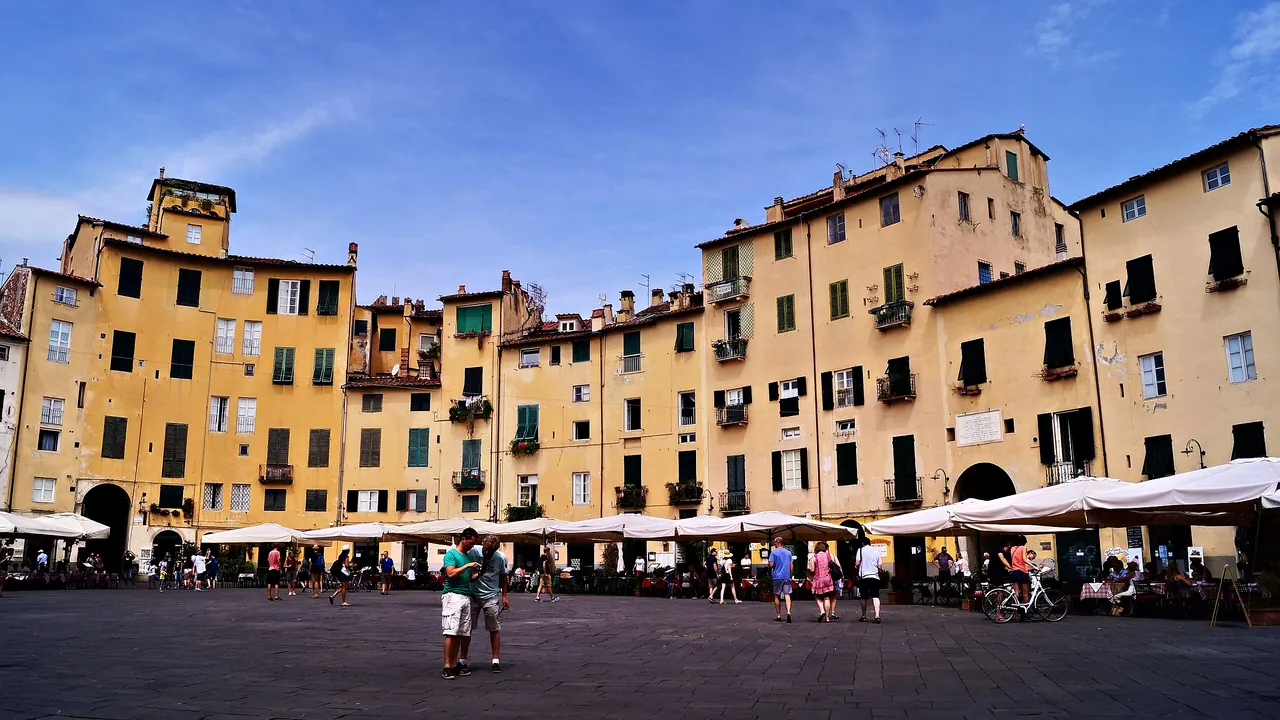
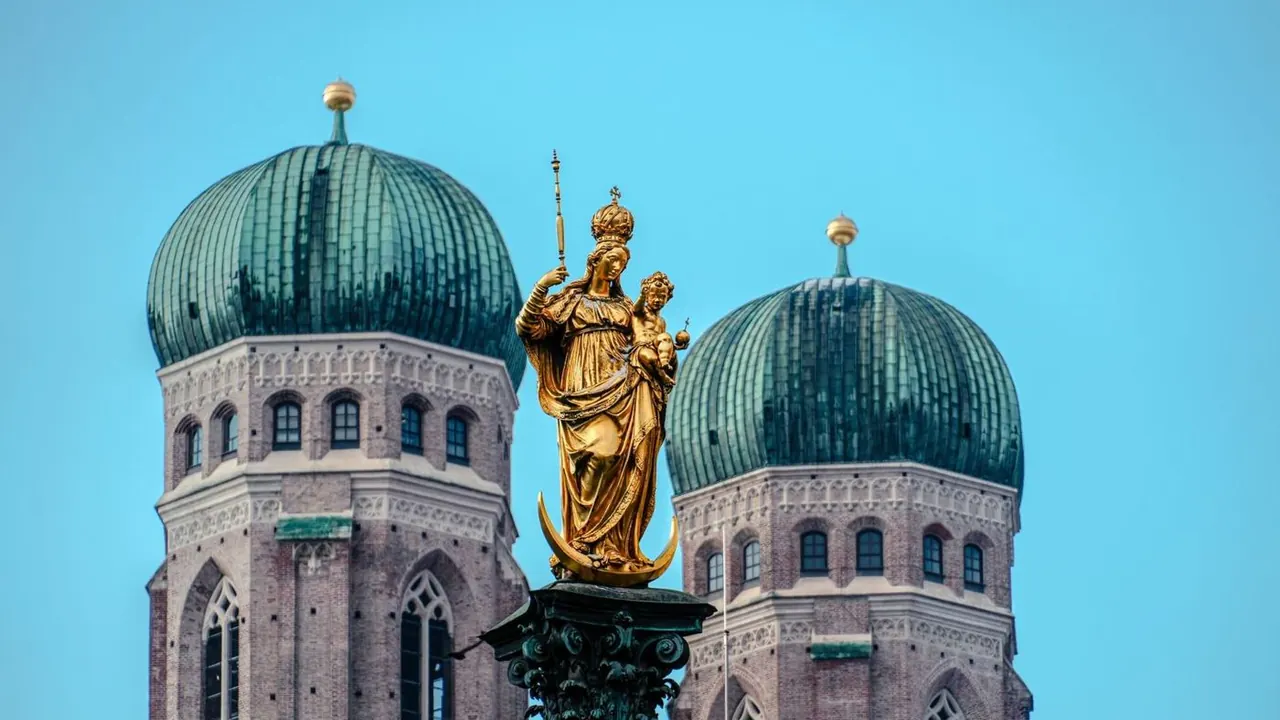
Photos: Lucca by Stefano Sansavini, CC BY-SA 4.0, cropped; Munich by 0xd1ma, Pexels License.
Lucca or Munich?
Our verdict in twelve categories, each scored against the same fixed benchmark cities, and the climate month by month, so you can choose for your trip.
Choose Lucca for
- beaches
- prices
- day trips
Lucca suits a slower and cheaper Tuscan trip: a walled town you cross by bike, Romanesque churches, long trattoria lunches and a train to the sand at Viareggio when the afternoon gets hot. It works best as a base, with Pisa, Florence and the villa gardens close by, for travellers who are happy to be in bed early.
Choose Munich for
- nightlife
- shopping
- live music and the arts
Choose Munich for a bigger city with more to do indoors and after dark. The Pinakotheks, the State Opera and its orchestras give it a depth Lucca cannot match, beer gardens and Glockenbach bars keep the evenings going, and the Alps and lakes are close enough for hiking or skiing. Families and shoppers are better served there too, if the higher bill is acceptable.
Scoreboard
Twelve categories on one fixed scale from 0 to 100. The shaded stretch is the gap between the two.
Your match
Pick a travel style or drag the sliders, and both match scores follow your weighting.
Wins on beaches and prices with your weighting.
Wins on nightlife and shopping with your weighting.
What matters to you?
Category by category
What the scores mean for a trip.
Beaches & swimming
Lucca is the one for sand and sea, though it is inland too. Regional trains reach Viareggio in about 25 minutes, and from there a broad, gently shelving shore runs north to Forte dei Marmi, with rows of umbrellas at the beach clubs or the wilder, pine-backed Lecciona dunes. By high summer the water is warm enough for long, unhurried swims.
Munich's swimming is freshwater: the gravel banks of the Isar at the Flaucher, and the Starnberger See and Ammersee by S-Bahn. The lakes are clear and pleasant on a hot afternoon, but their alpine-fed water stays noticeably cooler than the Versilia sea. They are a break in a city trip, not a reason to make one.
Food & drink
Both cities eat hearty regional food, and the difference lies mostly in what is on the plate. Lucca leans on farro soup, tordelli in ragù, chickpea cecina and chestnut flour, with mild local olive oil and Montecarlo wines, served in family trattorias whose menus start to repeat after a few days.
Munich's cooking is built around beer: roast pork with crackling, white sausage before noon and Obatzda under the chestnut trees, with the Viktualienmarkt for grazing. A tier of starred restaurants and some good Italian, Turkish and Balkan cooking give it a little more variety over a longer stay.
Culture & sights
Lucca's appeal is the town as a whole: complete Renaissance walls, the stacked arcades of San Michele in Foro, the oval Piazza dell'Anfiteatro and the tomb of Ilaria del Carretto in the cathedral. Its museums are modest, and two unhurried days cover it.
Munich has far more to fill a week. The Kunstareal alone holds the Alte Pinakothek's old masters, the Blue Rider painters at the Lenbachhaus and classical sculpture at the Glyptothek, before you reach the Residenz, Nymphenburg and the Deutsches Museum. Its old town, though, was largely rebuilt after the war and lacks Lucca's intact medieval fabric.
Nightlife
Lucca is a town for early nights: an aperitivo in Piazza San Michele, a long dinner and a stroll on the walls, with the centre calm by midnight. Anyone who wants to dance has to reach the Versilia coast clubs and get back late by car or taxi.
Munich offers a proper night out, starting in a beer hall and moving on to the cocktail and gay bars of Glockenbach and Gärtnerplatz, student pubs in Schwabing, or techno clubs that keep going until morning at weekends. It stays orderly rather than wild, except during Oktoberfest.
Nature & outdoors
Both have mountains about an hour away, but Munich's reach is greater. Trains run to Garmisch-Partenkirchen, the Zugspitze and Tegernsee for alpine hiking in summer and skiing in winter, and within the city the vast English Garden has surfers riding the Eisbach wave.
Lucca's outdoors is gentler: the 4km tree-lined ring of the walls, cycle paths along the Serchio and olive-covered hills. The Apuan Alps add sharp marble peaks and serious hiking, and Lake Massaciuccoli suits birdwatchers, but for winter sports Munich is the base.
Day trips
Both make excellent bases, and the difference lies in how the outings are laid out. From Lucca the great names sit close together on one railway line: Pisa's Campo dei Miracoli about half an hour away, Florence a little over an hour, with Pistoia and the old spa town of Montecatini on the same line. The villa gardens of Marlia and Collodi's Villa Garzoni are nearer still, and with an early start the Cinque Terre or San Gimignano fit into a long day.
Munich's excursions fan out much further, from Augsburg's Fuggerei at half an hour to Nuremberg's castle, Regensburg on the Danube, and Salzburg and Innsbruck over the Austrian border. The royal castles are the classic outing, with Neuschwanstein about two hours away and Herrenchiemsee on its island in the Chiemsee, while the painted villages of Oberammergau and Mittenwald make gentler days.
Good for families
Lucca is calm and easy with children, with the walls to ride by bike or family quadricycle, the Pinocchio Park at Collodi nearby and beaches under half an hour away. Beyond those, its sights are mostly churches and palaces.
Munich has much more made for young visitors: the Hellabrunn zoo along the Isar meadows, the hands-on sections of the Deutsches Museum, the aquarium in the Olympic Park and beer gardens with playgrounds. Pushchair-friendly transport and big green parks make a longer stay with small children easier.
Getting around
Inside its walls Lucca is a pleasure to cross on foot or by bike, and trains to Pisa, Florence and Viareggio leave from just outside the southern gate. The trouble starts in the countryside, where sparse buses make a car the simpler way to reach villas and hill villages.
Munich pairs a walkable, pedestrianised core with one integrated network of U-Bahn, S-Bahn, trams and buses that reaches the museums, Nymphenburg, the airport and the lakes. Most of its day trips run on regional trains too, so a car is rarely needed at all.
Shopping & style
Lucca's shopping is small-town: fashion and jewellery behind old Liberty shopfronts on Via Fillungo, delicatessens for olive oil and buccellato, and a monthly antiques market around the cathedral that is the real draw.
Munich has the depth Lucca lacks, from luxury houses on Maximilianstrasse to department stores along Kaufingerstrasse and independent boutiques in Glockenbach. Tracht tailors offer a purchase you will not find elsewhere, and the Christmas markets add craft stalls in December.
Affordability
Lucca is the easier of the two on the wallet. Trattoria meals and regional trains are fairly priced, the walls and many churches cost nothing, and staying just outside the walls keeps rooms reasonable, though summer and festival dates fill up.
Munich is Germany's most expensive city, and hotels are where it hurts, especially during Oktoberfest and the trade fairs. Beer-garden picnics, free parks and lakes and token Sunday museum entry help, but the overall bill runs well above Lucca's.
Live music & performing arts
Lucca's music revolves around Puccini: regular recitals of his arias in a central church, a season at the Teatro del Giglio, and open-air opera by the lake at Torre del Lago in summer. Beyond these, the scene is small.
Munich is a major music city. The Bavarian State Opera at the National Theatre, three orchestras of real standing, chamber opera in the rococo Cuvilliés Theatre and German-language drama at the Residenztheater and Kammerspiele give a far wider choice on any given night.
Wellness & relaxation
Lucca has no baths of its own, so relaxing there means traffic-free lanes and slow lunches, and a spa day means a train to Montecatini Terme or the warm cave pools of Monsummano.
Munich has a bathing culture inside the city: the Art Nouveau Müller'sches Volksbad, German-style public saunas with infusion rituals, and the huge thermal complex at Erding about forty minutes out. If you want proper spa time on your vacation, it offers more without leaving town.
When should you go?
Pick your month. The climate figures are measured averages, not a forecast.
Lucca in July
Munich in July
Daytime high, °C
Rainfall in the month, mm
Temperature and rainfall are climate normals, averaged over the years shown. Lucca: 1991-2020 normals, Pisa / S. Giusto (21.4 km from centre). Munich: 1991-2020 normals, München (1.9 km from centre).
Lucca has the longer warm season. From June to September the Versilia sea is good for swimming and reaches about 25°C in July and August, but those months also bring 30°C afternoons on the plain, which makes midday sightseeing hard work. May, June and late September are the best months for walking the walls. Rain sets in during autumn, with October and November the wettest months at up to 132mm, while winters stay mild.
Munich is cooler, and its weather runs the other way: summer is the wettest season, with around 120mm a month from May to August in showers and storms, though the warmth stays comfortable for walking. Winter is properly cold, with highs near 4°C in January and little sunshine. Lucca is the sunnier of the two through most of the year.
Which traveller are you?
For a beach and sun trip, Lucca is the clear pick. Sandy Versilia beaches are under half an hour away by train and the sea warms properly in summer, so a morning among the churches can end with a swim. Munich offers only cool alpine lakes.
On a culture and arts trip, Munich goes further. The Alte Pinakothek, the Residenz and the Deutsches Museum fill several days, and evenings can go to the Bavarian State Opera or a top orchestra. Lucca's churches and Puccini recitals take about two days.
For a food and nightlife trip, Munich has more to offer after dinner. Both cities eat heartily and regionally, but Munich adds beer halls, cocktail bars around Gärtnerplatz and clubs that run until morning, while Lucca winds down to an aperitivo and a quiet walk.
Before you go
| Measure | Lucca | Munich |
|---|---|---|
| Official language | Italian | German |
| Currency | Euro (EUR) | Euro (EUR) |
| Sockets | CFL230 V, 50 Hz | CF230 V, 50 Hz |
| Driving side | Right | Right |
| Time zone | UTC+1, UTC+2 in summer | UTC+1, UTC+2 in summer |
| Emergency number | 112 | 112 |
| Elevation | 19 m | 519 m |
| Main airport | Pisa International Airport (PSA)21 km from centre82 non-stop destinations | Munich Airport (MUC)29 km from centre210 non-stop destinations |
| Public holidays this year | 13 days | 12 days |
By the numbers
| Measure | Lucca | Munich |
|---|---|---|
| City population | 88,798 | 1,505,036 |
| People per km² | 478 | 4,844 |
| Museums within 10 km | 20 | 75 |
| UNESCO World Heritage sites within 50 km | 4 | 1 |
| Swim season, months above 21 °C | 4 months | - |
Where else could you go?
Every comparison below shares a destination with this one, so you can follow Lucca or Munich somewhere new.