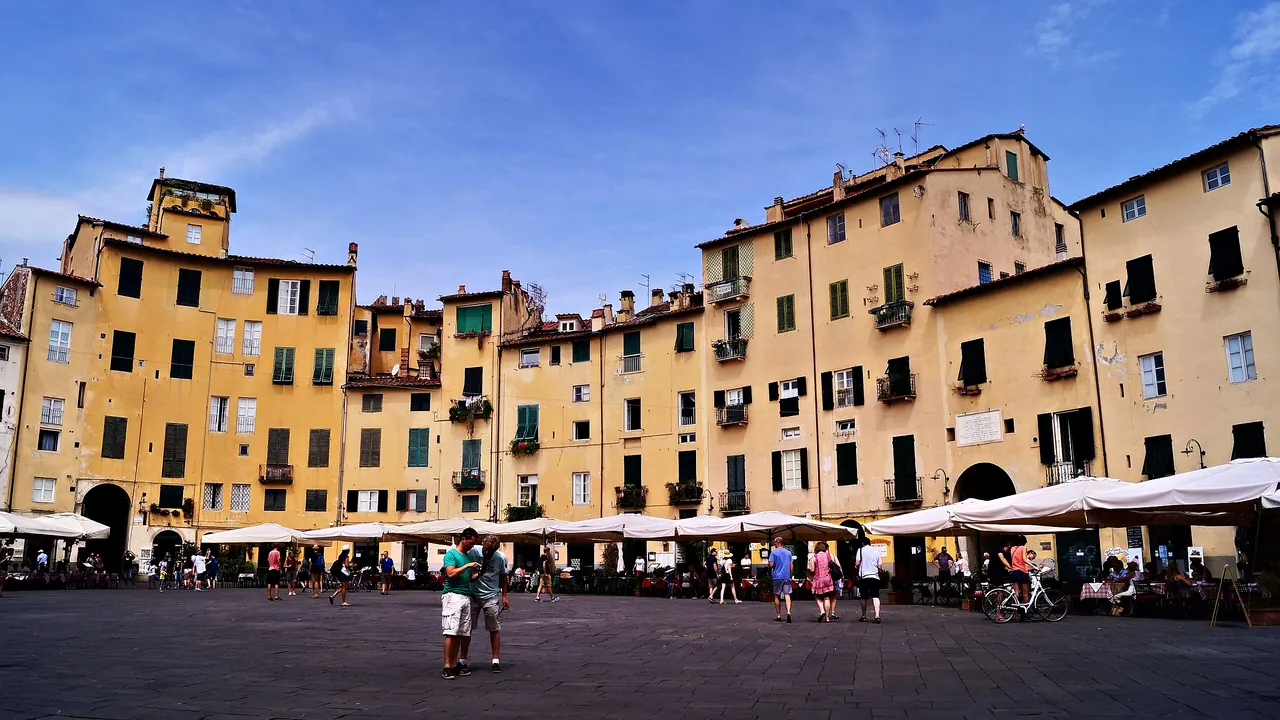
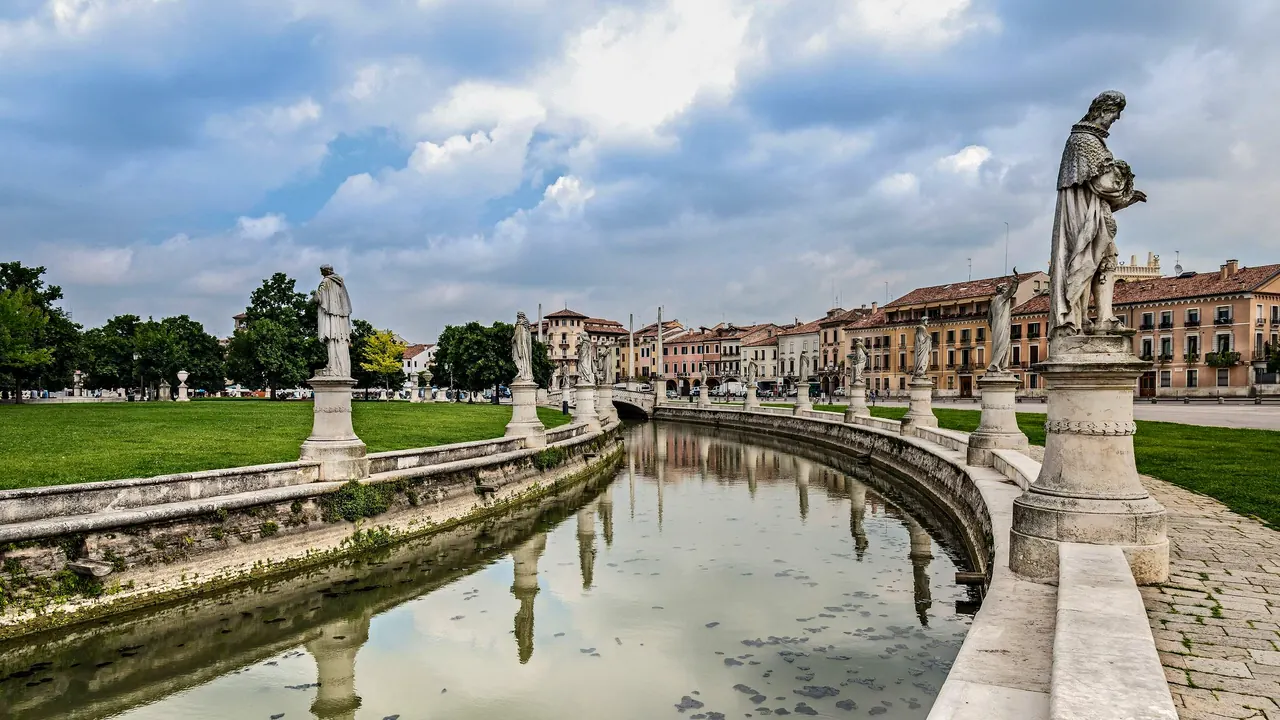
Photos: Lucca by Stefano Sansavini, CC BY-SA 4.0, cropped; Padua by Didier Descouens, CC BY-SA 4.0, cropped.
Lucca or Padua?
Our verdict in twelve categories, each scored against the same fixed benchmark cities, and the climate month by month, so you can choose for your trip.
Choose Lucca for
- beaches
- live music and the arts
- families
Lucca is the better pick for a slower, outdoor-leaning trip. The sandy Versilia beaches are a short train ride away, the marble peaks of the Apuan Alps rise an hour to the north, and children can cycle the tree-lined walls. Evenings are quiet, but Puccini recitals and summer opera by the lake at Torre del Lago fill them well.
Choose Padua for
- nightlife
- wellness
- culture and sights
If art and evenings out matter more than swimming, choose Padua. Giotto's Scrovegni Chapel and the city's fresco cycles make for weightier sightseeing, and in term time the student squares keep the aperitivo going later. The thermal pools of Abano Terme are on the doorstep, and rooms cost a little less, with Venice under half an hour by train.
Scoreboard
Twelve categories on one fixed scale from 0 to 100. The shaded stretch is the gap between the two.
Your match
Pick a travel style or drag the sliders, and both match scores follow your weighting.
Too close to call, level with your weighting
Wins on beaches and live music and the arts with your weighting.
Wins on nightlife and wellness with your weighting.
What matters to you?
Category by category
What the scores mean for a trip.
Beaches & swimming
Lucca has a real beach coast within easy reach. The Versilia shore begins at Viareggio, about 25 minutes by train, and broad sandy beaches run north to Forte dei Marmi. The pine-backed dunes of the Lecciona give you a wilder option, so an afternoon swim after a morning in town works well.
Padua's sea is an hour away at Sottomarina or the Lido of Venice. The Adriatic there is shallow and calm, which is fine for toddlers, but the beaches are long rows of umbrellas with nothing scenic behind them. It works as an occasional day out, not as a reason to stay.
Food & drink
The two eat about equally well, in different regional styles. Lucca's cooking is rustic Tuscan: Garfagnana spelt soup, tordelli in ragù, chickpea cecina from bakery counters, anise-scented buccellato and mild olive oil from its own hills, mostly eaten in family trattorias inside the walls.
Padua's cooking is Venetian, with bigoli in duck sauce, baccalà and spring-pea risotto, and the twin morning markets under the Palazzo della Ragione are a sight in themselves. Its standing spritz ritual and the grand old Caffè Pedrocchi give it more of a drinking culture. Neither city goes far beyond its local cooking.
Culture & sights
Padua has the more important art. Giotto's frescoes in the Scrovegni Chapel changed European painting, and the UNESCO-listed fresco cycles, Donatello's work at the Basilica of Saint Anthony, the world's oldest permanent anatomical theatre and the 1545 botanical garden add real depth. Book the Scrovegni slot ahead.
Lucca's great sight is the whole town: walls that survive complete, the carved Romanesque façade of San Michele, the tomb of Ilaria del Carretto in the cathedral and the oval amphitheatre piazza. Its museums are modest, so the pleasure lies in walking the streets rather than in any single masterpiece.
Nightlife
Padua is the livelier of the two after dark, thanks to its university. In term time, students and locals crowd Piazza delle Erbe and Piazza dei Signori over spritz until late, and wine bars fill the lanes of the old ghetto. Clubs are few, and the city empties in the summer breaks.
Lucca winds down much earlier. An aperitivo in Piazza San Michele, dinner and a stroll on the walls is the usual evening, and the centre is quiet by midnight. Anyone who wants to dance in summer has to make the late trip to the Versilia coast.
Nature & outdoors
Lucca has the more dramatic country nearby. The Apuan Alps, with sharp limestone peaks and white marble quarries, are about an hour away for serious hiking, and the Garfagnana adds chestnut and beech forest. Closer in, there are the 4km ring of the walls, the Serchio cycle paths and the birdlife of Lake Massaciuccoli.
Padua sits on a flat plain. Its best outing is the Euganean Hills, volcanic cones about 15km away with trails and vineyards, along with level towpath rides beside the Brenta. Real mountain walking means driving about an hour and a half to the pre-Alps.
Day trips
Both are excellent bases, but the trips are different. Padua's strength is fast main-line trains to famous cities: Venice in under half an hour, Vicenza in a quarter of an hour, and Verona, Bologna and Ferrara within about an hour. The Brenta villas and the walled towns around the Euganean Hills fill the quieter days.
Lucca puts Pisa half an hour away and Florence just over an hour, but its range is more mixed. You get coast and countryside as well: the marble workshops of Pietrasanta, the villa gardens at Marlia and Collodi, the Garfagnana villages, and with an early start the Cinque Terre.
Good for families
Lucca is the better choice with children. Riding the walls by bike or family quadricycle is a proper outing, the Pinocchio Park at Collodi is about 20 minutes away, and the beach is close enough for afternoons. Lucca Comics & Games in autumn is a big draw for teenagers.
Padua is safe and flat, and children are welcome everywhere, but beyond running around Prato della Valle and the botanical glasshouses there is little aimed at them. Gardaland and Lake Garda are well over an hour away.
Getting around
Both have compact, flat, largely traffic-free centres, so getting around is easy in either. Lucca is a cycling town, with bike rentals at every gate, but buses to the villas and hill villages are sparse, so a car helps for countryside days.
Padua has a tram from the station to Prato della Valle, and its arcades keep you dry in rain and shaded in sun. Being on main lines in every direction, it is also easier to explore without a car.
Shopping & style
Neither is a shopping destination, and both offer much the same in a different setting. Lucca has the winding Via Fillungo with its Liberty-style shopfronts, paper shops, and one of Italy's oldest antiques markets spreading through the streets around the cathedral each month.
Padua's arcaded streets add student bookshops and a few independent boutiques. Its daily markets are the better place for food to take home, and its own monthly antiques market fills the huge oval of Prato della Valle.
Affordability
Padua is the easier city on the wallet. Its hotels are reasonably priced, and many visitors sleep there and spend their days in Venice. A standing spritz and market produce cost little, though rooms get dearer during trade fairs and graduation season.
Lucca is cheaper than Florence, and the walls and many churches are free, but it has few hotels inside the walls, and they fill up in summer and at festival time. Staying just outside the gates usually saves money.
Live music & performing arts
Lucca has more to offer here, almost entirely thanks to Puccini. Recitals of his arias in a central church run for most of the year, the Teatro del Giglio has an opera season, and summer brings the open-air Puccini Festival at Torre del Lago and big concerts in Piazza Napoleone.
Padua's programme is smaller: prose theatre and some opera at Teatro Verdi, and chamber concerts in the frescoed Sala dei Giganti and the Basilica. For major opera, people travel to the Fenice in Venice or the Arena in Verona.
Wellness & relaxation
Padua wins clearly for spa-goers. Abano Terme and Montegrotto Terme lie about 12km away, where mineral water rises at up to 87°C and mud has been used for treatments since Roman times. Many spa hotels take day visitors, so you can have a thermal soak after a morning's sightseeing.
Lucca has no baths of its own. Montecatini's belle époque spas, Monsummano's cave pools and the steam grottoes of Bagni di Lucca all make a separate day out. In town, relaxing means quiet streets and a golden-hour walk along the walls.
When should you go?
Pick your month. The climate figures are measured averages, not a forecast.
Lucca in July
Padua in July
Daytime high, °C
Rainfall in the month, mm
Where the figures come from
Padua's temperatures are measured 35 km from the centre, at Treviso / Istrana.
Padua has no rain gauge within 25 km of the centre, so its rainfall comes from a gridded climate dataset read at the city rather than from a gauge further away.
Padua's sunshine is measured 36 km from the centre, at Treviso / S. Angelo.
Temperature and rainfall are climate normals, averaged over the years shown. Lucca: 1991-2020 normals, Pisa / S. Giusto (21.4 km from centre). Padua: 1991-2020 normals, Treviso / Istrana (35.4 km from centre).
Lucca has the drier, sunnier summer. July and August reach about 30°C with little rain, and the sea off Versilia warms to around 25°C, so June to early September is beach season. The weather turns sharply in autumn: October and November are the wettest months at around 130mm each, while winters stay fairly mild for strolling inside the walls. For sightseeing on foot, May, June and late September are the most comfortable months.
Padua has colder winters, with January highs near 8°C and fog often lying over the plain. Its rain is spread more evenly through the year, so late spring is wetter than in Lucca. Summers peak around 31°C and feel more humid, with less sunshine than Lucca gets, so the city is at its best in April and May and again from mid-September into October.
Which traveller are you?
On a beach and sun trip, Lucca is clearly the one to choose. Long, gently shelving Versilia sands start about 25 minutes away by train, with wild dunes at the Lecciona as well, while Padua's flat Adriatic strips are an hour away.
For a relaxing and wellness trip, Padua has the advantage. Abano and Montegrotto, one of Europe's largest thermal districts, sit about 12km away with day-visitor pools and mud treatments. From Lucca a proper soak means a day out to Montecatini or Bagni di Lucca.
On a family trip with children, Lucca makes the days easier to fill. Children can ride bikes or a quadricycle around the walls and climb the tree-topped Torre Guinigi, and Pinocchio Park and the beach are both close. Padua offers little more than open squares and glasshouses.
Before you go
| Measure | Lucca | Padua |
|---|---|---|
| Official language | Italian | Italian |
| Currency | Euro (EUR) | Euro (EUR) |
| Sockets | CFL230 V, 50 Hz | CFL230 V, 50 Hz |
| Driving side | Right | Right |
| Time zone | UTC+1, UTC+2 in summer | UTC+1, UTC+2 in summer |
| Emergency number | 112 | 112 |
| Elevation | 19 m | 12 m |
| Main airport | Pisa International Airport (PSA)21 km from centre82 non-stop destinations | Venice Marco Polo Airport (VCE)39 km from centre103 non-stop destinations |
| Public holidays this year | 13 days | 13 days |
By the numbers
| Measure | Lucca | Padua |
|---|---|---|
| City population | 88,798 | 206,496 |
| People per km² | 478 | 2,220 |
| Museums within 10 km | 20 | 29 |
| UNESCO World Heritage sites within 50 km | 4 | 5 |
| Swim season, months above 21 °C | 4 months | 4 months |
Where else could you go?
Every comparison below shares a destination with this one, so you can follow Lucca or Padua somewhere new.