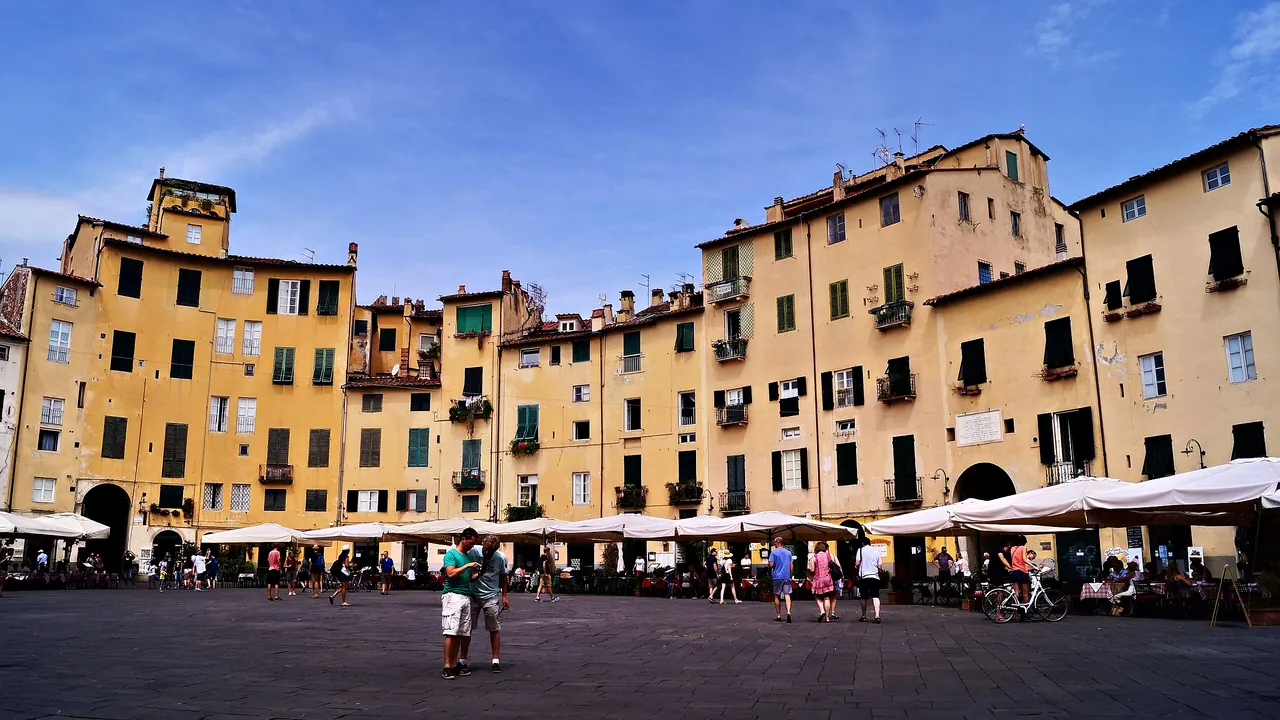
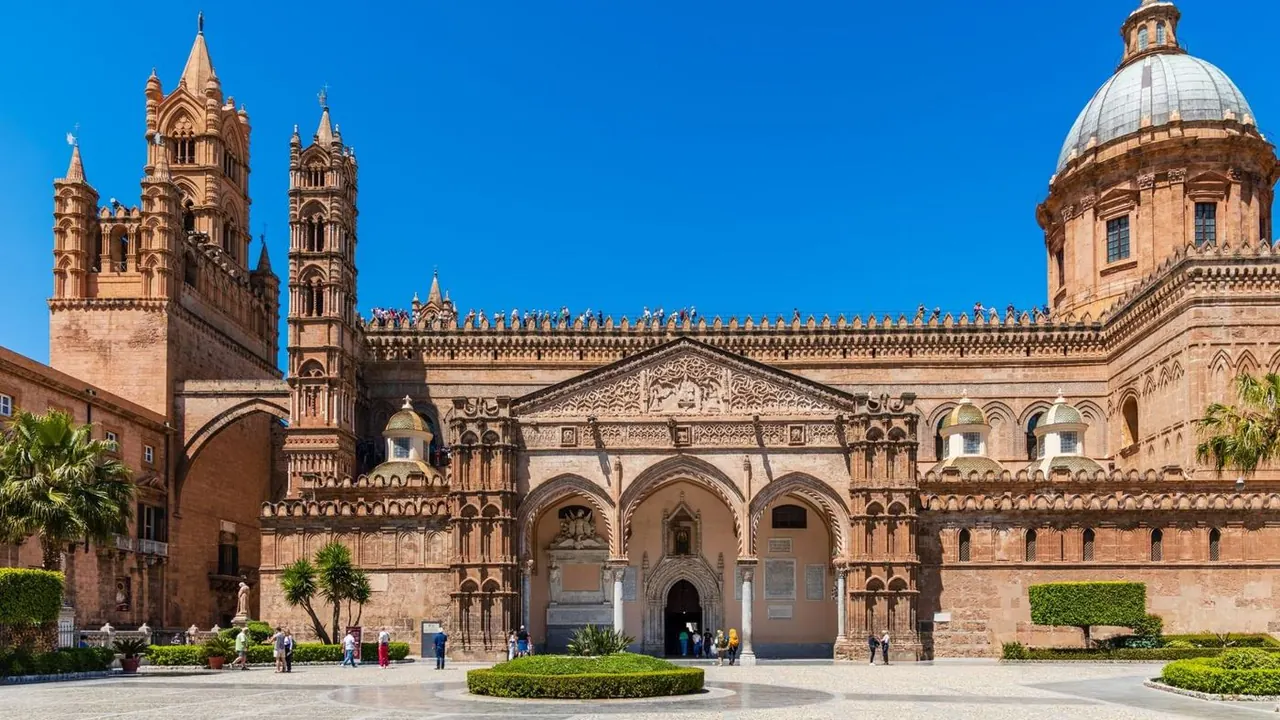
Photos: Lucca by Stefano Sansavini, CC BY-SA 4.0, cropped; Palermo by Antonino Giangrasso, Pexels License.
Lucca or Palermo?
Our verdict in twelve categories, each scored against the same fixed benchmark cities, and the climate month by month, so you can choose for your trip.
Choose Lucca for
- getting around
- wellness
- families
Lucca suits travellers who want a quiet, walkable base and plan to spend much of the trip elsewhere. Inside its walls you go everywhere on foot or by bike, the evenings end early, and Pisa, Florence and the Versilia beaches are all a short train ride away. It is the gentler choice for couples wanting calm, for families with children, and for anyone who would rather tour Tuscany than dig deep into one city.
Choose Palermo for
- nightlife
- food and drink
- beaches
Palermo rewards people who want the city itself to be the event. Its Arab-Norman mosaics and museums go further than Lucca's churches, the markets turn eating into the main activity, and the streets stay busy well past midnight. The swimming at Mondello is better, in a sea that runs warmer and holds its warmth for longer, and costs are lower. In return you put up with noise, traffic and crumbling lanes, and you need a car for the best day trips.
Scoreboard
Twelve categories on one fixed scale from 0 to 100. The shaded stretch is the gap between the two.
Your match
Pick a travel style or drag the sliders, and both match scores follow your weighting.
Wins on getting around and wellness with your weighting.
Wins on nightlife and food and drink with your weighting.
What matters to you?
Category by category
What the scores mean for a trip.
Beaches & swimming
Neither city has a beach in town, but Palermo's swimming is better. Mondello's pale sand and clear, shallow water lie about half an hour away by bus, and if you prefer deep water, the flat rocks and ladders towards Sferracavallo and Capo Gallo are close by. The sea there also stays warm a month longer than in Tuscany.
From Lucca, the train reaches Viareggio in under half an hour. From there, long, gently shelving sand runs up to Forte dei Marmi, mostly laid out in beach-club rows. The Lecciona dunes are the wilder escape. It works well as an afternoon after a morning of sightseeing, less so as the focus of a trip.
Food & drink
Palermo is the stronger eating city by a distance. Much of the best food is on the street, from panelle and arancine in Ballarò and the Capo to sfincione sold from vans, and the cooking carries Arab flavours of saffron, raisins and pine nuts. The pastry and granita tradition is a reason to visit on its own.
Lucca cooks the plainer food of its province: farro soup, tordelli in ragù, chestnut dishes in the cold months and cecina from bakery counters, with good local oil and wine. Meals are reliable and fairly priced, but the range is narrow and the menus repeat after a few days. Neither city has much fine dining or foreign food.
Culture & sights
Palermo has more to see and more variety. The Palatine Chapel's gold mosaics under an Islamic wooden ceiling, the red domes of San Giovanni degli Eremiti and the rest of the Arab-Norman route have no parallel in Tuscany. Add Serpotta's stucco oratories and two serious museums, the Salinas and Palazzo Abatellis, and there is enough to fill several days.
Lucca's appeal is a complete small city: unbroken Renaissance walls around a medieval grid, the carved arcades of San Michele in Foro and Ilaria del Carretto's tomb in the cathedral. Its museums are modest, and two days cover the essentials, though it is far better kept than Palermo's crumbling centre.
Nightlife
Palermo goes out late and outdoors. The Vucciria turns into an open-air drinking spot after dark, the bars around Via Maqueda and the Kalsa fill after dinner, and on warm nights the streets are busy past midnight. Lucca's evening is an aperitivo in Piazza San Michele, dinner and a stroll on the walls, and the centre is quiet by midnight. Neither has much of a club scene, and in summer both send their dancers to the beach venues on the coast.
Nature & outdoors
The two are broadly level, but the landscapes are very different. Palermo's mountains meet the sea: you can climb Monte Pellegrino on foot straight from the city, snorkel off Capo Gallo, walk the coves of the Zingaro, or drive to the Madonie, whose peaks approach 2,000m.
Lucca's outdoors starts gently, with the 4km tree-lined ring of the walls, cycle paths along the Serchio and olive-covered hills. The serious walking is in the marble peaks of the Apuan Alps and the chestnut woods of the Garfagnana, with birdwatching at Lake Massaciuccoli. In both places a car helps.
Day trips
Lucca is the easier base. Pisa is about half an hour away by train and Florence just over an hour, and Pistoia and Montecatini are on the same line. Closer to town are the villa gardens at Marlia and Collodi, and to the north are Pietrasanta's sculptors' studios and Carrara.
Palermo's outings are just as impressive but harder to reach. Monreale's mosaics and Cefalù are an easy half day, but Segesta, Erice and Agrigento's Valley of the Temples are really trips for a car, with Agrigento about two hours each way.
Good for families
Lucca is the easier city with children. The centre is flat, small and largely free of cars, and riding a family quadricycle round the walls, climbing to the trees on the Torre Guinigi and visiting the Pinocchio Park at Collodi fill the days without stress.
Palermo welcomes children in restaurants late into the evening, and Mondello's shallow bay and the knight-and-Saracen puppet shows are real treats. Against that, narrow lanes without pavements carry scooters and cars, pushchairs struggle on the stone, and the summer heat is heavy.
Getting around
Lucca is far simpler. Almost everything inside the walls is a short walk or bike ride, rental bikes wait at every gate, and the station just outside the southern walls has trains to Pisa, Florence and the coast. You only need a car for the villas and the Garfagnana.
Palermo's main sights line up along Via Maqueda and Corso Vittorio Emanuele and can be walked. Off that spine, though, the lanes fill with scooters and parked cars, buses crawl through traffic, and driving and parking are hard work.
Shopping & style
Neither is a shopping destination, and they are much alike on the whole. Lucca's charm is Via Fillungo's old Liberty shopfronts, delicatessens selling farro and buccellato, and one of Italy's oldest antiques markets, held one weekend a month around the cathedral. Palermo has more fashion along Via Libertà, including a few luxury labels, and better souvenirs: painted moor's-head ceramics, handmade marionettes, coral jewellery and pistachio pesto from the markets.
Affordability
Palermo goes further on a budget. A meal made of several market stops costs little, wine and pastries are cheap, and old-centre guesthouses are fairly priced outside high summer. The extra costs come from a hire car and from Mondello in July and August.
Lucca is cheaper than Florence but not cheap. Meals and trains are fair, but rooms inside the walls are few and fill up in summer and at festival times, so staying outside the gates often saves money.
Live music & performing arts
Palermo has the bigger stage. The Teatro Massimo runs a full season of opera, ballet and concerts, the Politeama is home to the Sicilian symphony orchestra, and the Opera dei Pupi puppet shows are a tradition worth seeing in their own right.
Lucca makes much of Puccini, who was born there. Recitals of his arias run through most of the year, the Teatro del Giglio has its own season, and summer brings star concerts in Piazza Napoleone and open-air opera by the lake at Torre del Lago. Outside those, there is little live music.
Wellness & relaxation
Lucca is the more restful place. Its quiet, traffic-free streets and the shaded walls at dusk do much of the work, and Montecatini's grand spa halls, the cave pools at Monsummano and the steam grottoes of Bagni di Lucca are all close enough for a day out.
Palermo is loud with scooters and market calls. Wellness there comes down to hotel spas, a train to Termini Imerese, or quiet hours in the Orto Botanico and the cloisters.
When should you go?
Pick your month. The climate figures are measured averages, not a forecast.
Lucca in July
Palermo in July
Daytime high, °C
Rainfall in the month, mm
Where the figures come from
Palermo's sunshine is measured 67 km from the centre, at Ustica.
Temperature and rainfall are climate normals, averaged over the years shown. Lucca: 1991-2020 normals, Pisa / S. Giusto (21.4 km from centre). Palermo: 1991-2020 normals, Palermo / Punta Raisi (24.1 km from centre).
Both cities reach about 30°C in July and August, too hot for long afternoons on foot, so late spring and early autumn are the comfortable times for sightseeing in either. They part ways after the summer. Lucca turns wet from September, and October and November are its rainiest months at around 125mm, while its winters are cool, with days of about 11°C in January. Palermo stays almost dry from May to August, gets more sunshine all year, and keeps milder winters of about 15°C, which makes it the better choice for a city break between November and March.
For swimming, the Versilia coast near Lucca is warm enough from June to September. Palermo's sea warms a little more and holds its heat longer, still around 23°C in October, so its beach season runs a month past Lucca's.
Which traveller are you?
For a food and nightlife trip, Palermo is the clear pick. Its markets feed you on fritters, arancine and cannoli all day, and the Vucciria and the Kalsa keep drinking outdoors past midnight. Lucca offers good trattoria meals but goes quiet early.
On a beach and sun trip, Palermo again comes out ahead. Mondello's shallow turquoise bay and the rocky coves towards Capo Gallo are a short bus ride away, and the sea stays warm into October. Lucca's Versilia beaches are mostly rows of umbrellas at beach clubs.
For a relaxing and wellness trip, Lucca is the calmer place. Its car-free streets, shaded walls and long lunches set a slow pace, and Montecatini and Bagni di Lucca make easy spa days. Palermo's scooters, traffic and market noise make real rest hard.
Before you go
| Measure | Lucca | Palermo |
|---|---|---|
| Official language | Italian | Italian |
| Currency | Euro (EUR) | Euro (EUR) |
| Sockets | CFL230 V, 50 Hz | CFL230 V, 50 Hz |
| Driving side | Right | Right |
| Time zone | UTC+1, UTC+2 in summer | UTC+1, UTC+2 in summer |
| Emergency number | 112 | 112 |
| Elevation | 19 m | 14 m |
| Main airport | Pisa International Airport (PSA)21 km from centre82 non-stop destinations | Falcone–Borsellino Airport (PMO)25 km from centre106 non-stop destinations |
| Public holidays this year | 13 days | 13 days |
By the numbers
| Measure | Lucca | Palermo |
|---|---|---|
| City population | 88,798 | 630,167 |
| People per km² | 478 | 3,924 |
| Museums within 10 km | 20 | 42 |
| UNESCO World Heritage sites within 50 km | 4 | 1 |
| Swim season, months above 21 °C | 4 months | 5 months |
Where else could you go?
Every comparison below shares a destination with this one, so you can follow Lucca or Palermo somewhere new.