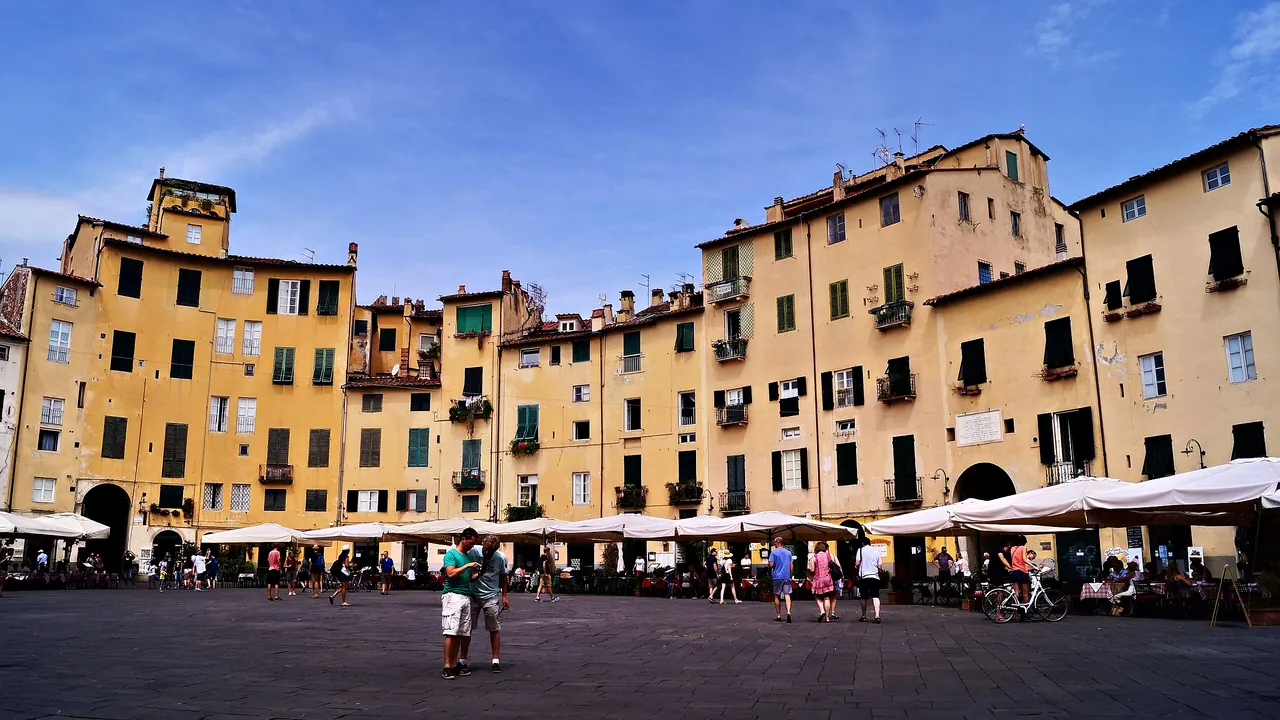
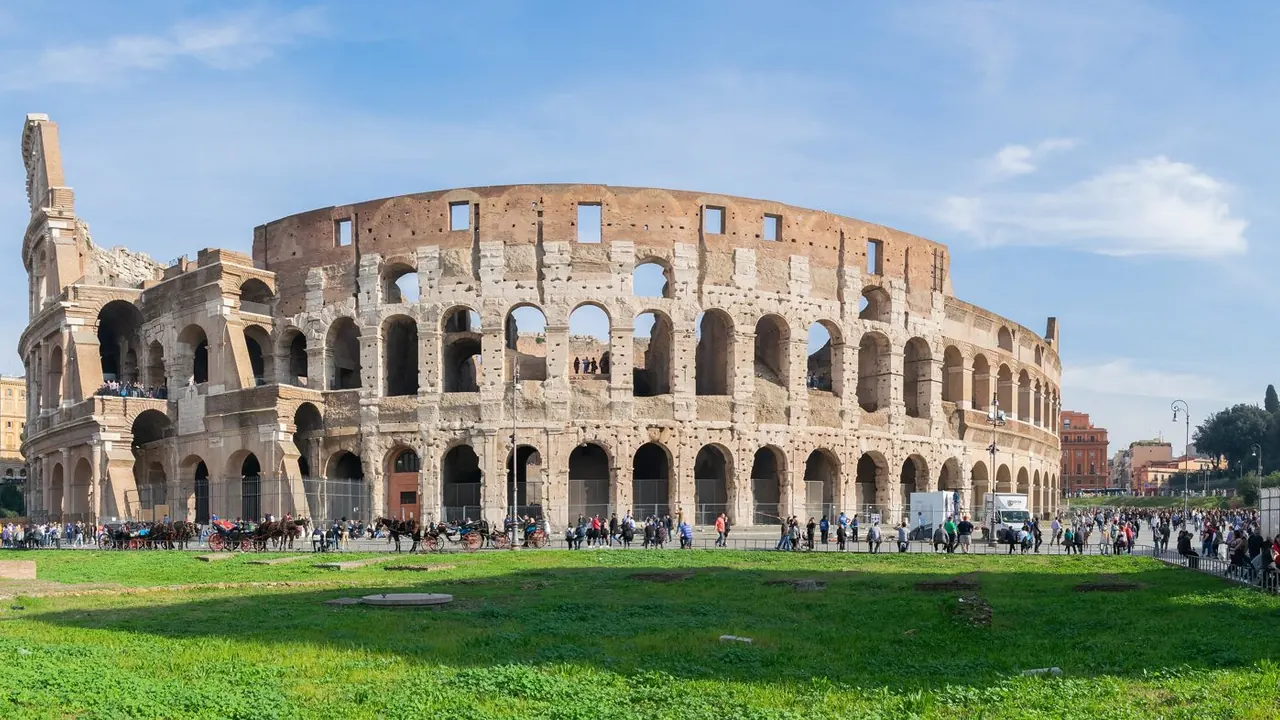
Photos: Lucca by Stefano Sansavini, CC BY-SA 4.0, cropped; Rome by Tournasol7, CC BY-SA 4.0, cropped.
Lucca or Rome?
Our verdict in twelve categories, each scored against the same fixed benchmark cities, and the climate month by month, so you can choose for your trip.
Choose Lucca for
- getting around
- wellness
- nature and the outdoors
Lucca suits a slower trip. The walled town is flat and easy to cross on foot or by bike, trains run to Pisa, Florence and the Versilia sand, and the Apuan Alps and Garfagnana are close enough for proper walking. It is quieter, a little cheaper and calm at night, so it works well for couples, families with younger children and anyone who wants a Tuscan base more than a big city.
Choose Rome for
- nightlife
- culture and sights
- shopping
Choose Rome when the sights themselves are the point. The ancient city, the Vatican and the Baroque churches go far beyond anything Lucca has, and Rome is also much stronger on food, late evenings in Trastevere and shopping around the Spanish Steps. In return you get heat, crowds, tiring cobbles and higher room prices, in a city that a week will not exhaust.
Scoreboard
Twelve categories on one fixed scale from 0 to 100. The shaded stretch is the gap between the two.
Your match
Pick a travel style or drag the sliders, and both match scores follow your weighting.
Wins on getting around and wellness with your weighting.
Wins on nightlife and culture and sights with your weighting.
What matters to you?
Category by category
What the scores mean for a trip.
Beaches & swimming
Neither city is on the sea, and from both the beach is about half an hour away by train, so either way it is a half-day add-on. From Lucca you reach the Versilia coast: long, wide sandy beaches that shelve gently, mostly laid out in tidy rows of umbrellas, with the pine-backed dunes of the Lecciona if you want something wilder.
Rome's beach at Ostia has dark volcanic sand and water that is rarely clear, and Fregene is a little more relaxed. For prettier coves at Sperlonga or Sabaudia you need a full day out.
Food & drink
Rome eats far better and with much more range. It has the four classic pastas, artichokes fried the Jewish way in the Ghetto, Testaccio's offal dishes and serious street food in supplì and pizza al taglio, and Trastevere and Monti are full of trattorias worth the walk.
Lucca's cooking is honest and rustic: farro soup, tordelli, cecina and buccellato, with good olive oil and local wine. It is reliable, which helps when Rome's menus near the big sights need avoiding, but the dishes start to repeat after a few days.
Culture & sights
This is the widest gap between the two. Rome has the Colosseum, the Forum and the Pantheon, the Vatican Museums and the Sistine Chapel, the Borghese Gallery and Caravaggios above side altars, enough for a week with plenty left over.
Lucca is a fine walled town, complete and well kept. Its carved Romanesque façades at San Michele and San Frediano, Ilaria del Carretto's tomb in the cathedral and the oval Piazza dell'Anfiteatro reward a slow look. Still, two days cover the essentials, and its museums are modest.
Nightlife
Rome has real evenings out. You can drink in Trastevere's crowded lanes of wine bars, the small cocktail bars of Monti, student San Lorenzo or arty Pigneto, and there is some clubbing in Testaccio and Ostiense. Lucca winds down with an aperitivo in Piazza San Michele, a long dinner and a stroll on the walls, and it is quiet by midnight. If you want to dance there, it means the Versilia beach clubs in summer and a late drive back.
Nature & outdoors
Lucca has the stronger landscape close by. The Apuan Alps, with their marble quarries and sharp limestone peaks, are about an hour away. The Garfagnana and the Orecchiella park offer chestnut and beech woods, and Lake Massaciuccoli has reed beds and birdlife. In town, the walls form a 4km tree-lined ring for running and cycling.
Rome's green spaces are gentler and more urban: the villa parks, the Appian Way ride past tombs and aqueducts, and the crater lakes of the Alban Hills. Its real mountains, the Simbruini and the Abruzzo peaks, are around ninety minutes away or more.
Day trips
Both cities are excellent bases, so the choice comes down to what you want to see. From Lucca you cover Tuscany: Pisa in half an hour, Florence in a little over an hour, the villa gardens at Marlia and Collodi, the marble towns of Pietrasanta and Carrara, and the Cinque Terre if you start early.
Rome's day trips lean towards antiquity and the Etruscans. Ostia Antica, Hadrian's Villa and Villa d'Este at Tivoli are close, with the painted tombs of Tarquinia, Orvieto and Civita di Bagnoregio further out. Fast trains also put Florence and Naples within reach.
Good for families
Lucca is the easier of the two with children, mainly because it is small, flat and largely car-free. Riding the walls on a family quadricycle, climbing the Torre Guinigi and a short trip to Pinocchio Park at Collodi or the beach fill the days well. Rome has more to fire young imaginations, with gladiators, catacombs and the Bioparco in Villa Borghese, but the queues, heat, cobbles and traffic make sightseeing tiring.
Getting around
Lucca is much simpler. The centre is compact, flat and closed to most traffic, there are bikes for rent at every gate, and the station sits just outside the walls with trains to the coast and Florence. Only the villas and the Garfagnana villages really need a car.
Rome's centre is also best seen on foot, but the distances are longer, the cobbles and scooters wear you down, and the metro barely reaches the historic core. That leaves buses and trams, which get stuck in traffic.
Shopping & style
Rome is the place to shop. The big Italian fashion houses line Via Condotti and the streets around the Spanish Steps, Monti has independent and vintage boutiques, Via dei Coronari has antique dealers, and Porta Portese holds its huge flea market on Sundays. Lucca has Via Fillungo's fashion and jewellery shops behind old Liberty-style fronts, good delicatessens and a historic monthly antiques market. It is pleasant, but it has nothing like Rome's depth.
Affordability
Neither city is cheap, but Lucca is easier on the budget. Its rooms cost less than those in Rome's historic centre, although they fill up in summer and at festival time, so staying just outside the walls is often the better deal.
Rome's headline sights charge substantial entry fees, while Lucca's walls and many of its churches are free and its paid sights are modest. Everyday eating is fair value in both.
Live music & performing arts
Rome offers more, and on a grander stage. There is opera and ballet at the Teatro dell'Opera, summer opera among the ruins of the Baths of Caracalla, the Santa Cecilia orchestra at the Auditorium Parco della Musica and a long-running jazz club scene.
Lucca's music centres on Puccini. Short recitals of his arias run in a church for most of the year, and the Teatro del Giglio has its own opera season. In summer the Puccini Festival stages open-air opera by the lake at Torre del Lago, and in July big outdoor concerts fill Piazza Napoleone.
Wellness & relaxation
Lucca is the more restful place to stay. Its streets are quiet and largely free of traffic, and an evening on the shaded walls is calm in a way Rome's centre, full of scooters, rarely is. It also has better spa days within reach: the belle époque baths at Montecatini, the cave pools of Monsummano and the steam grottoes of Bagni di Lucca.
In Rome, the options are hotel spas, a few hammam-style day spas and the sulphur pools at Bagni di Tivoli. Quiet is found mainly in the villa gardens and on the Aventine.
When should you go?
Pick your month. The climate figures are measured averages, not a forecast.
Lucca in July
Rome in July
Daytime high, °C
Rainfall in the month, mm
Where the figures come from
Rome's sunshine is measured 31 km from the centre, at Vigna Di Valle.
Temperature and rainfall are climate normals, averaged over the years shown. Lucca: 1991-2020 normals, Pisa / S. Giusto (21.4 km from centre). Rome: 1991-2020 normals, Roma / Ciampino (15.1 km from centre).
The two cities follow almost the same calendar, but Rome is a degree or so warmer and sunnier all year. In both, the sea is warm enough to swim in from June to September and reaches 25°C in July and August. Those same months bring daytime highs of 30°C or more, which makes long afternoons of sightseeing hard work, especially on Rome's cobbles.
In both cities, May and early June are the best months overall: warm and mostly dry. Autumn is where they part. Lucca gets wet earlier, with rain jumping to 102mm in September and peaking around 132mm in November. Rome stays drier through September and gets more sunshine through the winter, so it is the better choice for a cool-season city break.
Which traveller are you?
For a food and nightlife trip, Rome is the clear choice. You get carbonara in Testaccio trattorias and supplì from street counters, then wine bars in Trastevere and Monti until late. Lucca's menus are narrow, and its centre goes quiet by midnight.
On a relaxing and wellness trip, Lucca suits better. Traffic-free lanes, long lunches and evening walks on the walls keep the pace slow, and Montecatini, Monsummano and Bagni di Lucca offer real thermal soaks. In Rome, wellness mostly means hotel spas.
For an outdoors trip, Lucca has the edge. The Apuan Alps and the Garfagnana trails are about an hour away, you can cycle the walls and the Serchio paths, and Massaciuccoli is good for birdwatching. Rome's Appian Way ride is superb, but its mountains are further out.
Before you go
| Measure | Lucca | Rome |
|---|---|---|
| Official language | Italian | Italian |
| Currency | Euro (EUR) | Euro (EUR) |
| Sockets | CFL230 V, 50 Hz | CFL230 V, 50 Hz |
| Driving side | Right | Right |
| Time zone | UTC+1, UTC+2 in summer | UTC+1, UTC+2 in summer |
| Emergency number | 112 | 112 |
| Elevation | 19 m | 21 m |
| Main airport | Pisa International Airport (PSA)21 km from centre82 non-stop destinations | Rome–Fiumicino Leonardo da Vinci International Airport (FCO)23 km from centre242 non-stop destinations |
| Public holidays this year | 13 days | 13 days |
By the numbers
| Measure | Lucca | Rome |
|---|---|---|
| City population | 88,798 | 2,748,109 |
| People per km² | 478 | 2,135 |
| Museums within 10 km | 20 | 178 |
| UNESCO World Heritage sites within 50 km | 4 | 8 |
| Swim season, months above 21 °C | 4 months | 5 months |
Where else could you go?
Every comparison below shares a destination with this one, so you can follow Lucca or Rome somewhere new.