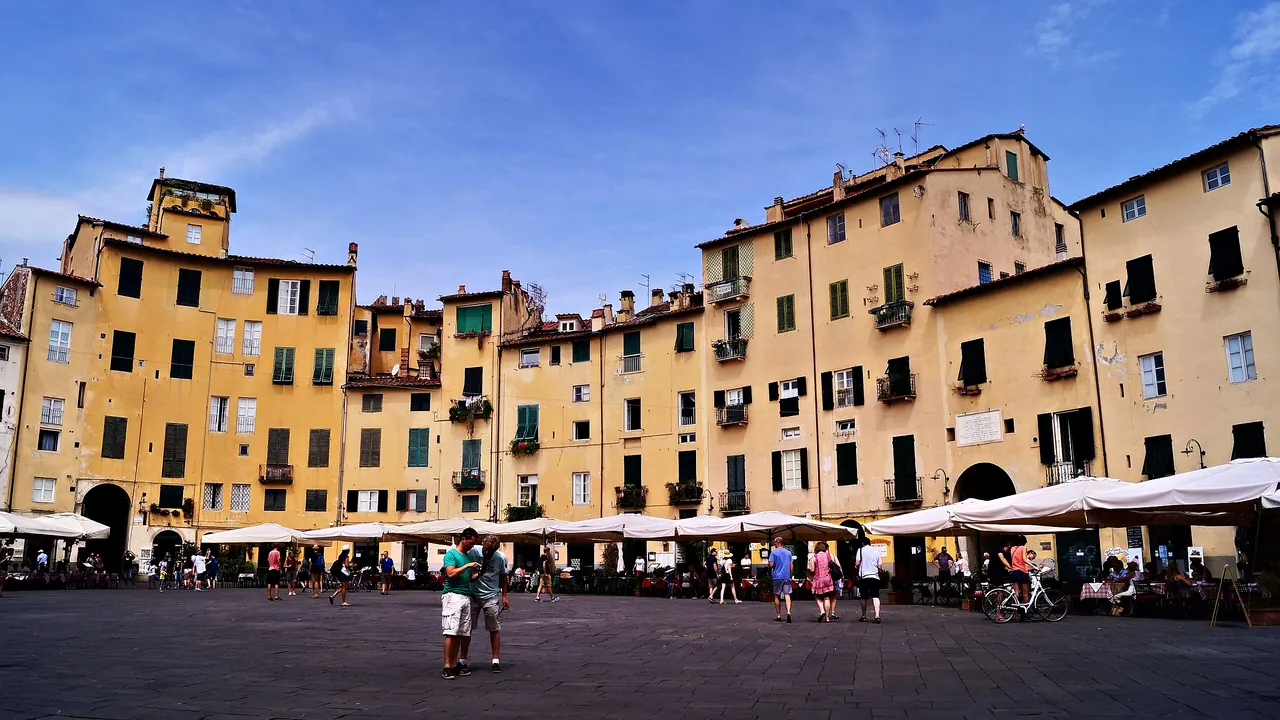
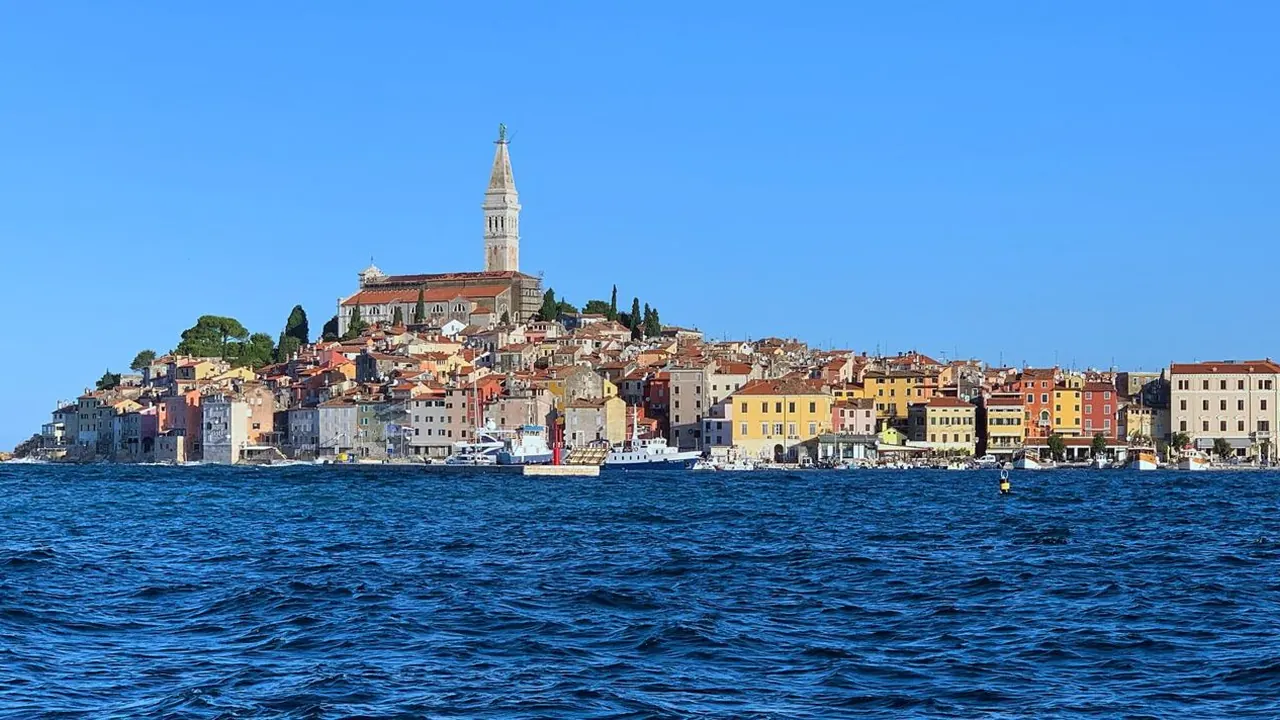
Photos: Lucca by Stefano Sansavini, CC BY-SA 4.0, cropped; Rovinj by Vyacheslav Bukharov, CC BY-SA 4.0, cropped.
Lucca or Rovinj?
Our verdict in twelve categories, each scored against the same fixed benchmark cities, and the climate month by month, so you can choose for your trip.
Choose Lucca for
- live music and the arts
- culture and sights
- day trips
Lucca is the better choice for a traveller who wants to see a lot of Tuscany from one comfortable base. Its complete Renaissance walls enclose Romanesque churches, Puccini's birthplace and a flat, car-free centre made for bikes, and trains put Pisa, Florence and the Versilia beaches within easy reach. It is also the easier of the two on the wallet, and the one with far more opera and concerts.
Choose Rovinj for
- beaches
- nightlife
Rovinj is for those whose days revolve around the sea. Clear Adriatic water reaches the rocks right below the old town, the pines of the Golden Cape are a short walk away, and taxi boats run out to quiet island coves. Expect a slow, scenic stay with good fish and Istrian wine, but fewer sights, little cultural life and steeper bills in high summer.
Scoreboard
Twelve categories on one fixed scale from 0 to 100. The shaded stretch is the gap between the two.
Your match
Pick a travel style or drag the sliders, and both match scores follow your weighting.
Wins on live music and the arts and culture and sights with your weighting.
Wins on beaches and nightlife with your weighting.
What matters to you?
Category by category
What the scores mean for a trip.
Beaches & swimming
Rovinj has the sea on its doorstep. Flat limestone ledges, pebble coves and bathing platforms run for kilometres through the Golden Cape, and the water is notably clear. The catch is that there is almost no sand, so water shoes are part of the kit.
Lucca has to borrow its coast. The Versilia shore from Viareggio to Forte dei Marmi is long, sandy and gently shelving, kinder to small children than Rovinj's rocks, but it is a train ride away and mostly laid out as beach clubs with rows of umbrellas.
Food & drink
Lucca has the stronger table, built on rustic provincial cooking: farro soup, tordelli in ragù, chestnut dishes in the colder months and cecina from the bakery counter, served in reliable trattorias at fair prices. Its weakness is a narrow range.
Rovinj's strengths are fish, shellfish and Istrian truffle pasta with Malvazija wine, but the harbour menus are written for passing visitors and the best meals often mean driving to a konoba inland.
Culture & sights
Lucca's walled centre gives a full two days of sightseeing: the tiered arcades of San Michele in Foro, San Frediano's golden mosaic, the cathedral with Ilaria del Carretto's tomb, the oval amphitheatre piazza and towers to climb.
Rovinj is lovely to look at, a former island of pastel Venetian houses rising to St Euphemia, but beyond the bell tower, a small town museum and the Batana House, one slow afternoon covers it.
Nightlife
Neither town is for clubbing, and both are quiet by midnight. What differs is the setting: Lucca's evenings run from aperitivo in its piazzas to a stroll on the walls, with a few student pubs, while Rovinj's centre on drinks on the rocks at sunset and waterfront cocktail bars that fill only in summer. Dancing means the Versilia beach discos from Lucca, or the bigger party spots along the coast from Rovinj.
Nature & outdoors
Lucca has more variety and more drama within reach. The Apuan Alps, with sharp marble peaks and serious hiking, are about an hour north, the Garfagnana adds chestnut and beech woods, and Lake Massaciuccoli is good for birdwatching, while the walls themselves make a 4km loop for runners and cyclists.
Rovinj's outdoors is gentler and more watery: easy paths through the Golden Cape, kayaking and diving around the islands, and boat trips into the Lim Fjord, but no mountains.
Day trips
Few bases match Lucca. Pisa is half an hour by train, Florence a little over an hour, and Pistoia, the Montecatini spas, the Lucca villas and Pietrasanta are all close, with the Cinque Terre possible on a long day.
Rovinj's surroundings are rewarding too, with Pula's amphitheatre, the mosaics of the Euphrasian Basilica in Porec and the hill towns of Motovun and Groznjan, but most of it needs a car and the list is shorter.
Good for families
Both are relaxed with children, in different ways. Lucca offers a flat, traffic-free centre, bike rides on the walls, Pinocchio Park at Collodi and gently shelving sandy beaches half an hour away, though its sights are mostly churches and palaces.
Rovinj answers with resort life: family campsites with pools, boat trips and shady park paths. Its rocky shore needs close watching with small children, though, and the steep cobbled lanes are hard going with a pushchair.
Getting around
Lucca is easier both in town and beyond it. The walled centre is flat and car-free, bikes are the local way of moving, and the station just outside the walls links to Pisa, Florence and the coast. Only the villas and hill villages really call for a car.
Rovinj's town is walkable too, though steep and slippery underfoot. With no railway and only intercity buses, the rest of Istria is driving country.
Shopping & style
Lucca offers more to browse: fashion and jewellery shops behind old Liberty-style fronts on Via Fillungo, good delicatessens and a monthly antiques market that is one of Italy's oldest. Rovinj's shopping is mainly regional produce such as truffles, oil and wine, plus the galleries and studios along Grisia, with no fashion streets at all.
Affordability
Neither is cheap, but Lucca is gentler on spending, with fairly priced trattorias and regional trains and free walls and churches. Staying outside the walls saves most.
Rovinj in July and August costs what a sought-after Mediterranean resort costs, and harbour fish sold by weight adds up. Apartments, campsites and the months either side of summer bring it down.
Live music & performing arts
Here the gap is wide. Lucca is Puccini's birthplace, with aria recitals in a church in the centre most of the year, opera and concerts at the Teatro del Giglio, big July concerts in Piazza Napoleone and open-air opera by the lake at Torre del Lago.
Rovinj has summer concerts in St Euphemia, music on the harbour and the occasional performance of bitinada singing, and very little out of season.
Wellness & relaxation
Neither town has baths of its own, but Lucca has better spa days within reach: the belle époque buildings of Montecatini by train, the cave pools of Monsummano and the steam grottoes of Bagni di Lucca. Its quiet, car-free streets help too.
In Rovinj, relaxing means the spas of the resort hotels along the Golden Cape and slow swims off the rocks in May, June and September. In high summer, finding calm means getting away from the busy old town.
When should you go?
Pick your month. The climate figures are measured averages, not a forecast.
Lucca in July
Rovinj in July
Daytime high, °C
Rainfall in the month, mm
Where the figures come from
Rovinj's temperatures are measured 64 km from the centre, at Trieste.
Rovinj has no rain gauge within 25 km of the centre, so its rainfall comes from a gridded climate dataset read at the city rather than from a gauge further away.
Temperature and rainfall are climate normals, averaged over the years shown. Lucca: 1991-2020 normals, Pisa / S. Giusto (21.4 km from centre). Rovinj: 1991-2020 normals, Trieste (63.7 km from centre).
Both follow a Mediterranean rhythm, with July and August highs around 30°C in Lucca and a degree lower in Rovinj. Swimming is good on both coasts from June to September, when the sea warms to about 25°C, and Rovinj's water is a touch warmer in August. Lucca's plain feels hot for sightseeing in midsummer, so late May, June and September are the best months for walking the walls and the streets. Summer is also when Lucca is at its driest, with less rain than Rovinj from June to August.
From September the rain picks up in both, but autumn is much wetter in Lucca, where October and November bring more than 120mm a month. Rovinj gets less rain over the year as a whole and stays drier from autumn through spring, but it is a little colder in winter, with January highs near 9°C against Lucca's 11°C. Lucca also gets slightly more sunshine in every month.
Which traveller are you?
On a culture and arts trip, Lucca is the clear pick. Its walls, Romanesque façades and Puccini heritage fill two days on their own, Florence and Pisa are a short train ride away, and opera recitals and the Teatro del Giglio give the evenings substance.
On a beach and sun trip, Rovinj suits better. You can swim off the rocks below the old town or in the Golden Cape coves in very clear water without catching a train, whereas Lucca's sandy Versilia beaches mean a half-day outing each time.
On a tight budget, Lucca makes the money go further. The walls and many churches cost nothing, trattoria meals and regional trains are fairly priced, and rooms outside the walls help. In Rovinj, high-summer rooms and fish sold by weight quickly add up.
Before you go
| Measure | Lucca | Rovinj |
|---|---|---|
| Official language | Italian | Croatian |
| Currency | Euro (EUR) | Euro (EUR) |
| Sockets | CFL230 V, 50 Hz | CF230 V, 50 Hz |
| Driving side | Right | Right |
| Time zone | UTC+1, UTC+2 in summer | UTC+1, UTC+2 in summer |
| Emergency number | 112 | 112 |
| Elevation | 19 m | 0 m |
| Main airport | Pisa International Airport (PSA)21 km from centre82 non-stop destinations | Pula Airport (PUY)31 km from centre34 non-stop destinations |
| Public holidays this year | 13 days | 14 days |
By the numbers
| Measure | Lucca | Rovinj |
|---|---|---|
| City population | 88,798 | 12,968 |
| People per km² | 478 | - |
| Museums within 10 km | 20 | 1 |
| UNESCO World Heritage sites within 50 km | 4 | 1 |
| Swim season, months above 21 °C | 4 months | 4 months |
Where else could you go?
Every comparison below shares a destination with this one, so you can follow Lucca or Rovinj somewhere new.