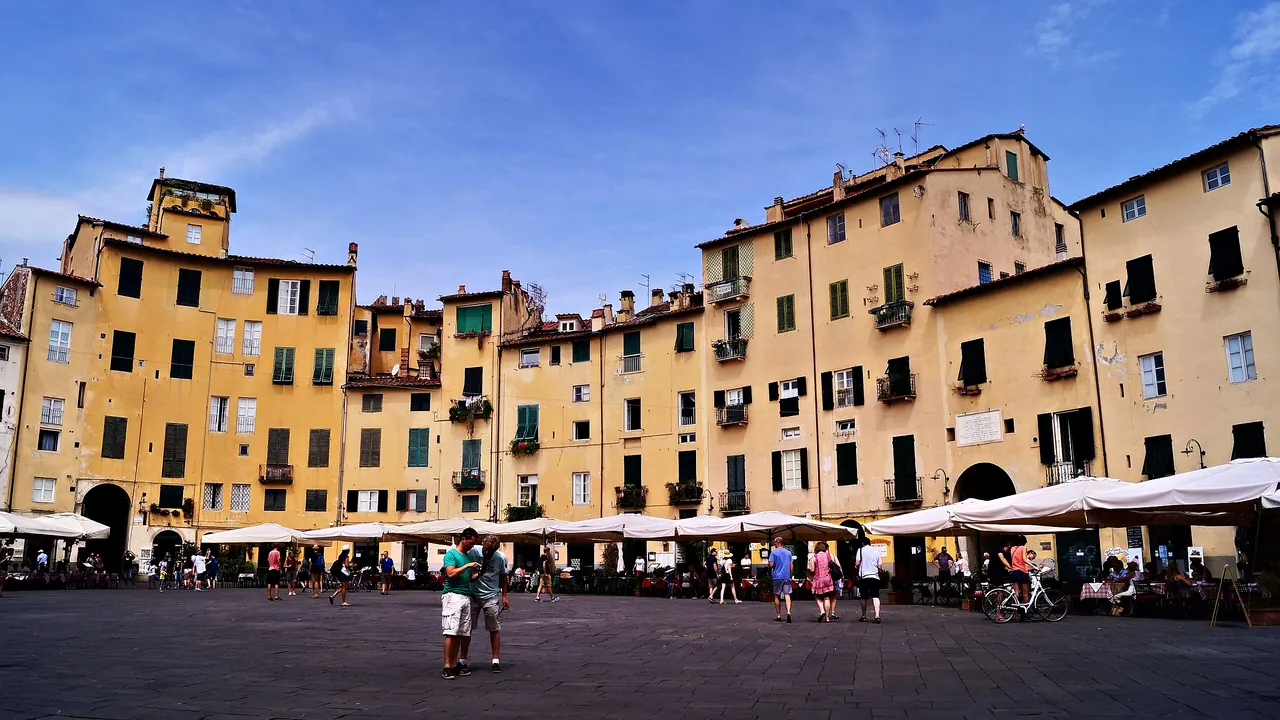
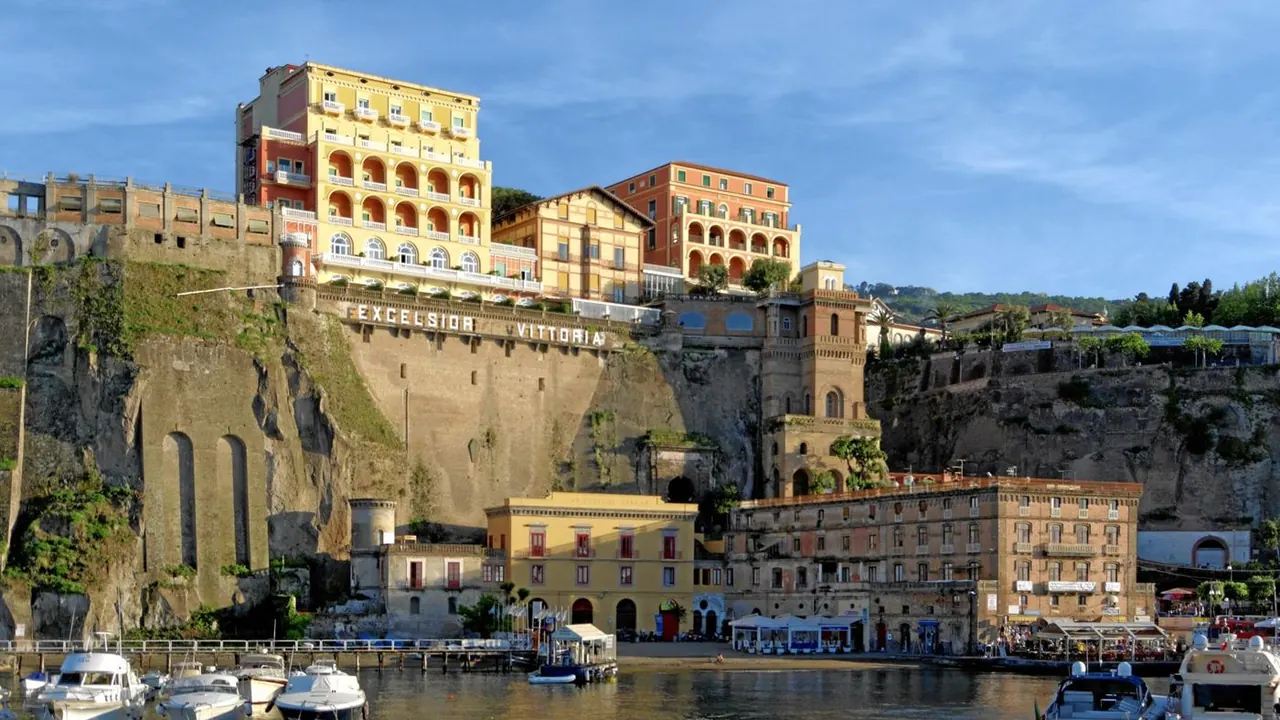
Photos: Lucca by Stefano Sansavini, CC BY-SA 4.0, cropped; Sorrento by Berthold Werner, CC BY-SA 3.0, cropped.
Lucca or Sorrento?
Our verdict in twelve categories, each scored against the same fixed benchmark cities, and the climate month by month, so you can choose for your trip.
Choose Lucca for
- live music and the arts
- culture and sights
- getting around
Lucca suits travellers who want a walled city to explore on foot and by bike, with Romanesque churches, Puccini's music on most evenings and trains running easily out to Pisa, Florence and the Versilia sand. It is the calmer, cheaper and more practical of the two, and it works better for families and for anyone who wants the town itself to be the main event.
Choose Sorrento for
- nature and the outdoors
- nightlife
- beaches
Sorrento is for people who come for the bay and what lies around it. The town is pleasant but small, and its real value is as a base: Pompeii and Vesuvius by train, Capri and the Amalfi Coast by boat, and cliff paths out to Punta Campanella. Choose it for sea views, walking and island days, and accept that it costs more and that culture mostly means going out of town.
Scoreboard
Twelve categories on one fixed scale from 0 to 100. The shaded stretch is the gap between the two.
Your match
Pick a travel style or drag the sliders, and both match scores follow your weighting.
Wins on live music and the arts and culture and sights with your weighting.
Wins on nature and the outdoors and nightlife with your weighting.
What matters to you?
Category by category
What the scores mean for a trip.
Beaches & swimming
Neither city is a beach resort, and the swimming is quite different. From Lucca you take a short train to Viareggio for long, gently shelving sand, mostly laid out with rows of beach-club umbrellas, or wilder dunes at the Lecciona.
Sorrento has the sea right below the town, but you get in from wooden piers and rocks into deep, clear water, or at the rocky inlet of Regina Giovanna, so it has a slight edge for swimming. For sand there you need a bus or a boat.
Food & drink
The two eat about equally well, in very different styles. Lucca's cooking is plain and inland: farro soup, tordelli in ragù, chestnut flour and cecina, with Montecarlo wine and mild hill olive oil.
Sorrento cooks from the sea and the lemon groves, with gnocchi alla sorrentina, fish all'acqua pazza, fresh mozzarella and Naples-style pizza. It also has serious fine dining in the hill villages, though its main squares have more tourist menus than Lucca's.
Culture & sights
Here Lucca is far ahead, because the city itself is the sight. The Renaissance walls survive whole, and inside them are the carved arcades of San Michele, the gold mosaic of San Frediano, Ilaria del Carretto's tomb in the cathedral and the oval amphitheatre piazza.
Sorrento's own sights are modest: the cloister of San Francesco, the Museo Correale and the ruined mill in its ravine. Its great history, Pompeii and Naples, lies outside the town.
Nightlife
Neither is a place for a big night out, though Sorrento has a little more going on. Its terraces over the bay, piano bars and one or two summer clubs keep some life going after dinner, but the last trains and ferries make Naples or Capri an overnight trip.
Lucca's evenings are an aperitivo in Piazza San Michele and a walk on the walls, with the centre quiet by midnight. Dancing means a late drive to the Versilia coast.
Nature & outdoors
Sorrento has the more dramatic setting right on the doorstep: Vesuvius across the bay, a limestone ridge of lemon terraces, and cliff paths to Punta Campanella and the protected bay of Ieranto. Add Monte Faito and the sea trips around Capri and it wins for anyone who wants to hike or get out on the water.
Lucca's own outdoors is gentler, from the tree-lined walls to the olive hills. The Apuan Alps, the Garfagnana and the marshes of Massaciuccoli are excellent, but they are an hour's drive or a day out rather than a walk from the hotel.
Day trips
Both are outstanding bases, for different regions. From Lucca, regional trains reach Pisa, Florence, Pistoia and Montecatini, and the Lucca villas, Pietrasanta and Carrara are close, with the Cinque Terre a long day.
Sorrento's range is perhaps a touch richer: Pompeii, Herculaneum and Vesuvius by rail, Capri and the Amalfi Coast by boat, and Naples within the hour. The catch is summer traffic on the coast road, which makes the sea route the better choice.
Good for families
Lucca is the easier choice with children. Riding a family quadricycle around the walls, climbing the tree-topped Torre Guinigi, Pinocchio Park at Collodi and gently shelving sand nearby give the days a shape, and teenagers love Lucca Comics & Games in autumn.
Sorrento is welcoming, and boat trips and Pompeii go down well, but deep water off piers, hotels on steep lanes without pavements and long coastal bus rides make it harder with small children.
Getting around
Lucca is simpler on almost every count. Inside the walls it is flat and mostly free of traffic, bikes are hired at every gate, and the station just outside the walls has frequent trains around Tuscany. Only the hill villages really need a car.
Sorrento's centre is just as walkable, but everything beyond it takes effort. The Circumvesuviana is crowded and often late, the Amalfi buses crawl round the hairpins, and hill hotels depend on shuttles, so ferries are often the best way to travel.
Shopping & style
Both offer small-town shopping without luxury depth, and what you take home differs. Lucca has Via Fillungo's fashion shops behind Liberty-style fronts, delicatessens stocked with olive oil and buccellato, and a monthly antiques market that is one of Italy's oldest.
Sorrento leans on crafts: inlaid wood, sandals made to measure, linen and cameos, alongside a lot of lemon-themed souvenirs. For anything more serious you go to Naples or Capri.
Affordability
Lucca is the cheaper stay. It is still central Italy and rooms inside the walls fill up, but trattorias and trains are fairly priced, the walls and many churches are free, and staying just outside the gates saves more.
Sorrento charges resort prices in summer for sea-view rooms, lido sunbeds and boat trips. Its cheap trains and back-lane pizzerias help, and the best savings come from going in spring or late autumn.
Live music & performing arts
Lucca has far more live music, all built around Puccini, who was born there. Recitals of his arias run most of the year, the Teatro del Giglio has a full opera season, Piazza Napoleone hosts big summer concerts, and the lakeside Puccini Festival at Torre del Lago is nearby.
Sorrento offers Neapolitan song and tarantella shows for visitors, plus summer chamber concerts in the cloister. For real opera you have to travel an hour to the San Carlo in Naples.
Wellness & relaxation
Lucca's strength is the number of spa days within easy reach. Montecatini's belle époque bathhouses are a short train ride away, and Monsummano's warm cave pools and the steam grottoes of Bagni di Lucca are close by. In town, resting means car-free streets and an evening on the shaded walls.
Sorrento puts its comfort into the hotels, with spas, pools and terraces on the cliffs over the bay, and its lemon groves set a slow pace. The nearest thermal water is a ferry ride away on Ischia, and the centre gets loud in July and August, so spring and autumn suit a restful stay better.
When should you go?
Pick your month. The climate figures are measured averages, not a forecast.
Lucca in July
Sorrento in July
Daytime high, °C
Rainfall in the month, mm
Where the figures come from
Sorrento has no rain gauge within 25 km of the centre, so its rainfall comes from a gridded climate dataset read at the city rather than from a gauge further away.
Sorrento's sunshine is measured 54 km from the centre, at Grazzanise.
Temperature and rainfall are climate normals, averaged over the years shown. Lucca: 1991-2020 normals, Pisa / S. Giusto (21.4 km from centre). Sorrento: 2005-2025 (sunshine 1991-2020, rainfall 1991-2020) normals, Capri (17 km from centre).
From June to August both are hot and sunny, with highs around 30°C. That is good beach weather, but it makes long walks tiring in Lucca's inland plain and on Sorrento's exposed trails. In both places the sea is warm enough to swim from June to September. Sorrento's sea stays a little warmer into October, and its summer is the drier of the two, with almost no rain in July and August.
May is for walking and sightseeing rather than swimming. The days are warm but the sea is still cool, at about 18°C. In September the heat eases and the autumn rains begin, sharply in Lucca, which gets 102mm. October and November are wet in both, and Sorrento is wettest of all with about 150mm in November. Winter is mild on the bay and a little cooler in Lucca, around 11°C in January.
Which traveller are you?
On a culture and arts trip, Lucca is the clear choice. The complete walls, San Michele and the cathedral fill two good days, Puccini recitals run for most of the year, and Florence and Pisa are a short train ride away.
For an outdoors trip, Sorrento comes out ahead. Terraced paths lead to Punta Campanella and Ieranto, the Path of the Gods and the rim of Vesuvius are within reach, and kayaks and small boats get you to the coves and Capri's grottoes.
On a family trip with children, Lucca is the more relaxed base. Everything inside the walls is a short stroll away, with no traffic to watch, short train hops make easy outings, and lower costs go further for a family than Sorrento's resort prices.
Before you go
| Measure | Lucca | Sorrento |
|---|---|---|
| Official language | Italian | Italian |
| Currency | Euro (EUR) | Euro (EUR) |
| Sockets | CFL230 V, 50 Hz | CFL230 V, 50 Hz |
| Driving side | Right | Right |
| Time zone | UTC+1, UTC+2 in summer | UTC+1, UTC+2 in summer |
| Emergency number | 112 | 112 |
| Elevation | 19 m | 50 m |
| Main airport | Pisa International Airport (PSA)21 km from centre82 non-stop destinations | Naples International Airport (NAP)30 km from centre131 non-stop destinations |
| Public holidays this year | 13 days | 13 days |
By the numbers
| Measure | Lucca | Sorrento |
|---|---|---|
| City population | 88,798 | 15,407 |
| People per km² | 478 | 1,541 |
| Museums within 10 km | 20 | 6 |
| UNESCO World Heritage sites within 50 km | 4 | 5 |
| Swim season, months above 21 °C | 4 months | 5 months |
Where else could you go?
Every comparison below shares a destination with this one, so you can follow Lucca or Sorrento somewhere new.