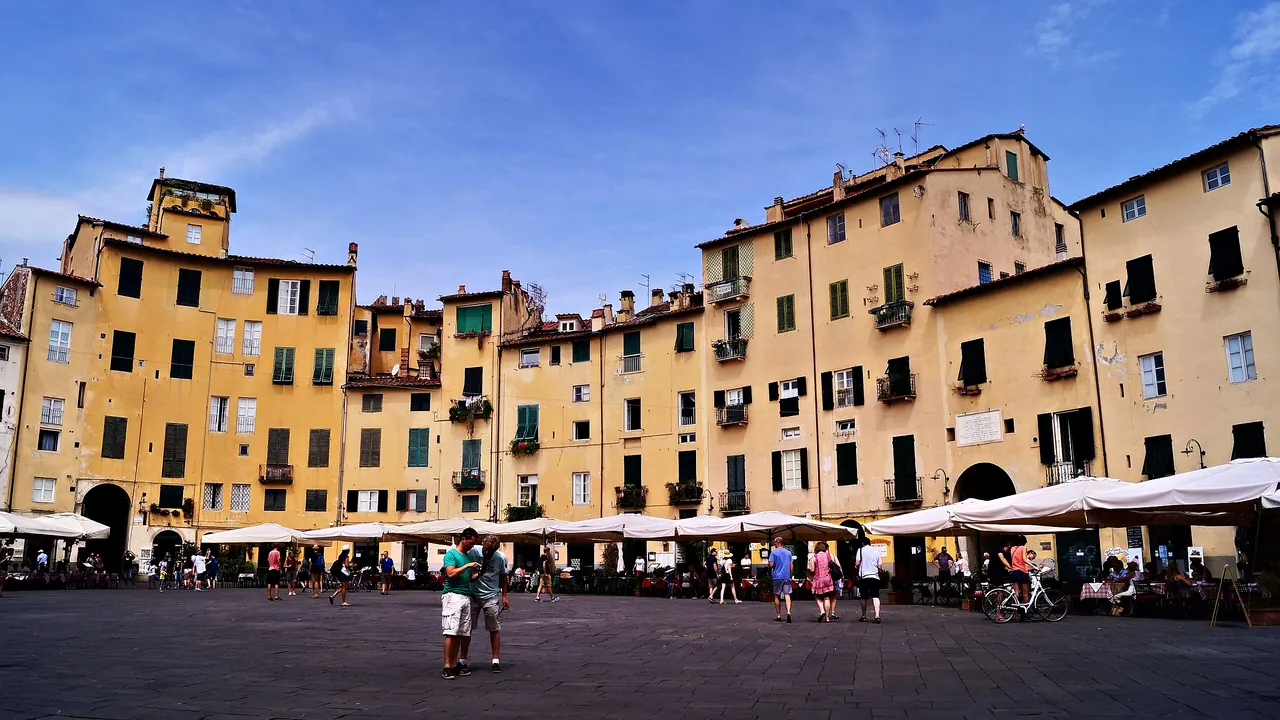
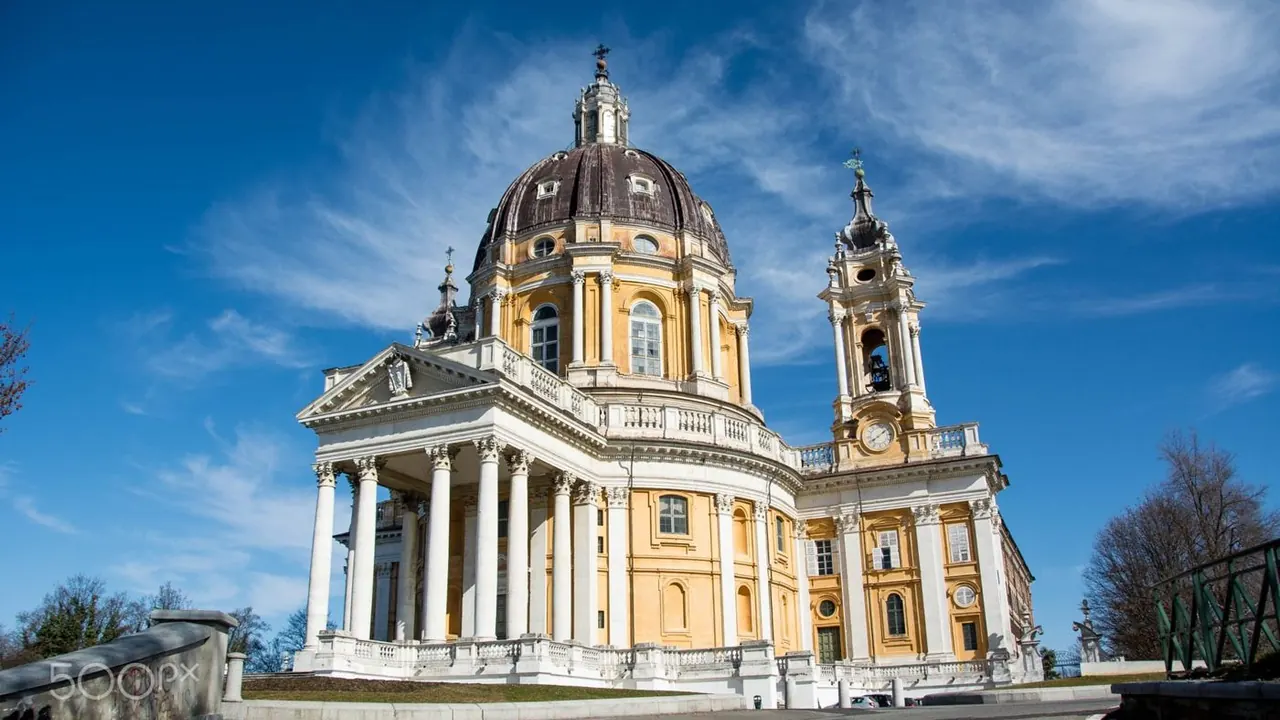
Photos: Lucca by Stefano Sansavini, CC BY-SA 4.0, cropped; Turin by Konstantin Dacosta, CC BY 3.0, cropped.
Lucca or Turin?
Our verdict in twelve categories, each scored against the same fixed benchmark cities, and the climate month by month, so you can choose for your trip.
Choose Lucca for
- beaches
- wellness
- day trips
Lucca suits a slower, smaller trip. You can cross the walled town on foot or by bike, see its Romanesque churches in the morning and take the train to the sand at Viareggio after lunch. Pisa, Florence and the villa gardens are easy days out. Choose it if you want the sea, the countryside and quiet evenings, and don't need a big city around you.
Choose Turin for
- nightlife
- food and drink
- shopping
Travellers who want a proper city should pick Turin. The Museo Egizio and the Savoy palaces give it far more to see. Eating out is a highlight, with Piedmontese cooking and the aperitivo the city invented. Evenings also carry on in San Salvario and the Quadrilatero long after Lucca has gone quiet. The Alps and the Langhe wine hills are close by, but the sea is not.
Scoreboard
Twelve categories on one fixed scale from 0 to 100. The shaded stretch is the gap between the two.
Your match
Pick a travel style or drag the sliders, and both match scores follow your weighting.
Wins on beaches and wellness with your weighting.
Wins on nightlife and food and drink with your weighting.
What matters to you?
Category by category
What the scores mean for a trip.
Beaches & swimming
Lucca has real beach access. A short train ride takes you to the Versilia coast, where wide, gently shelving sand runs from Viareggio to Forte dei Marmi. Most of it is organised into beach clubs, and the Lecciona dunes are there for something wilder. Sightseeing in the morning and a swim after lunch is a realistic plan.
Turin has nothing like this. The Ligurian Riviera is close to two hours away, so swimming in the sea means a separate stay on the coast. In summer, people in Turin make do with lakes such as Avigliana or Viverone.
Food & drink
Turin is the stronger food city by some way. Piedmontese cooking is rich and precise, from agnolotti del plin and vitello tonnato to white truffles from the Langhe in autumn, with Barolo and Barbaresco to drink. Add bicerin in the cafés under the arcades and Porta Palazzo market for produce.
Lucca eats plainly and well, with farro soup, tordelli, cecina and buccellato in family trattorias inside the walls. It is honest country cooking, but the menus start to repeat within a few days, while Turin keeps offering something new.
Culture & sights
Turin has the bigger collections. The Museo Egizio alone justifies a visit, and the Royal Palace, Palazzo Madama, the cinema museum in the Mole and the contemporary art at Rivoli can fill several days.
In Lucca, the town itself is the main sight: the complete Renaissance walls, the carved façade of San Michele in Foro, the oval Piazza dell'Anfiteatro and the tomb of Ilaria del Carretto in the cathedral. Its museums are modest, and two days are enough to see it properly.
Nightlife
After dinner, Turin keeps going. The aperitivo hour leads on to the wine and cocktail bars of the Quadrilatero Romano, crowds on the pavements of San Salvario and the more alternative bars of Vanchiglia. In summer there are the Murazzi by the river, and a few clubs sit in old industrial buildings.
An evening in Lucca means an aperitivo in a piazza, a long meal and a walk on the walls, and the centre is calm by midnight. In summer, anyone who wants to dance has to head out to the beach clubs on the Versilia coast and arrange a late ride back.
Nature & outdoors
Lucca's outdoors is gentler and starts at the door. The tree-lined walls make an easy loop for a morning run or a bike ride, and olive groves and villa gardens begin just past the gates. For steeper ground, the marble-scarred peaks of the Apuan Alps are about an hour north and have proper hiking, while the reed beds of Lake Massaciuccoli suit birdwatchers. There is some skiing, at Abetone in the Apennines, but it is further away and much smaller than the Alpine resorts near Turin.
Turin is the better choice if mountains are a main reason for your trip. The Gran Paradiso, with ibex and chamois on its high trails, the Susa valley and the Via Lattea slopes around Sestriere are only an hour or an hour and a half away. That means a city stay can include a full day of skiing in winter or hut-to-hut hiking, climbing and mountain biking in summer. The city itself is flat, but paths climb the hills across the Po, and deer roam the walled Mandria park to the north.
Day trips
Both cities are excellent bases, but Lucca has more within easy reach. Pisa is half an hour away by train and Florence about an hour, with Pistoia and Montecatini on the same line. The villa gardens at Marlia and Collodi are close by, and Pietrasanta and Carrara are up the coast.
Turin's days out lean towards wine and mountains: the Langhe villages around Barolo and Alba, Asti and the Monferrato, and the Sacra di San Michele on its rock. Milan is an hour away by fast train. The wine hills are easiest by car, while Lucca's best-known trips need only a regional train ticket.
Good for families
Both cities are equally manageable with children, but in different ways. Lucca is small and largely car-free. Children can ride bikes on the walls and climb the tree-topped Torre Guinigi, and Pinocchio Park and the beach are both nearby.
Turin's strength is indoors. Older children enjoy the glass lift in the Mole, the Egyptian mummies and the car museum, and the arcades keep pushchairs out of the rain. Lucca suits younger children who want to be outside, and Turin suits curious older ones on a wet day.
Getting around
Lucca is the simpler place to get around. It is flat, compact and mostly closed to traffic, so you walk or hire a bike, and the station sits just outside the walls.
Turin's grid centre is also easy to walk under its arcades. Beyond it, though, you rely on one metro line plus trams and buses that take some working out. In both cities a car only helps for the countryside: the villas and the Garfagnana around Lucca, and the Langhe and the Alps around Turin.
Shopping & style
Turin offers more choice. Big-name labels line Via Roma under its arcades, and the long pedestrian Via Garibaldi has mainstream shops. There are antique dealers on Via Maria Vittoria, the Balon flea market on Saturdays, and chocolate and truffles to take home.
Lucca's Via Fillungo is a pleasant small-town street of fashion and jewellery shops behind old shopfronts. Its real draw is the monthly antiques market around the cathedral. Neither city is a place to shop seriously for designer clothes.
Affordability
Turin gives you more for your money. Central hotels are fairly priced for most of the year, and a generous aperitivo can replace dinner. Porta Palazzo market and inexpensive public transport also keep daily costs down.
Lucca is cheaper than Florence, but rooms are its main expense. There are few hotels inside the walls, and they fill up in summer and during festivals, so staying just outside the walls is usually the better deal.
Live music & performing arts
Turin has the fuller calendar. The Teatro Regio stages a full opera and ballet season, the RAI National Symphony Orchestra has its own auditorium, and there are concerts at the Lingotto. Add Italian-language theatre, jazz clubs and festivals through the year.
Lucca's music scene is smaller but has a clear focus in Puccini, who was born here. Recitals of his arias are held in a church in the centre for most of the year, and the Teatro del Giglio has its own season. Summer brings open-air opera at Torre del Lago and big July concerts in Piazza Napoleone.
Wellness & relaxation
Lucca makes a spa day easy. Montecatini's belle époque baths are half an hour away by train, and the cave pools of Monsummano Terme and the steam grottoes of Bagni di Lucca are also close.
Turin's nearest thermal waters, at Acqui Terme or in the Aosta valley, are close to two hours away. In the city, relaxing means hotel spas, long café breaks and walks along the Po. Both are calm places to stay, but Lucca's car-free streets make it easier to slow down.
When should you go?
Pick your month. The climate figures are measured averages, not a forecast.
Lucca in July
Turin in July
Daytime high, °C
Rainfall in the month, mm
Where the figures come from
Turin has no rain gauge within 25 km of the centre, so its rainfall comes from a gridded climate dataset read at the city rather than from a gauge further away.
Temperature and rainfall are climate normals, averaged over the years shown. Lucca: 1991-2020 normals, Pisa / S. Giusto (21.4 km from centre). Turin: 1991-2020 normals, Torino / Caselle (15.4 km from centre).
Lucca is the warmer of the two and has a proper beach season. From June to September the sea near Viareggio is warm enough to swim, reaching about 25°C in July and August. Summers are dry and very sunny, but inland highs of around 30°C make midday walking hard work. Autumn brings the rain, with about 125mm in October and even more in November. Spring and early autumn are the best times for walking the town and the hills.
Turin has colder winters, with January highs of about 7°C, but it is fairly dry from December to February. Its wettest time is late spring, with about 115mm in May. Summers are a degree or two cooler than in Lucca but still hot. September and early October are pleasant in both cities, but Lucca turns wet sooner as autumn goes on.
Which traveller are you?
On a beach and sun trip, Lucca is the clear choice. The wide sandy beaches of the Versilia coast are under half an hour away by train, so you can swim every afternoon. From Turin, the nearest sea is a long day's journey away.
For a food and nightlife trip, Turin is far ahead. Piedmontese cooking, Barolo, autumn truffles and the city's own aperitivo lead into evenings in the bars of San Salvario, the Quadrilatero and the Murazzi. Lucca, by contrast, is quiet by midnight.
On a relaxing and wellness trip, Lucca works better. Its car-free streets and shaded walls slow the pace, and Montecatini, Monsummano and Bagni di Lucca all offer thermal waters within easy reach. Turin's nearest real spa towns are close to two hours away.
Before you go
| Measure | Lucca | Turin |
|---|---|---|
| Official language | Italian | Italian |
| Currency | Euro (EUR) | Euro (EUR) |
| Sockets | CFL230 V, 50 Hz | CFL230 V, 50 Hz |
| Driving side | Right | Right |
| Time zone | UTC+1, UTC+2 in summer | UTC+1, UTC+2 in summer |
| Emergency number | 112 | 112 |
| Elevation | 19 m | 239 m |
| Main airport | Pisa International Airport (PSA)21 km from centre82 non-stop destinations | Turin Airport (TRN)14 km from centre65 non-stop destinations |
| Public holidays this year | 13 days | 13 days |
By the numbers
| Measure | Lucca | Turin |
|---|---|---|
| City population | 88,798 | 841,600 |
| People per km² | 478 | 6,474 |
| Museums within 10 km | 20 | 72 |
| UNESCO World Heritage sites within 50 km | 4 | 4 |
| Swim season, months above 21 °C | 4 months | - |
Where else could you go?
Every comparison below shares a destination with this one, so you can follow Lucca or Turin somewhere new.