Photos: Lucca by Stefano Sansavini, CC BY-SA 4.0, cropped; Venice by David Vives, Pexels License.
Lucca or Venice?
Our verdict in twelve categories, each scored against the same fixed benchmark cities, and the climate month by month, so you can choose for your trip.
Choose Lucca for
- prices
- nature and the outdoors
- families
Lucca suits travellers who want a calm, affordable base and plan to roam. Its intact walls, flat traffic-free streets and bikes make daily life easy. Pisa, Florence, the Versilia sand and the Apuan Alps are all close enough for a day out, and families and walkers get more from it than from Venice. Expect two unhurried days of sights in town, then use it as a springboard.
Choose Venice for
- culture and sights
- shopping
- live music and the arts
Venice is the choice when the city itself is the reason for the trip. Few places anywhere hold as much art and architecture: the Basilica and Doge's Palace, Titian and Tintoretto, the Biennale, La Fenice. A week of looking still leaves plenty unseen. The price is high, the bridges are hard work with small children, and the green outdoors is mostly lagoon. Travellers who care most about great art and atmosphere will find it worth the cost.
Scoreboard
Twelve categories on one fixed scale from 0 to 100. The shaded stretch is the gap between the two.
Your match
Pick a travel style or drag the sliders, and both match scores follow your weighting.
Too close to call, 2 points apart
Wins on prices and nature and the outdoors with your weighting.
Wins on culture and sights and shopping with your weighting.
What matters to you?
Category by category
What the scores mean for a trip.
Beaches & swimming
These two are broadly level for a swim, and in both cases the beach is a side trip rather than the reason to come. Lucca's sand is a train ride away on the Versilia coast: wide, gently shelving beaches from Viareggio to Forte dei Marmi, mostly laid out as beach clubs, with wilder dunes and pinewoods at the Lecciona.
Venice's Lido is closer, a short vaporetto ride from San Marco, with fine sand on the open Adriatic and shallow water for children, though the sea looks greenish rather than clear. Versilia gives a longer, more varied stretch of coast, while the Lido is easier to fit into an afternoon of sightseeing.
Food & drink
The two eat about equally well, in very different ways. Lucca's cooking is rustic and inland: farro soup, meat-filled tordelli, chestnut flour in the cooler months, cecina and buccellato, with local oil and Montecarlo wine in family trattorias. It is reliable and fairly priced, but after a few days the menus start to look alike.
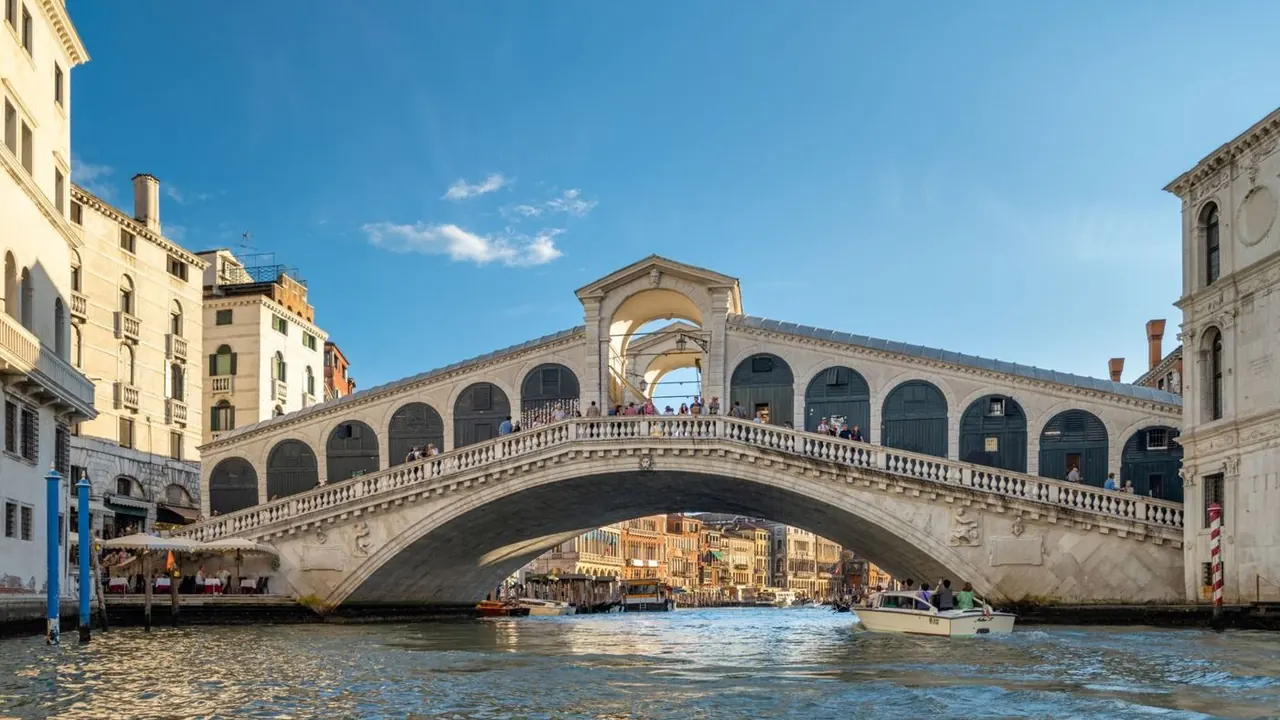
Venice is about the lagoon and the bar counter: cicchetti and a spritz in the bacari, cuttlefish risotto, sarde in saor, moeche from the Rialto market. The best of it is more distinctive than Lucca's, but tourist restaurants crowd the main routes, so it pays to eat in Cannaregio or Castello.
Culture & sights
Venice is in another league here. The whole city is a monument, from the Basilica of San Marco and the Doge's Palace to the palazzi of the Grand Canal. On top of that come the Venetian painters in the Accademia, Titian at the Frari, Tintoretto at San Rocco, modern art at the Guggenheim and the Biennale.
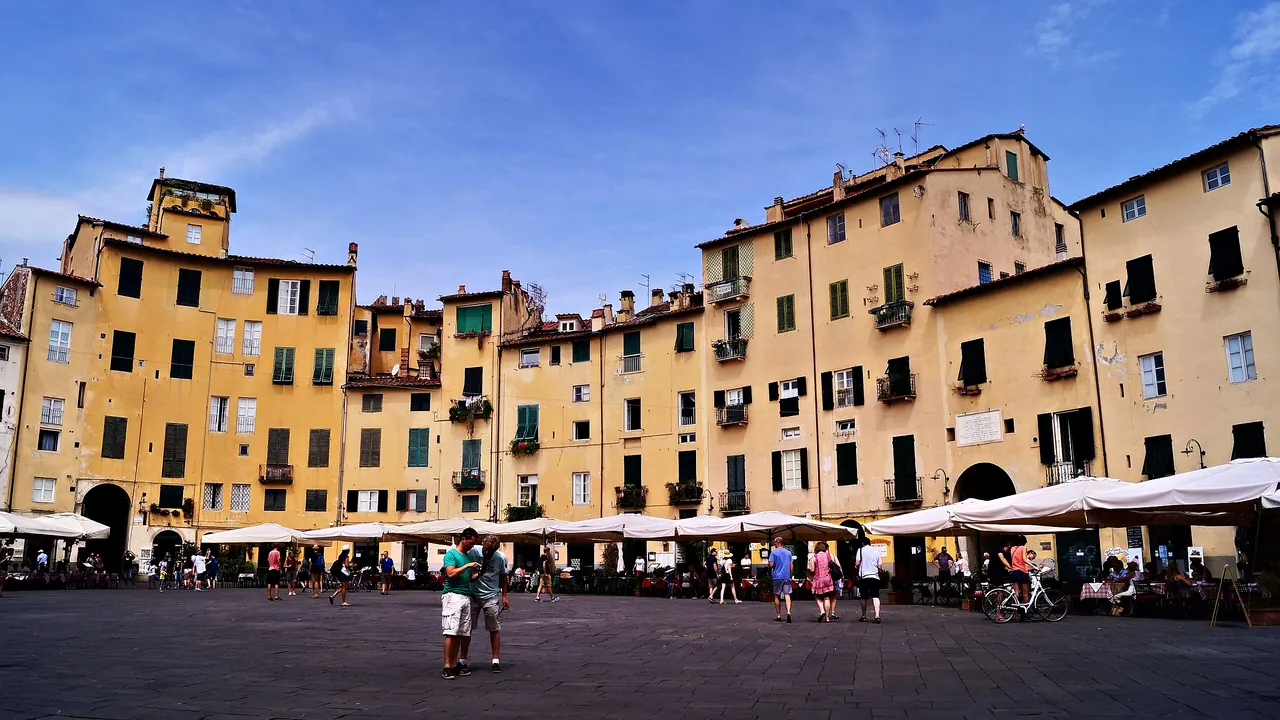
Lucca has real charm on a smaller scale: complete Renaissance walls, the carved façade of San Michele, Ilaria del Carretto's tomb in the cathedral and the oval Piazza dell'Anfiteatro. Its museums are modest, though, and two days cover the essentials where Venice could fill a week.
Nightlife
Neither city is for a big night out, and both centres fall quiet around midnight. The evening is built around aperitivo: in Lucca on Piazza San Michele or the Anfiteatro, followed by dinner and a stroll on the walls.
Venice has a little more going on. The bacari of the Rialto and the Fondamenta della Misericordia fill up early, and student bars keep Campo Santa Margherita busy later. For dancing, both send people to the coast in summer, to Versilia or Jesolo.
Nature & outdoors
Lucca has much more to offer outdoors. The tree-lined walls and Serchio cycle paths are right in town, and the olive hills begin at the edge of the city. The Apuan Alps, with their limestone peaks and marble quarries, are about an hour north, and the Garfagnana's chestnut and beech woods are close by.
Venice's nature is the lagoon: marshes around Torcello, herons and flamingos, kayaking or Venetian rowing. It is beautiful but flat, the city has few parks, and real mountains are more than two hours away.
Day trips
Both are excellent bases, with Lucca slightly ahead. From Lucca, Pisa is half an hour by train and Florence little more than an hour, with Pistoia, the Lucca villas, Collodi, Pietrasanta and the coast all close. The Cinque Terre and San Gimignano are possible with an early start.
From Venice, fast trains reach Padua, Vicenza and Verona easily, and the Brenta villas and Prosecco hills are nearby. The difference is the lagoon, which gives Venice a day of island-hopping to Murano, Burano and Torcello without boarding a train.
Good for families
Lucca is the easier city with children. Its centre is small, flat and almost traffic-free, so a family bike or quadricycle ride round the walls is simple. Pinocchio Park at Collodi and the Versilia beaches are each under half an hour away.
Venice delights children in theory, with its boats, glass-blowing on Murano and the Lido's shallow water. The practice is harder: stepped bridges defeat pushchairs, summer crowds are thick and there are few parks or playgrounds. Short stays with older children work best.
Getting around
Both centres are car-free and best on foot, but Lucca is the smoother of the two. It is compact, level and made for bikes, and the station sits just outside the walls with direct trains to Pisa and Florence. Only the hill villages and the Garfagnana really need a car.
In Venice, bikes are ruled out and walking is the only option apart from the boats. Alleys that dead-end at canals get people lost, hundreds of bridges have steps, and the vaporetti are slow and crowded. Arrival by train at Santa Lucia, though, is easy.
Shopping & style
Venice has the better shopping, built on crafts with centuries behind them: Murano glass, Burano lace, papier-mâché masks, marbled paper and furlane slippers. Big fashion names line Calle Larga XXII Marzo. The catch is the imported fakes on the main routes, so look for workshops where you can see the craft being done.
Lucca is smaller and more provincial. Via Fillungo has fashion and jewellery behind old Liberty shopfronts, and the lanes sell oil, wine and buccellato. Its real draw is the monthly antiques market around the cathedral.
Affordability
Lucca is the far cheaper stay. Prices are normal for central Italy and well below Florence. The walls and most churches are free and trattoria meals are fair, so accommodation is the main cost, and staying just outside the walls helps.
Venice is among the most expensive places in Italy. Hotels in the centre, water transport and entry to most churches all cost more, and café table service on San Marco is notorious. Cicchetti at the counter and a bed in Mestre or a quieter sestiere soften the bill.
Live music & performing arts
Venice has the deeper stage. La Fenice, where Verdi and Rossini premiered works, runs a full season of opera, ballet and concerts. The Goldoni and the Biennale festivals add drama and contemporary work, and Vivaldi concerts in churches fill most evenings, of uneven quality but in the city where he worked.
Lucca's music belongs to Puccini: nightly recitals of his arias, the Teatro del Giglio's season and open-air opera by the lake at Torre del Lago in summer. Big outdoor concerts come to Piazza Napoleone in July. It is charming but narrower.
Wellness & relaxation
Neither city has a bathing culture of its own, but Lucca is better placed for a gentle trip. Montecatini's belle époque spas are half an hour away by train, along with the cave pools of Monsummano and the steam grottoes of Bagni di Lucca. In town, the quiet streets and shaded walls set an unhurried pace.
Venice relies on hotel spas in palazzi and on the Lido, with the thermal mud of Abano about an hour away. Its calm is real in Castello, Cannaregio and on Giudecca, but the daytime crowds around San Marco work against it.
When should you go?
Pick your month. The climate figures are measured averages, not a forecast.
Lucca in July
Venice in July
Daytime high, °C
Rainfall in the month, mm
Temperature and rainfall are climate normals, averaged over the years shown. Lucca: 1991-2020 normals, Pisa / S. Giusto (21.4 km from centre). Venice: 1991-2020 (sunshine 1971-2000, rainfall 1981-2010) normals, Venezia / Tessera (6.7 km from centre).
Both cities are at their most comfortable in May, June and September, when it is warm enough for long walks and, by June, for swimming. The sea off both coasts reaches about 25°C in July and August. Lucca's inland plain gets hotter, around 30°C at midsummer, and has noticeably more sunshine than Venice right through the year. Its summers are also drier, but autumn turns wet, with October and November the rainiest months at around 130mm.
Venice is cooler at both ends of the year. Winter highs stay in single figures, around 7°C in January, so it is a raw season for wandering the canals, while Lucca stays a few degrees milder. Rain in Venice is spread more evenly through the year, with no dry summer and no very wet peak, so a shower is possible in any month. For a spring or autumn trip, Lucca has the warmer and sunnier weather, but its late autumn is the wetter of the two.
Which traveller are you?
For a culture and arts trip, Venice wins clearly. Palaces on the Grand Canal, the Accademia, the Frari, San Rocco's Tintorettos and the Biennale give days of serious looking. Lucca's Romanesque churches and walls are lovely but take about two days.
On a trip on a tight budget, Lucca is far easier on the wallet. Its trattorias, regional trains and free walls and churches cost much less. Venice's hotel rooms, water transport and paid entry to most churches add up quickly.
On an outdoors trip, choose Lucca. Its 4km walls are made for cycling and running, the marble peaks of the Apuan Alps are about an hour away and the Garfagnana has quiet trails. Venice offers lagoon kayaking and birdwatching on flat ground.
Before you go
| Measure | Lucca | Venice |
|---|---|---|
| Official language | Italian | Italian |
| Currency | Euro (EUR) | Euro (EUR) |
| Sockets | CFL230 V, 50 Hz | CFL230 V, 50 Hz |
| Driving side | Right | Right |
| Time zone | UTC+1, UTC+2 in summer | UTC+1, UTC+2 in summer |
| Emergency number | 112 | 112 |
| Elevation | 19 m | 2 m |
| Main airport | Pisa International Airport (PSA)21 km from centre82 non-stop destinations | Venice Marco Polo Airport (VCE)7 km from centre103 non-stop destinations |
| Public holidays this year | 13 days | 13 days |
By the numbers
| Measure | Lucca | Venice |
|---|---|---|
| City population | 88,798 | 250,369 |
| People per km² | 478 | 602 |
| Museums within 10 km | 20 | 52 |
| UNESCO World Heritage sites within 50 km | 4 | 5 |
| Swim season, months above 21 °C | 4 months | 4 months |
Where else could you go?
Every comparison below shares a destination with this one, so you can follow Lucca or Venice somewhere new.