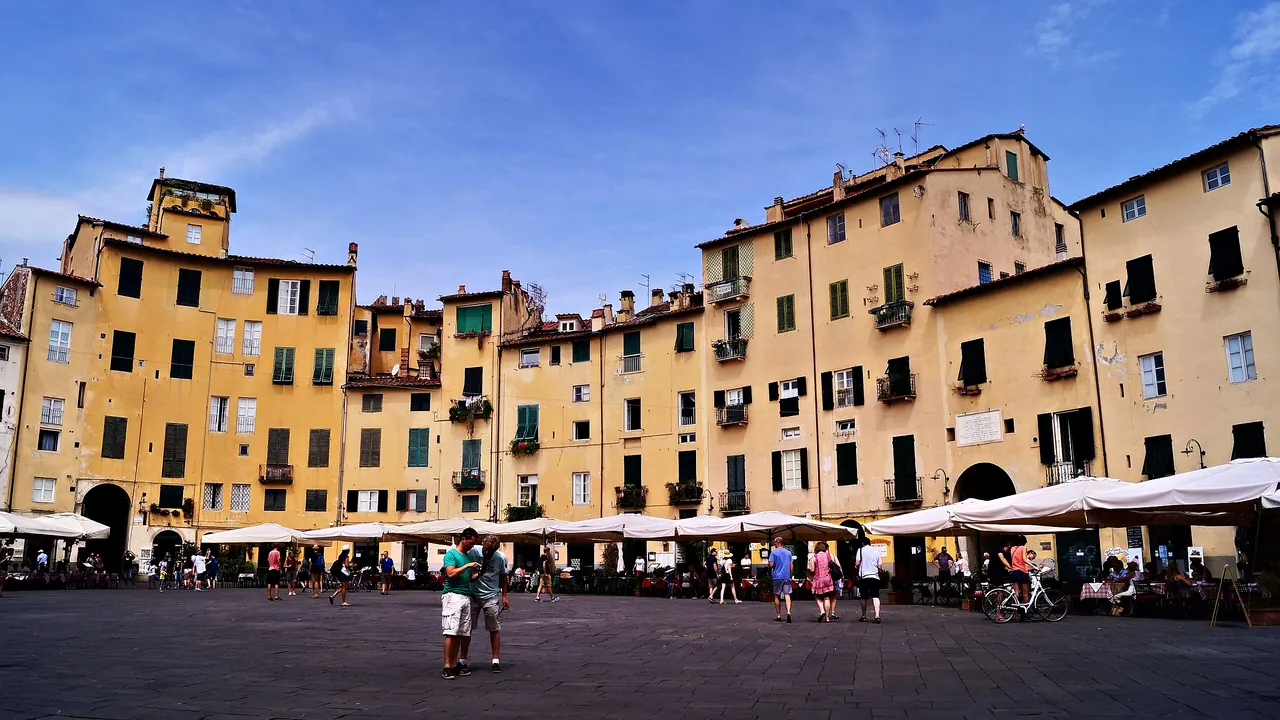
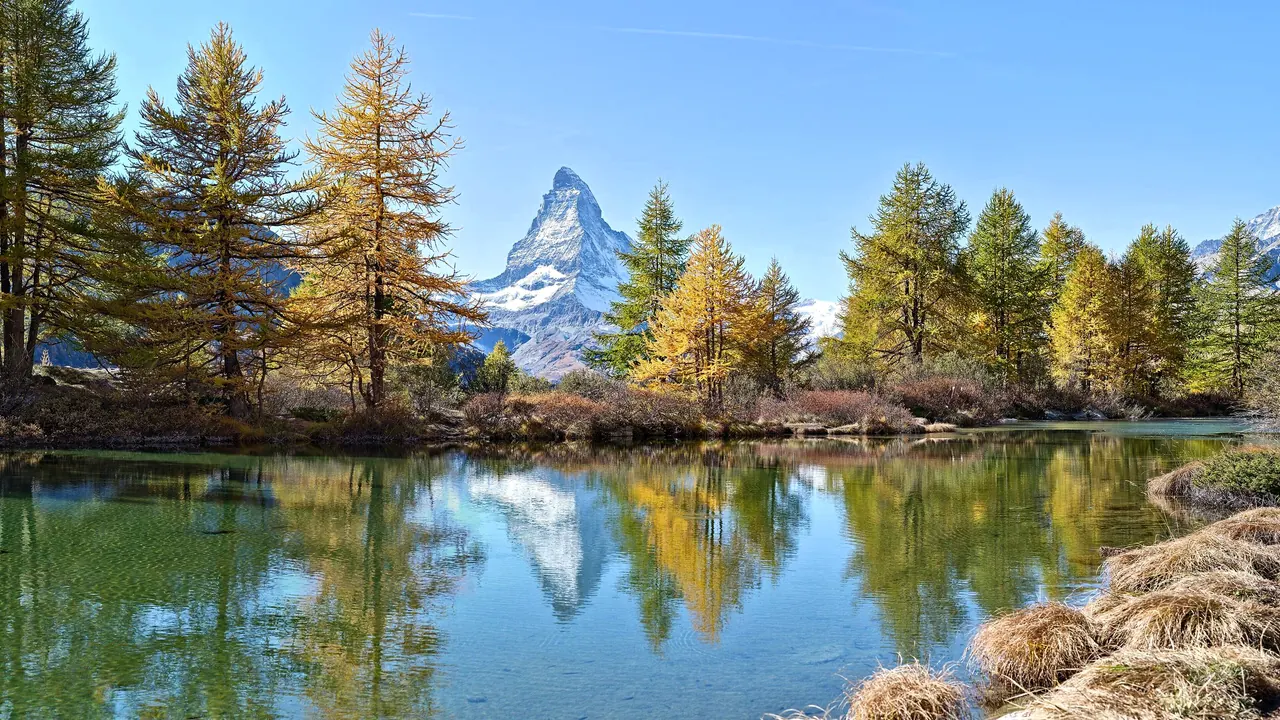
Photos: Lucca by Stefano Sansavini, CC BY-SA 4.0, cropped; Zermatt by Roy Egloff, CC BY-SA 4.0, cropped.
Lucca or Zermatt?
Our verdict in twelve categories, each scored against the same fixed benchmark cities, and the climate month by month, so you can choose for your trip.
Choose Lucca for
- day trips
- beaches
- culture and sights
Lucca suits a traveller who wants Italy at walking pace. You get Romanesque churches inside a complete ring of walls, rustic trattoria meals, opera in Puccini's home town and trains to Pisa, Florence and the Versilia beaches. It costs far less than Zermatt and gives you much more to do when you are not out in the hills.
Choose Zermatt for
- nature and the outdoors
- nightlife
- getting around
When the mountains are the whole point, Zermatt is the place. The Matterhorn stands right over the village, lifts climb to glaciers and high trails, and the skiing runs across the border into Italy. You will pay heavily, and evenings mostly end with dinner rather than a concert, but no Tuscan base puts the high Alps on your doorstep.
Scoreboard
Twelve categories on one fixed scale from 0 to 100. The shaded stretch is the gap between the two.
Your match
Pick a travel style or drag the sliders, and both match scores follow your weighting.
Wins on day trips and beaches with your weighting.
Wins on nature and the outdoors and nightlife with your weighting.
What matters to you?
Category by category
What the scores mean for a trip.
Beaches & swimming
Lucca has no sea of its own, but the long sandy beaches of Versilia are less than half an hour away by train. The water shelves gently and is warm enough to swim from June to September. You can pick the neat rows of umbrellas at the beach clubs or the dunes of the Lecciona, which are backed by pine woods.
Zermatt has nothing like this. Its mountain tarns are for photographing the Matterhorn, not for swimming, so a swim means a hotel pool.
Food & drink
Lucca eats better, and for less. Farro soup, meat-filled tordelli, cecina from the bakery and buccellato make a distinct local table, and the family trattorias inside the walls are reliable, even if the menus start to look alike after a few days.
Zermatt's food is heavier and feels more like an occasion than everyday eating: raclette, fondue and air-dried beef, at their best on a chalet terrace at Findeln or Zum See with the Matterhorn in view. In the village the choice is mostly hotel dining rooms and a few ambitious kitchens, and casual, inexpensive meals are scarce.
Culture & sights
The gap here is wide. In Lucca the city itself is the sight: an intact ring of Renaissance walls, the arcaded front of San Michele in Foro, the mosaic at San Frediano, the cathedral with Ilaria del Carretto's tomb, and the oval piazza built into a Roman amphitheatre. Two full days go by easily.
Zermatt's heritage is about mountaineering. The Matterhorn Museum, the climbers' cemetery and the old larch barns of the Hinterdorf take a morning, and after that the peaks are the attraction.
Nightlife
Neither is a place for a big night out, but Zermatt is a little livelier in winter. The après-ski bars on the runs into the village fill from late afternoon, and a few bars and small clubs on the main street stay open past midnight on busy weekends. In summer and between seasons the village goes quiet early.
Lucca's evenings are slower: aperitivo in Piazza San Michele, a long dinner, a stroll on the walls, and a calm centre by midnight. In summer, dancing means a late trip out to the Versilia coast.
Nature & outdoors
Close to Lucca the outdoors is gentle: the 4km tree-lined walls, cycle paths along the Serchio and olive-covered hills. It gets dramatic about an hour north, in the marble-quarried Apuan Alps and the chestnut woods of the Garfagnana, and spring and autumn are the seasons for both.
Zermatt is in another league. The Matterhorn rises straight above the village, and lifts climb to glaciers above 3,800m. The same lifts serve skiing into Italy in winter and, in summer, hundreds of kilometres of trails, ibex and climbs of four-thousand-metre peaks.
Day trips
Lucca is one of the best bases in Tuscany. Pisa is half an hour away by train and Florence just over an hour, and the villas at Marlia and Collodi, the sculptors' studios of Pietrasanta and the Versilia coast are all close. With an early start you can even reach the Cinque Terre or San Gimignano.
From Zermatt every outing begins with a long train ride down the valley. Sion, with its castle hills, and Brig, with the Stockalper Palace, are each worth a day, but most visitors spend their spare days up the mountain instead.
Good for families
Both have quiet, traffic-free centres, but Lucca gives children a little more to do. Riding the walls on a family quadricycle, the oak trees on top of the Torre Guinigi, Pinocchio Park at Collodi and the nearby beaches fill several days, and Lucca Comics & Games is a treat for teenagers in autumn.
Zermatt works best for families who ski or hike: nursery slopes at Sunnegga in winter, marmots and cog railways in summer. Rainy days are hard to fill, though, and the highest viewpoints can be too cold and too high for small children.
Getting around
Both are easy on foot, and in neither does a car help much in town. Lucca's flat centre is made for bikes, and the station just outside the walls has frequent trains to Pisa and Florence, though you need a car for the hill villages and the Garfagnana.
Zermatt is car-free altogether. You arrive by train via Täsch, walk or take an electric taxi, and catch the cog railway and gondolas straight from the village. The slow part is leaving the valley, which takes over an hour by train.
Shopping & style
Lucca has more to browse. The old Liberty-style shopfronts on Via Fillungo, delicatessens selling olive oil and buccellato, and the monthly antiques market around the cathedral make a pleasant afternoon, though not a luxury one.
Zermatt's one main street is aimed at wealthy skiers, with Swiss watches, jewellery, cowbells and chocolate. Its real strength is outdoor gear, which is excellent if you need boots or a shell jacket.
Affordability
Lucca is moderately priced for central Italy and cheaper than Florence. The walls and many churches are free, and beds are the main expense, which you can cut by staying just outside the walls. Zermatt is one of the most expensive places in the Alps, with steep rooms, mountain-terrace meals and lift tickets, and even self-catering and sleeping in Täsch only soften the cost.
Live music & performing arts
Music runs deep in Lucca, Puccini's birthplace. Recitals of his arias are held for most of the year, the Teatro del Giglio has an opera season, and in July big outdoor concerts come to Piazza Napoleone. The lakeside Puccini Festival at Torre del Lago is half an hour away.
Zermatt has no theatre or concert hall. Zermatt Unplugged in spring and a late-summer chamber music festival in the church are worth planning a trip around, but at other times live music means a band in an après-ski bar.
Wellness & relaxation
Neither has thermal springs of its own, so the difference is in the kind of rest each offers. Lucca relaxes you through its pace, with quiet streets and long lunches, and old spa towns make easy day trips: Montecatini Terme, the cave pools at Monsummano and the steam grottoes of Bagni di Lucca.
In Zermatt the pampering happens indoors, in a dense cluster of hotel spas with pools, saunas and mountain views, some of which sell day passes to visitors. The clear air is restful, but the village feels active rather than slow.
When should you go?
Pick your month. The climate figures are measured averages, not a forecast.
Lucca in July
Zermatt in July
Daytime high, °C
Rainfall in the month, mm
Where the figures come from
Zermatt has no weather station within reach, so its figures come from a gridded climate model rather than a measured record, and read a broad area rather than the city itself.
Temperature and rainfall are climate normals, averaged over the years shown. Lucca: 1991-2020 normals, Pisa / S. Giusto (21.4 km from centre). Zermatt: 1991-2020 normals, TerraClimate 4 km grid at the town, no weather station within 90 km.
Lucca is at its best in the warm half of the year. The sea off Versilia is good for swimming from June to September and warms to 25°C in July and August. Those same months bring highs around 30°C, though, which is too hot for long afternoons in the streets. May, early June and the first weeks of September are the best times for walking and sightseeing. After that the rain builds quickly to a peak of about 132mm in November, and winters are mild but short on sunshine.
Zermatt has two clear seasons. From December to March daytime highs stay below freezing, down to about -2°C, which is the time for snow sports. July and August are the walking months, with highs of about 14°C, so you will want a warm layer higher up. Rain and snow fall fairly evenly through the year, and November is the wettest month. The two places rarely compete for the same weeks: Lucca is best in spring and early autumn, Zermatt in deep winter and high summer.
Which traveller are you?
On a culture and arts trip, Lucca is the clear choice. Its complete walls, carved Romanesque façades and the Volto Santo fill two days, Puccini recitals run through most of the year, and Florence and Pisa are a short train ride away. Zermatt's history fits into one morning.
For an outdoors trip, Zermatt has no equal here. Lifts reach glaciers above 3,800m, summer trails lead past mountain lakes towards the Matterhorn, and in winter you can ski high and cross into Italy. Lucca's Apuan Alps make good hiking, but they are a day out, not on the doorstep.
On a trip on a tight budget, Lucca lets you do a lot for little. Have cecina from a bakery counter for lunch, swim from the free dunes of the Lecciona instead of a beach club, and see Florence on a day trip by train. In Zermatt you cannot skip the lifts, so the saving comes from picnicking on the mountain.
Before you go
| Measure | Lucca | Zermatt |
|---|---|---|
| Official language | Italian | French, German, Italian, Romansh |
| Currency | Euro (EUR) | Swiss Franc (CHF) |
| Sockets | CFL230 V, 50 Hz | CJ230 V, 50 Hz |
| Driving side | Right | Right |
| Time zone | UTC+1, UTC+2 in summer | UTC+1, UTC+2 in summer |
| Emergency number | 112 | 112 |
| Elevation | 19 m | 1,624 m |
| Main airport | Pisa International Airport (PSA)21 km from centre82 non-stop destinations | Geneva International Airport (GVA)128 km from centre150 non-stop destinations |
| Public holidays this year | 13 days | 9 days |
By the numbers
| Measure | Lucca | Zermatt |
|---|---|---|
| City population | 88,798 | 6,023 |
| People per km² | 478 | 25 |
| Museums within 10 km | 20 | 2 |
| UNESCO World Heritage sites within 50 km | 4 | 2 |
| Swim season, months above 21 °C | 4 months | - |
Where else could you go?
Every comparison below shares a destination with this one, so you can follow Lucca or Zermatt somewhere new.