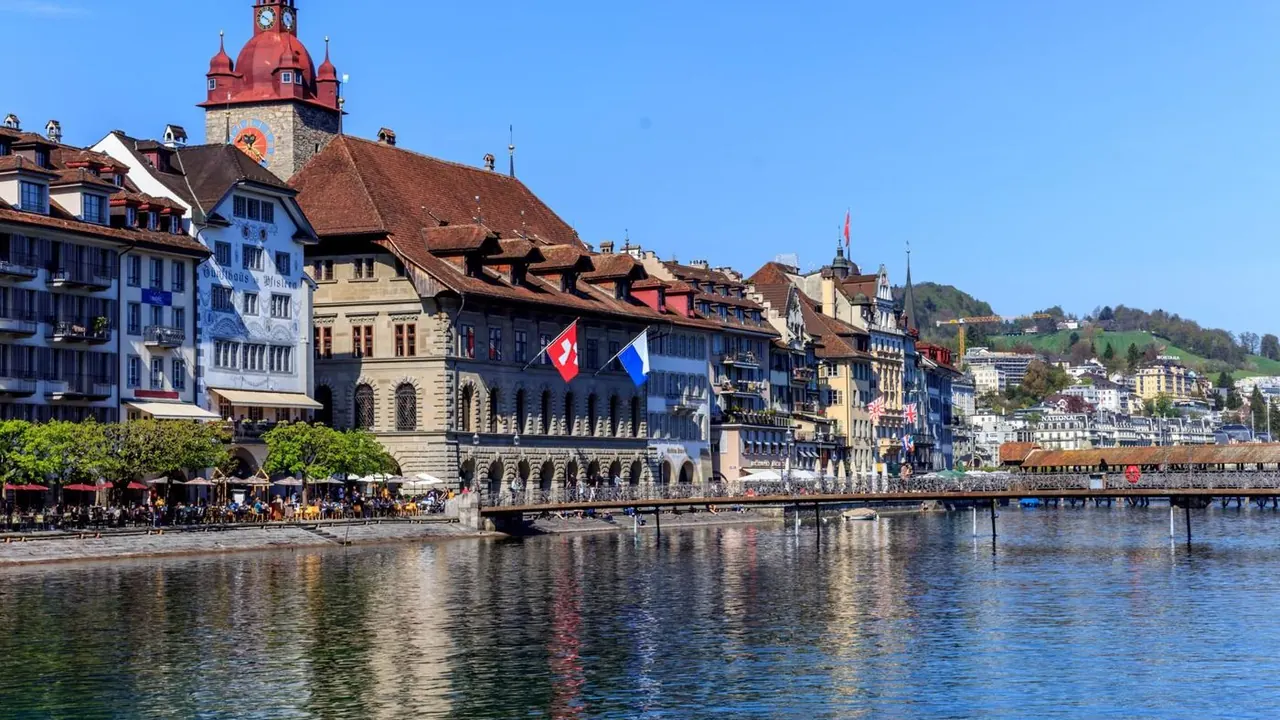
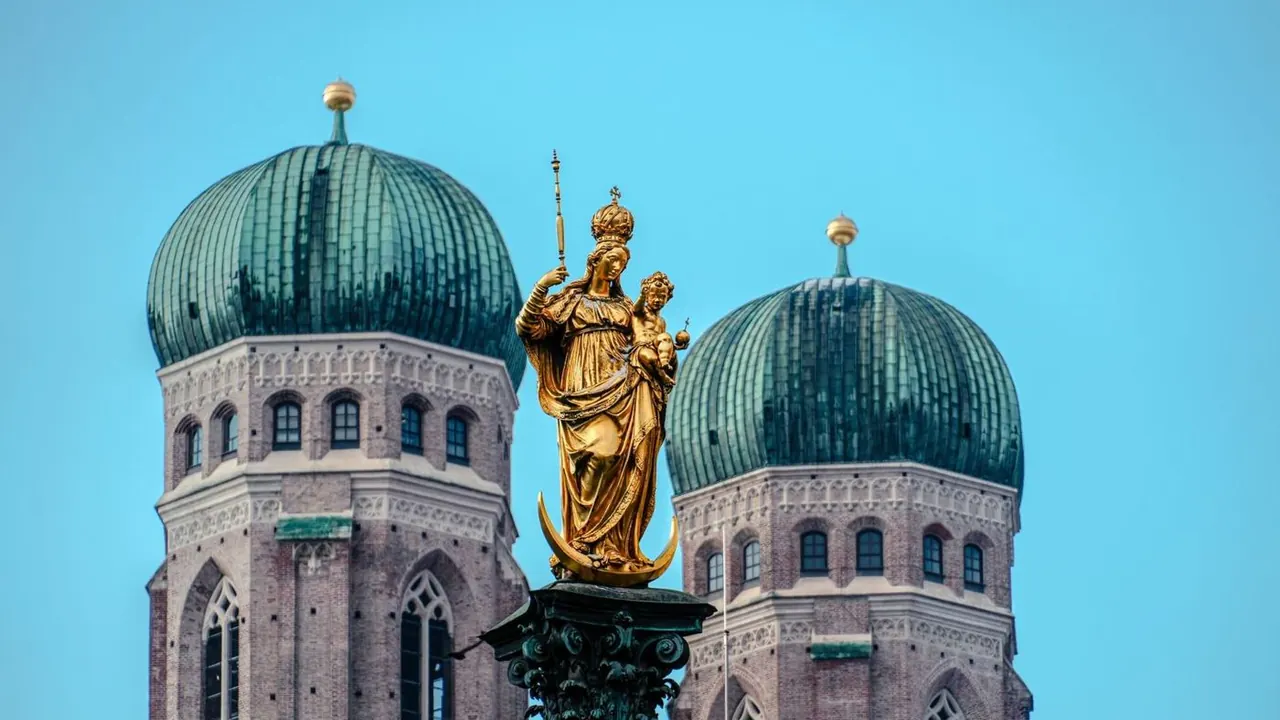
Photos: Lucerne by ILOVESwitzerland, Pexels License; Munich by 0xd1ma, Pexels License.
Lucerne or Munich?
Our verdict in twelve categories, each scored against the same fixed benchmark cities, and the climate month by month, so you can choose for your trip.
Choose Lucerne for
- nature and the outdoors
- beaches
Lucerne is the better pick if the landscape is the point of the trip. The lake and the mountains start at the station door: a steamer, a cogwheel railway and a ridge walk all fit into one day, and you never need a car. The town itself is small, calm and quickly seen, so it suits travellers who want quiet evenings and big views more than a full programme of things to do in town, and who can accept a very high bill.
Choose Munich for
- nightlife
- food and drink
- shopping
Munich makes more sense for a broader city trip. Great painting collections, a world-class opera house, beer gardens, proper shopping and a real night out are all there, and the Alps, the lakes and royal castles are close enough for day trips. It is expensive too, though less so than Lucerne, and it gives families and people who like to eat and drink a lot more to do.
Scoreboard
Twelve categories on one fixed scale from 0 to 100. The shaded stretch is the gap between the two.
Your match
Pick a travel style or drag the sliders, and both match scores follow your weighting.
Wins on nature and the outdoors and beaches with your weighting.
Wins on nightlife and food and drink with your weighting.
What matters to you?
Category by category
What the scores mean for a trip.
Beaches & swimming
Neither city has a beach in any real sense, but Lucerne makes swimming easier. The Lido, the old wooden lake baths and the lawns at Ufschötti are a short walk from the Old Town, and the water is calm and clean, with mountains behind it.
In Munich, a proper swim means taking the S-Bahn out to the Starnberger See or the Ammersee. In town, the Isar's gravel banks at the Flaucher are better for sunbathing and barbecues than for swimming. In both places the lakes are only warm enough from about June to early September.
Food & drink
Munich gives you much more to eat and drink. The beer hall and beer garden tradition is a reason to visit in itself, with roast pork, white sausage before noon, Obatzda and the Viktualienmarkt for grazing, plus a solid tier of fine dining.
Lucerne's cooking is good and dependable, with Chügelipastete, fondue, rösti and lake perch served in panelled guild houses. Choice is limited, though, and many tables near the Chapel Bridge cater to coach tours. A riverside coffee or a glass of Swiss white on the Reuss is the most memorable part.
Culture & sights
Munich offers far more to see. The Kunstareal alone, with the Alte Pinakothek, the Glyptothek and the Blue Rider painters at the Lenbachhaus, could fill several days, and the Residenz, Nymphenburg and the Deutsches Museum come on top of that.
Lucerne's sights are fewer but highly memorable: the painted Chapel Bridge, the towers of the Musegg Wall and the Lion Monument in its cliff. Its medieval Old Town also survived intact, while much of Munich's centre was rebuilt after the war. The Rosengart's Picasso and Klee collection is the highlight, and a day or two covers the lot.
Nightlife
Munich offers a proper night out. A beer garden evening can run on into the cocktail and gay bars around Gärtnerplatz, and serious techno clubs stay open until morning at weekends, though weeknights are calmer than in many big cities.
Lucerne is more about a drink by the water and an early night. A few bars near the station and a small club scene keep students busy on Saturdays. Each city has one big exception: Lucerne's Fasnacht carnival, which runs all night in costume, and Munich's Oktoberfest tents on the Theresienwiese.
Nature & outdoors
Lucerne's setting is the closer and more dramatic of the two. The lake is right in the city, and Pilatus, Rigi and the Stanserhorn rise from its shores, reached by cogwheel railway, cable car and paddle steamer. Glacier snow on Titlis is about an hour away.
Munich has to travel for its mountains, about an hour by train to Garmisch, the Zugspitze or Tegernsee, but it makes up for that within the city. The English Garden, the surfers on the Eisbach and the cycle paths along the Isar give it green space that Lucerne's compact lakefront cannot match.
Day trips
Munich has the longer list of outings. Augsburg, Nuremberg, Regensburg, Salzburg and Innsbruck are all within easy train range, and Neuschwanstein and Herrenchiemsee are the classic castle trips.
Lucerne is well placed too, with Bern, Basel and Zurich each under an hour away. Its distinctive outing is the lake itself, with a boat to the Rütli meadow and Altdorf, where the William Tell story and the founding of Switzerland are set.
Good for families
Lucerne is small, flat along the river and very safe, but it leans on one big attraction, the Swiss Museum of Transport, and on journeys children love: paddle steamers, cogwheel trains up Pilatus and Rigi, and the summer toboggan run. These are wonderful in clear weather, but they cost a lot. There is no zoo or aquarium to fall back on when it rains.
Munich gives children more to do. Hellabrunn zoo stretches along the Isar meadows, many beer gardens have playgrounds, and the English Garden and the lakes fill summer days. On wet days the Sea Life aquarium and the hands-on children's area at the Deutsches Museum are good indoor options.
Getting around
Both are easy without a car, but in different ways. Lucerne is a walking town: the station, the boat piers and the Old Town sit together on the lakefront, and the same Swiss tickets carry you onto steamers, mountain railways and cable cars.
Munich is a big city with a pedestrianised core and a full network of U-Bahn, S-Bahn and trams out to Nymphenburg, the Olympic Park and the lakes, and its flat streets suit cycling. Each has its weak point. In Lucerne, a day combining boat, rail and cable car means studying the connections first. In Munich, the trouble is delays on the busy central S-Bahn line.
Shopping & style
Munich is the far better shopping city. Luxury houses line Maximilianstrasse, department stores fill the Kaufingerstrasse pedestrian zone, Glockenbach and Schwabing have independent boutiques, and Tracht tailors sell real dirndls and lederhosen.
Lucerne's shopping comes down to watches, with large jewellery houses on Schwanenplatz, plus army knives, chocolate and cuckoo clocks for the tour groups. Beyond that there are a few Old Town boutiques and the Saturday market.
Affordability
Neither is cheap, but Lucerne is in a different league. Hotels, ordinary meals and the mountain railways that make a stay worthwhile all cost a lot, and a Swiss travel pass and lakeside picnics only take the edge off.
Munich's hotels are dear, especially during Oktoberfest and the trade fairs. Day to day, though, beer-hall meals are fair value, you can bring your own food to a beer garden, the parks and lakes are free, and museums charge little on Sundays.
Live music & performing arts
Lucerne is at its best during the festival, when leading orchestras play in Jean Nouvel's lakefront hall, famous for its acoustics. The rest of the year it has the programme of a small city, with the symphony orchestra, the city theatre and Fasnacht's Guggenmusik bands.
Munich has more going on in any week of the year. The Bavarian State Opera plays most of the season at the National Theatre, and the Bavarian Radio Symphony Orchestra, the Munich Philharmonic and the Bavarian State Orchestra give concerts in halls such as the Herkulessaal and the Prinzregententheater. Chamber opera in the rococo Cuvilliés Theatre, operetta at the Gärtnerplatz and a jazz club scene add to that.
Wellness & relaxation
Munich has a real bathing culture. There is the Art Nouveau Müller'sches Volksbad with its Roman-style steam bath, textile-free public saunas with infusion rituals, and the huge thermal complex at Erding, about forty minutes away.
Lucerne relies on hotel spas and on Mario Botta's mineral bath high on the Rigi. Its strength is quiet: lakeside promenades, slow steamer afternoons and empty evenings, as long as you avoid the Old Town at midday.
When should you go?
Pick your month. The climate figures are measured averages, not a forecast.
Lucerne in July
Munich in July
Daytime high, °C
Rainfall in the month, mm
Where the figures come from
Lucerne has no rain gauge within 25 km of the centre, so its rainfall comes from a gridded climate dataset read at the city rather than from a gauge further away.
Lucerne's sunshine is measured 42 km from the centre, at Zurich Town / Ville..
Temperature and rainfall are climate normals, averaged over the years shown. Lucerne: 2005-2025 (sunshine 1991-2020, rainfall 1991-2020) normals, Emmen (4.2 km from centre). Munich: 1991-2020 normals, München (1.9 km from centre).
The two share almost the same calendar. Both are cold and often grey from December to February, with highs of about 4°C, which is fine for museums and Christmas markets but not for long days on the lake. Spring warms up quickly. June to August brings highs in the low to mid twenties, warm enough for lake swimming and the best time for mountain views, though it is also the wettest stretch. Lucerne collects about 136mm in June and Munich about 121mm, mostly in the form of summer showers.
Munich has a little more sun in every month, and the difference matters most in winter, when the low cloud over Lake Lucerne can hide the peaks for days. For walking and hiking, September is the sweet spot in both, with highs near 19°C, the summer rain easing and the weather still settled enough for a cable car. In Munich it is also the month the city is at its fullest.
Which traveller are you?
On an outdoors trip, Lucerne wins. Pilatus, Rigi and the Stanserhorn rise straight from the lake, and boats and mountain railways link the trailheads to the station. Munich's Alps are real but sit about an hour away across a flat plain.
For a food and nightlife trip, choose Munich. Beer halls, beer gardens and the Viktualienmarkt give it a food culture of its own, and Glockenbach's bars and the weekend techno clubs run late. Lucerne's taverns and riverside bars are pleasant but quiet by midnight.
On a tight budget, Munich is the only realistic option of the two. Beer garden picnics, free parks and lakes, and cheap Sunday museum entry all help. In Lucerne the hotels, the meals and the mountain fares that justify the visit add up with no real way to cut them.
Before you go
| Measure | Lucerne | Munich |
|---|---|---|
| Official language | French, German, Italian, Romansh | German |
| Currency | Swiss Franc (CHF) | Euro (EUR) |
| Sockets | CJ230 V, 50 Hz | CF230 V, 50 Hz |
| Driving side | Right | Right |
| Time zone | UTC+1, UTC+2 in summer | UTC+1, UTC+2 in summer |
| Emergency number | 112 | 112 |
| Elevation | 436 m | 519 m |
| Main airport | Zürich Airport (ZRH)49 km from centre226 non-stop destinations | Munich Airport (MUC)29 km from centre210 non-stop destinations |
| Public holidays this year | 12 days | 12 days |
By the numbers
| Measure | Lucerne | Munich |
|---|---|---|
| City population | 86,234 | 1,505,036 |
| People per km² | 2,963 | 4,844 |
| Museums within 10 km | 14 | 74 |
| UNESCO World Heritage sites within 50 km | 1 | 1 |
Where else could you go?
Every comparison below shares a destination with this one, so you can follow Lucerne or Munich somewhere new.