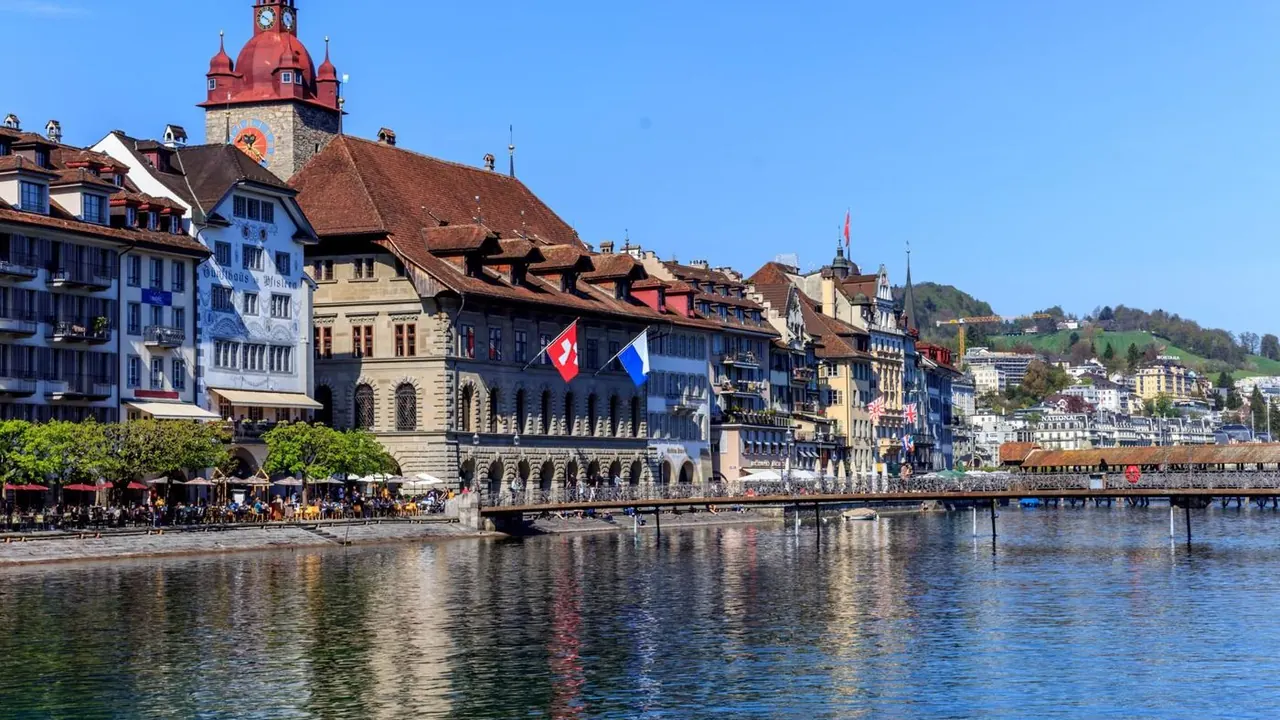
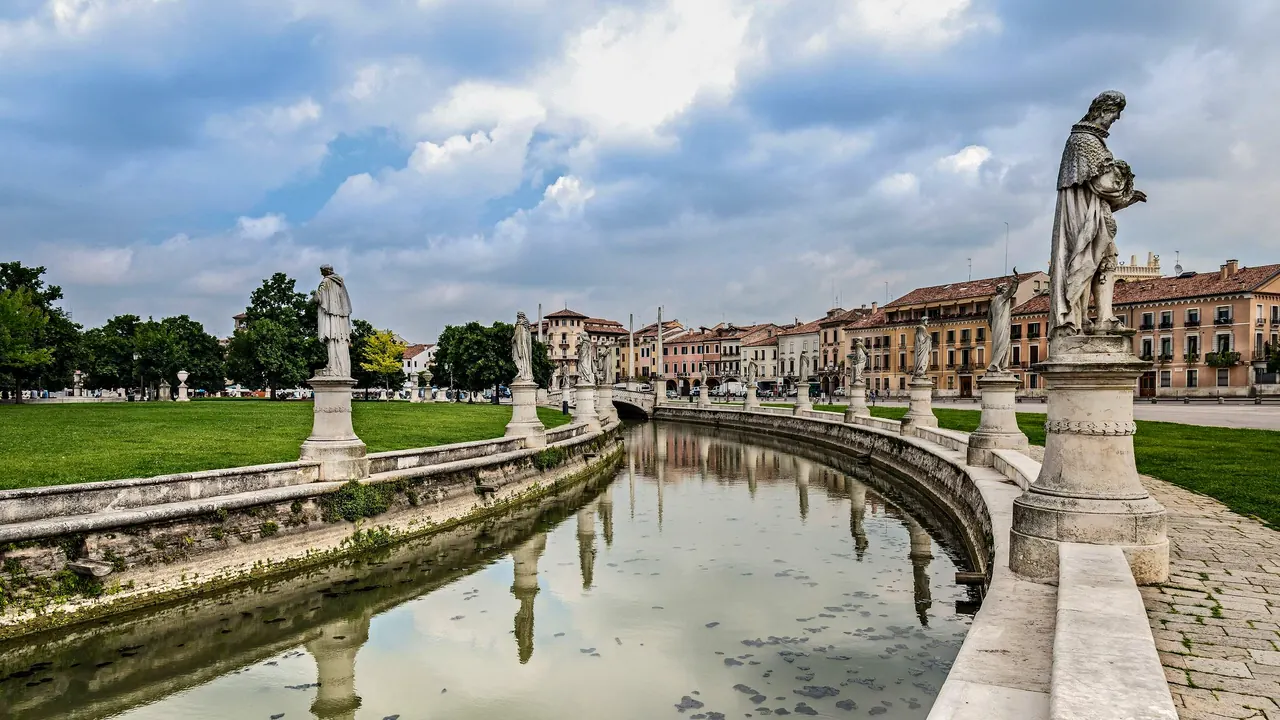
Photos: Lucerne by ILOVESwitzerland, Pexels License; Padua by Didier Descouens, CC BY-SA 4.0, cropped.
Lucerne or Padua?
Our verdict in twelve categories, each scored against the same fixed benchmark cities, and the climate month by month, so you can choose for your trip.
Choose Lucerne for
- nature and the outdoors
- live music and the arts
- families
Lucerne is for travellers who come for the landscape. The lake and the peaks of Pilatus, Rigi and Titlis are within a boat or train ride of the station, so days are spent on steamers, cogwheel railways and ridge walks. In the evening there is a quiet Old Town, and in late summer one of the world's great classical festivals. It suits couples and families who want scenery, easy logistics and calm, and who can accept that almost everything costs a lot.
Choose Padua for
- prices
- food and drink
- wellness
Choose Padua if you care more about art, food and a strong base for touring. Giotto's Scrovegni Chapel and the Basilica of Saint Anthony are on the doorstep, the spritz hour in the market squares is a daily social event, and Venice, Verona and Vicenza are short train rides away. The thermal baths of Abano lie just outside town. It costs far less than Lucerne and rewards people who like to eat well and move between Italian cities, though it has little in the way of mountains or attractions built for children.
Scoreboard
Twelve categories on one fixed scale from 0 to 100. The shaded stretch is the gap between the two.
Your match
Pick a travel style or drag the sliders, and both match scores follow your weighting.
Wins on nature and the outdoors and live music and the arts with your weighting.
Wins on prices and food and drink with your weighting.
What matters to you?
Category by category
What the scores mean for a trip.
Beaches & swimming
Neither city is a beach destination, and Lucerne's swimming is slightly easier to fit in. You can walk from the Old Town to the Lido, the wooden lake baths or the lawns at Ufschötti and swim in clean, calm water with mountains behind you. The catch is that it is only warm enough in high summer.
Padua's swimming means a day out, about an hour to the sand at Sottomarina or the Lido of Venice. The Adriatic there is warmer and shallow, which suits small children, but the beaches are flat strips of umbrellas.
Food & drink
Padua is clearly the better place to eat. Its morning markets in Piazza delle Erbe and Piazza della Frutta, Venetian dishes such as bigoli and baccalà, and the evening spritz with small bites make food part of the day's rhythm. Euganean wines are made just outside town.
Lucerne cooks reliable Swiss comfort food: Chügelipastete, fondue, rösti and lake perch in panelled guild houses. Many tables near the Chapel Bridge serve tour groups, and the choice is narrow and expensive.
Culture & sights
Padua has the deeper art. Giotto's Scrovegni frescoes, the UNESCO-listed fourteenth-century fresco cycles, Donatello's work at the Basilica of Saint Anthony and the anatomical theatre at Palazzo Bo are of European importance. Book the timed chapel visit ahead.
Lucerne's sights are fewer but iconic: the Chapel Bridge and Water Tower, the climbable towers of the Musegg Wall and the Lion Monument, with Picasso and Klee at the Rosengart. Both centres can be covered in a day or two, but Padua gives more to look at closely.
Nightlife
Neither city is for clubbing, but Padua's evenings have more going on. Students and locals fill Piazza delle Erbe and Piazza dei Signori with spritz glasses until late, and the wine bars around the old ghetto stay busy during term.
Lucerne has a drink by the water and then goes quiet, with only a few cocktail bars in the Neustadt. The exception is Fasnacht, when the whole town stays out in costume until dawn.
Nature & outdoors
This is Lucerne's great strength. A branching lake runs straight into the mountains, Pilatus and Rigi rise above the city with their historic railways, and Titlis keeps snow all year. You can combine a boat, a train and a hike in one day, and there is skiing in winter.
Padua sits on a flat plain. The volcanic Euganean Hills, about 15km away, offer vineyard trails and cycling, and the Brenta towpaths make easy rides. For real mountain walking you need to drive to the pre-Alps.
Day trips
Lucerne's outings are good ones. Zurich, Bern's arcaded UNESCO old town and Basel's Rhine-side art museums are each under an hour by train. The lake steamers call at Weggis and Brunnen on the way to the Rütli meadow, where by tradition the Confederation's founding oath was sworn, and Altdorf, the town of the William Tell story. Interlaken is a scenic two hours over the Brünig Pass.
Padua is the stronger base. Venice is under half an hour by train, close enough to visit on several days, Vicenza is quicker still, and Verona, Bologna and Ferrara are about an hour away. Add the Brenta villas and the walled towns of Este and Montagnana, and the list is longer and takes in several of Italy's great art cities.
Good for families
Lucerne gives children more to do. The Swiss Museum of Transport, with its trains, planes and planetarium, is a full day in itself, and the Glacier Garden's mirror maze, the Goldau wildlife park and the Pilatus toboggan run add to it. Rainy days still come up short of ideas.
Padua is relaxed and welcoming with children, and Prato della Valle is a good place to let them run. Its sights are aimed at adults, though, so families usually head out to Gardaland or the Adriatic.
Getting around
Both are easy without a car. Lucerne has the edge because the station, the steamer piers and the Old Town sit together on the lakefront, and one integrated ticket system runs the boats, cogwheel railways and cable cars into the mountains.
Padua's flat, arcaded centre is walkable in about 20 minutes from end to end, with a tram and bicycles for the rest. Its main-line station makes rail touring simple, but a car still helps for the hills and the villa countryside.
Shopping & style
The two are about level for shopping, and neither is a reason to travel, but they suit different buyers. Lucerne is the better stop if you have come for a Swiss watch or a classic souvenir, because its shops are built around that trade and the tour groups it serves. Anyone hunting for clothes, homeware or design will run out of options quickly.
Padua suits someone who likes to browse at a slower pace. Its arcaded streets offer everyday Italian fashion and shoes, and the market squares are where you stock up on cheese and wine to take home. If your dates include the monthly Sunday antiques fair at Prato della Valle, that gives a good reason to linger. For serious fashion shopping, Venice and Milan are both an easy train ride away.
Affordability
The difference in cost is large. Lucerne is one of Europe's most expensive stops: central hotels, simple meals and especially the mountain railways eat through a budget, and lakeside supermarket picnics only help a little.
Padua's prices are moderate. That is exactly why many visitors stay there and visit Venice by train, and spritzes, trattoria meals and getting around the walkable centre all cost little.
Live music & performing arts
For classical music, Lucerne is clearly ahead. The Lucerne Festival brings the world's leading orchestras to Jean Nouvel's acoustically famous lakefront hall, which has its own programme all year, and the city theatre stages opera and dance.
Padua offers chamber concerts in the Sala dei Giganti and the Basilica, plus plays at Teatro Verdi. For big opera, people go to the Fenice in Venice or the Arena in Verona.
Wellness & relaxation
Padua is the better place for a restful stay. Abano and Montegrotto, about 12km away, form one of Europe's largest thermal districts, with hot mineral pools and mud treatments dating back to Roman times, and day visitors are easy to fit in after sightseeing.
Lucerne has no thermal tradition of its own. Its calm comes from quiet evenings, lakeside promenades and slow steamer trips, and the best soak is Botta's mineral bath high on the Rigi.
When should you go?
Pick your month. The climate figures are measured averages, not a forecast.
Lucerne in July
Padua in July
Daytime high, °C
Rainfall in the month, mm
Where the figures come from
Lucerne has no rain gauge within 25 km of the centre, so its rainfall comes from a gridded climate dataset read at the city rather than from a gauge further away.
Lucerne's sunshine is measured 42 km from the centre, at Zurich Town / Ville..
Padua's temperatures are measured 35 km from the centre, at Treviso / Istrana.
Padua has no rain gauge within 25 km of the centre, so its rainfall comes from a gridded climate dataset read at the city rather than from a gauge further away.
Padua's sunshine is measured 36 km from the centre, at Treviso / S. Angelo.
Temperature and rainfall are climate normals, averaged over the years shown. Lucerne: 2005-2025 (sunshine 1991-2020, rainfall 1991-2020) normals, Emmen (4.2 km from centre). Padua: 1991-2020 normals, Treviso / Istrana (35.4 km from centre).
Lucerne is at its best from June to September, when days reach about 24°C and the lake is warm enough for a swim. Those are also its wettest months, with up to 141mm of rain, often in heavy showers, and low cloud can hide the peaks. Winter is cold, grey and short of sun, which suits skiing and sledging in the mountains more than walking the city.
Padua runs hotter and sunnier. July and August reach about 31°C on the humid plain, which is tiring for sightseeing but right for a day at the Adriatic, where the sea warms to around 26°C. Spring and early autumn are the most comfortable months for walking the centre. Rain peaks in late autumn at about 97mm in November, and winters are mild next to Lucerne's but often foggy.
Which traveller are you?
On an outdoors trip, Lucerne wins easily. Lake steamers, cogwheel railways up Pilatus and Rigi, and glacier snow on Titlis are all within reach without a car. Padua offers the gentler Euganean Hills and level towpath rides along the Brenta.
For a family trip with children, Lucerne has more to do. The Swiss Museum of Transport fills a whole day, and the boats, mountain trains and summer toboggan run feel like adventures. Padua's sights are mostly frescoes and churches, so families have to rely on day trips.
On a tight budget, Padua is the sensible choice. Its hotels, trattorias and standing spritzes are moderately priced, and cheap trains reach Venice and Verona. Lucerne is one of the costliest places to visit in Europe, and its mountain excursions add sharply to the bill.
Before you go
| Measure | Lucerne | Padua |
|---|---|---|
| Official language | French, German, Italian, Romansh | Italian |
| Currency | Swiss Franc (CHF) | Euro (EUR) |
| Sockets | CJ230 V, 50 Hz | CFL230 V, 50 Hz |
| Driving side | Right | Right |
| Time zone | UTC+1, UTC+2 in summer | UTC+1, UTC+2 in summer |
| Emergency number | 112 | 112 |
| Elevation | 436 m | 12 m |
| Main airport | Zürich Airport (ZRH)49 km from centre226 non-stop destinations | Venice Marco Polo Airport (VCE)39 km from centre103 non-stop destinations |
| Public holidays this year | 12 days | 13 days |
By the numbers
| Measure | Lucerne | Padua |
|---|---|---|
| City population | 86,234 | 206,496 |
| People per km² | 2,963 | 2,220 |
| Museums within 10 km | 14 | 29 |
| UNESCO World Heritage sites within 50 km | 1 | 5 |
| Swim season, months above 21 °C | - | 4 months |
Where else could you go?
Every comparison below shares a destination with this one, so you can follow Lucerne or Padua somewhere new.