Photos: Lucerne by ILOVESwitzerland, Pexels License; Paris by Efrem Efre, Pexels License.
Lucerne or Paris?
Our verdict in twelve categories, each scored against the same fixed benchmark cities, and the climate month by month, so you can choose for your trip.
Choose Lucerne for
- nature and the outdoors
- beaches
- wellness
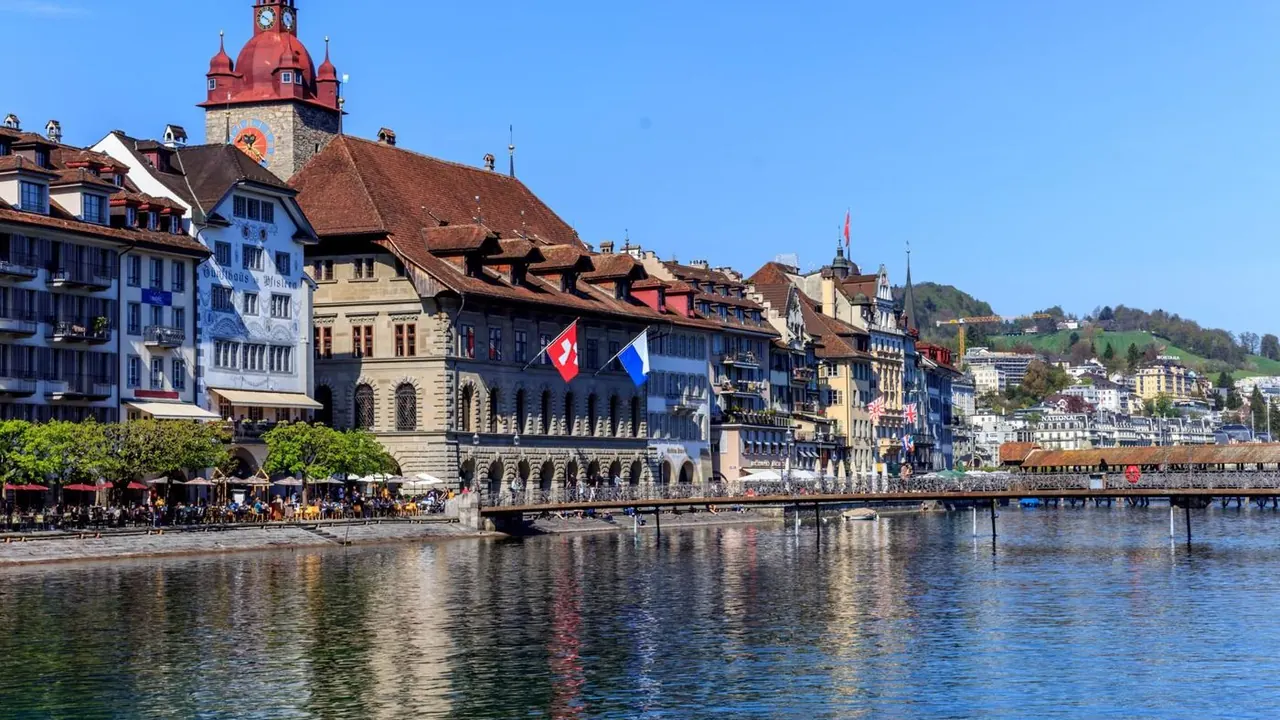
Lucerne is the choice for travellers who want mountains and water more than a city. Its real attraction is the setting: steamers on the lake, cogwheel trains up Pilatus and Rigi, ridge walks and glacier snow within reach, and a small, calm Old Town to come back to in the evening. It suits a slower trip built around excursions and fresh air, provided the budget can take Swiss prices and you don't need much nightlife or eating out.
Choose Paris for
- food and drink
- nightlife
- shopping
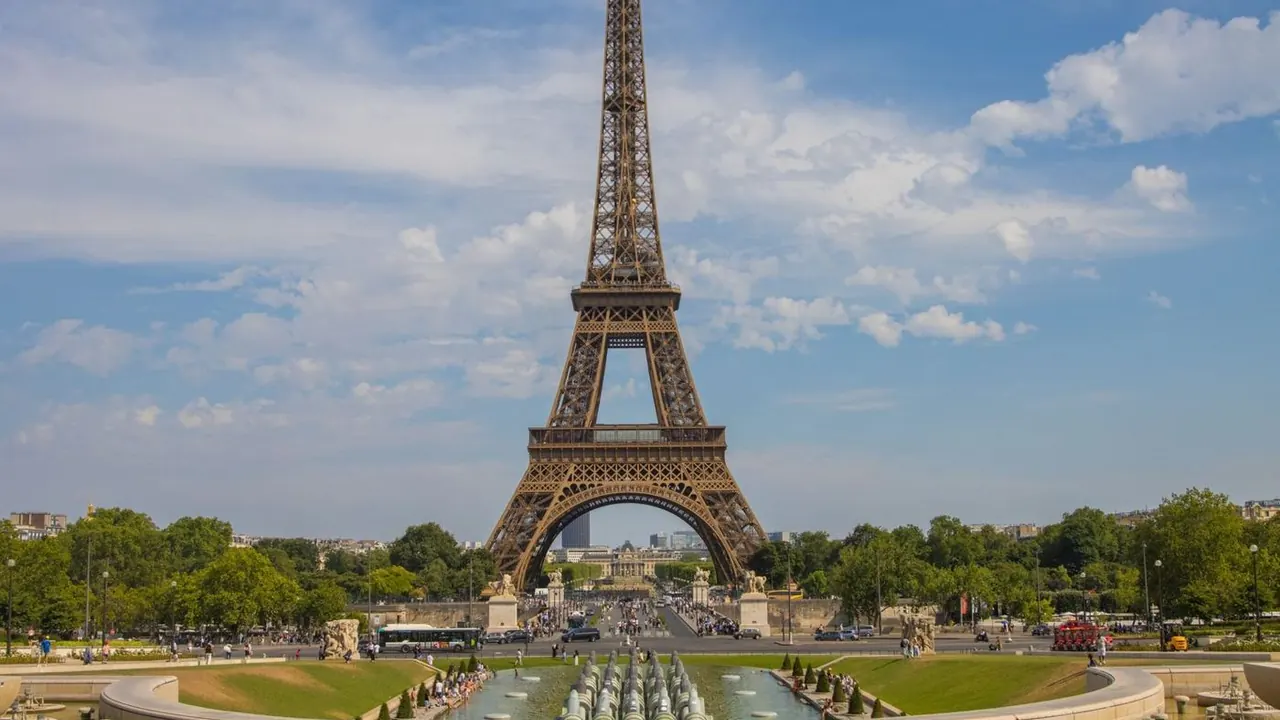
Paris is better for anyone who wants a great city to be the whole point. The museums, the food, the shopping and the nights out are all on a scale Lucerne cannot approach, and Versailles, Chartres and Champagne country add days of easy outings. Choose it for culture, eating well and late evenings, and accept parks and forests in place of real landscape.
Scoreboard
Twelve categories on one fixed scale from 0 to 100. The shaded stretch is the gap between the two.
Your match
Pick a travel style or drag the sliders, and both match scores follow your weighting.
Wins on nature and the outdoors and beaches with your weighting.
Wins on food and drink and nightlife with your weighting.
What matters to you?
Category by category
What the scores mean for a trip.
Beaches & swimming
Neither city is on the coast, but Lucerne makes more of its water. In July and August people swim in the clean, calm lake from the Lido, the old wooden lake baths and the lawns at Ufschötti, with the mountains straight in front of them. The swimming is from grass and jetties, not sand, but it is real open-water bathing.
Paris has summer sand dressed along the Seine banks, swimming spots on the Bassin de la Villette and handsome Art Deco pools. These are for cooling off in the city. For an actual swim outdoors, Lucerne is better, and for the sea you would have to go to Normandy.
Food & drink
Food is one of the biggest gaps between the two. Lucerne serves good, hearty Swiss cooking: Chügelipastete, fondue, rösti and lake perch in panelled Old Town taverns. Once you have tried those, the choice is limited, and the places by the Chapel Bridge feed coach groups.
In Paris, eating well is part of every day of the trip. You can go from zinc-counter bistros to haute cuisine, natural wine bars and the small neo-bistros in the east of the city, then add couscous in Belleville and pho in the 13th. Then there are the boulangeries, cheese shops and street markets. A food lover could spend a week there without eating the same meal twice.
Culture & sights
Lucerne has a small set of very fine sights. The painted Chapel Bridge, the Musegg towers, the Lion Monument and the Picasso and Klee at the Rosengart can all be seen in a day or two.
Paris works on a different scale. The Louvre alone outlasts all of Lucerne, and the Orsay, the Pompidou, the Orangerie, Sainte-Chapelle and the Haussmann boulevards, Marais townhouses and Seine embankments around them can fill a long stay. The cost is queues, so book the big museums ahead.
Nightlife
Lucerne's evenings end early. After a drink in a riverside wine bar or one of the few cocktail bars in the Neustadt, the lakefront is mostly empty by midnight. Fasnacht is the one time the whole town stays out until dawn.
Paris has a real nightlife. Evenings start on a terrace or in a wine bar, move to the bars of Oberkampf, the Canal Saint-Martin and Belleville, and go on in house and techno clubs and on moored barges after the bars close. It is stylish rather than wild, and doors can be selective, but there is far more choice.
Nature & outdoors
This is where Lucerne clearly beats Paris. The lake winds between the peaks, and Pilatus at 2,128m is reached by cogwheel railway. Rigi, the Stanserhorn and the glacier on Titlis are close as well, and with steamers and mountain trains you can combine a boat ride, a summit and a hike in one day. In winter there is skiing and sledging, though low cloud can hide everything for days.
Paris offers gardens and woods. The Buttes-Chaumont, the Bois de Vincennes and the forest at Fontainebleau, with its climbing boulders, are good for running, cycling and gentle walks, but there are no mountains or wild views.
Day trips
Both cities make good bases, and Paris has the longer list. From Lucerne, trains reach Bern, Basel and Zurich in under an hour, and the lake itself is an outing, with boats to Vitznau, Brunnen and the Rütli meadow of the William Tell story.
From Paris you can take in Versailles, Fontainebleau, Chartres and Monet's garden at Giverny, and fast trains bring Reims, Rouen, the Loire and Brussels within reach. There is enough variety to fill as many days as the city itself.
Good for families
Lucerne is small, flat, very safe and easy with children. The Transport Museum easily fills a day, and cogwheel trains and paddle steamers feel like rides in themselves. However, it has no zoo or aquarium, and on rainy days you can run out of ideas.
Paris offers much more for children. Disneyland and Parc Astérix are within easy reach, and the city has the Cité des Sciences, the zoo at Vincennes, the aquarium and the carousels and toy boats of the Luxembourg. The trade-off is the daily hassle: metro stairs with a pushchair, small hotel rooms and long queues.
Getting around
Both are very easy cities to get around, but in different ways. In Lucerne the station, the boat piers and the Old Town all sit together on the lakefront, and the same integrated tickets cover the steamers, mountain railways and cable cars, so the transport is part of the trip.
Paris is bigger and has a dense metro, so a station is always close and the walk along the Seine between sights is a pleasure. Expect stairs, crowded lines at rush hour and pickpockets, none of which you will notice much in Lucerne.
Shopping & style
In Lucerne, shopping mostly means Swiss watches, army knives and chocolate around Schwanenplatz, with a few boutiques in the Old Town. There is very little fashion or design.
Paris is one of the world's great shopping cities. It has the couture flagships on Avenue Montaigne, the department stores Galeries Lafayette and Le Bon Marché, and independent designers in the Marais. The covered passages, the Saint-Ouen flea market and the bouquinistes along the Seine add antiques and old books that Lucerne cannot match.
Affordability
Neither city is cheap, but Lucerne costs noticeably more. Hotels and simple meals are expensive, and the mountain railways that make the trip worthwhile add a lot to the bill. Lake picnics and a Swiss travel pass help only a little.
Paris gives a careful traveller more room. You can walk much of the centre, and bakeries, markets, lunchtime set menus and the free permanent collections of the city's own museums keep costs down. Staying in the outer arrondissements helps too, so a sensible budget can work in a way it cannot in Lucerne.
Live music & performing arts
For classical music, Lucerne is far stronger than its size suggests. In festival weeks, top orchestras play in Jean Nouvel's concert hall, which is known for its sound. Outside those weeks the programme is that of a small city, with little live music on most nights.
Paris has the depth all year: ballet at the Palais Garnier, opera at the Bastille, the Philharmonie, and church concerts in Sainte-Chapelle. It also has jazz cellars in Saint-Germain, cabaret in Pigalle and the Comédie-Française, though most of the theatre is in French.
Wellness & relaxation
Lucerne's kind of rest is calm. It has quiet evenings, slow steamer trips on the lake and the Botta-designed mineral bath high on the Rigi, where you soak with the mountains in view. For massage and treatments, both cities depend on hotel spas.
Paris has the tiled steam rooms and mint tea of the Grande Mosquée hammam in the Latin Quarter instead, a bathing habit brought by its North African communities. Beyond that, rest in Paris comes in short breaks, such as an hour on a chair in the Luxembourg gardens or an evening walk by the Seine, in a city that is otherwise loud and fast.
When should you go?
Pick your month. The climate figures are measured averages, not a forecast.
Lucerne in July
Paris in July
Daytime high, °C
Rainfall in the month, mm
Where the figures come from
Lucerne has no rain gauge within 25 km of the centre, so its rainfall comes from a gridded climate dataset read at the city rather than from a gauge further away.
Lucerne's sunshine is measured 42 km from the centre, at Zurich Town / Ville..
Temperature and rainfall are climate normals, averaged over the years shown. Lucerne: 2005-2025 (sunshine 1991-2020, rainfall 1991-2020) normals, Emmen (4.2 km from centre). Paris: 1991-2020 normals, Paris-Montsouris (4.6 km from centre).
Lucerne is at its best from June to September, when highs reach about 24°C, the lake is warm enough for a swim in July and August, and the long sunny days show off the mountains. Summer is also its wettest stretch, with more than 120mm of rain a month from May to July, so leave a few spare days for mountain trips in case cloud hides the peaks. November turns cool, grey and short of sun. From December to February highs sit around 7°C, and that weather suits skiing and sledging up in the mountains better than strolling the lakefront.
Paris is a little warmer all year, reaching 26°C in July and August. It is also much drier, with no month as wet as Lucerne's summer. That makes spring and early autumn very good for long walks through the city, though high summer can feel hot on the pavements. Winter in Paris is cool rather than cold and mild enough to walk between museums, so it makes a better off-season trip than Lucerne.
Which traveller are you?
On an outdoors trip, Lucerne is far ahead. Pilatus, Rigi, the Stanserhorn and Titlis are all within a day, and boats, trains and cable cars link them. Paris offers park runs and forest walks at Fontainebleau, but nothing on a mountain scale.
For a food and nightlife trip, Paris wins easily. It has bistros, wine bars, markets and immigrant kitchens across every neighbourhood, then bars in Oberkampf and Belleville and clubs until dawn. Lucerne offers hearty Swiss dishes and a quiet drink by the water.
On a culture and arts trip, Paris is the obvious pick. The Louvre, the Orsay and the Gothic churches fill a week, and you can add opera at the Garnier and jazz in Saint-Germain. Lucerne's Chapel Bridge, Lion Monument and festival concerts make a lovely but much shorter programme.
Before you go
| Measure | Lucerne | Paris |
|---|---|---|
| Official language | French, German, Italian, Romansh | French |
| Currency | Swiss Franc (CHF) | Euro (EUR) |
| Sockets | CJ230 V, 50 Hz | CE230 V, 50 Hz |
| Driving side | Right | Right |
| Time zone | UTC+1, UTC+2 in summer | UTC+1, UTC+2 in summer |
| Emergency number | 112 | 112 |
| Elevation | 436 m | 27 m |
| Main airport | Zürich Airport (ZRH)49 km from centre226 non-stop destinations | Charles de Gaulle International Airport (CDG)22 km from centre277 non-stop destinations |
| Public holidays this year | 12 days | 11 days |
By the numbers
| Measure | Lucerne | Paris |
|---|---|---|
| City population | 86,234 | 2,103,778 |
| People per km² | 2,963 | 19,960 |
| Museums within 10 km | 14 | 251 |
| UNESCO World Heritage sites within 50 km | 1 | 4 |
Where else could you go?
Every comparison below shares a destination with this one, so you can follow Lucerne or Paris somewhere new.