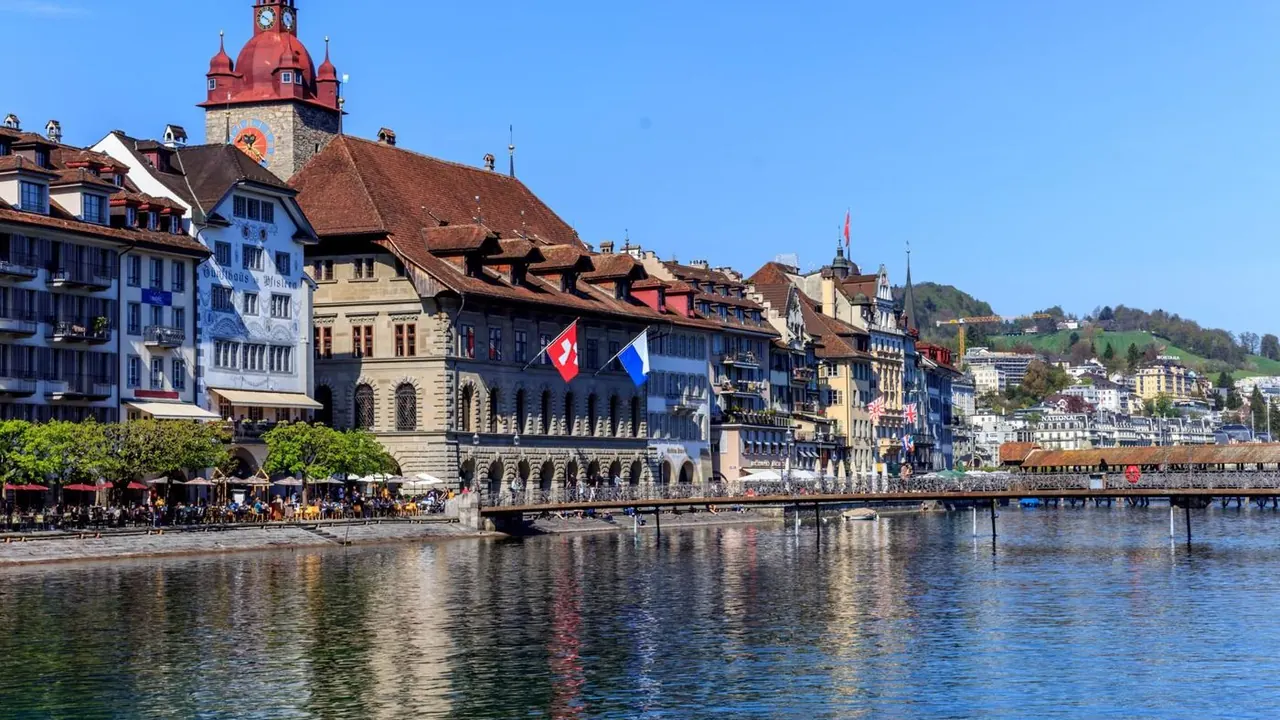
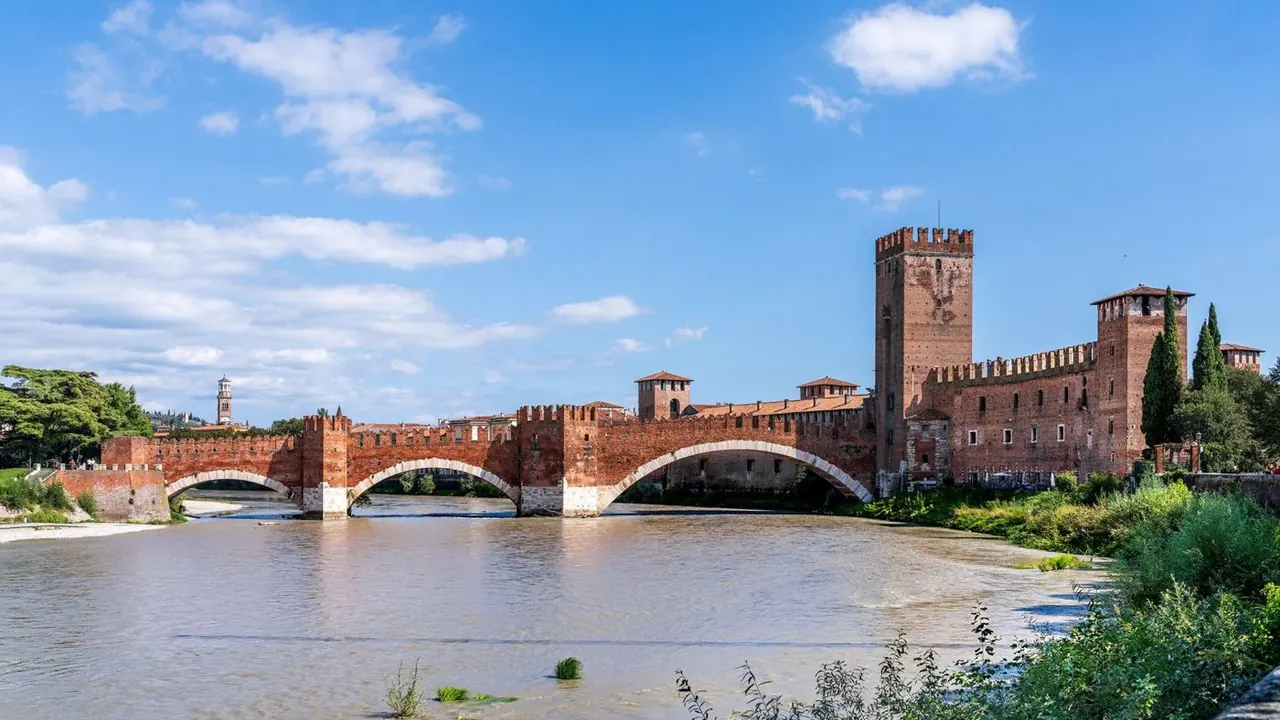
Photos: Lucerne by ILOVESwitzerland, Pexels License; Verona by NorbertNagel, CC BY-SA 4.0, cropped.
Lucerne or Verona?
Our verdict in twelve categories, each scored against the same fixed benchmark cities, and the climate month by month, so you can choose for your trip.
Choose Lucerne for
- nature and the outdoors
- getting around
Lucerne is the choice for travellers who come for the landscape. The lake and the mountains around it are the main event: paddle steamers, cogwheel railways up Pilatus and Rigi, ridge walks and glacier snow on Titlis, all on one easy, car-free network. It suits a calm, scenic trip where the evenings are quiet and you don't mind that the cost of everything, meals and mountain tickets alike, runs very high.
Choose Verona for
- prices
- food and drink
- culture and sights
Verona rewards people who travel for history, food and wine. Its Roman Arena, Romanesque churches and Scaliger squares add up to a richer city than Lucerne's compact Old Town, and the osterie and Valpolicella counters give the evenings a real flavour. It is also the better base for days out, with Venice, Padua, Vicenza and Lake Garda close by, and it is far gentler on the budget.
Scoreboard
Twelve categories on one fixed scale from 0 to 100. The shaded stretch is the gap between the two.
Your match
Pick a travel style or drag the sliders, and both match scores follow your weighting.
Wins on nature and the outdoors and getting around with your weighting.
Wins on prices and food and drink with your weighting.
What matters to you?
Category by category
What the scores mean for a trip.
Beaches & swimming
Neither city has a coast, so swimming means a lake. Verona has the better of it: Lake Garda's southern shore is about half an hour away, warmer in midsummer, and offers lidos with sunbeds, small pebble beaches and Sirmione's flat limestone shelves.
Lucerne's swimming happens in the city itself, from the old wooden lake baths, the Lido and the lawns at Ufschötti, in clean water backed by mountains. The season is shorter and the water cooler, and there are jetties and grass rather than any real beach.
Food & drink
Food is a real reason to choose Verona. The cooking of the Veneto hinterland, with Amarone risotto, bigoli with duck and pastissada, comes with wines made a short drive away, from Valpolicella to Soave, and the evening glass with snacks at a counter is a ritual in itself.
Lucerne serves good, hearty Swiss food: Chügelipastete, fondue, raclette and perch from the lake, eaten in guild houses and riverside terraces. There is little variety, though, and many tables near the Chapel Bridge cater to coach tours.
Culture & sights
Verona has much more to see. Its UNESCO-listed centre layers the Roman Arena and theatre, the della Scala squares and tombs, San Zeno's bronze doors and Scarpa's Castelvecchio, enough for two or three full days.
Lucerne's highlights are fewer but iconic: the Chapel Bridge and Water Tower, the Musegg Wall towers, the Lion Monument and Picasso and Klee at the Rosengart Collection. A day or two covers it all, and the medieval Old Town is pretty rather than deep.
Nightlife
Neither city is a place for clubbing, but Verona's evenings have more life. The aperitivo spills into Piazza delle Erbe, and Veronetta's student bars stay busy later. In summer the crowd leaving the opera at the Arena livens the streets near midnight.
Lucerne winds down earlier, with a drink by the water and a handful of bars in the Neustadt, and the lakefront is mostly empty by midnight. The exception is Fasnacht, when the whole town stays out in costume until dawn.
Nature & outdoors
This is where Lucerne pulls well ahead. Mountains rise straight from its lake, and in a single day you can take the steepest cogwheel railway in the world up Pilatus, walk the ridges of Rigi and return by paddle steamer. Titlis brings glacier snow within about an hour, and winter adds skiing.
Verona's surroundings are gentler: vineyard walks and cycling in the Valpolicella, the Lessinia's pastures and gorges, and Monte Baldo above Garda with its paragliding and the wind-sailing at the lake's northern end. It is lovely countryside, but at least an hour from anything as dramatic as Lucerne's peaks.
Day trips
Lucerne sits at the centre of the Swiss rail network, so Zurich, Bern's arcaded old town and Basel's art museums are each under an hour away. The lake is an outing in itself, with boats to Weggis, Brunnen and the Rütli meadow of the William Tell story, and Interlaken is about two hours off on the scenic line over the Brünig Pass.
Verona offers more, and more variety. Vicenza's Palladio, Padua's Scrovegni Chapel and Gonzaga Mantua are all within an hour by train, and Venice is only a little further, near enough for a full day there. The Garda towns and the Soave and Valpolicella wineries are closer still, so the days can alternate between art cities, lake harbours and tastings.
Good for families
Both work about equally well with children, in different ways. Lucerne has the Swiss Museum of Transport, which fills a whole day, and the journeys themselves (steamers, cogwheel trains, the Pilatus toboggan run) are part of the fun, though they depend on clear skies.
Verona's big attractions sit outside town: Gardaland, the water parks and the drive-through safari at Parco Natura Viva, all of which need a car or transfer. It does offer shallow, warm lake swimming that Lucerne can only offer in midsummer.
Getting around
Lucerne is simpler to get around. The station, boat piers and Old Town sit together on the lakefront, and one integrated ticket system carries you onto steamers, cogwheel railways and cable cars, so you never need a car, even for the mountains.
Verona's centre inside the river loop is easy to walk and largely free of traffic, and the train is excellent towards Venice, Milan and Garda. Porta Nuova station is a twenty-minute walk from Piazza Bra, though, and the wine villages and Lessinia are hard to reach without a car.
Shopping & style
Lucerne's shopping is built around Swiss watches: big jewellery and watch houses on Schwanenplatz and the lakefront, with army knives, chocolate and cuckoo clocks beside them. There is very little fashion or design beyond that.
Verona has a little more range. Via Mazzini, the marble-paved street between Piazza Bra and Piazza delle Erbe, has Italian fashion and accessory labels, and Corso Porta Borsari adds smaller boutiques and shoe shops. Its best things to take home are edible, though: Amarone, Garda olive oil and pandoro. Serious shoppers still go to Milan.
Affordability
The gap here is wide. Lucerne is among the most expensive places to visit in Europe, and meals, rooms and the mountain railways that make the trip worthwhile all cost a great deal. Picnics and a travel pass help, but only a little.
Verona is pricey only by provincial standards. Rooms in the centre and on opera nights are the main expense, while student osterie, good-value local wine and a walkable centre keep daily spending moderate.
Live music & performing arts
Both cities centre their musical year on a great summer festival, but of very different kinds. Lucerne's is about pure sound: leading orchestras and soloists in Jean Nouvel's acoustically celebrated concert hall, a draw for serious listeners.
Verona's is grand spectacle: Verdi and Puccini under the night sky on the Arena's Roman stone tiers, with candles and huge sets. Outside the festival weeks both settle into a modest season, at the Teatro Filarmonico and the summer Roman theatre in Verona and the city theatre in Lucerne.
Wellness & relaxation
For a proper soak, Lucerne sends you up a mountain and Verona sends you to the lakeshore. From Lucerne the best option is Mario Botta's mineral bath high on the Rigi, about an hour away by boat and cogwheel train, with the peaks as your view. Otherwise spa time means hotel spas. Around Verona the warm springs are more plentiful: Sirmione's thermal pools facing Lake Garda, the spring-fed lake in a villa garden near Lazise, and the springs at Caldiero, in use since Roman times.
From day to day, both are restful in their own way. In Lucerne the calm comes from steamer afternoons and quiet lakeside promenades. In Verona it comes from long lunches, the evening passeggiata by the Adige and the terraces of the Giardino Giusti.
When should you go?
Pick your month. The climate figures are measured averages, not a forecast.
Lucerne in July
Verona in July
Daytime high, °C
Rainfall in the month, mm
Where the figures come from
Lucerne has no rain gauge within 25 km of the centre, so its rainfall comes from a gridded climate dataset read at the city rather than from a gauge further away.
Lucerne's sunshine is measured 42 km from the centre, at Zurich Town / Ville..
Temperature and rainfall are climate normals, averaged over the years shown. Lucerne: 2005-2025 (sunshine 1991-2020, rainfall 1991-2020) normals, Emmen (4.2 km from centre). Verona: 1991-2020 normals, Verona / Villafranca (11.6 km from centre).
Lucerne is a summer and early autumn city. Highs climb to about 24°C in July and August, which is good walking and hiking weather, but May to August are also its wettest months, with summer showers and low cloud that can hide the peaks. From November to February it is cold and grey, with little sun, and the season turns to skiing and sledging in the mountains rather than sightseeing.
Verona runs warmer and sunnier all year. By July and August afternoons reach about 30°C, hot enough to push sightseeing into the mornings and evenings, though that same heat makes Lake Garda inviting. Late spring and September are the most comfortable months for walking the old town, although September is also its wettest month at around 85mm. Winters are cool but milder and drier than Lucerne's, so a winter city break works better here.
Which traveller are you?
On an outdoors trip, Lucerne is the clear pick. Pilatus, Rigi, the Stanserhorn and Titlis are all within easy reach by boat, rail and cable car, and Verona's Valpolicella hills and Monte Baldo, fine as they are, cannot match that mountain setting.
For a food and nightlife trip, choose Verona. Risotto all'Amarone, bigoli and bollito with pearà beat Lucerne's narrow menu of fondue and rösti, and the aperitivo scene in Piazza delle Erbe and Veronetta stays livelier than Lucerne's early-closing lakefront.
On a tight budget, Verona is far easier. Student osterie, wine counters and a walkable centre keep daily costs reasonable, while in Lucerne even simple meals and the mountain railways that justify the trip make saving money almost impossible.
Before you go
| Measure | Lucerne | Verona |
|---|---|---|
| Official language | French, German, Italian, Romansh | Italian |
| Currency | Swiss Franc (CHF) | Euro (EUR) |
| Sockets | CJ230 V, 50 Hz | CFL230 V, 50 Hz |
| Driving side | Right | Right |
| Time zone | UTC+1, UTC+2 in summer | UTC+1, UTC+2 in summer |
| Emergency number | 112 | 112 |
| Elevation | 436 m | 59 m |
| Main airport | Zürich Airport (ZRH)49 km from centre226 non-stop destinations | Verona Villafranca Valerio Catullo Airport (VRN)10 km from centre96 non-stop destinations |
| Public holidays this year | 12 days | 13 days |
By the numbers
| Measure | Lucerne | Verona |
|---|---|---|
| City population | 86,234 | 255,588 |
| People per km² | 2,963 | 1,285 |
| Museums within 10 km | 14 | 18 |
| UNESCO World Heritage sites within 50 km | 1 | 5 |
Where else could you go?
Every comparison below shares a destination with this one, so you can follow Lucerne or Verona somewhere new.