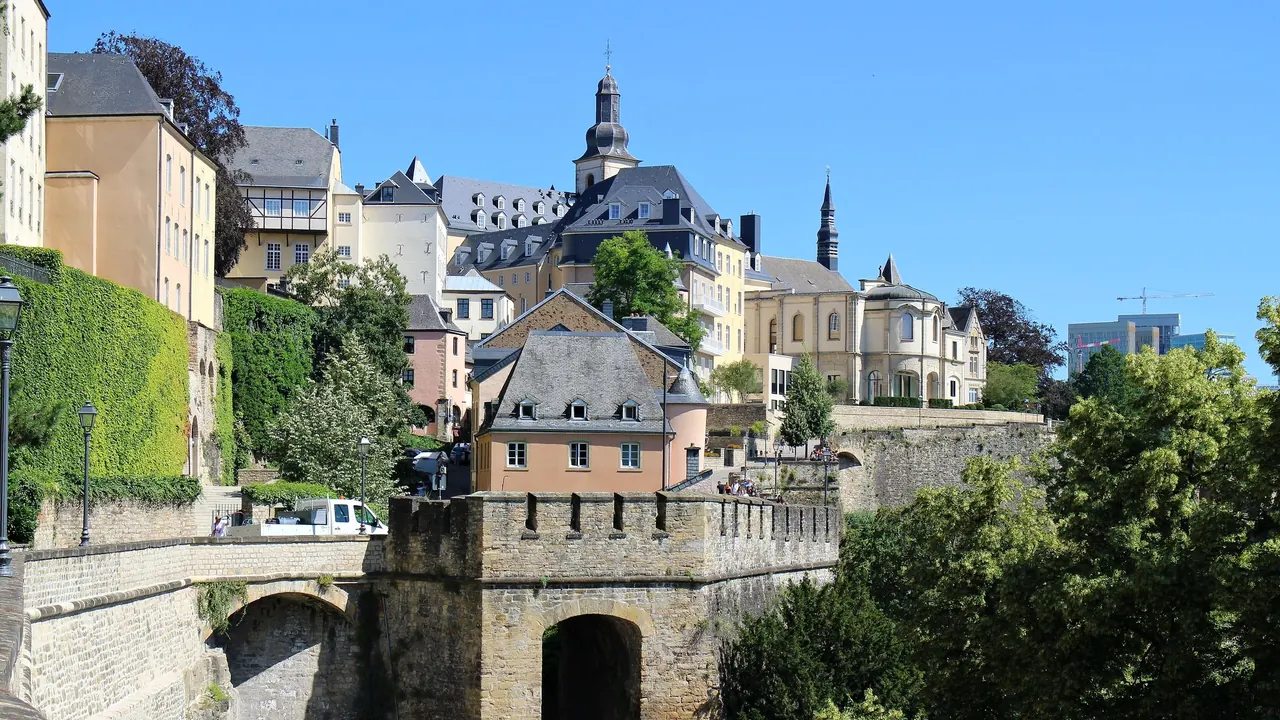
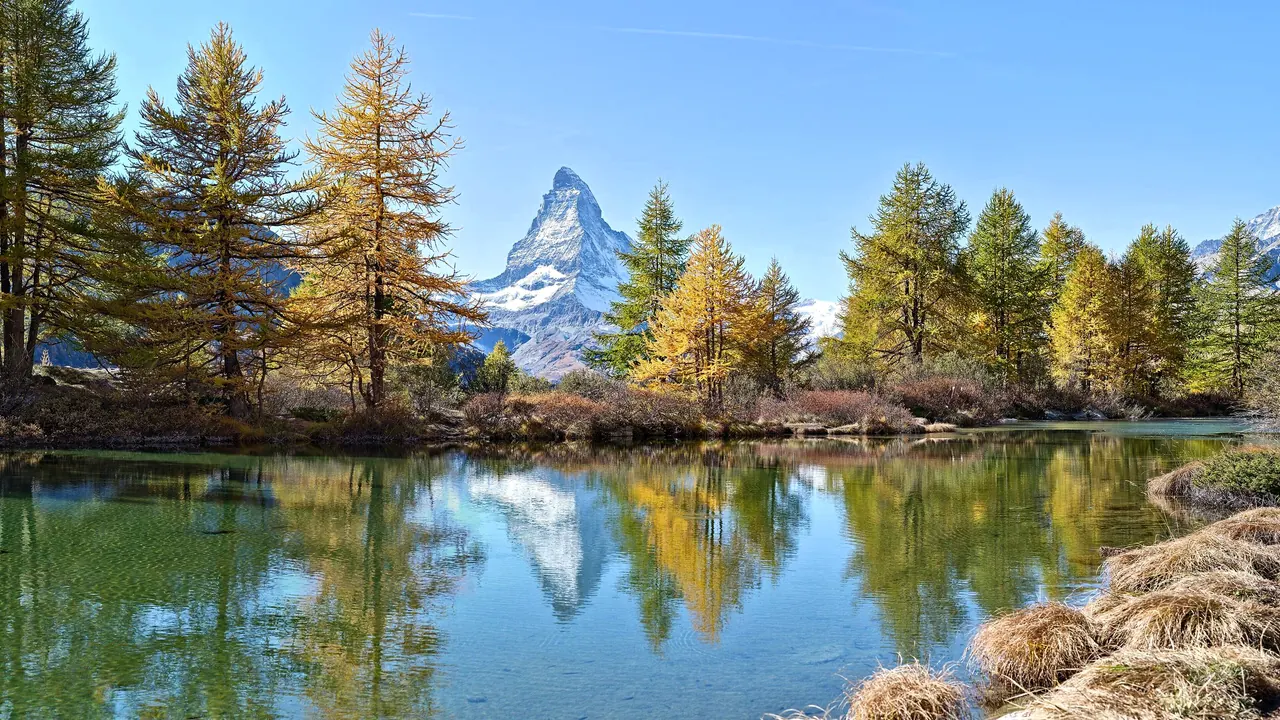
Photos: Luxembourg by Suicasmo, CC BY-SA 4.0, cropped; Zermatt by Roy Egloff, CC BY-SA 4.0, cropped.
Luxembourg or Zermatt?
Our verdict in twelve categories, each scored against the same fixed benchmark cities, and the climate month by month, so you can choose for your trip.
Choose Luxembourg for
- day trips
- culture and sights
- live music and the arts
Luxembourg suits a traveller who wants a compact European capital with plenty around it. The UNESCO-listed fortress town sits above its gorges and a serious concert hall fills the evenings. Free public transport reaches the Moselle wine villages and Vianden castle, and Trier and Metz are each under an hour across the border by train. It works best as a base for a few days of sights, wine and short hops between countries. It is also the gentler of the two on the wallet, though nowhere near cheap.
Choose Zermatt for
- nature and the outdoors
If the mountains are the whole point, go to Zermatt. The Matterhorn stands over a car-free village, the lifts climb to glacier level, and winter skiing or summer trails fill every day. Museums, nightlife and outings to other towns hardly matter here, and the bills are steep. It rewards people who ski, hike or climb and plan to spend their days outdoors.
Scoreboard
Twelve categories on one fixed scale from 0 to 100. The shaded stretch is the gap between the two.
Your match
Pick a travel style or drag the sliders, and both match scores follow your weighting.
Wins on day trips and culture and sights with your weighting.
Wins on nature and the outdoors with your weighting.
What matters to you?
Category by category
What the scores mean for a trip.
Beaches & swimming
Neither place is for swimmers, but Luxembourg at least has lakes. There are wooded bathing spots on the Upper Sûre reservoir about an hour north, and the old gravel pits at Remerschen are warm enough in high summer for an afternoon swim.
Zermatt has nothing like that. Its mountain tarns reflect the Matterhorn but stay glacier-cold even in August, so a swim means a hotel pool.
Food & drink
Luxembourg has the wider choice: French-led restaurants, Belgian- and German-style brasseries, Portuguese and Italian neighbourhood places, plenty of fine dining, and Moselle Riesling and crémant by the glass. Lunch menus are how to eat well there for less.
Zermatt's cooking is narrower, mostly Valais raclette, fondue and air-dried beef with Fendant or Cornalin. Its best meals come with a view, though: long lunches on chalet terraces at Findeln, Furi and Zum See, reached on skis or on foot. Out of season many kitchens close.
Culture & sights
Here the two are far apart. Luxembourg's old town is the sight in itself: a UNESCO-listed fortress on a sandstone plateau, the Bock casemates cut into the rock, the Corniche above the Grund, the cathedral, the palace and the national museum, with MUDAM across the Red Bridge. That fills two full days.
Zermatt's heritage is all about climbing. The Matterhorn Museum tells the story of the 1865 first ascent, and there are the mountaineers' cemetery and the old larch barns of the Hinterdorf. Together they fill a morning, and after that the mountains take over.
Nightlife
Both are quiet after dark, but in different ways. Luxembourg's nights belong to an international crowd of young professionals in the bars of the Rives de Clausen, the riverside pubs of the Grund and the later venues in Hollerich. Thursday and Friday are the busy nights, and weekends are quieter.
In Zermatt, going out means winter après-ski. Slope-side bars get loud from late afternoon, and on busy weekends a few clubs on the main street stay open past midnight. In summer the hikers are in bed soon after dinner.
Nature & outdoors
Luxembourg's countryside is gentle and close. Wooded gorges run through the city centre, the mossy rock passages of the Müllerthal are half an hour away, and beyond them are the Ardennes hills and the cycle paths through the Moselle vineyards. It is good walking country, but there are no mountains.
Zermatt is on a completely different scale. The Matterhorn rises over the village, dozens of four-thousand-metre peaks surround it, and the lifts reach the Matterhorn Glacier Paradise at over 3,800m. You can ski in winter and on the glacier in summer, and summer trails lead to the Five Lakes, the Europaweg bridge and the Hörnli hut.
Day trips
Luxembourg is the far better base for day trips, sitting where three countries meet. Trier's Porta Nigra and Metz's Gothic cathedral are each under an hour by train. Vianden castle, Echternach, Clervaux and the Moselle wine villages are all easy to reach without a car.
In Zermatt, every day out starts with the long train ride down the valley. Sion, with its two castle hills, is the best of them at about an hour and a half. Most visitors would rather spend a spare day on another trail.
Good for families
Both are calm, safe and easy with children, and neither has a zoo, aquarium or theme park. In Luxembourg the highlight is the fortress, whose tunnels and ramparts feel like an adventure, along with the natural history museum and the small Parc Merveilleux at Bettembourg.
Zermatt suits families who ski or hike together: car-free streets, nursery slopes at Sunnegga, marmots and cog railways. Rainy days are harder to fill there, and the highest viewpoints can be too cold and the air too thin for small children.
Getting around
You need no car in either place, but for different reasons. In Luxembourg, trams, buses and trains are free across the whole country, and public lifts and a funicular link the city's levels, so a trip to Vianden or the Moselle needs no ticket at all.
Zermatt is closed to ordinary cars. You arrive by train, walk around the compact village and take cog railways, a funicular and gondolas up the mountains. Leaving the valley is the slow part, at over an hour by train.
Shopping & style
Luxembourg has more to browse: luxury fashion on the Grand-Rue, high-street chains on Avenue de la Gare, the Villeroy & Boch porcelain outlet and the market on Place Guillaume II, with Moselle crémant the best thing to take home. Zermatt's one main street is mostly watches, jewellery and souvenirs, though its ski and mountaineering shops are well stocked if you need gear.
Affordability
Neither is cheap, but Luxembourg is clearly easier on a budget. Free public transport, museums that charge nothing and lunch menus make up for some of the hotel costs, and Trier or Metz make cheaper places to stay.
Zermatt costs even more. Rooms and meals on mountain terraces are steep, and lift and railway tickets come on top. Self-catering, supermarket picnics and a bed down the valley in Täsch help, but only up to a point.
Live music & performing arts
Luxembourg has a full programme. The Philharmonie on Kirchberg has its resident orchestra and hosts touring soloists, the Grand Théâtre stages opera and dance, and there are concerts at the Rotondes and open-air music at Neimënster in summer.
Zermatt has no theatre or concert hall. Apart from Zermatt Unplugged in spring and a chamber music festival in the village church in late summer, live music means a band in an après-ski bar, so most evenings are about dinner.
Wellness & relaxation
Both make for a calm stay, though neither has its own bathing culture, and they offer different kinds of rest. Luxembourg has a real thermal spring at Mondorf-les-Bains, half an hour away, with pools and saunas in a landscaped park, and quiet river walks through the Grund.
Zermatt has no springs, but it has an unusual number of excellent hotel spas, many with mountain views and some open to day visitors. The clear air and car-free streets add to the quiet, though in peak weeks the mood is more active than restful.
When should you go?
Pick your month. The climate figures are measured averages, not a forecast.
Luxembourg in July
Zermatt in July
Daytime high, °C
Rainfall in the month, mm
Where the figures come from
Zermatt has no weather station within reach, so its figures come from a gridded climate model rather than a measured record, and read a broad area rather than the city itself.
Temperature and rainfall are climate normals, averaged over the years shown. Luxembourg: 1991-2020 normals, Luxembourg / Luxembourg (6.3 km from centre). Zermatt: 1991-2020 normals, TerraClimate 4 km grid at the town, no weather station within 90 km.
Luxembourg is at its best from May to September. Midsummer highs reach around 24°C and July has the most sunshine, so it is good weather for walking the ramparts and for an afternoon at a lake. There is no rainy season, and rain is spread fairly evenly through the year, so a shower is possible in any month. Winters are grey, chilly and short on daylight, but you can still see the sights. Spring and autumn suit the Müllerthal trails best.
Zermatt follows a different calendar. From December to March daytime highs stay below freezing, around -2°C in January, which is what the ski season needs. Summer is cool, with highs of about 14°C in July and August. That is fine for hiking but never warm. November is the wettest month at 130mm, and the village is half shut then too, so it is the month to avoid.
Which traveller are you?
For a culture and arts trip, Luxembourg is the clear choice. The fortress casemates, the Grund, the national museum and MUDAM fill two days, the Philharmonie covers the evenings, and Trier's Roman monuments are under an hour away.
On an outdoors trip, Zermatt is in another league. Lifts climb to the glaciers, hundreds of kilometres of trails open in summer, the skiing crosses into Italy, and guides lead ascents of four-thousanders. Luxembourg's Müllerthal gorges are lovely but gentle.
On a tight budget, neither is easy, but Luxembourg costs less. Free trams, buses and trains, museums that charge nothing and lunch menus soften the bill, and staying in Trier or Metz helps. In Zermatt, rooms, meals and lift tickets are steep.
Before you go
| Measure | Luxembourg | Zermatt |
|---|---|---|
| Official language | French, German, Luxembourgish | French, German, Italian, Romansh |
| Currency | Euro (EUR) | Swiss Franc (CHF) |
| Sockets | CF230 V, 50 Hz | CJ230 V, 50 Hz |
| Driving side | Right | Right |
| Time zone | UTC+1, UTC+2 in summer | UTC+1, UTC+2 in summer |
| Emergency number | 112 | 112 |
| Elevation | 300 m | 1,624 m |
| Main airport | Luxembourg-Findel International Airport (LUX)6 km from centre115 non-stop destinations | Geneva International Airport (GVA)128 km from centre150 non-stop destinations |
| Public holidays this year | 12 days | 9 days |
By the numbers
| Measure | Luxembourg | Zermatt |
|---|---|---|
| City population | 137,678 | 6,023 |
| People per km² | 2,663 | 25 |
| Museums within 10 km | 19 | 2 |
| UNESCO World Heritage sites within 50 km | 4 | 2 |
Where else could you go?
Every comparison below shares a destination with this one, so you can follow Luxembourg or Zermatt somewhere new.
- Chamonixvs Zermatt
- Interlakenvs Zermatt
- Luganovs Zermatt
- Lausannevs Zermatt
- Turinvs Zermatt
- Bernvs Zermatt