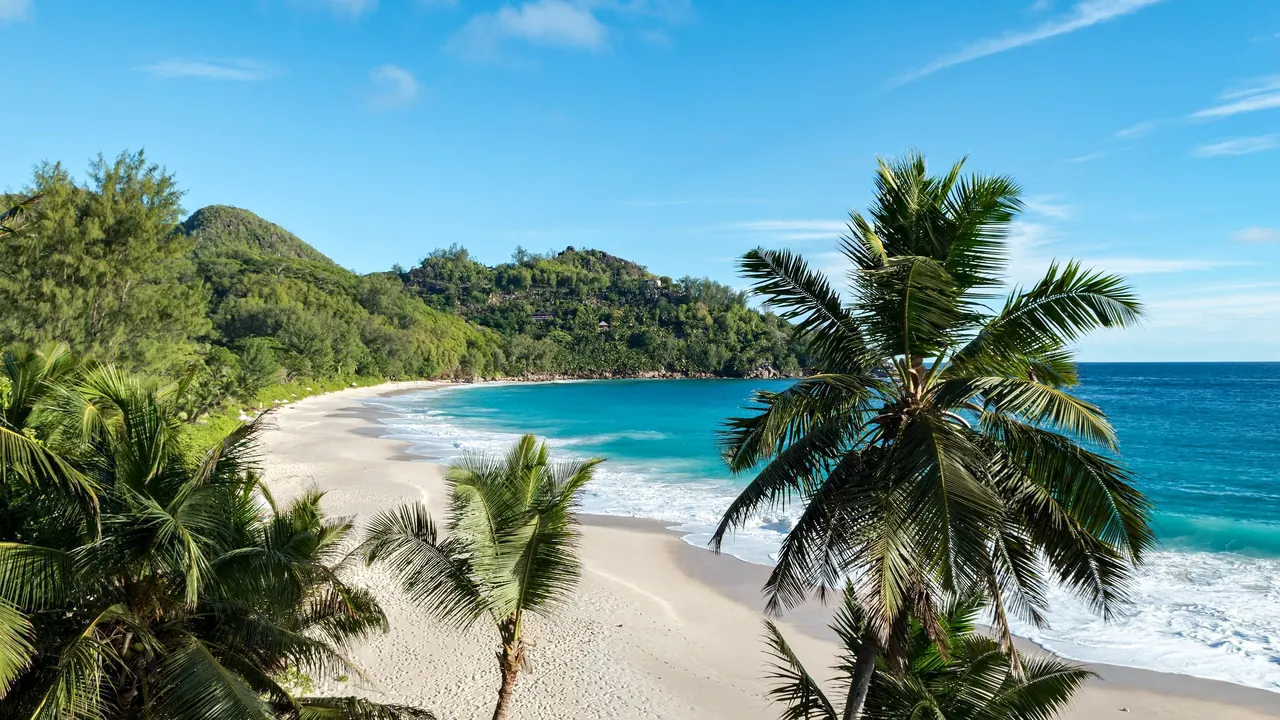
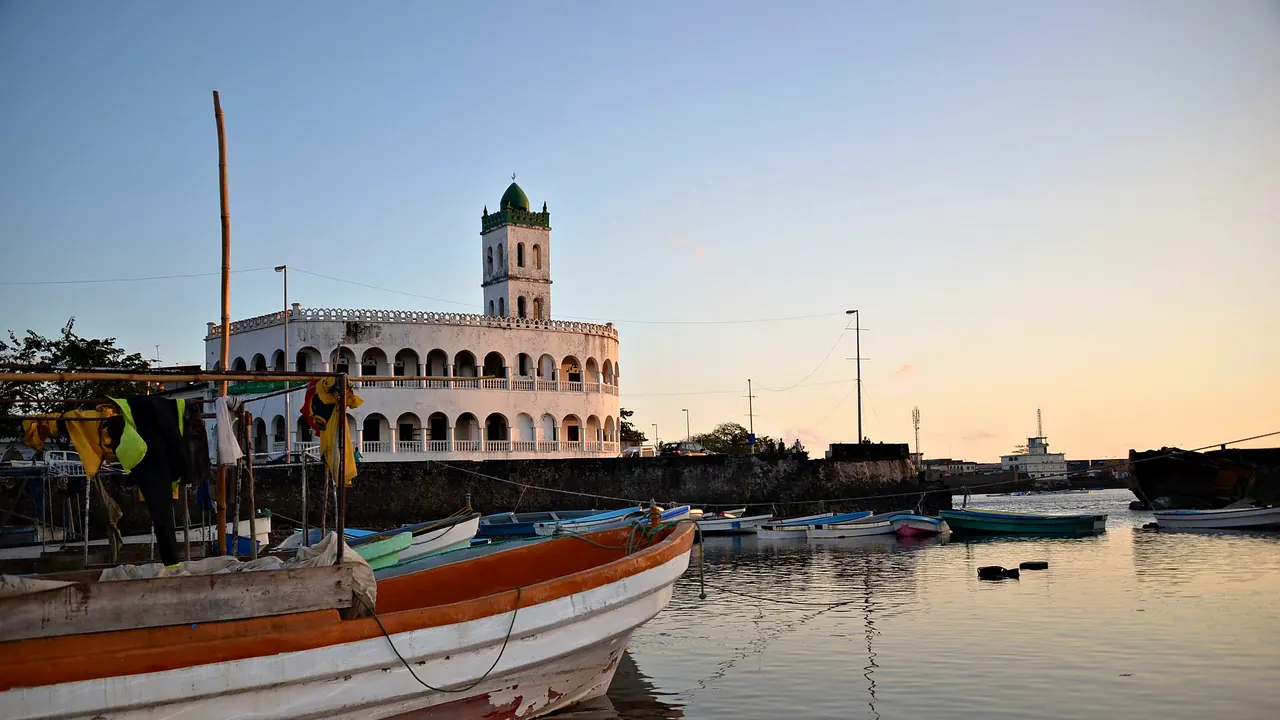
Photos: Mahe by dronepicr, CC BY 2.0, cropped; Moroni by GeGki, CC BY-SA 4.0, cropped.
Mahe or Moroni?
Our verdict in twelve categories, each scored against the same fixed benchmark cities, and the climate month by month, so you can choose for your trip.
Choose Mahe for
- wellness
- beaches
- families
Mahe suits a slow island vacation built around the sea. Its long list of white-sand coves between granite boulders, the forest trails of Morne Seychellois and the marine parks offshore give you more to do outdoors, and the resort spas and secluded bays make it the easier place to switch off. Families with young children will also find it gentler. You give up a lot of money for it, and there is little culture or nightlife beyond the beach.
Choose Moroni for
- prices
- culture and sights
- live music and the arts
Moroni is the choice for a more adventurous traveller on a tighter budget who wants a real Swahili town rather than a resort coast. The old harbour, the Old Friday Mosque and the coral-stone medina offer more sense of place than anything in Victoria, and Mount Karthala gives a genuine expedition. The beaches are a drive away and facilities are thin, so it rewards self-reliance more than comfort.
Scoreboard
Twelve categories on one fixed scale from 0 to 100. The shaded stretch is the gap between the two.
Your match
Pick a travel style or drag the sliders, and both match scores follow your weighting.
Wins on wellness and beaches with your weighting.
Wins on prices and culture and sights with your weighting.
What matters to you?
Category by category
What the scores mean for a trip.
Beaches & swimming
Mahe is one of the great beach islands, with dozens of white-sand bays to choose from: Beau Vallon for easy family swimming, Anse Royale for sheltered snorkelling, Anse Intendance for surf and small coves such as Petite Anse. Because the trade winds switch coasts with the seasons, there is always a calm shore somewhere.
Moroni itself sits on black lava, so swimming means driving to Itsandra or up the west coast towards Mitsamiouli, where Maloudja and Bouni have white sand and coral close in. They are lovely but bare, with little shade and few loungers, and village beaches call for modest dress.
Food & drink
Neither place is worth travelling to for food, but Mahe gives you a little more. Its Creole cooking of grilled job fish, octopus curry and ladob is good fresh, the Victoria market is lively, and roadside curry takeaways are everywhere, though resort menus repeat themselves.
Moroni's cooking has interesting roots, with vanilla sauces on langouste, mataba and pilao rice, but the restaurant choice is smaller still. Alcohol is mostly confined to hotels in this Muslim town, whereas Mahe has its own beer and rum.
Culture & sights
Moroni has the stronger sense of history. The Old Friday Mosque on the harbour, with its dhows at anchor, and the coral-stone lanes of the medina behind it make an atmospheric walk that feels like the Swahili coast, even if the national museum is modest.
Victoria is pleasant but slight: the Clock Tower, the Hindu temple, two cathedrals and a small museum fill a morning, with the Sans Souci ruins and Domaine de Val des Prés out on the island. Both places can be covered in a few short outings.
Nightlife
Mahe has a little more after dark, chiefly at Beau Vallon, where beach bars, weekend music and the evening street market draw a crowd, and a couple of nightclubs near Victoria fill at weekends. Moroni is quieter still: alcohol sits outside daily life, there is no bar district, and evenings mean a harbour stroll and tea, busier only during Ramadan with families out.
Nature & outdoors
Mahe offers the fuller and easier outdoor menu. Short, steep trails such as Copolia and Trois Frères climb through cloud forest to reef views, the Anse Major path follows the coast, and the marine parks, giant tortoises and seabird islands nearby are easy to reach.
Moroni has one big outing that Mahe cannot match: the climb of Mount Karthala, an active volcano of about 2,360m, usually done over two days with a guide and a night near the crater rim. Add lava shores, blowholes and Lac Salé, but trails are unmarked and suit self-reliant walkers.
Day trips
Mahe's day trips go by boat, and they give you more to choose from. An hour on the fast ferry takes you to Praslin and the coco de mer palms of the Vallée de Mai. You can add La Digue, with its bicycles, ox carts and the plantation at L'Union, if you start early, though a night there makes it a gentler trip. The marine park islets just off Victoria make an easy half-day. The drawback is that each island offers more of what Mahe already has, beaches and forest, and rough seas can cancel a crossing.
Moroni's outings go by road and are about history rather than scenery. You can visit Iconi, the early capital just to the south, Itsandra's fort above the beach, and the old mosque towns of Ntsaoueni and Mitsamiouli in the north, all of which show the island's Swahili past. Little on site explains what you are seeing, so hiring a guide matters a lot. Moheli and Anjouan, the neighbouring islands, can only be reached by plane or a long boat trip, so the choice stays small.
Good for families
Mahe is clearly easier with children. Calm water at Beau Vallon and the west coast bays in the right season, resort kids' clubs and family rooms, and tortoises and glass-bottom boats give a week of simple pleasures, though currents and steep roads need watching.
Moroni is warm towards children but offers almost nothing for them beyond the northern beaches and reef shallows. Basic medical care, malaria precautions and constant heat make it a trip for experienced families with older children.
Getting around
Mahe is a little easier to get around, mainly because buses run to nearly every bay from Victoria and hiring a car is straightforward, even if the mountain roads are steep and twisting. Moroni's old town is walkable, but beyond it you rely on shared taxis and taxi-brousse with no timetables or maps, or a car with a driver, and some French helps.
Shopping & style
Shopping is limited in both, and the difference is in what you bring home. Mahe's Victoria market and craft shops offer vanilla, chilli sauces, sarongs, model boats and the polished coco de mer nut, while Moroni's crowded Volo Volo market is the place for cloves, ylang-ylang essence, embroidered kofia caps and chiromani cloth.
Affordability
Moroni is much the cheaper place to spend time. Market food, local eateries and shared taxis cost little, and simple guesthouses keep the budget low, although reliable hotels and a car with driver are pricier than the quality suggests.
Mahe is expensive across the board, since almost everything is imported and resorts, boat trips, diving and car hire are priced accordingly. Guesthouses, self-catering and the bus help, but it remains a costly island.
Live music & performing arts
Neither has a stage programme, so music is a matter of timing and luck. On Mahe you will mostly meet sega and moutya in hotel shows and at weekend beach bars, with the Festival Kreol in late October as the high point. In Moroni twarab and women's dances fill the streets at grand mariage weddings, often in the dry months, which a visitor may hear from the street or even be invited to.
Wellness & relaxation
Mahe is the place to unwind properly. Secluded hotels on the south-west and north-west coasts, hillside spa pavilions using coconut and vanilla, and open-air yoga make rest something you can plan, though treatments are expensive.
Moroni has no spa culture and only a few hotels offering massage. Its calm comes from a slow pace, little traffic and afternoons spent on a terrace looking at the sea.
When should you go?
Pick your month. The climate figures are measured averages, not a forecast.
Mahe in July
Moroni in July
Daytime high, °C
Rainfall in the month, mm
Where the figures come from
Mahe's station stands 237 m below the place it is measured for, so that place is likely a little cooler than the figures say.
Moroni has no rain gauge within 25 km of the centre, so its rainfall comes from a gridded climate dataset read at the destination rather than from a gauge further away.
Temperature and rainfall are climate normals, averaged over the years shown. Mahe: 1991-2020 normals, Seychelles International Airport (10 km from centre). Moroni: 2005-2025 (rainfall 1991-2020) normals, Hahaya International Airport (19 km from centre).
Both are hot all year, with daytime highs of around 29°C to 32°C, so the choice of month comes down to rain. On Mahe the drier, sunnier stretch runs from May to August, with July the driest at about 88mm. The wet season peaks in December and January, when the island gets by far its heaviest rain. April and October fall between the two wind seasons and bring calm water on most coasts, and the sea is warm enough to swim in every month.
Moroni's dry season comes later and is more marked. Rain eases from August and is lightest in September and October, with September down to about 59mm, while January to April are heavy and wet. Its sea is just as warm all year. If you want dry weather in both places, August is the month when their dry seasons overlap. July to September are also slightly less hot in both, which makes them the easiest months for walking the streets.
Which traveller are you?
On a relaxing and wellness trip, Mahe is far ahead. Hotels sit alone on their own bays on the south-west and north-west coasts, with hillside spas and open-air yoga decks, while Moroni offers little more than a sea-view terrace.
On a family trip with young children, Mahe is the safer bet. Beau Vallon's calm water, kids' clubs, giant tortoises and glass-bottom boats keep small children busy, whereas Moroni has basic medical care, malaria precautions and nothing made for children.
On a trip on a tight budget, Moroni goes much further. Market food, simple eateries and shared taxis cost little, and simple guesthouses are cheap, while on Mahe even buses, curry takeaways and self-catering leave you paying well above tropical norms.
Before you go
| Measure | Mahe | Moroni |
|---|---|---|
| Official language | French, English, Seychellois Creole | French, Arabic, Comorian |
| Currency | Seychelles Rupee (SCR) | Comorian Franc (KMF) |
| Sockets | G240 V, 50 Hz | CE220 V, 50 Hz |
| Driving side | Left | Right |
| Time zone | UTC+4 | UTC+3 |
| Emergency number | 112 or 999 | Police 17, ambulance 18 |
| Elevation | - | 29 m |
| Main airport | Seychelles International Airport (SEZ)19 non-stop destinations | Prince Said Ibrahim International Airport (HAH)19 km from centre6 non-stop destinations |
| Public holidays this year | 13 days | - |
By the numbers
| Measure | Mahe | Moroni |
|---|---|---|
| Population | 77,000 | 85,400 |
| People per km² | 490 | 2,847 |
| Museums within 10 km | - | 1 |
| UNESCO World Heritage sites within 50 km | - | 1 |
| Swim season, months above 21 °C | 12 months | 12 months |
Where else could you go?
Every comparison below shares a destination with this one, so you can follow Mahe or Moroni somewhere new.