Malaysia
Kuala Lumpur
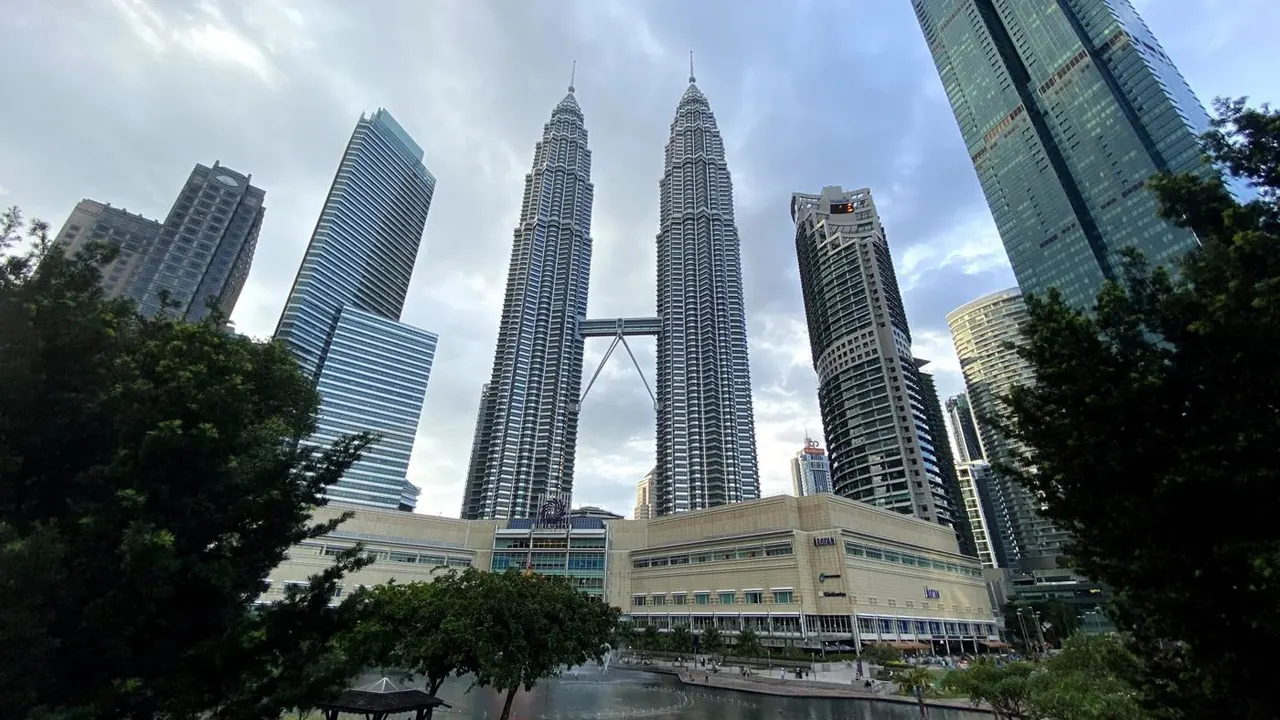
The Petronas Twin Towers from KLCC Park
- Food & drink82
- Affordable cities75
- Shopping66
Photo: Brownc, CC BY-SA 4.0, cropped
Match
54
Every category weighted equally
- Beach & sun51
- Culture & arts57
- Food & nightlife58
- Family trip54
- Outdoors53
- Relax & unwind51
- Shopping & style59
- On a budget57
Kuala Lumpur in twelve categories
Our verdict on each, scored 0 to 100 against the same fixed benchmark cities, so a score means the same thing on every page.
Beaches & swimming. Scores 12 out of 100.
Food & drink. Scores 82 out of 100.
Culture & sights. Scores 57 out of 100.
Nightlife. Scores 54 out of 100.
Nature & outdoors. Scores 47 out of 100.
Day trips. Scores 52 out of 100.
Good for families. Scores 64 out of 100.
Getting around. Scores 57 out of 100.
Shopping & style. Scores 66 out of 100.
Affordability. Scores 75 out of 100.
Live music & performing arts. Scores 42 out of 100.
Wellness & relaxation. Scores 44 out of 100.
Kuala Lumpur category by category
Beaches & swimming
12Kuala Lumpur is an inland city, and beaches play almost no part in a stay. The closest stretch of coast, around Port Klang, is muddy mangrove and shipping water rather than anywhere to swim. The nearest real beaches are at Port Dickson, about an hour and a half by road, where the Strait of Malacca is warm all year but the sand is ordinary and the water rarely clear.
Visitors who want sea and sand usually add a separate leg to Langkawi, Penang or the east-coast islands. In the city itself, swimming means a hotel rooftop pool, which many mid-range hotels have.
Food & drink
82Eating is one of the best reasons to come. Three culinary traditions live side by side: Malay nasi lemak, rendang and satay; Cantonese and Hokkien noodles, roast meats and dim sum; and South Indian banana-leaf rice and thosai. On top of that sits mamak culture, the round-the-clock Indian-Muslim canteens where locals meet over roti canai and teh tarik at any hour.
Most of the best food is cheap and casual: hawker stalls, open-fronted kopitiams and night markets. Jalan Alor is the famous after-dark food street, Chinatown and Brickfields' Little India reward wandering, and Kampung Baru keeps a village feel with Malay home cooking. There is a polished restaurant and cocktail tier as well, though the hawker stalls remain the main draw. Alcohol is heavily taxed, so drinking costs more than eating.
Culture & sights
57Kuala Lumpur is a young city, founded as a tin-mining settlement in the 19th century, and its sights reflect that mix of colonial, multicultural and modern. The Petronas Towers are the landmark everyone comes to see, and the skybridge view is worth it. Around Merdeka Square, the Moorish-style Sultan Abdul Samad Building and the old railway station show the British-era architecture, and the Masjid Jamek sits where the two rivers meet.
The Islamic Arts Museum is excellent, among the finest of its kind in Asia, and the National Mosque and National Museum are nearby in the leafy Lake Gardens area. Chinatown's Sri Mahamariamman and Guan Di temples, the hilltop Thean Hou Temple and the Hindu shrine at Batu Caves, up its long rainbow stairway, round out a list that fills two or three days rather than a week.
Nightlife
54Going out centres on a few areas. Changkat Bukit Bintang is the main bar street, a strip of pubs and open-air bars in old shophouses that stays busy late, especially at weekends. Rooftop bars with views of the Petronas Towers are a city speciality, and there is a cluster of larger clubs for those who want to dance into the small hours. Bangsar and Mont Kiara have a more local, neighbourhood feel.
Malaysia is a Muslim-majority country and drinks are heavily taxed, so much of the scene is aimed at expats, Chinese-Malaysian locals and visitors. For many people the late night is spent at a mamak stall over tea rather than in a bar, which is a pleasant, very local way to end an evening.
Nature & outdoors
47For a tropical capital, rainforest is surprisingly close. A patch of original jungle survives in the city centre around the KL Tower, with a canopy walkway, and the Forest Research Institute on the north-western edge has trails and a suspension bridge through tall dipterocarp forest. Bukit Kiara and Bukit Gasing are local favourites for hiking and mountain biking.
Further out, the cooler hill stations of Fraser's Hill and Genting Highlands sit in the Titiwangsa range, with Fraser's Hill a well-known birdwatching spot, and the mangroves at Kuala Selangor have fireflies and silvered leaf monkeys. The limits are the heat and humidity, daily afternoon storms and traffic on the way out; the great national parks need an overnight trip.
Day trips
52Malacca is the day trip that matters: a UNESCO-listed port town about two hours south by road, with Dutch, Portuguese and British buildings, Chinese shophouses and a strong Peranakan food tradition. It is a long day, and many travellers sleep over.
Closer in, Putrajaya, the planned administrative capital about half an hour away, has grand mosques and government buildings around an artificial lake. The royal town of Klang, with its palace and Little India, and Kuala Selangor, with its hilltop fort and firefly river, make smaller outings. Genting Highlands is a casino and theme-park resort in the hills rather than a town to explore. Ipoh and the Cameron Highlands are worth visiting but are better as overnight trips.
Good for families
64Kuala Lumpur works better with children than its skyline suggests. Beneath the Petronas Towers are an aquarium with a walk-through shark tunnel and a hands-on science centre, and the park next to them has a free splash area. The Lake Gardens hold a large walk-in bird park and a butterfly park, and the national zoo is on the north-east edge of the city. A big water park and theme park lies in the Sunway suburb, and Genting Highlands has another theme park in the cool hills.
Malaysians are warm towards children, the food is easy to adjust and air-conditioned malls make a refuge when it rains. Against that, the heat, the afternoon storms, broken or missing pavements and busy roads mean most families end up using taxis rather than walking.
Getting around
57Getting around is easier than it first looks, though rarely a pleasure on foot. Several LRT and MRT lines, a monorail through Bukit Bintang and commuter trains link the main districts, and an airport express train runs to KL Sentral. The trains are clean and cool, but the lines were built separately and changing between them can mean long walks and confusing stations.
Walking is the weak point. Heat, humidity, wide roads and patchy pavements make it hard going outside the centre, though an elevated, air-conditioned walkway links the Petronas Towers to Bukit Bintang. Ride-hailing is cheap and widely used, and most visitors combine it with the trains. A car is never needed and traffic makes driving unappealing.
Shopping & style
66Kuala Lumpur is a city of giant malls, and they are among the best in the region. Bukit Bintang is the main shopping district, a string of huge centres from luxury flagships to electronics floors, linked to the mall at the foot of the Petronas Towers. Mid Valley and Bangsar to the south add more. The malls are also where locals escape the heat, so shopping blends into eating and cinema.
For something local, Central Market, an Art Deco hall, gathers batik, songket, pewter and handicraft stalls, while Petaling Street in Chinatown is a covered market of cheap goods and copies. Independent boutiques and design shops exist, especially in Bangsar, but they are a small part of the picture.
Affordability
75Kuala Lumpur is one of the best-value big cities in Asia. Hotel rooms, including well-run international chains with rooftop pools, cost far less than in most capitals of comparable comfort, and the quality at the mid and upper end is unusually high for the price. Eating at hawker stalls, mamak canteens and kopitiams is very cheap, and trains and ride-hailing cost little.
The exception is alcohol: heavy taxes make beer, wine and cocktails expensive, so a night of drinking can cost more than a day of eating. Imported brands in the malls are priced much as anywhere else, and the observation deck at the Petronas Towers is one of the few sights with a notable entry fee.
Live music & performing arts
42The performing arts are present but modest. The Malaysian Philharmonic Orchestra plays a regular season in the Petronas Philharmonic Hall, a fine, intimate shoebox hall inside the twin towers, and it is the city's most reliable cultural evening. Istana Budaya, the national theatre, stages large musical and traditional productions, and the performing arts centre at Sentul West hosts smaller theatre and dance.
There is a small jazz and live-music circuit, mostly in bars around Bukit Bintang, Bangsar and Changkat, and cultural shows with Malay, Chinese and Indian dance are put on for visitors. For most travellers, though, this is not a city to plan evenings around performances.
Wellness & relaxation
44Massage is the easiest way to unwind here. Bukit Bintang is lined with foot reflexology parlours, and full-body Chinese, Thai-style and traditional Malay massage is easy to find at reasonable cost. Hotel spas are plentiful and good, some offering Malay treatments with local herbs and oils, and there are a few Turkish-style hammams.
There is no bathing tradition in the city itself, and the pace is not restorative: traffic, heat and construction noise run through most districts. The calmer escapes are the Lake Gardens on a quiet morning, an afternoon by a rooftop hotel pool, or the cool air of the hill stations further out.
When should you go?
Pick a month to see what it is like. The climate figures are measured averages, not a forecast.
Kuala Lumpur in July
Daytime high, °C
Rainfall in the month, mm
The whole year
Shaded against this city’s own year: the deepest cell is its best month for that figure and the palest its weakest.
Where the figures come from
Kuala Lumpur's temperatures are measured 46 km from the centre, at Sepang/KL International Airport.
Kuala Lumpur has no rain gauge within 25 km of the centre, so its rainfall comes from a gridded climate dataset read at the city rather than from a gauge further away.
Temperature and rainfall are climate normals, averaged over the years shown. Kuala Lumpur: 1991-2020 normals, Sepang/KL International Airport (46.1 km from centre).
Before you go
| Measure | Kuala Lumpur |
|---|---|
| Official language | Malay |
| Currency | Malaysian Ringgit (MYR) |
| Sockets | G240 V, 50 Hz |
| Driving side | Left |
| Time zone | UTC+8 |
| Emergency number | 999 |
| Elevation | 50 m |
| Main airport | Kuala Lumpur International Airport (KUL)45 km from centre146 non-stop destinations |
By the numbers
| Measure | Kuala Lumpur |
|---|---|
| City population | 9,000,280 |
| People per km² | 36,932 |
| Museums within 10 km | 25 |
| UNESCO World Heritage sites within 50 km | 1 |
| Swim season, months above 21 °C | 12 months |
Compare Kuala Lumpur with
Every comparison with a written verdict behind it.