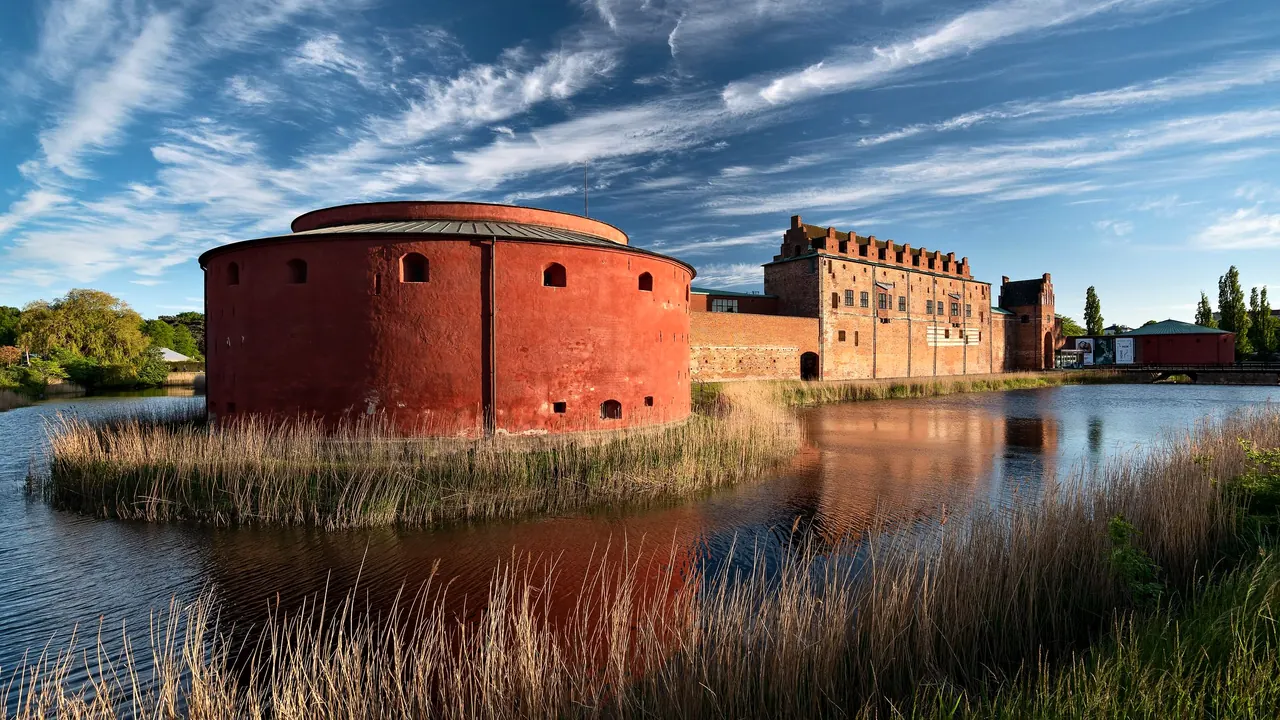
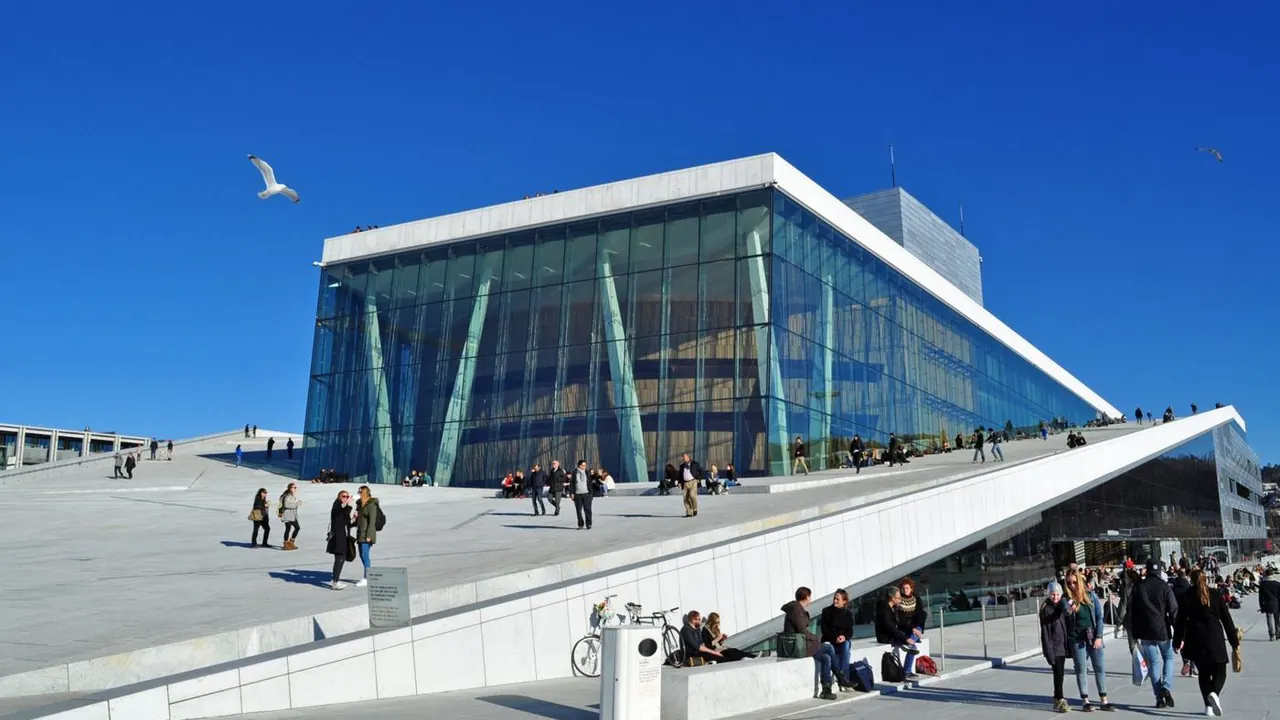
Photos: Malmo by Kateryna Baiduzha, CC BY-SA 4.0, cropped; Oslo by Beata May, CC BY-SA 4.0, cropped.
Malmo or Oslo?
Our verdict in twelve categories, each scored against the same fixed benchmark cities, and the climate month by month, so you can choose for your trip.
Choose Malmo for
- day trips
- prices
- beaches
Malmo suits a traveller who wants a calm, affordable Scandinavian base and plans to move around from it. Copenhagen, Lund, Kronborg and the Skåne coast are all an easy train ride away. The city beach is a short bike ride from the centre, and your money goes noticeably further than in Oslo. Choose it for a relaxed week of day trips, cycling and cheap multicultural food, not for a long list of sights.
Choose Oslo for
- nature and the outdoors
- culture and sights
- getting around
For museums, landscapes and a city that is easy to get around, Oslo is the stronger choice, as long as your budget can take it. Munch, the Bygdøy museums and the Opera House give it real depth. The forest and the fjord islands start where the metro and ferries end, with walking and swimming in summer and skiing in winter. It is a place to stay put and explore rather than a base for trips elsewhere.
Scoreboard
Twelve categories on one fixed scale from 0 to 100. The shaded stretch is the gap between the two.
Your match
Pick a travel style or drag the sliders, and both match scores follow your weighting.
Wins on day trips and prices with your weighting.
Wins on nature and the outdoors and culture and sights with your weighting.
What matters to you?
Category by category
What the scores mean for a trip.
Beaches & swimming
Neither city is a beach destination, but the swimming is quite different. Malmo has a proper sand beach, Ribersborg, a short ride from the centre, with shallow, calm water that suits small children. Further south, Skanör and Falsterbo have finer, emptier sand.
In Oslo, swimming is spread around the fjord: rocky coves on islands reached by harbour ferry, Huk on Bygdøy, diving platforms at Sørenga and forest lakes such as Sognsvann. The water is cool in both even in July. Oslo suits a dip from the rocks, Malmo an afternoon on the sand.
Food & drink
The two cities eat equally well, but in different ways. Malmo's food comes from immigration and farmland. Falafel counters, Middle Eastern bakeries and simple lunch spots fill the streets around Möllevångstorget, and they make eating on a budget easy at midday. Skåne cooking adds smoked eel, spettekaka and the November goose dinners, though dinner out in the evening is not cheap.
Oslo's food is built on cold-water seafood, game and berries. It has a strong top tier of Nordic tasting menus, prawns eaten on the quay in summer and light-roast coffee that outdoes Malmo's fika cafés. Street food is scarce and every meal costs more, so in Oslo it pays to plan one special dinner, while Malmo suits casual eating as you go.
Culture & sights
Malmo's historic core is small but real. It has the Renaissance town hall on Stortorget, the half-timbered houses of Lilla Torg, the brick Gothic St Petri Church and the moated Malmöhus castle with the city museums inside, plus the twisting Turning Torso in the Western Harbour. A day or two covers it, and visitors who love art and history often use the city as a base for Copenhagen and Lund.
Oslo has far more to fill the days, even though it has less old architecture. The Munch Museum and the National Museum hold The Scream and the core of Norwegian art. Bygdøy adds the Fram and Kon-Tiki museums and the open-air Folk Museum, and Malmo has nothing like Vigeland Park's granite figures or the walkable roof of the Opera House.
Nightlife
Neither is a party city, but Oslo has more going on. Grünerløkka, Youngstorget and Grønland have craft beer, natural wine and cocktail bars plus a few electronic clubs, and the waterfront at Aker Brygge fills with people drinking outside on summer evenings.
Malmo's nightlife is smaller and more laid-back. It centres on the student-heavy bars of Möllevången and the terraces of Lilla Torg, and for a big night locals take the train to Copenhagen. Drinks are expensive in both, and more so in Oslo.
Nature & outdoors
Nature is Oslo's clearest advantage. The metro climbs straight into Nordmarka's forest, lakes and marked trails, which become floodlit cross-country ski tracks in winter. In summer, ferries reach the wooded islands of the Oslofjord for kayaking and coastal walks.
Malmo is surrounded by flat farmland and beech woods, best seen by bike along the coast. For proper walking you need to travel about an hour, to the ravine at Söderåsen or the sea cliffs of Kullaberg. The autumn migration of birds of prey over the Falsterbo peninsula, though, is something Oslo cannot offer.
Day trips
Malmo wins easily here, because Copenhagen is a short train ride across the Öresund Bridge and Lund's Romanesque cathedral is even closer. Kronborg Castle at Helsingør, the Louisiana museum, Roskilde's Viking ships and the standing stones of Ales Stenar fill several more days.
Oslo's day trips are pleasant but modest: the star-shaped fortress town of Fredrikstad, the wooden town of Drøbak by boat, Viking-age Tønsberg, or the Olympic ski jumps at Lillehammer. The western fjords many visitors picture are far beyond a day's reach.
Good for families
Both cities are calm and safe, prams are welcome everywhere, and almost every park has a playground. Oslo has a little more to fill the days. Children can see farm animals at the Folk Museum and board a polar ship at the Fram, and there is a hands-on science museum and the Tusenfryd amusement park nearby.
Malmo's attractions are simpler: a shallow sandy beach for toddlers, a submarine to climb inside at the technology and maritime museum, and flat streets with separate cycle lanes. Families with older children may run out of things to do sooner, but they will spend much less than in Oslo.
Getting around
Both cities have compact centres you can walk, but Oslo's transport reaches further. Trams, buses, the metro and the harbour ferries all run as one network, the metro climbs to Holmenkollen and the forest, and an express train runs to the airport, so you never need a car.
Malmo has no metro or tram and relies on buses and bicycles, which suit its flat streets, and it is the better city for cycling. Its great advantage is the rail tunnel under the centre, which connects to Lund, Copenhagen Airport and Copenhagen itself.
Shopping & style
Shopping is much the same in size in both cities, but the interest lies in different places. In Malmo it is markets and small design shops. The chains line Södergatan, the lanes of Gamla Väster sell Swedish homeware and clothing, and the open-air market at Möllevångstorget is the liveliest place to browse. Luxury is thin, which is why keen shoppers save themselves for Copenhagen.
Oslo does better at the top end. Steen & Strøm, a department store dating from the eighteenth century, carries luxury and Nordic brands, and Grünerløkka has vintage and record shops. Patterned knitwear, outdoor clothing and silver are good things to take home, but there are few markets and prices are higher.
Affordability
Both are expensive by European standards, but Malmo is clearly the cheaper of the two. Hotels are reasonable for Scandinavia, the weekday set lunch is a good-value way to eat well, and Möllevången's falafel counters make cheap meals easy. Only evenings out with drinks really strain the budget.
Oslo is among the most expensive places to travel, with meals, coffee, alcohol and hotels all dear. Free sights such as Vigeland Park, the Opera House roof and the forest trails help, as do supermarket picnics and a transport pass that also covers the ferries.
Live music & performing arts
Oslo has the stronger programme. The national opera and ballet perform in the oak-lined hall of the harbour Opera House and the Oslo Philharmonic plays at the Konserthus. There are also small jazz and rock clubs and a big August music festival in Tøyen park.
Malmo does well for its size. Malmö Opera's large stage puts on opera and musicals, the symphony orchestra plays at Malmö Live, and the Malmö Festival fills the streets with free concerts each August. Most theatre is in Swedish, and Copenhagen's stages are close if you want more.
Wellness & relaxation
Both cities relax the Nordic way, with a sauna followed by a cold plunge in the sea, and neither has a thermal spa tradition. The difference is scale. In Malmo the ritual centres on one place, the 1890s wooden bathhouse Ribersborgs Kallbadhus on its pier, while Oslo has a row of wood-fired saunas, many of them floating, along the harbour by the Opera House and at Sørenga, which makes the habit easier to fit into any day.
When should you go?
Pick your month. The climate figures are measured averages, not a forecast.
Malmo in July
Oslo in July
Daytime high, °C
Rainfall in the month, mm
Where the figures come from
Malmo's temperatures are measured 27 km from the centre, at Falsterbo.
Malmo has no rain gauge within 25 km of the centre, so its rainfall comes from a gridded climate dataset read at the city rather than from a gauge further away.
Temperature and rainfall are climate normals, averaged over the years shown. Malmo: 1991-2020 normals, Falsterbo (27.3 km from centre). Oslo: 1991-2020 normals, Oslo-Blindern (4.3 km from centre).
Both cities are at their best from June to August, when evenings are long and walking the streets is a pleasure. Oslo is actually a little warmer in July, around 23°C against Malmo's 21°C, and its sunniest weeks run from May to July. The sea stays cool in both and reaches about 18°C at its warmest in August, so swimming means a brisk dip in high summer only.
The bigger differences are rain and winter. Oslo gets much wetter from summer into autumn, with rain peaking at 104mm in August, while Malmo's rainfall stays lower and more even through the year. Winters are dark in both cities. Oslo's days stay around 0°C, cold enough for snow and skiing, while Malmo is grey, windy and a few degrees above freezing.
Which traveller are you?
On a trip on a tight budget, Malmo is much the easier choice. Hotels are reasonable by Scandinavian standards, and set lunches and falafel counters feed you cheaply. The flat centre is easy on foot or by bike. In Oslo, high prices hit every meal.
For an outdoors trip, Oslo is the clear winner. The metro runs straight into Nordmarka's forest trails and lakes, which become ski tracks in winter, and summer ferries reach the fjord islands for kayaking. Malmo's flat farmland is better for gentle cycling.
On a culture and arts trip, Oslo has more to fill the days: Munch and The Scream, the Bygdøy exploration museums, Vigeland Park, and opera or ballet in the harbour Opera House. Malmo's own sights take a day or two, though Copenhagen is close.
Before you go
| Measure | Malmo | Oslo |
|---|---|---|
| Official language | Swedish | Norwegian, Nynorsk, Bokmål, Sámi |
| Currency | Swedish Krona (SEK) | Norwegian Krone (NOK) |
| Sockets | CF230 V, 50 Hz | CF230 V, 50 Hz |
| Driving side | Right | Right |
| Time zone | UTC+1, UTC+2 in summer | UTC+1, UTC+2 in summer |
| Emergency number | 112 | Police 112, ambulance 113, fire 110 |
| Elevation | 12 m | 23 m |
| Main airport | Copenhagen Kastrup Airport (CPH)22 km from centre196 non-stop destinations | Oslo-Gardermoen International Airport (OSL)37 km from centre147 non-stop destinations |
| Public holidays this year | 16 days | 13 days |
By the numbers
| Measure | Malmo | Oslo |
|---|---|---|
| City population | 339,316 | 717,710 |
| People per km² | 4,205 | - |
| Museums within 10 km | 24 | 60 |
| UNESCO World Heritage sites within 50 km | 2 | 0 |
| Swim season, months above 21 °C | None | None |
Where else could you go?
Every comparison below shares a destination with this one, so you can follow Malmo or Oslo somewhere new.