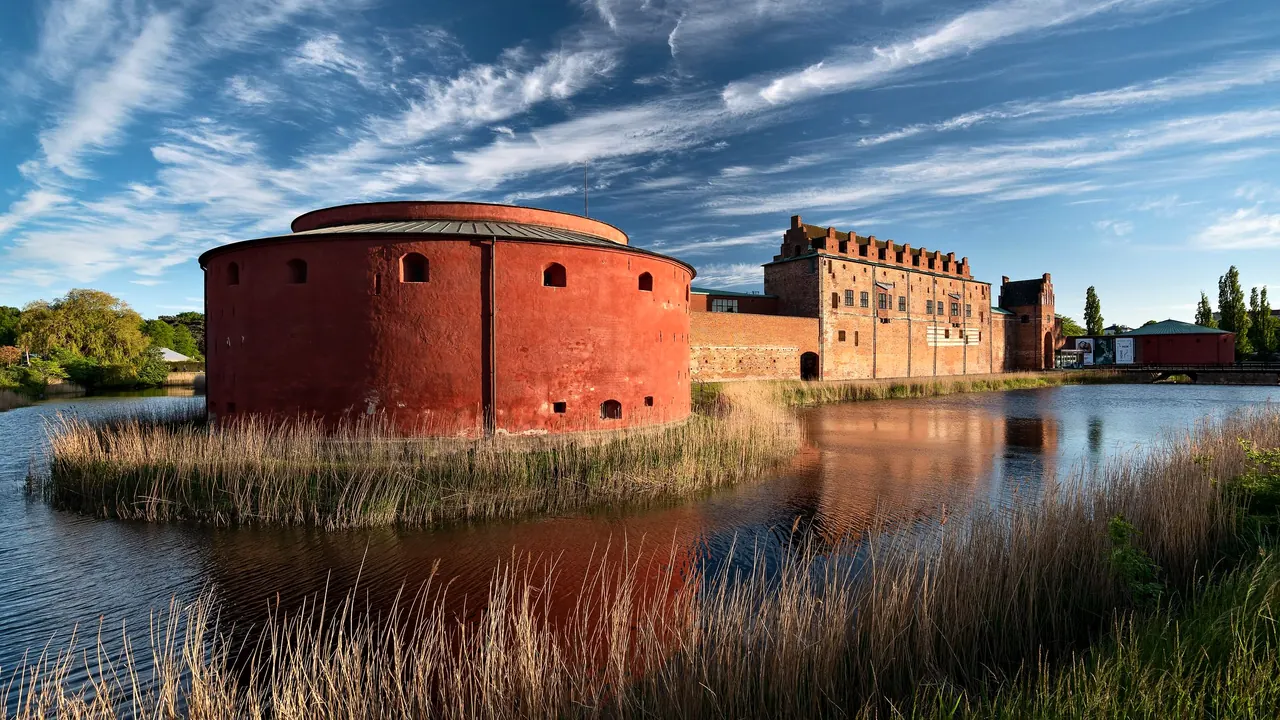
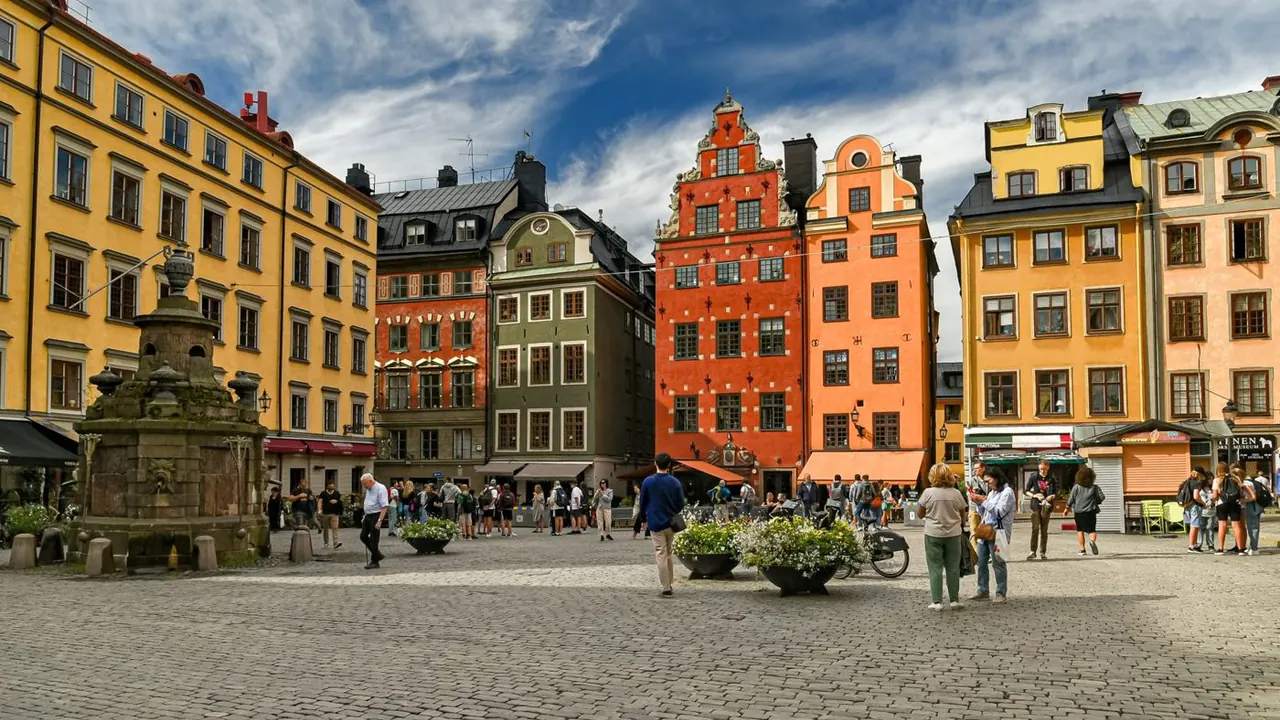
Photos: Malmo by Kateryna Baiduzha, CC BY-SA 4.0, cropped; Stockholm by Jorge Franganillo, CC BY 2.0, cropped.
Malmo or Stockholm?
Our verdict in twelve categories, each scored against the same fixed benchmark cities, and the climate month by month, so you can choose for your trip.
Choose Malmo for
- day trips
- prices
Malmo suits a traveller who wants a calm, compact base and expects to spend much of the trip elsewhere. Copenhagen is a short train ride across the bridge and Lund is next door, while Skåne's castles and coast fill more days. Falafel counters and weekday lunches keep costs a little gentler than in the capital. Come for the location, the cycling and a sauna on the pier, not for the sights in town.
Choose Stockholm for
- culture and sights
- families
- shopping
If you want the city itself to be the trip, Stockholm is the stronger choice. The Vasa Museum, Skansen, Gamla Stan and the Royal Palace give it far deeper sightseeing, and the archipelago starts at the quayside. Djurgården can keep children busy for days. Scandinavian design shopping, a fuller stage programme and a livelier night out add to the case, though it all costs more.
Scoreboard
Twelve categories on one fixed scale from 0 to 100. The shaded stretch is the gap between the two.
Your match
Pick a travel style or drag the sliders, and both match scores follow your weighting.
Wins on day trips and prices with your weighting.
Wins on culture and sights and families with your weighting.
What matters to you?
Category by category
What the scores mean for a trip.
Beaches & swimming
Neither city is a beach destination, and in both the swimming season is squeezed into high summer. The difference is in the kind of beach. Malmo has a real sandy strand at Ribersborg, a short ride from the centre, where the shallow, calm water suits small children. Further south, Skanör and Falsterbo have finer, quieter sand.
In Stockholm you swim from rock slabs, jetties and small lawns: at Långholmen, on Kungsholmen or in the freshwater lakes at Hellasgården. The archipelago adds rocky coves a ferry ride out. If you want sand, choose Malmo. If you like a quick dip from the rocks between sights, Stockholm suits you better.
Food & drink
Stockholm eats better and more ambitiously. Its tasting-menu kitchens cook with foraged herbs, archipelago fish and game at a level only a handful of places in Malmo reach. Old-fashioned dining rooms serve home cooking like meatballs with lingonberries and fried herring, and Östermalms Saluhall shows it all off.
Malmo's strength lies elsewhere. Its international population shapes casual eating, with falafel counters and Middle Eastern bakeries around Möllevångstorget, and Skåne adds smoked eel and goose dinners in November. Eating in Malmo is cheaper and more casual, but Stockholm has more depth.
Culture & sights
This is where the two cities differ most. Stockholm's sights are spread across its islands: Gamla Stan's medieval lanes and the Royal Palace, the Vasa warship, Skansen, the Nationalmuseum, Moderna Museet and the City Hall where the Nobel banquet is held. That is enough for several full days.
Malmo has a pleasant small old centre around Stortorget and Lilla Torg, plus St Petri Church, the museums in Malmöhus castle and the Turning Torso in the Western Harbour. A couple of days covers it, and visitors with cultural interests usually go on to Lund and Copenhagen.
Nightlife
Stockholm gives you a fuller night out, with two distinct scenes. Stureplan has polished clubs with strict doors, while Södermalm has looser bars and small dance floors, and on summer nights the waterfront terraces fill up.
Going out in Malmo is smaller and more studenty. It centres on Möllevången's bars and late kitchens and the terraces of Lilla Torg, and for a big night many locals take the train to Copenhagen.
Nature & outdoors
Stockholm has far more nature on its doorstep. The archipelago of granite islands begins at the quayside, with kayaking, sailing and island walks. Djurgården's oak meadows and Tyresta's old pine forest are close by, and in cold winters people skate on the frozen lakes and sea.
Malmo's landscape is gentler: flat farmland, beech woods and a long coast that are lovely by bike. Söderåsen's ravine and Kullaberg's sea cliffs are further out, and Falsterbo is a draw for birdwatchers when birds of prey migrate in autumn.
Day trips
Malmo is the better base for day trips, because a second capital sits just across the bridge. Copenhagen is about thirty-five minutes away by train and Lund about ten. Kronborg, the Louisiana museum and Roskilde's Viking Ship Museum make more Danish days, and on the Swedish side there are Ystad and the Ales Stenar stones.
Stockholm has good trips too, to Uppsala's cathedral, Sigtuna and Drottningholm Palace. But many of its best outings, to Birka, Gripsholm or Vaxholm, depend on summer boats, so there is less choice in winter.
Good for families
Both cities treat children as part of everyday life, with buggies welcome on buses and playgrounds in most parks, but Stockholm has far more to do. Skansen's Nordic animals, Junibacken's Astrid Lindgren world and the rides at Gröna Lund are all on Djurgården, and science and natural history museums plus an aquarium cover rainy days.
Malmo's attractions are modest: a few small rides in Folkets Park, a small aquarium at Malmöhus and a submarine to climb inside at the technology museum. Its shallow beach and flat, quiet streets make it easy with toddlers, but older children may run out of things to do.
Getting around
Stockholm has the fuller network: metro, trams, buses and commuter ferries all on one ticket. The painted, rock-cut metro stations are worth seeing in themselves, and the harbour ferries double as sightseeing trips. On foot, though, the bridges and Södermalm's steep streets take some effort.
Malmo has no metro or tram, and it hardly needs one. The centre is flat and compact, the cycle lanes are excellent, and the underground rail link runs straight to Lund, Copenhagen Airport and central Copenhagen.
Shopping & style
Stockholm is worth a trip for its shopping alone. Minimalist Swedish labels and the luxury houses cluster around Biblioteksgatan, NK is the grand department store, and SoFo on Södermalm has vintage and independent boutiques.
Malmo covers the basics, with high-street chains, design shops around Lilla Torg and a mall at Hyllie. Its best browsing is at the open-air market on Möllevångstorget, and serious shoppers usually save themselves for Copenhagen.
Affordability
Both are expensive by European standards, but Malmo is easier on the wallet. Its hotels are reasonable for Scandinavia, and the falafel counters and cheap kitchens of Möllevången make eating on a budget simple.
Stockholm costs more, especially for hotels on weekdays in spring and autumn, when conferences fill the city. Weekends and July are cheaper. In both cities the weekday set lunch is the best-value meal, and evening drinks are where the money goes.
Live music & performing arts
Stockholm's stage is deeper. The Royal Swedish Opera puts on opera and ballet, the Royal Dramatic Theatre leads the country's drama, and two concert halls and a long-running jazz scene add more. In summer, Drottningholm stages baroque opera using its original eighteenth-century stage machinery.
Malmo does more than its size suggests. Malmö Opera has one of Scandinavia's biggest stages, the symphony orchestra plays at Malmö Live, touring bands play the Moriska Paviljongen, and the August festival brings free concerts to the streets. Language limits theatre in both cities.
Wellness & relaxation
The two are evenly matched, and both build relaxation around sauna and cold water. Malmo puts it all in one place: Ribersborgs Kallbadhus, an 1890s bathhouse on a pier, where a wood-fired sauna followed by a dip in the sea is the city's signature ritual.
Stockholm spreads it wider. There are the historic indoor spas of Centralbadet and Sturebadet, sauna and ice-hole dips at Hellasgården, and spa hotels by the water in Nacka and the inner archipelago. Choose Malmo for one memorable bathhouse and Stockholm for more variety.
When should you go?
Pick your month. The climate figures are measured averages, not a forecast.
Malmo in July
Stockholm in July
Daytime high, °C
Rainfall in the month, mm
Where the figures come from
Malmo's temperatures are measured 27 km from the centre, at Falsterbo.
Malmo has no rain gauge within 25 km of the centre, so its rainfall comes from a gridded climate dataset read at the city rather than from a gauge further away.
Stockholm's sunshine is measured 26 km from the centre, at Stockholm Observatoriet.
Temperature and rainfall are climate normals, averaged over the years shown. Malmo: 1991-2020 normals, Falsterbo (27.3 km from centre). Stockholm: 2003-2020 (sunshine 1991-2020, rainfall 1981-2010) normals, Stockholm Bromma Airport (7.1 km from centre).
Both cities are best in summer. From June to August the days are warm enough for a swim, with highs of about 21°C in Malmo and slightly more in Stockholm, which reaches 23°C in July. Summer is also the wettest part of the year in both, so expect some showers. Malmo's sea is a little warmer, at about 18°C in August, against 17°C in the Baltic off Stockholm.
May and September are pleasant for walking around either city, and late spring and early summer in Stockholm are very sunny. Winter is cold and dark in both. Stockholm is the colder of the two, just above freezing in January and getting very little sun from November to January. Malmo stays a few degrees milder in winter, but it is grey and windy.
Which traveller are you?
On a culture and arts trip, Stockholm is the clear pick. Malmo's own sights fill a couple of days before you need Lund or Copenhagen, while Stockholm's palaces, museums and medieval old town can fill a week, with opera or ballet in the evenings.
On a family trip with children, Stockholm is the stronger choice. Malmo works well for a few easy days with toddlers, thanks to its shallow beach and flat streets. School-age children are better served by Stockholm, which can keep a family busy for a week, especially in summer.
On a trip with a tight budget, Malmo is the gentler of two expensive cities. You can walk or cycle everywhere, and Copenhagen is a short train ride away with no second hotel. Stockholm strains a budget harder, especially on weekdays.
Before you go
| Measure | Malmo | Stockholm |
|---|---|---|
| Official language | Swedish | Swedish |
| Currency | Swedish Krona (SEK) | Swedish Krona (SEK) |
| Sockets | CF230 V, 50 Hz | CF230 V, 50 Hz |
| Driving side | Right | Right |
| Time zone | UTC+1, UTC+2 in summer | UTC+1, UTC+2 in summer |
| Emergency number | 112 | 112 |
| Elevation | 12 m | 22 m |
| Main airport | Copenhagen Kastrup Airport (CPH)22 km from centre196 non-stop destinations | Stockholm-Arlanda Airport (ARN)36 km from centre174 non-stop destinations |
| Public holidays this year | 16 days | 16 days |
By the numbers
| Measure | Malmo | Stockholm |
|---|---|---|
| City population | 339,316 | 984,748 |
| People per km² | 4,205 | 5,260 |
| Museums within 10 km | 24 | 266 |
| UNESCO World Heritage sites within 50 km | 2 | 3 |
| Swim season, months above 21 °C | None | None |
Where else could you go?
Every comparison below shares a destination with this one, so you can follow Malmo or Stockholm somewhere new.