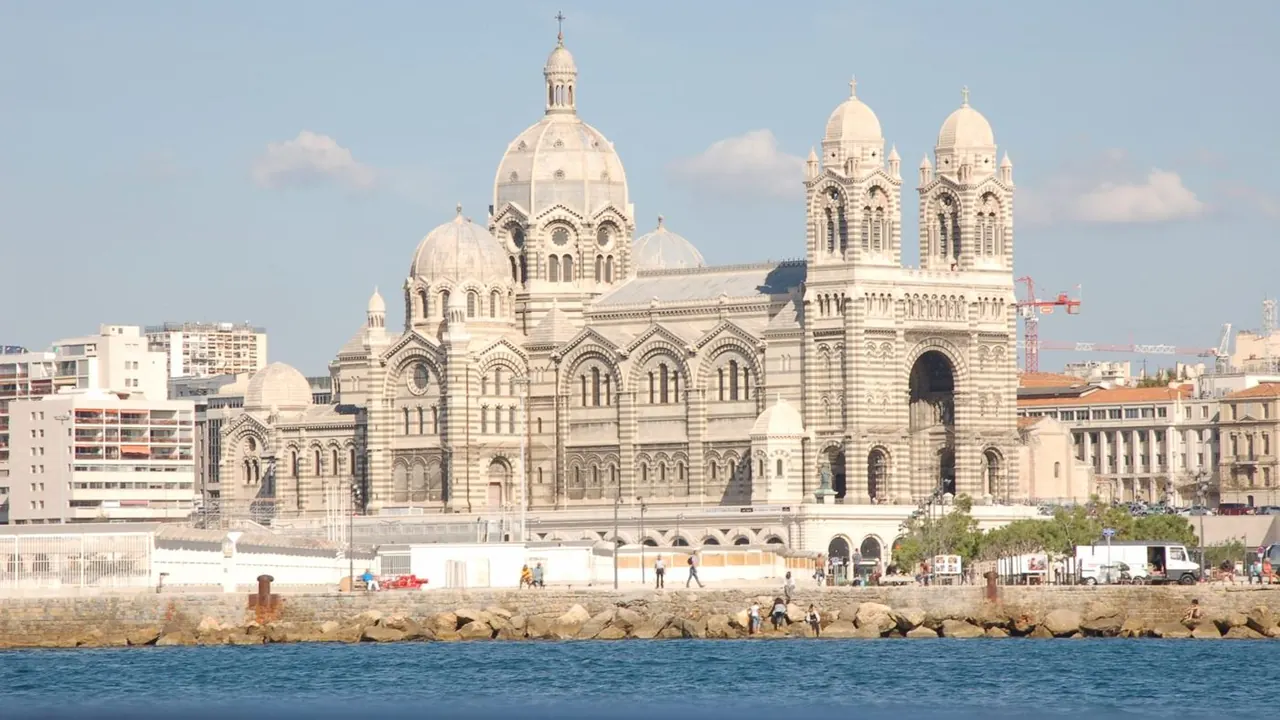
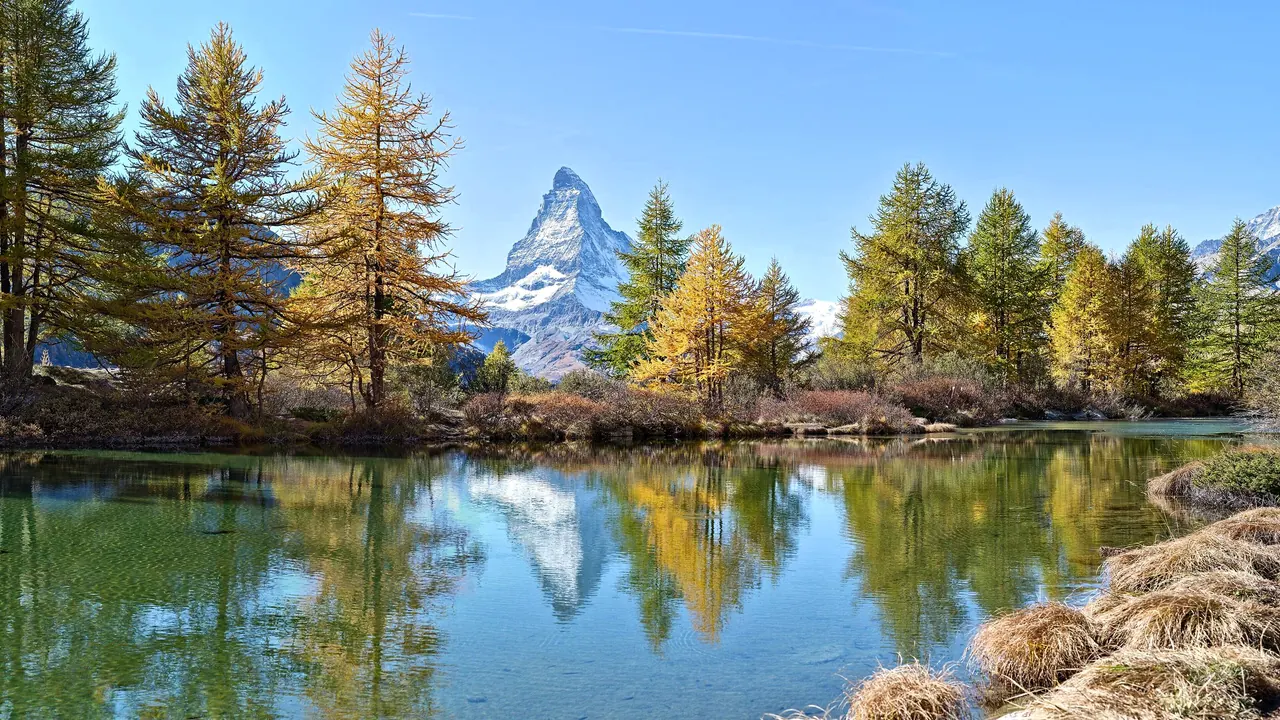
Photos: Marseille by Charlotte Noblet, CC BY-SA 3.0, cropped; Zermatt by Roy Egloff, CC BY-SA 4.0, cropped.
Marseille or Zermatt?
Our verdict in twelve categories, each scored against the same fixed benchmark cities, and the climate month by month, so you can choose for your trip.
Choose Marseille for
- beaches
- day trips
- culture and sights
Marseille suits travellers who want the Mediterranean in all its forms: swimming in the Calanques, a long fish lunch in a Corniche harbour, Greek-founded history around the Vieux-Port and an easy train to Aix, Arles or Avignon. It is a rough-edged working port rather than a polished resort, and it is best for people who like a city that is loud and mixed, with plenty to eat.
Choose Zermatt for
- getting around
- nature and the outdoors
- wellness
Zermatt is the choice for anyone whose trip is really about mountains. The Matterhorn stands over a car-free village, lifts climb to glaciers and high trails, and in winter the skiing links across into Italy. There is little to do beyond that, and everything costs a lot. For skiers, walkers and climbers, though, few places in the Alps come close.
Scoreboard
Twelve categories on one fixed scale from 0 to 100. The shaded stretch is the gap between the two.
Your match
Pick a travel style or drag the sliders, and both match scores follow your weighting.
Wins on beaches and day trips with your weighting.
Wins on getting around and nature and the outdoors with your weighting.
What matters to you?
Category by category
What the scores mean for a trip.
Beaches & swimming
Marseille has real swimming. There are the broad Prado beaches for a family afternoon, quick dips at the Catalans or the Vallon des Auffes, and the clear turquoise inlets of the Calanques and the Frioul islands for a half-day outing. The only catches are the mistral and the occasional beach closure after heavy rain.
Zermatt has none of this. Its glacier-fed tarns are for photographs, not swimming, so the only water you will get into is a hotel pool.
Food & drink
Marseille's food draws on the whole Mediterranean. You can have two-course bouillabaisse in the Corniche harbours, panisses and wood-fired pizza on the street, and the spice shops and North African bakeries of Noailles, with rosé from Cassis or Bandol alongside. Cheap meals and serious ones sit side by side, though the Vieux-Port has its share of tired set menus.
Zermatt's food is narrower and pricier. The memorable meals are long lunches at mountain chalets around Findeln and Furi with the Matterhorn in view: raclette, fondue and air-dried beef with Valais wines such as Petite Arvine. There is little range, though, and almost nothing cheap.
Culture & sights
Marseille has more than 2,600 years of history. It runs from the Greek founding through to Notre-Dame de la Garde, the forts at the harbour mouth, MuCEM, the Vieille Charité in Le Panier, the crypts of Saint-Victor and Le Corbusier's Cité Radieuse. It is spread through a working city rather than a preserved old town, but there is enough for several days.
Zermatt's heritage fills a morning, and it is all about the mountain. There is the Matterhorn Museum and the story of the 1865 first ascent, the climbers' graves beside the church and the old larch barns of the Hinterdorf.
Nightlife
Marseille goes out on terraces and in the streets. There are graffiti-covered bars around Cours Julien and La Plaine, pastis on the Vieux-Port quays, and warehouse electronic nights or seaside parties in summer. It is informal and runs late, though some central streets feel edgy after dark.
In Zermatt, going out means après-ski: ski-boot bars on the runs back to the village and a few clubs on the main street on winter weekends. In summer the walkers and climbers are in bed early.
Nature & outdoors
Both are outstanding, but Zermatt works on a far larger scale. The Matterhorn rises over the village, ringed by dozens of four-thousand-metre peaks and the Gorner Glacier. Lifts reach terrain above 3,800m, with skiing in winter and, in summer, hundreds of kilometres of trails, a suspension bridge on the Europaweg and guided ascents.
Marseille's strength is a national park within its city limits. The white limestone Calanques have coastal paths to Sugiton and En-Vau, along with sport climbing, kayaking and diving, and Sainte-Victoire is within an hour. Summer heat and fire closures make spring and autumn the time to go.
Day trips
Marseille is one of the best bases in Provence. Aix and Cassis are close, Arles and Avignon are an easy train ride away, and with a car the Luberon villages, Les Baux and the Pont du Gard come within reach.
From Zermatt, every outing starts with the long train down the valley. The options are Brig, the castle hills and vineyards of Sion, or Saas-Fee next door. Most visitors spend their spare days higher up the mountain instead.
Good for families
Neither place is built around children, and the difference lies in how a family day feels. In Marseille it means beaches and boats: the sand and lawns of the Prado, Parc Borély, and ferries to the Frioul and the Château d'If. Against that, heavy traffic, steep pavements and summer heat make pushing a buggy hard going.
Zermatt is calmer and safer underfoot. It has car-free streets, ski schools and nursery slopes at Sunnegga, marmots to spot and cog railways to ride. It suits families who ski or hike together, though rainy days and the thin air at the top viewpoints can be hard on small children.
Getting around
Zermatt is easier to get around. The village is a compact, car-free strip where you walk everywhere, with electric taxis for the outer edges. The Gornergrat railway, the Sunnegga funicular and the gondolas all start near the centre. The only effort is the train in and out of the valley, plus the climb up to slope-side hotels.
Marseille's core around the Vieux-Port, Le Panier and the Canebière is walkable, and there are metro and tram lines and small harbour ferries. The beaches and Calanques trailheads, though, mean slow buses stuck in traffic, and driving in the centre is stressful.
Shopping & style
Neither is a fashion destination, but Marseille has far more to browse. The classic buys are plain green cubes of olive-oil Marseille soap and santons, the small painted clay crib figures made in workshops around Le Panier. Noailles packs fabrics, teas and North African goods into its narrow streets, Cours Julien has independent design shops, and the chains and department stores are on Rue de Rome.
Zermatt's shopping is a single main street of watch and jewellery boutiques, plus shops selling cowbells and chocolate. Where it does well is ski and mountaineering gear, which is worth buying here if you need equipment.
Affordability
Marseille is mid-priced for a French city. Street and market food is cheap, transport is inexpensive and walking in the Calanques is free. Only in July and August do rooms near the water get expensive.
Zermatt is about as expensive as the Alps get. That covers plain hotel rooms, terrace lunches and the lift and cog-railway fares every visitor pays. Self-catering or sleeping down the valley in Täsch helps, but it is still a splurge.
Live music & performing arts
Marseille has a proper season. There is opera in the art deco house behind the Vieux-Port, drama at La Criée and contemporary work at the Friche la Belle de Mai. The city also has a strong hip-hop and Mediterranean music scene, and the Festival de Marseille and the Fiesta des Suds are the high points.
Zermatt has no theatre or concert hall. Its two big moments are Zermatt Unplugged in spring and a chamber music festival in late summer. The rest of the year, live music means a band in an après-ski bar.
Wellness & relaxation
Zermatt is the more restful choice. Many hotels have excellent spas with pools, saunas and mountain views, and some sell day passes to non-residents. The car-free streets and clear, quiet air make evenings genuinely calm, though peak weeks feel active rather than slow.
Marseille is loud and dense, and has only a few hammams used mostly by locals. Its rest comes from a long harbour lunch on the Corniche, and visitors who want real quiet often stay in Cassis instead.
When should you go?
Pick your month. The climate figures are measured averages, not a forecast.
Marseille in July
Zermatt in July
Daytime high, °C
Rainfall in the month, mm
Where the figures come from
Zermatt has no weather station within reach, so its figures come from a gridded climate model rather than a measured record, and read a broad area rather than the city itself.
Temperature and rainfall are climate normals, averaged over the years shown. Marseille: 1991-2020 normals, Marseille / Marignane (20.6 km from centre). Zermatt: 1991-2020 normals, TerraClimate 4 km grid at the town, no weather station within 90 km.
Marseille is a summer and shoulder-season city. The sea is warm enough to swim in from June to September and is warmest in August, at around 22°C. July is almost dry, but highs of about 31°C make midday walking hard work. May, June and late September are the most comfortable months for the streets and the Calanques paths. Autumn brings the heaviest rain, with September to November the wettest stretch. Winters are mild and fairly sunny, which is fine for sightseeing but not for swimming.
Zermatt has two seasons. From December to March daytime temperatures stay around freezing, which keeps the pistes in good condition. July and August reach only about 14°C, ideal for hiking but never warm. Rain and snow are spread through the year, and November is the wettest month at 130mm, a grey gap before the ski season starts.
Which traveller are you?
On a culture and arts trip, Marseille is the clear pick. MuCEM, the Vieille Charité in Le Panier, Notre-Dame de la Garde and the Cité Radieuse fill several days, and the Opéra or La Criée fill the evenings. Zermatt has a mountaineering museum and two festivals.
For an outdoors trip, Zermatt wins on sheer altitude. It has winter skiing, glacier lifts above 3,800m, the Five Lakes walk and guided ascents of four-thousanders. Marseille's Calanques are superb for coastal walking and climbing, but they are not the high Alps.
On a tight budget, Marseille is far easier. Market food in Noailles, cheap public transport, free walks in the Calanques and inexpensive museums keep costs down. In Zermatt, rooms, terrace meals and lift fares are steep enough that even supermarket picnics only soften the bill.
Before you go
| Measure | Marseille | Zermatt |
|---|---|---|
| Official language | French | French, German, Italian, Romansh |
| Currency | Euro (EUR) | Swiss Franc (CHF) |
| Sockets | CE230 V, 50 Hz | CJ230 V, 50 Hz |
| Driving side | Right | Right |
| Time zone | UTC+1, UTC+2 in summer | UTC+1, UTC+2 in summer |
| Emergency number | 112 | 112 |
| Elevation | 0 m | 1,624 m |
| Main airport | Marseille Provence Airport (MRS)21 km from centre126 non-stop destinations | Geneva International Airport (GVA)128 km from centre150 non-stop destinations |
| Public holidays this year | 11 days | 9 days |
By the numbers
| Measure | Marseille | Zermatt |
|---|---|---|
| City population | 886,040 | 6,023 |
| People per km² | 3,683 | 25 |
| Museums within 10 km | 27 | 2 |
| UNESCO World Heritage sites within 50 km | 1 | 2 |
| Swim season, months above 21 °C | 2 months | - |
Where else could you go?
Every comparison below shares a destination with this one, so you can follow Marseille or Zermatt somewhere new.
- Aix-en-Provencevs Marseille
- Chamonixvs Zermatt
- Interlakenvs Zermatt
- Avignonvs Marseille
- Luganovs Zermatt
- Saint-Tropezvs Marseille