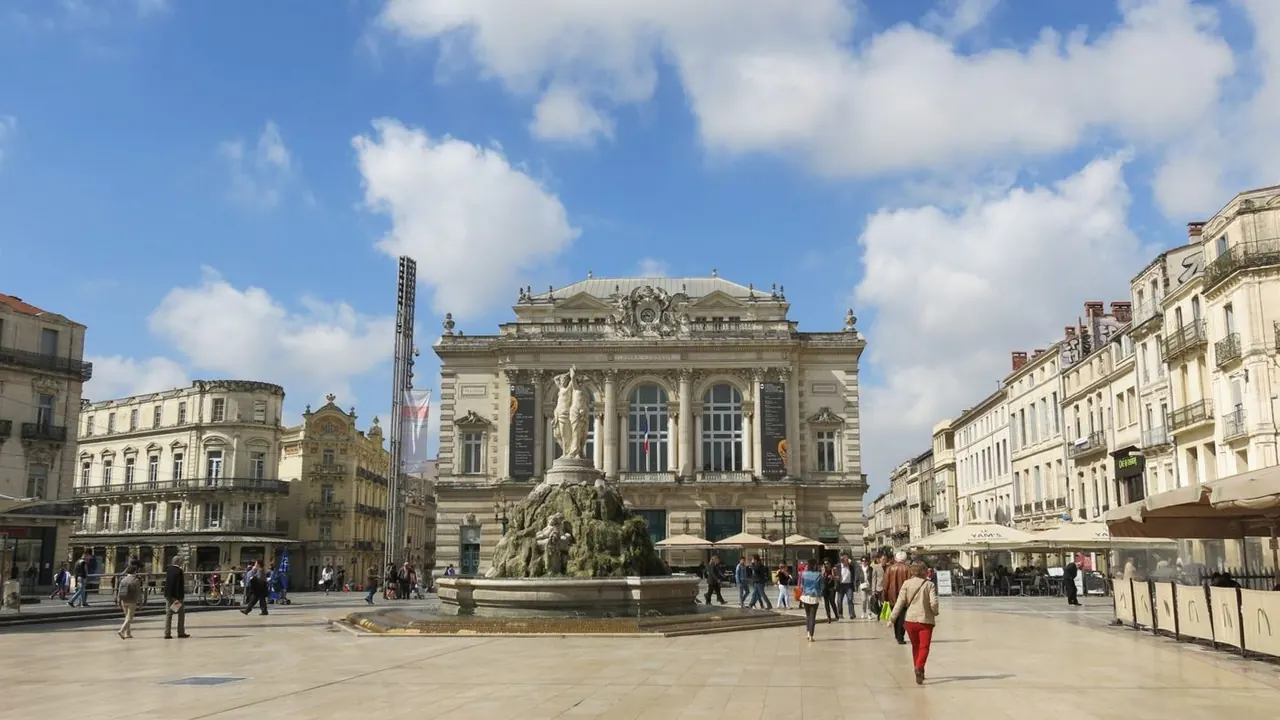
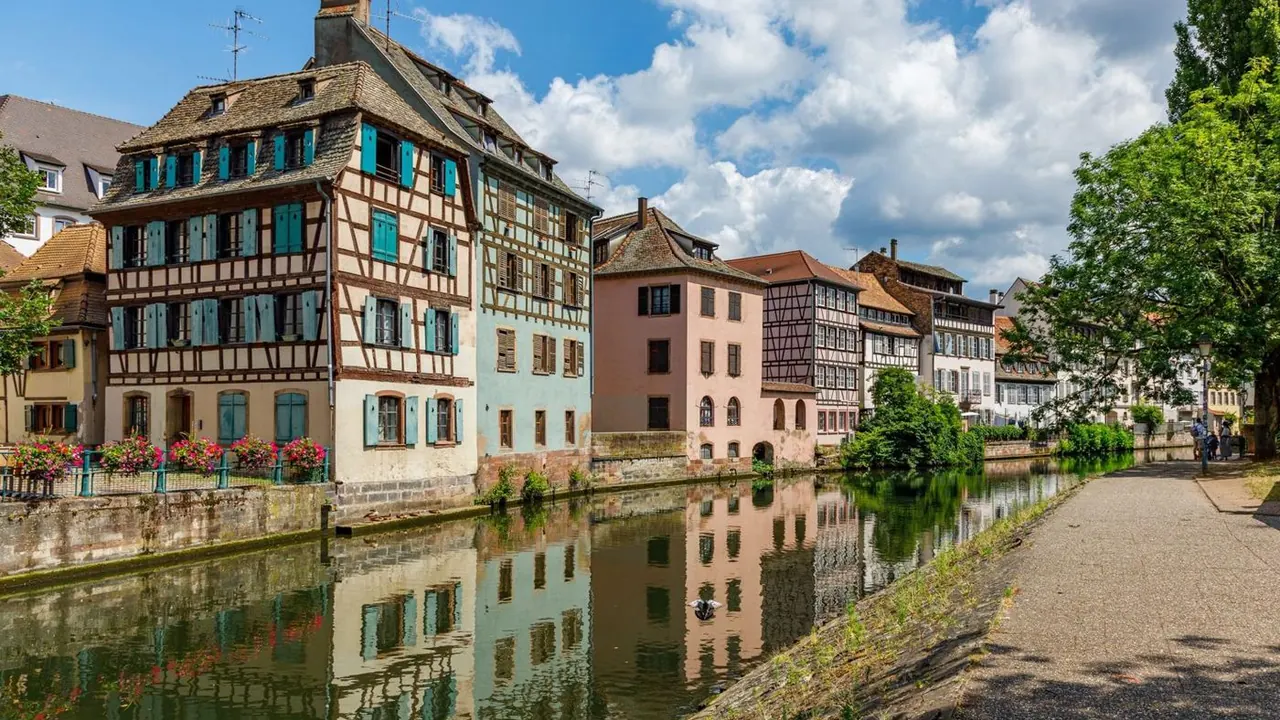
Photos: Montpellier by Peter, CC BY 2.0, cropped; Strasbourg by Edoardo Colombo, Pexels License.
Montpellier or Strasbourg?
Our verdict in twelve categories, each scored against the same fixed benchmark cities, and the climate month by month, so you can choose for your trip.
Choose Montpellier for
- beaches
- nightlife
- nature and the outdoors
Montpellier suits a warm-weather trip that mixes city and coast. You get long sandy beaches a short ride away, lagoons, gorges and garrigue hills to explore, a younger and later night out, and a strong summer of dance and music festivals. It works best for travellers who want sun, outdoor days and lively evenings, with Roman Provence close enough for day trips.
Choose Strasbourg for
- wellness
- culture and sights
- getting around
Strasbourg is the better pick if you care most about the old town itself. The cathedral, the canals of Petite France and the museums of the Palais Rohan make a richer set of sights. Thermal baths are close at hand across the Rhine, the centre is flat and easy to cycle, and the winstub cooking is at its best in the cold months. It fits a slower, more cultured stay, and nobody should go expecting a beach.
Scoreboard
Twelve categories on one fixed scale from 0 to 100. The shaded stretch is the gap between the two.
Your match
Pick a travel style or drag the sliders, and both match scores follow your weighting.
Wins on beaches and nightlife with your weighting.
Wins on wellness and culture and sights with your weighting.
What matters to you?
Category by category
What the scores mean for a trip.
Beaches & swimming
The gap here is as wide as it gets. From Montpellier the coast is about 11km away. Fine sand runs from Palavas and Carnon past La Grande-Motte to the empty dunes of l'Espiguette, and Sète adds more beaches west of the lagoon. The water is shallow and warm by late summer, though the nearest beaches are crowded in July and August.
Strasbourg has no sea at all. Its swimming happens in old gravel-pit lakes like the Baggersee, which are lifeguarded in high summer and pleasant on a hot afternoon. That is all there is.
Food & drink
The two eat about equally well, but they feel like different countries. Montpellier is Mediterranean: oysters and mussels from the Thau lagoon, Sète's octopus tielle and Pic Saint-Loup wines. It is at its best in the market halls and casual bistros, and it suits hot weather.
Strasbourg cooks heavier food for colder days. Think choucroute, baeckeoffe and tarte flambée in wood-panelled winstubs with a pichet of Riesling. It also has a stronger fine-dining tier and foie gras of its own, but the restaurants around the cathedral tend to serve the same tourist menus.
Culture & sights
Strasbourg has more to see. The pink sandstone cathedral with its astronomical clock, the island old town and Petite France, and the German-built Neustadt together make up a UNESCO-listed townscape. The Palais Rohan alone holds three museums, and the contemporary art museum and the Alsatian Museum add more.
Montpellier's Écusson is attractive, with lanes of hôtels particuliers, the Peyrou terrace and its aqueduct, and France's oldest botanical garden. The Musée Fabre is a fine gallery, and Bofill's Antigone is unusual modern architecture. Overall, though, it offers fewer major sights and less depth.
Nightlife
Montpellier makes for the better night out. The terraces around Place Jean-Jaurès and the Écusson fill on weeknights too. When the bars close, the crowd takes taxis to clubs out towards Lattes and the coast, and in summer the night moves to the beach towns.
Strasbourg has good bars in the Krutenau and around Place Saint-Étienne, including beer cellars and riverside terraces in summer. It has few clubs, though, and the city is mostly quiet by midnight.
Nature & outdoors
Montpellier has the more varied outdoors close to town. Flamingos feed in the lagoons behind the coast and the Camargue is an hour away. To the north the climb up Pic Saint-Loup, the Hérault gorges for canoeing and the Cirque de Navacelles are all within easy reach. The windy coast also suits kitesurfing.
Strasbourg's own landscape is flat river plain, best enjoyed by bike along the Rhine. For proper walking you have to travel about an hour, to the forested Vosges and the castle ruins in the west or the higher ridges of the Black Forest in the east.
Day trips
Both are excellent bases, and the difference is in what you visit. From Montpellier, trains run to Nîmes and its Roman arena, to Arles and Avignon, and to walled Carcassonne. Closer in, Sète, Aigues-Mortes and Saint-Guilhem-le-Désert make easy trips, so the focus is Roman and medieval southern France.
Strasbourg offers two sets of trips. One is Colmar and the wine route villages such as Riquewihr and Eguisheim. The other crosses the border, to Baden-Baden, Freiburg, Heidelberg and Basel. Both cities need a car for their smaller villages.
Good for families
With children the two are about even, and what separates them is the kind of trip. Montpellier's family days are built around summer and the sea. The nearby beaches slope so gradually that small swimmers can paddle in safety, and when the midday heat makes the old town hard going, the Lunaret zoo in its woodland or the aquarium and planetarium at Odysseum give you somewhere cooler to go.
Strasbourg is the easier city to get around with a pushchair, being level and compact, and children tend to enjoy a boat ride round Petite France or watching storks on their nests in the Orangerie. Its standout is a whole day at Europa-Park across the Rhine, which Montpellier has nothing to match, though the city's museums offer little for younger visitors.
Getting around
Both have compact, largely car-free centres and good tram networks. Strasbourg's island centre is flat and it is a true cycling city, so a visitor never needs a car there, and one tram line even crosses into Germany.
Montpellier's Écusson sits on a low hill with slopes and uneven paving. The beaches are reachable by tram and then bus, which is slow in summer. For the gorges and the Camargue, renting a car is much easier.
Shopping & style
Neither city is a shopping destination, and the best buys are regional. Strasbourg has more to take home besides food: Soufflenheim and Betschdorf pottery, printed linens and kougelhopf moulds. In December its old Christmas market sells crafts and decorations.
Montpellier's best buys are edible, such as wine, olive oil and honey from the covered markets. There are boutiques in the Écusson, and the Polygone and Odysseum have the chain stores.
Affordability
Montpellier is slightly easier on a budget. Its students keep plenty of cheap counters and bars going, and lunch menus and market halls stretch your money. Costs rise mainly with restaurant dinners and coastal rooms in July and August.
In Strasbourg, the winstub meals and wine by the pichet are fair value and many sights are free, but hotels cost more. Rooms are especially dear during the Christmas market and the weeks when the European Parliament sits, so the date of your trip matters.
Live music & performing arts
Montpellier has the bigger stage life. Two opera houses share a season with the national orchestra, and the Montpellier Danse festival makes it a major city for contemporary dance. In summer the Radio France festival puts on many free concerts, and the Printemps des Comédiens fills the outdoor theatres of the Domaine d'O.
Strasbourg's strengths lie elsewhere. The Théâtre National de Strasbourg is one of France's leading drama stages, and the autumn Musica festival is devoted to contemporary music. The Opéra national du Rhin plays on Place Broglie, and evenings out need planning around the season.
Wellness & relaxation
Strasbourg is the better choice for bathing and rest. The Bains municipaux give it a real local bathhouse with tiled pools, a hammam and saunas. Baden-Baden's Friedrichsbad and Caracalla baths are under an hour away, with more spa towns in the Black Forest.
Montpellier relies on hotel spas. The nearest thermal water is at Balaruc-les-Bains on the Thau lagoon. Long lunches and shaded squares help you slow down, but the student centre is rarely quiet.
When should you go?
Pick your month. The climate figures are measured averages, not a forecast.
Montpellier in July
Strasbourg in July
Daytime high, °C
Rainfall in the month, mm
Temperature and rainfall are climate normals, averaged over the years shown. Montpellier: 1991-2020 normals, Montpellier (7.8 km from centre). Strasbourg: 1991-2020 normals, Strasbourg (9.1 km from centre).
Montpellier is the summer city of the two. From June to September it is warm enough for the beach, and the sea is at its warmest in August at about 22°C. July and August are long and sunny, but highs near 30°C make the stone streets tiring by afternoon, so late spring and September are better for walking. The rain comes in autumn, with October the wettest month at about 93mm, and winters are mild and fairly bright.
Strasbourg has a more continental year. January highs are only around 5°C and winter days are grey and short. Summer peaks at a comfortable 26°C, which is good walking weather, but May to August is also the rainiest stretch, usually as showers. Late spring and early autumn are the easiest times for sightseeing. Winter suits anyone who doesn't mind the cold and has come for the food and the festive season.
Which traveller are you?
On a beach and sun trip, Montpellier is the clear choice. The flat sands from Palavas to l'Espiguette are easy to reach, the shallow water is warm in summer and the season is long and sunny. Strasbourg only has lakes in old gravel pits.
For a food and nightlife trip, Montpellier comes out ahead. Both cities eat well, with Languedoc wine and Thau oysters against Alsatian winstub plates. Montpellier's big student crowd keeps the terraces full and the bars and clubs open far later.
On a relaxing and wellness trip, Strasbourg is the better base. It has its own tiled public bathhouse, and the grand thermal baths of Baden-Baden are under an hour away. Quiet canal walks and long winstub lunches set a gentler pace than Montpellier's noisy student centre.
Before you go
| Measure | Montpellier | Strasbourg |
|---|---|---|
| Official language | French | French |
| Currency | Euro (EUR) | Euro (EUR) |
| Sockets | CE230 V, 50 Hz | CE230 V, 50 Hz |
| Driving side | Right | Right |
| Time zone | UTC+1, UTC+2 in summer | UTC+1, UTC+2 in summer |
| Emergency number | 112 | 112 |
| Elevation | 7 m | 132 m |
| Main airport | Montpellier-Méditerranée Airport (MPL)8 km from centre41 non-stop destinations | Strasbourg Airport (SXB)10 km from centre43 non-stop destinations |
| Public holidays this year | 11 days | 11 days |
By the numbers
| Measure | Montpellier | Strasbourg |
|---|---|---|
| City population | 310,240 | 293,771 |
| People per km² | 5,452 | 3,752 |
| Museums within 10 km | 14 | 21 |
| UNESCO World Heritage sites within 50 km | 2 | 1 |
| Swim season, months above 21 °C | 2 months | - |
Where else could you go?
Every comparison below shares a destination with this one, so you can follow Montpellier or Strasbourg somewhere new.