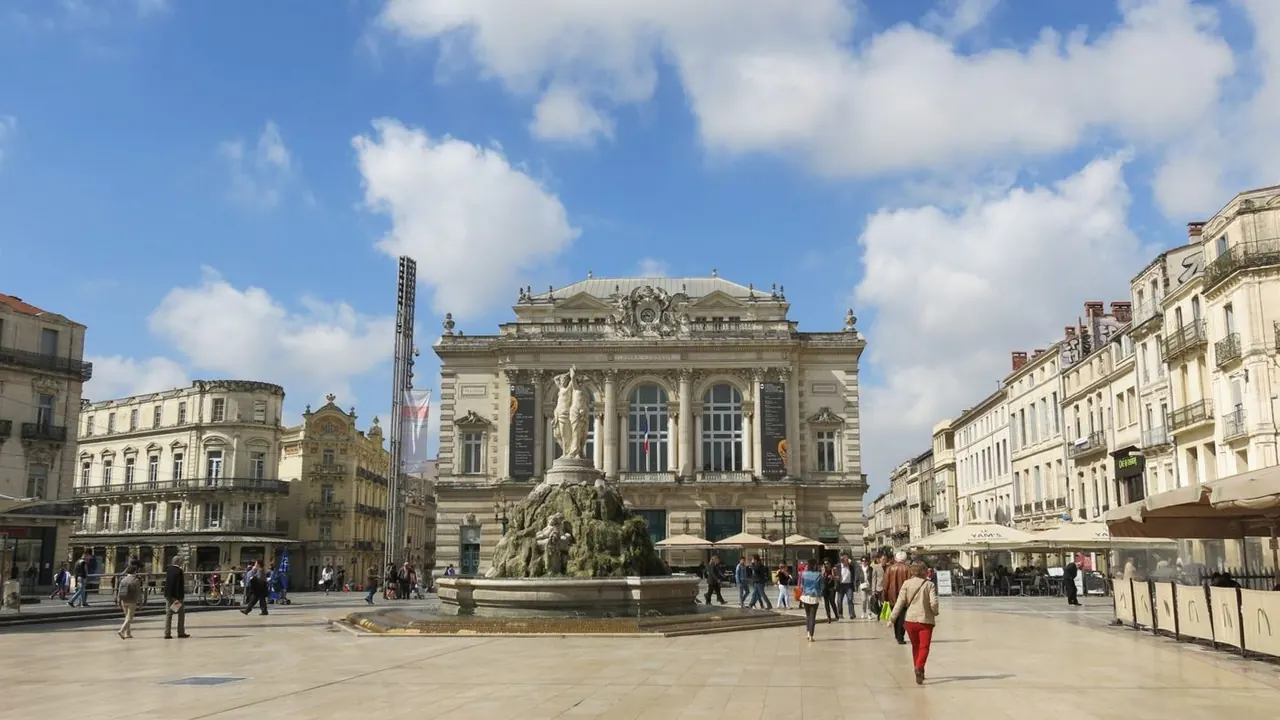
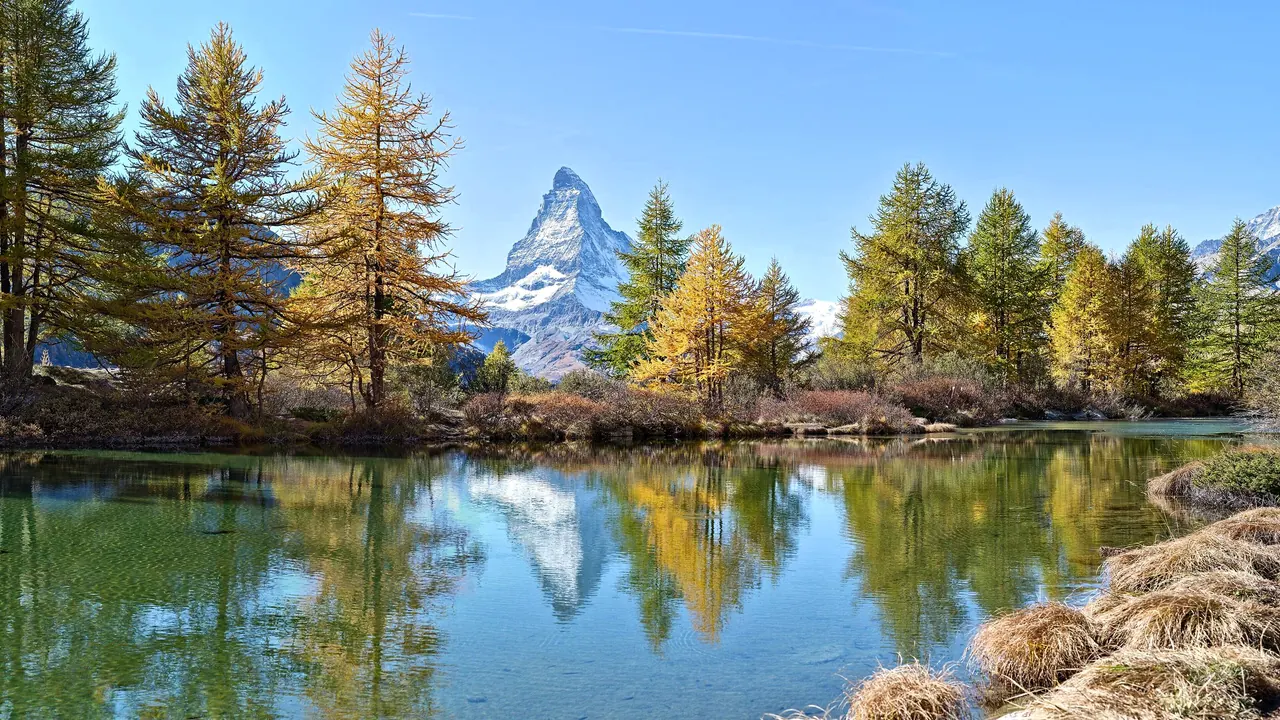
Photos: Montpellier by Peter, CC BY 2.0, cropped; Zermatt by Roy Egloff, CC BY-SA 4.0, cropped.
Montpellier or Zermatt?
Our verdict in twelve categories, each scored against the same fixed benchmark cities, and the climate month by month, so you can choose for your trip.
Choose Montpellier for
- beaches
- day trips
- prices
Montpellier suits a traveller who wants a warm southern city with plenty to fill the days: a medieval old town, the Musée Fabre, a serious summer of dance and music, and the sand at Palavas and Carnon close enough for an afternoon. Its greatest strength is the region around it. Roman Nîmes, Arles, Avignon and Carcassonne are all a train ride away, and a stay costs far less than anything in the high Alps.
Choose Zermatt for
- nature and the outdoors
- wellness
- getting around
Choose Zermatt when the mountains are the whole point. The Matterhorn stands over a car-free village, the lifts climb to glacier terrain and in summer the same lifts open a huge network of trails. There is little in the way of museums, shops or nights out, and it is very expensive. That makes it a place for skiers, hikers and climbers who will be outdoors all day and want a quiet hotel spa at the end of it.
Scoreboard
Twelve categories on one fixed scale from 0 to 100. The shaded stretch is the gap between the two.
Your match
Pick a travel style or drag the sliders, and both match scores follow your weighting.
Wins on beaches and day trips with your weighting.
Wins on nature and the outdoors and wellness with your weighting.
What matters to you?
Category by category
What the scores mean for a trip.
Beaches & swimming
Montpellier has a real if modest beach offer. A long run of fine, gently shelving sand stretches from Palavas-les-Flots and Carnon to the dunes of l'Espiguette, a tram and bus ride away, and Sète adds beaches backed by a lagoon. It is flat, open sand rather than coves, and it gets crowded on summer evenings.
Zermatt has nothing like it. There is no sea and no bathing lake, the tarns are icy meltwater for photographing the Matterhorn, and swimming means a hotel pool.
Food & drink
Montpellier eats from a wider larder: Pic Saint-Loup and Larzac wines, oysters from the Thau lagoon, Sète's tielle, and the Halles Castellane and Halles Laissac for market food. Cheap student places sit alongside good bistros.
Zermatt's best meals are long mountain lunches at the chalets of Findeln, Furi and Zum See, with raclette, fondue and Valais wines such as Petite Arvine. It is enjoyable but narrow and expensive, with a few fine-dining kitchens in the village and little in between.
Culture & sights
Here Montpellier is a proper city and Zermatt is a village. The Écusson's lanes and courtyard mansions, the Peyrou terrace and its aqueduct, the cathedral beside the medieval medical faculty, France's oldest botanical garden, the Musée Fabre and Bofill's Antigone fill two or three days.
Zermatt's heritage is about mountaineering: the Matterhorn Museum and the story of the 1865 first ascent, the climbers' graves by the church and the old larch barns of the Hinterdorf. Together they take about a morning.
Nightlife
For a night out, Montpellier is the better choice by some way. One of France's largest student populations keeps the bars, pubs and wine bars around Place Jean-Jaurès and the Écusson squares busy all week, not only at weekends. Late at night the crowd takes a taxi out to the clubs towards Lattes and the coast. It is young and casual rather than smart, and it quietens down when the students are away.
Zermatt has one main kind of night out, and it depends on the season. In winter the après-ski bars on the last runs into the village are loud and cheerful, and a few places on the main street stay open past midnight. In summer the hikers and climbers want to be up early, so most evenings end after dinner.
Nature & outdoors
Montpellier's surroundings are good. There are lagoons full of flamingos, the Camargue about an hour away, the climb up Pic Saint-Loup and the Hérault gorges for canoeing, and walking is best in spring and autumn.
Zermatt is in another league. The Matterhorn rises over the village and lifts reach the glacier at over 3,800m. The skiing crosses into Italy, and in summer the Five Lakes walk, the Europaweg suspension bridge and hundreds of kilometres of trails start from the lifts, with guides on hand for the four-thousanders.
Day trips
Montpellier sits in one of France's richest corners for days out. Roman Nîmes is about half an hour by train, with the Pont du Gard beyond it, Arles and Avignon are around an hour away and Carcassonne a little further. Sète, Aigues-Mortes and Saint-Guilhem-le-Désert are close by.
From Zermatt every outing starts with a long train ride down the valley, and the rewards are smaller: Sion's castle hills among the vineyards, Brig's Stockalper Palace or Saas-Fee next door. Most visitors simply go back up the mountain.
Good for families
Montpellier has more to fill a family week: the Lunaret zoo in its wooded park, the aquarium and planetarium at Odysseum, and warm, shallow beaches for small swimmers. Midsummer heat in the stone streets needs planning around.
Zermatt's car-free streets make it calm and safe, with ski schools and nursery slopes at Sunnegga and marmot-spotting walks in summer. Beyond that, there is no zoo or aquarium for rainy days, and the highest viewpoints are too cold and thin-aired for small children. It works best for families who ski or hike together.
Getting around
Both are easy without a car, but in different ways. Montpellier's Écusson is walkable and mostly car-free, and trams link it to the station, Antigone and Odysseum, with fast trains to Nîmes and Avignon. The beaches need a slow tram and bus, though, and the hills are much easier with a car.
Zermatt bans ordinary cars entirely, so you arrive by train from Täsch and then walk the compact village. The cog railway, the funicular and the gondolas all start from the centre, but leaving the valley takes over an hour.
Shopping & style
Neither is a place to come for shopping, but Montpellier has more to browse: small boutiques, bookshops and delicatessens in the Écusson lanes, the Polygone mall by the Comédie, and wine, olive oil and honey from the markets. Zermatt has one main street of watch and jewellery boutiques, souvenir shops and excellent ski and mountaineering outfitters. That is useful if you need gear, and offers little else.
Affordability
This is one of the sharpest differences between the two. Montpellier is mid-range, with student-priced bars and counters, market halls and lunch menus to keep costs down. The main exception is July and August, when rooms get dearer.
Zermatt is among the most expensive places in the Alps. Plain rooms, meals on mountain terraces and the lifts all cost a great deal, and self-catering or sleeping down the valley in Täsch only softens the bill.
Live music & performing arts
Montpellier has a real season. Opera, ballet and the national orchestra play at the Opéra Comédie and the Opéra Berlioz, Montpellier Danse and the choreographic centre make it a name in contemporary dance, and the Radio France festival brings free summer concerts.
Zermatt has no theatre or concert hall. Zermatt Unplugged in spring and a chamber music festival in late summer are worth timing a visit around. Otherwise, the evening's music is a band in an après-ski bar.
Wellness & relaxation
Neither has a bathing tradition of its own, and Zermatt is the better place to unwind. Montpellier's centre is lively, and its spas are hotel and day spas. Real thermal water means a half-hour trip to Balaruc-les-Bains on the Thau lagoon, so relaxing here mostly means long lunches and shaded terraces.
Zermatt has a large number of fine hotel spas with pools, saunas and mountain views, some open to day visitors. With no traffic in the village, the evenings are quiet and restful, though peak weeks feel active rather than slow.
When should you go?
Pick your month. The climate figures are measured averages, not a forecast.
Montpellier in July
Zermatt in July
Daytime high, °C
Rainfall in the month, mm
Where the figures come from
Zermatt has no weather station within reach, so its figures come from a gridded climate model rather than a measured record, and read a broad area rather than the city itself.
Temperature and rainfall are climate normals, averaged over the years shown. Montpellier: 1991-2020 normals, Montpellier (7.8 km from centre). Zermatt: 1991-2020 normals, TerraClimate 4 km grid at the town, no weather station within 90 km.
Montpellier is a warm-weather city. The beach season runs from June to September, with the sea at about 22°C in August. July is the driest and sunniest month, but at around 30°C it is also too hot for comfortable midday walking in the stone streets. May, June and late September are the best balance for sightseeing. The rain comes in autumn, and September and October are the wettest months at about 90mm each. Winter is mild and reasonably bright, fine for museums and markets but not for the beach.
Zermatt has two clear seasons. From December to March daytime highs stay around freezing, which is the snow season. From late June to September the village warms to about 14°C, mild enough for the trails, though the high viewpoints stay cold. Rain and snow fall steadily all year, and November is the wettest month, a poor time for either skiing or walking. The two cities peak at opposite times of year: Montpellier for summer sun, Zermatt for winter snow or a cool break from southern summer heat.
Which traveller are you?
For a culture and arts trip, Montpellier is the clear choice. The Musée Fabre, the medieval Écusson, opera and contemporary dance, and Roman Nîmes, Arles and Avignon within an hour give days of sights that Zermatt's single mountaineering museum cannot match.
On an outdoors trip, Zermatt wins easily. Skiing that crosses into Italy, lift-served summer trails, glacier viewpoints and guided climbs put the high Alps at the door. Montpellier's lagoons, gorges and Pic Saint-Loup are pleasant, but on a much smaller scale.
On a tight budget, go to Montpellier. Student bars, market halls and lunch menus keep daily costs moderate, and Nîmes and Sète are easy train outings. In Zermatt, rooms, mountain meals and lift tickets are all very expensive, even if you self-cater.
Before you go
| Measure | Montpellier | Zermatt |
|---|---|---|
| Official language | French | French, German, Italian, Romansh |
| Currency | Euro (EUR) | Swiss Franc (CHF) |
| Sockets | CE230 V, 50 Hz | CJ230 V, 50 Hz |
| Driving side | Right | Right |
| Time zone | UTC+1, UTC+2 in summer | UTC+1, UTC+2 in summer |
| Emergency number | 112 | 112 |
| Elevation | 7 m | 1,624 m |
| Main airport | Montpellier-Méditerranée Airport (MPL)8 km from centre40 non-stop destinations | Geneva International Airport (GVA)128 km from centre150 non-stop destinations |
| Public holidays this year | 11 days | 9 days |
By the numbers
| Measure | Montpellier | Zermatt |
|---|---|---|
| City population | 310,240 | 6,023 |
| People per km² | 5,452 | 25 |
| Museums within 10 km | 14 | 2 |
| UNESCO World Heritage sites within 50 km | 2 | 2 |
| Swim season, months above 21 °C | 2 months | - |
Where else could you go?
Every comparison below shares a destination with this one, so you can follow Montpellier or Zermatt somewhere new.
- Chamonixvs Zermatt
- Interlakenvs Zermatt
- Avignonvs Montpellier
- Luganovs Zermatt
- Lausannevs Zermatt
- Turinvs Zermatt