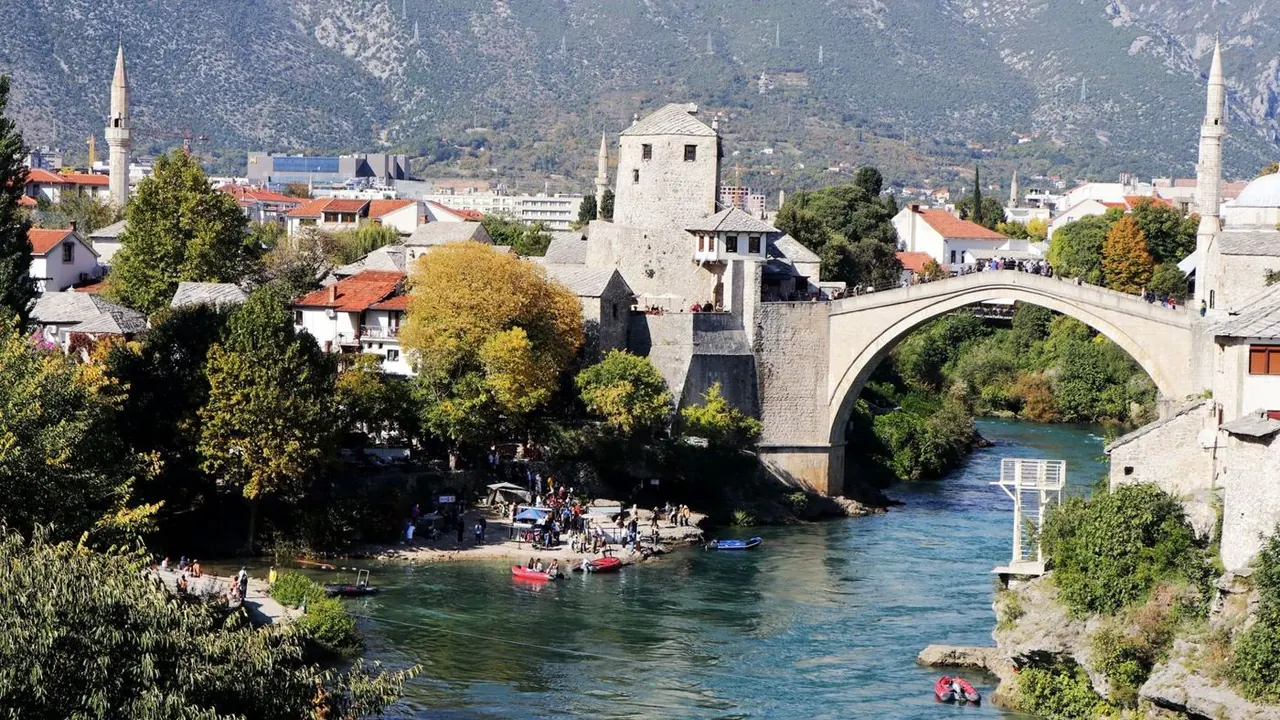
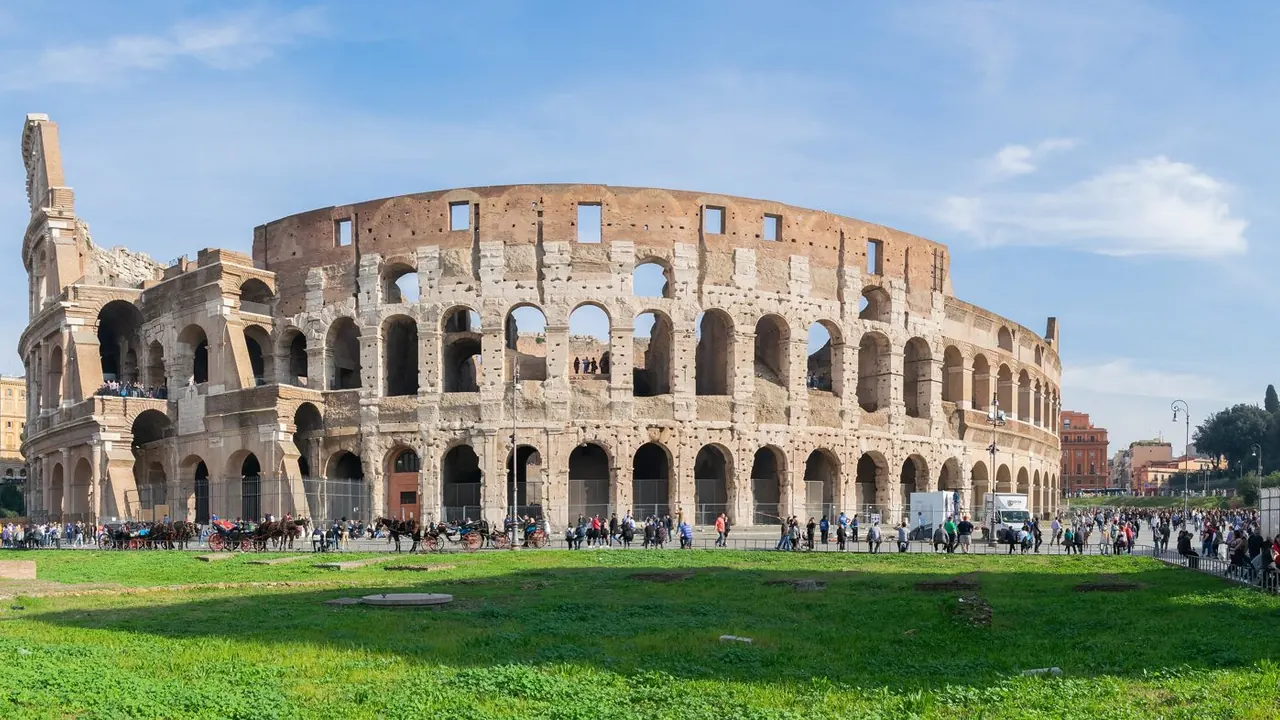
Photos: Mostar by Alan Wang, Pexels License; Rome by Tournasol7, CC BY-SA 4.0, cropped.
Mostar or Rome?
Our verdict in twelve categories, each scored against the same fixed benchmark cities, and the climate month by month, so you can choose for your trip.
Choose Mostar for
- prices
- nature and the outdoors
Mostar suits a traveller who wants a short, inexpensive stop built around one great sight, the rebuilt Old Bridge, with the rivers, karst mountains and Ottoman villages of Herzegovina around it. It works best as two or three days on a wider Balkan or Dalmatian route, with a car for Blagaj, Počitelj and Kravica. It costs far less than Rome at almost every turn.
Choose Rome for
- live music and the arts
- culture and sights
- food and drink
Rome is the choice when the trip is about history, art and eating well. The ancient ruins, the Vatican, the Baroque churches and the trattorias of Trastevere and Testaccio could fill a week on their own, and trains open up Tivoli, Orvieto, Florence and Naples. Rooms and entry fees cost more, but in return you get far more evening life, music and shopping.
Scoreboard
Twelve categories on one fixed scale from 0 to 100. The shaded stretch is the gap between the two.
Your match
Pick a travel style or drag the sliders, and both match scores follow your weighting.
Wins on prices and nature and the outdoors with your weighting.
Wins on live music and the arts and culture and sights with your weighting.
What matters to you?
Category by category
What the scores mean for a trip.
Beaches & swimming
Neither city has a beach on the doorstep, but Rome is closer to one. Mostar is inland, and the Neretva is too cold for more than a quick plunge. The real swim is the pool below the Kravica waterfalls, and the Adriatic at Neum is over an hour's drive away.
From Rome, the suburban train reaches the dark volcanic sand of Ostia in about half an hour, and the summer sea is warm enough to swim in, though rarely clear. Neither suits a beach-based stay, but Rome can fit a beach afternoon into a city break.
Food & drink
Rome is far stronger here. Mostar eats well but in a narrow range: charcoal-grilled ćevapi, burek, stuffed peppers and Bosnian coffee, with Žilavka and Blatina wines from the surrounding valleys, and little beyond that.
Rome has a whole cuisine of its own, from carbonara and cacio e pepe to Jewish-style artichokes and Testaccio's offal dishes, plus serious street food and artisan gelato. The two share one trap, the dull tourist menus near the main sights, and in both a walk a few streets away is rewarded.
Culture & sights
Mostar has one world-famous sight, the rebuilt Stari Most with its divers. Around it is a compact old town with the bazaar street, the Koski Mehmed Pasha Mosque and Ottoman houses, and the war-scarred old front line adds a harder layer. Together they fill a day or two.
Rome is in a different class. It has ancient Rome, early Christian mosaics, Renaissance and Baroque churches, and museums from the Vatican to Palazzo Massimo. Even a week leaves much unseen, the opposite problem to Mostar's.
Nightlife
Evenings in Mostar mean dinner on a terrace facing the lit bridge, then a quiet old town once the coach groups leave, with a few cocktail bars and student clubs busy on summer weekends. Rome offers far more: aperitivo, then crowded wine bars in Trastevere, smaller cocktail bars in Monti and cheap student drinking in San Lorenzo. Neither is a clubbing city, but Rome's nights run much later.
Nature & outdoors
Mostar has the edge, and its landscape is wilder. The karst basin, the Prenj and Velež mountains, rafting in the Neretva canyons and the Buna spring at Blagaj are all close by, with Blidinje and the Hutovo Blato wetland within a couple of hours.
Rome's outdoors is gentler and more tamed: villa parks, the Appian Way by bike, the crater lakes of the Alban Hills, and the Apennines about ninety minutes away. In both cities summer heat rules out midday activity.
Day trips
Mostar's excursions are small and full of character: the tekke at Blagaj, walled Počitelj, the stećci tombstones at Stolac, and Sarajevo as a long day by train. Most of them need a car or a tour.
Rome offers far more, much of it by train: Ostia Antica, Tivoli's villas, the Etruscan tombs, Orvieto, Assisi, and Florence or Naples on the high-speed line. It could fill a week of outings, where Mostar's fill two or three days.
Good for families
Neither city is built for children, though Rome copes better. Mostar holds a family for a day or two with the bridge divers, a minaret climb and swimming at Kravica, but the steep, slippery lanes and fierce valley heat are hard on small children.
Rome has gladiators and catacombs to catch children's interest, plus the Bioparco zoo, rowing boats in Villa Borghese and a children's museum. Queues and crowds are the price, and in both cities restaurants welcome children warmly.
Getting around
Both are walking cities at heart, with sights linked on foot over smooth, tiring cobbles. Mostar's old town and Austro-Hungarian centre are a short stroll apart, but almost everything beyond them needs a car, a taxi or a tour.
Rome's walkable core is larger. The metro barely enters it, but metro, buses and trams together reach the Vatican, Termini and the wider city, and trains run to the coast and the hill towns. A car is useful around Mostar and a burden in Rome.
Shopping & style
Mostar's shopping comes down to the Kujundžiluk, where a few coppersmiths still hammer coffee sets among stalls of imported souvenirs, and there is little else. Rome has the fashion houses around the Spanish Steps, independent boutiques and vintage in Monti, antique dealers on Via dei Coronari and the sprawling Porta Portese flea market. For leather, handmade shoes or paper, Rome is the clear choice, while Mostar is the place for one hand-beaten copper džezva.
Affordability
Mostar is much the cheaper of the two. Guesthouses, ćevapi, local wine and coffee all cost little, and only the bridge-view terraces and old-town rooms in midsummer push prices up.
In Rome, rooms in the centre are expensive and small, and the Vatican, the Colosseum and the Borghese all charge substantial entry fees. Standing espresso, pizza al taglio, free drinking fountains and churches open to all keep daily spending down, but a stay still costs well above one in Mostar.
Live music & performing arts
Rome is far ahead here. Mostar has a national theatre and a youth theatre that perform in local languages, plus open-air concerts in summer, and little else for visitors.
Rome has opera and ballet at the Teatro dell'Opera, with a summer season among the ruins of the Baths of Caracalla. The Santa Cecilia orchestra plays at the Auditorium Parco della Musica, churches hold organ concerts and there is a long-running jazz scene, all of which you can enjoy without speaking Italian.
Wellness & relaxation
Rome comes out ahead for a restorative stay, mainly because it has real hot water within reach. In Mostar the old Ottoman bath by the bridge is something to look at rather than step into, and beyond a handful of hotel treatment rooms there is nowhere to book a soak or a massage. What rests you here is the slow rhythm: a coffee that stretches to an hour, and the old town at dawn or dusk, when only the Neretva can be heard.
Rome has lost its own bathing tradition too, but it offers more choice, with spas in the larger hotels and a few day spas in town. A short trip out, the Acque Albule springs fill the big thermal pools at Bagni di Tivoli, and the free open-air hot springs near Viterbo make a longer day out. The price is noise, because central Rome is far louder than Mostar's riverside lanes, so look for calm in the villa gardens or up on the Aventine.
When should you go?
Pick your month. The climate figures are measured averages, not a forecast.
Mostar in July
Rome in July
Daytime high, °C
Rainfall in the month, mm
Where the figures come from
Rome's sunshine is measured 31 km from the centre, at Vigna Di Valle.
Temperature and rainfall are climate normals, averaged over the years shown. Mostar: 1991-2020 normals, Mostar (0.9 km from centre). Rome: 1991-2020 normals, Roma / Ciampino (15.1 km from centre).
Both cities have a hot, dry summer and a wet late autumn, but Mostar goes to greater extremes. In July and August its valley reaches about 33°C, which suits a swim at Kravica but makes midday walking on the cobbles hard work. From September the rain arrives in earnest, and November and December are the wettest months at close to 200mm. Winter is chilly and grey. Late April and May, warm and sunnier by the week, are the best time for walking and hiking.
Rome is a little milder at both ends. Its winters are much drier than Mostar's, and its summer heat is slightly less fierce. The sea off Ostia warms to about 25°C in July and August and stays almost as warm through September, so beach days run from midsummer into early autumn. July is the sunniest month in both cities. For sightseeing on foot, April to early June and late September into October are the comfortable months, before the November rains.
Which traveller are you?
On a trip on a tight budget, Mostar goes much further. Guesthouses and family-run apartments are cheap, ćevapi and local wine cost little, and the old town is free to wander. In Rome, central rooms and museum fees add up quickly.
For a culture and arts trip, Rome is in another league. The Colosseum, the Vatican Museums, the Borghese Gallery and Caravaggios in side chapels fill a week, and in summer there is opera at the Baths of Caracalla. Mostar's bridge and Ottoman houses take a day or two.
On a food and nightlife trip, Rome wins clearly. Roman pastas, fried artichokes in the Ghetto and Testaccio's market come first, followed by aperitivo and late wine bars in Trastevere and Monti. Mostar offers good grills and Herzegovina wine, then a quiet old town after dinner.
Before you go
| Measure | Mostar | Rome |
|---|---|---|
| Official language | Croatian, Serbian, Bosnian | Italian |
| Currency | Convertible Mark (BAM) | Euro (EUR) |
| Sockets | CF230 V, 50 Hz | CFL230 V, 50 Hz |
| Driving side | Right | Right |
| Time zone | UTC+1, UTC+2 in summer | UTC+1, UTC+2 in summer |
| Emergency number | 112 | 112 |
| Elevation | 60 m | 21 m |
| Main airport | Sarajevo International Airport (SJJ)68 km from centre38 non-stop destinations | Rome–Fiumicino Leonardo da Vinci International Airport (FCO)23 km from centre242 non-stop destinations |
| Public holidays this year | 8 days | 13 days |
By the numbers
| Measure | Mostar | Rome |
|---|---|---|
| City population | 105,448 | 2,748,109 |
| People per km² | 90 | 2,135 |
| Museums within 10 km | 3 | 178 |
| UNESCO World Heritage sites within 50 km | 1 | 7 |
| Swim season, months above 21 °C | - | 5 months |
Where else could you go?
Every comparison below shares a destination with this one, so you can follow Mostar or Rome somewhere new.