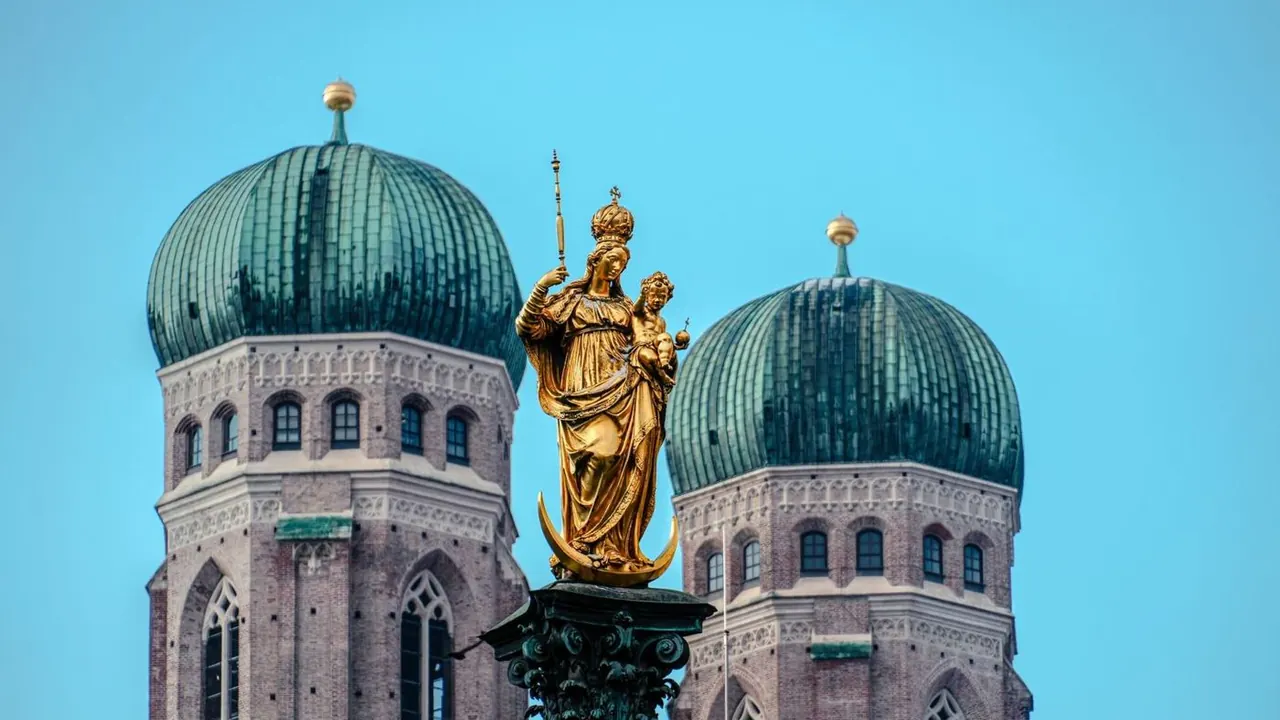
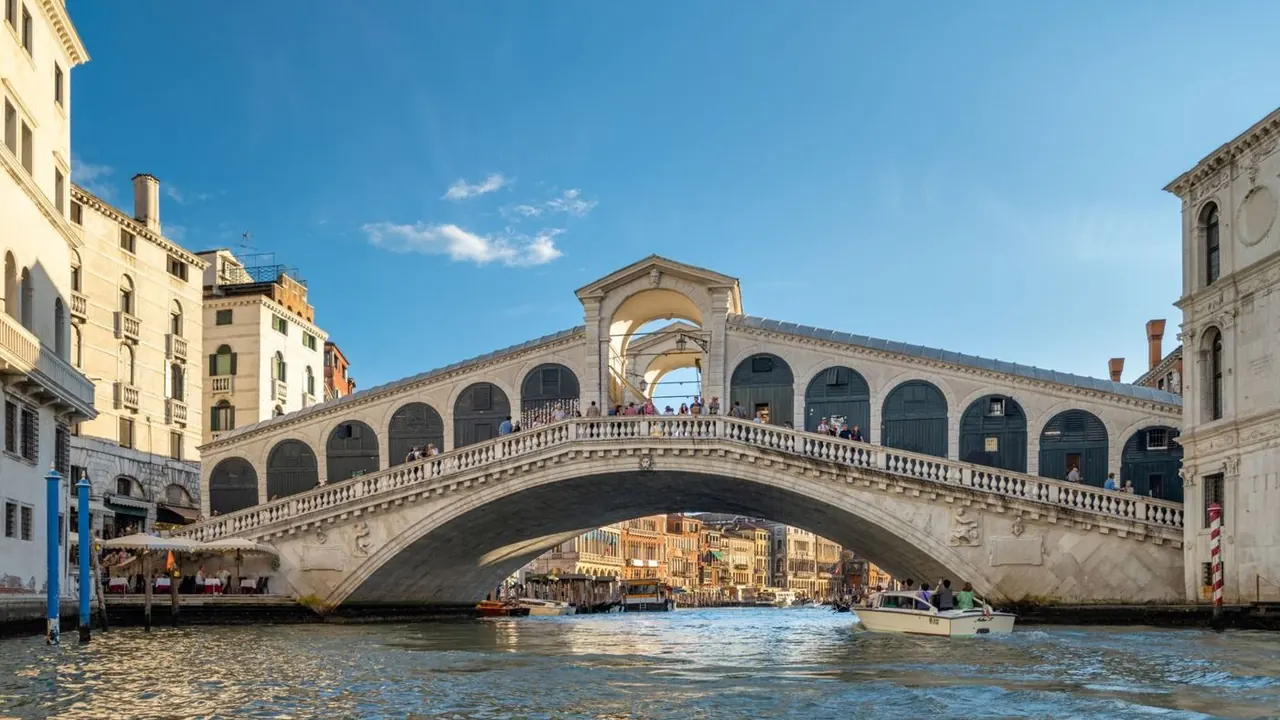
Photos: Munich by 0xd1ma, Pexels License; Venice by David Vives, Pexels License.
Munich or Venice?
Our verdict in twelve categories, each scored against the same fixed benchmark cities, and the climate month by month, so you can choose for your trip.
Choose Munich for
- nature and the outdoors
- families
- nightlife
Munich suits the traveller who wants a city with plenty around it. The Alps and the lakes are about an hour away, the opera and orchestras are among the best in Europe, and the transport makes everything easy. It is the stronger choice for families, for active people who like a mountain day between museums, and for anyone who wants evenings that go past the aperitivo.
Choose Venice for
- beaches
- culture and sights
Venice is for those who come mainly to look. The whole city is the sight: palaces on the water, no traffic, and Titian or Tintoretto in churches you just happen to walk into. It suits couples, art lovers and adults or older children on a short, unhurried stay who don't mind steps, early nights and a high bill, and it adds a sandy Lido beach that Munich cannot match.
Scoreboard
Twelve categories on one fixed scale from 0 to 100. The shaded stretch is the gap between the two.
Your match
Pick a travel style or drag the sliders, and both match scores follow your weighting.
Wins on nature and the outdoors and families with your weighting.
Wins on beaches and culture and sights with your weighting.
What matters to you?
Category by category
What the scores mean for a trip.
Beaches & swimming
Venice has a proper sea beach on its doorstep. The Lido offers kilometres of fine sand facing the Adriatic, with shallow water that warms well in high summer, and the wilder Pellestrina lies further along.
Munich's swimming is in fresh water: gravel banks on the Isar at the Flaucher, and the Starnberger See and Ammersee by S-Bahn, with lawns and jetties but cooler alpine water. Neither city is a beach destination, but only Venice can give you a real afternoon by the sea.
Food & drink
The two eat equally well but in very different ways. Munich's meals happen sitting down in beer halls and chestnut-shaded beer gardens, with roast pork, white sausage and pretzels, plus coffee and cake in the afternoon and the Viktualienmarkt for picking at cheese and snacks.
Venice is about grazing standing up: cicchetti and a spritz at the bacari around the Rialto, then lagoon seafood such as cuttlefish risotto in black ink. Venice has more tourist traps around its main routes, Munich is the heavier and meatier of the two, and neither goes far beyond its own regional cooking.
Culture & sights
Venice is ahead, because its streets are the main exhibit. Every walk passes Gothic palazzi and churches with no modern buildings in sight, and the art goes from the Accademia and the Frari to Tintoretto's cycle at San Rocco and the Biennale at the Arsenale.
Munich's strength is in its royal collections more than its streets. The Alte Pinakothek and the rest of the Kunstareal, the Residenz, Nymphenburg and the vast Deutsches Museum are first rate, but the old town was largely rebuilt after wartime bombing and lacks Venice's unbroken old fabric.
Nightlife
Munich gives you a much longer night. After the beer halls there are the cocktail and gay bars of Glockenbachviertel and Gärtnerplatz, student pubs in Schwabing, and techno clubs open until morning at weekends, while the Oktoberfest takes over the whole city each autumn.
Venice peaks at aperitivo time on the Fondamenta della Misericordia, and Campo Santa Margherita keeps a few student bars going later. After midnight the canals fall silent, which is lovely for a walk but means going to the mainland or Jesolo for any clubbing.
Nature & outdoors
Munich is far stronger here. The Alps begin about an hour away, with hiking in the Wetterstein and around Tegernsee in summer and skiing in winter. In town, the English Garden is huge, surfers ride the Eisbach wave and cycle paths follow the Isar out into the countryside.
Venice's outdoors is the lagoon: salt marshes around Torcello and Sant'Erasmo with egrets and flamingos, explored by kayak or on a Venetian rowing lesson. Beyond that the land is flat, the Dolomites are more than two hours away and there is little green space in the city.
Day trips
Both are superb bases, but for different kinds of day out. From Munich you get fairy-tale castles such as Neuschwanstein and Herrenchiemsee, alpine villages like Oberammergau, and a second country with Salzburg and Innsbruck, alongside the old towns of Nuremberg and Regensburg.
From Venice the trains run to the art cities of the Veneto: Giotto in Padua, Palladio in Vicenza, the Roman arena in Verona. The lagoon adds days out with no train at all, among the glass furnaces of Murano, the painted houses of Burano and lonely Torcello.
Good for families
Munich is much the easier city with children. It is green and calm, transport takes pushchairs, and there is Hellabrunn zoo along the Isar, the hands-on Deutsches Museum, beer gardens with playgrounds and Legoland within reach for a day.
Venice appeals to children's imagination, with boats for buses, no cars and glass-blowing on Murano, and the Lido's shallow sand is ideal for little ones. Day to day, though, the stepped bridges, packed alleys, summer humidity and lack of playgrounds make it best for a short stay with older children.
Getting around
An integrated network against a city you cross on foot: of the two, the network is far easier. In Munich the compact, largely pedestrianised old town puts Marienplatz, the Residenz and the Viktualienmarkt a short walk apart. U-Bahn, S-Bahn, trams and buses on one system reach Nymphenburg, the Olympic Park, the lakes and the airport, and the flat streets and Isar paths suit a bike. The main nuisance is delays on the central S-Bahn line.
Venice has no cars or bikes, so you walk, and walking without traffic is a pleasure in itself. But the alleys twist and dead-end at canals, the stepped bridges are hard on wheeled luggage, and the vaporetto along the Grand Canal is slow and crowded at busy times. The traghetto gondolas that cross between the bridges help a little.
Shopping & style
Munich offers the broader shopping trip. There are luxury houses on Maximilianstrasse, department stores along Kaufingerstrasse, independent boutiques in Glockenbach and Schwabing, and Tracht tailors for a dirndl or lederhosen, while the Christmas markets fill December.
Venice is narrower but more distinctive: Murano glass, Burano lace, papier-mâché masks, marbled paper and furlane slippers. The catch is the imported imitations along the main routes, so it pays to find workshops in Dorsoduro and Castello. There are no department stores in the historic centre.
Affordability
Neither is cheap, but Munich is the gentler on a budget. Its hotels are dear and rise sharply at Oktoberfest and trade fair times, yet the beer garden picnic custom, free parks and lakes and token Sunday museum entry all help.
Venice costs more on almost every front: rooms in the centre, visitor-priced water transport, church entry and the famous café bills on Piazza San Marco. Standing for cicchetti, sleeping in Mestre and coming in late autumn or winter are the main ways to bring it down.
Live music & performing arts
Munich is the stronger music city. The Bavarian State Opera at the National Theatre is among the world's best, three major orchestras play in halls such as the Herkulessaal, the rococo Cuvilliés Theatre stages chamber opera, and jazz clubs and big Olympic Park concerts widen the range.
Venice has La Fenice, a great house with a Verdi and Rossini history, and the Biennale's contemporary festivals. Beyond that, most evenings mean Vivaldi concerts in churches and scuole, which vary from excellent to routine, and there is little jazz or rock.
Wellness & relaxation
Munich has a real bathing culture and Venice does not. Munich offers the Art Nouveau pools of the Müller'sches Volksbad, textile-free saunas with infusion rituals, the vast Erding thermal baths about forty minutes out, and spa towns like Bad Tölz.
In Venice the options are hotel spas in palazzi or on the Lido, or the thermal mud of Abano Terme about an hour away. Its calm comes instead from the hush of early mornings and the residential quiet of Castello, Cannaregio and Giudecca, away from the San Marco crowds.
When should you go?
Pick your month. The climate figures are measured averages, not a forecast.
Munich in July
Venice in July
Daytime high, °C
Rainfall in the month, mm
Where the figures come from
Venice has no rain gauge within 25 km of the centre, so its rainfall comes from a gridded climate dataset read at the city rather than from a gauge further away.
Venice's sunshine is measured 26 km from the centre, at Treviso / S. Angelo.
Temperature and rainfall are climate normals, averaged over the years shown. Munich: 1991-2020 normals, München (1.9 km from centre). Venice: 1991-2020 normals, Venezia / Tessera (6.7 km from centre).
Munich has a short warm season and a long cold one. From June to August days reach about 25°C, warm enough for the Isar banks and the lakes, but these are also the wettest months, with around 120mm of rain falling in heavy showers. May and September are pleasant for walking. From November to March days are cold and grey, which suits museums and concert halls more than strolling, though the snow on the mountains brings the skiing.
Venice is milder in winter and hotter in summer. July and August reach about 30°C and feel humid in the alleys, while the Adriatic at the Lido warms to 26°C, so the beach season runs from June into September. The sunniest months are also the hottest, so May, late September and October are the best for walking. The rain moves to autumn, with September to November the wettest stretch, the opposite of Munich's summer downpours.
Which traveller are you?
On a family trip with young children, Munich is far easier. Pushchairs go on every train, parks have playgrounds, and there is a large zoo and the Deutsches Museum's children's area. Venice's stepped bridges, summer crowds and lack of play space wear families down.
For an outdoors trip, Munich wins clearly. Trains reach alpine hiking around Garmisch and the Zugspitze, the Five Lakes are good for cycling and sailing, and there is skiing in winter. Venice has the lagoon by kayak and its birdlife, but little else.
On a beach and sun trip, Venice is the better pick. The Lido's long sandy shore faces a warm, shallow Adriatic just a boat ride from San Marco, and summers are hotter and sunnier. Munich only has fresh alpine lakes and gravel riverbanks.
Before you go
| Measure | Munich | Venice |
|---|---|---|
| Official language | German | Italian |
| Currency | Euro (EUR) | Euro (EUR) |
| Sockets | CF230 V, 50 Hz | CFL230 V, 50 Hz |
| Driving side | Right | Right |
| Time zone | UTC+1, UTC+2 in summer | UTC+1, UTC+2 in summer |
| Emergency number | 112 | 112 |
| Elevation | 519 m | 2 m |
| Main airport | Munich Airport (MUC)29 km from centre210 non-stop destinations | Venice Marco Polo Airport (VCE)7 km from centre103 non-stop destinations |
| Public holidays this year | 12 days | 13 days |
By the numbers
| Measure | Munich | Venice |
|---|---|---|
| City population | 1,505,036 | 250,369 |
| People per km² | 4,844 | 602 |
| Museums within 10 km | 74 | 52 |
| UNESCO World Heritage sites within 50 km | 1 | 5 |
| Swim season, months above 21 °C | - | 4 months |
Where else could you go?
Every comparison below shares a destination with this one, so you can follow Munich or Venice somewhere new.