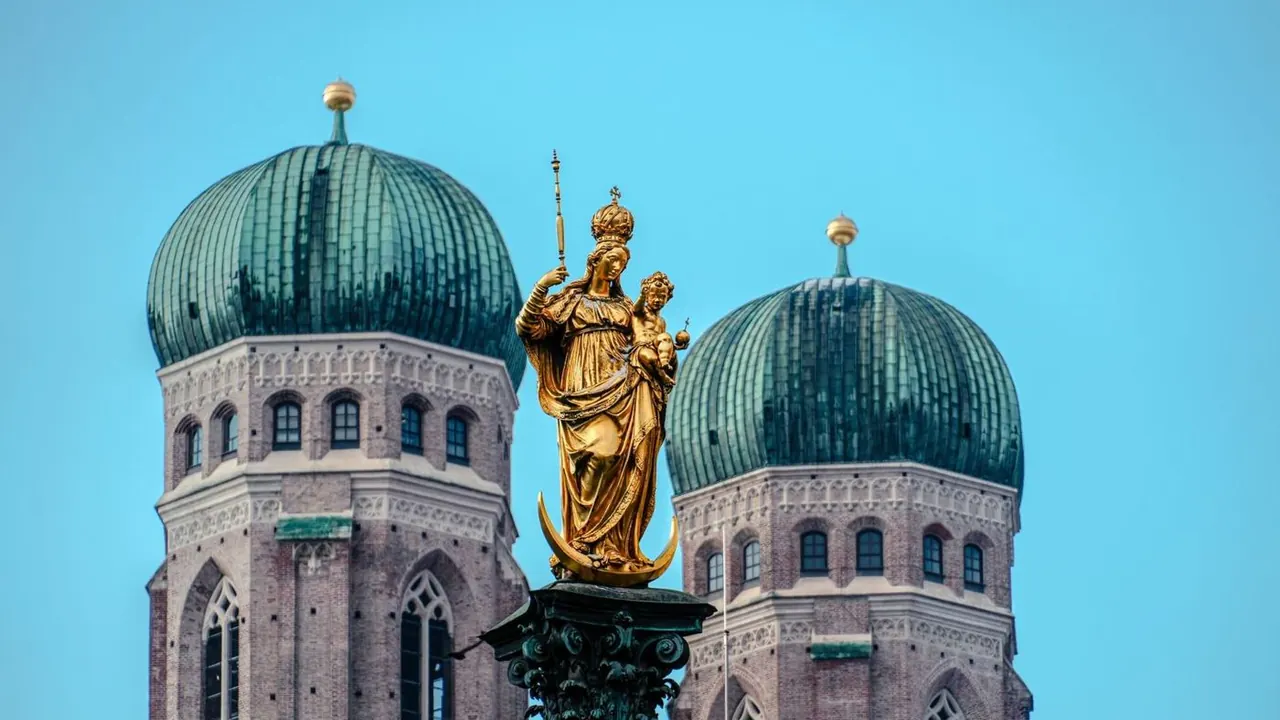
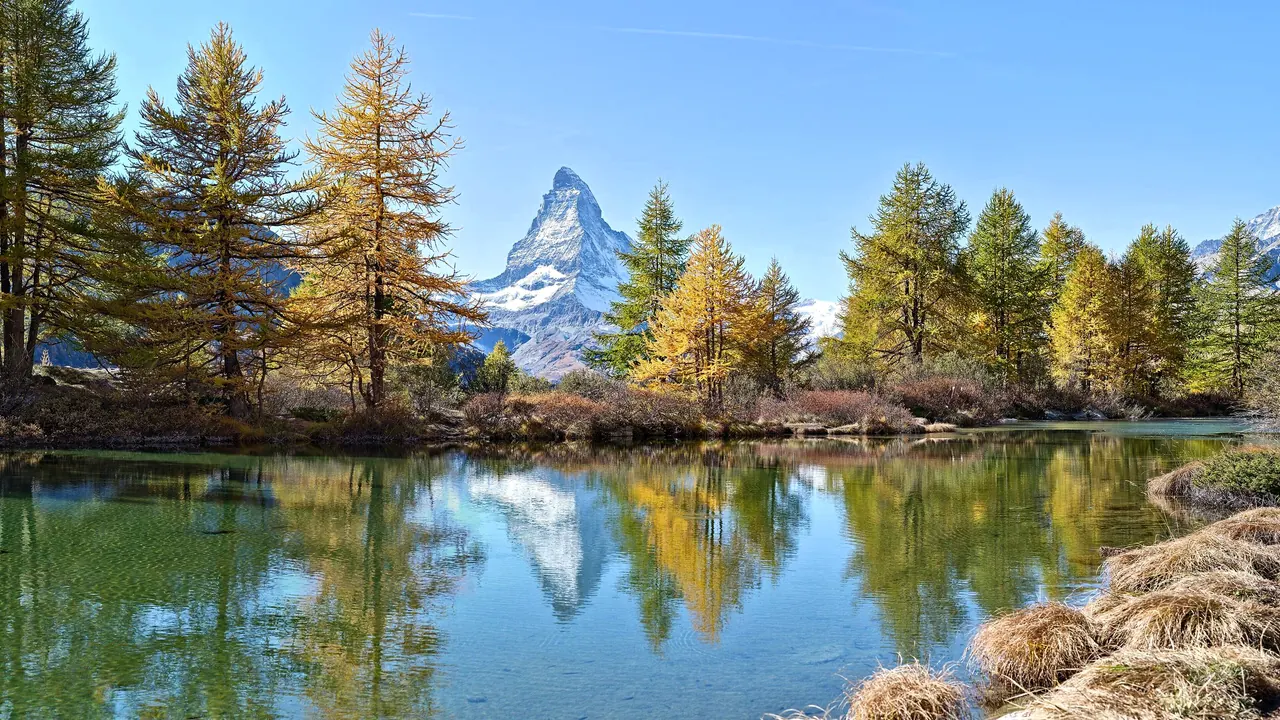
Photos: Munich by 0xd1ma, Pexels License; Zermatt by Roy Egloff, CC BY-SA 4.0, cropped.
Munich or Zermatt?
Our verdict in twelve categories, each scored against the same fixed benchmark cities, and the climate month by month, so you can choose for your trip.
Choose Munich for
- live music and the arts
- culture and sights
- day trips
Munich suits travellers who want a full city trip with plenty to fill it: old master paintings in the Kunstareal, a night at the Bavarian State Opera, long afternoons in beer gardens, and a different town or royal castle every day you choose to leave. It is also the easier choice with children, and although it is far from cheap, it costs a good deal less than its Alpine neighbour.
Choose Zermatt for
- nature and the outdoors
Zermatt is for people who travel for mountains and little else. The Matterhorn stands over a car-free village, and lifts climb to glaciers and four-thousand-metre peaks, so skiers, hikers and climbers get high Alpine terrain from the hotel door. Evenings are quiet, the prices are steep, and you won't find a museum quarter or a concert season, but nobody books it for those.
Scoreboard
Twelve categories on one fixed scale from 0 to 100. The shaded stretch is the gap between the two.
Your match
Pick a travel style or drag the sliders, and both match scores follow your weighting.
Wins on live music and the arts and culture and sights with your weighting.
Wins on nature and the outdoors with your weighting.
What matters to you?
Category by category
What the scores mean for a trip.
Beaches & swimming
Neither place is a beach destination, but Munich at least gives you a summer swim. People sunbathe on the gravel banks of the Isar at the Flaucher, and the Starnberger See and the Ammersee are a short S-Bahn ride away, with lawns and jetties.
Zermatt has no bathing lake at all. The tarns above the village are snowmelt, far too cold to swim in, so the only option is a hotel pool.
Food & drink
Munich has more variety and more cheap food. It has beer halls and chestnut-shaded beer gardens, roast pork and white sausage, the Viktualienmarkt for snacking, a serious afternoon cake culture and some starred restaurants, though cuisines from further afield are thinner on the ground.
Zermatt's best meals are on the mountain: raclette, fondue and air-dried beef on chalet terraces at Findeln or Zum See, with Petite Arvine or Cornalin in the glass. The menus are narrow, eating cheaply is hard, and many kitchens close between seasons.
Culture & sights
Munich is far ahead. The Alte Pinakothek, the Glyptothek and the Lenbachhaus's Blue Rider paintings in the Kunstareal, the Wittelsbach state rooms of the Residenz, Nymphenburg and the Deutsches Museum could fill a week of sightseeing.
Zermatt's heritage is all about climbing. The Matterhorn Museum tells the story of the 1865 first ascent, the mountaineers' cemetery holds climbers who died on the peaks, and the old larch barns of the Hinterdorf stand on stilts. Together they make a pleasant morning, not a reason to go.
Nightlife
Munich gives you more choice of where to go after dark: beer halls, cocktail and gay bars around Gärtnerplatz, student pubs in Schwabing and a few techno clubs that run until dawn at weekends, plus the Oktoberfest each autumn. It is still a fairly orderly city.
Zermatt's nightlife is almost entirely winter après-ski. Slope-side bars fill up in ski boots in the late afternoon, and a few main-street clubs stay open after midnight. In summer the hikers go to bed early.
Nature & outdoors
Zermatt is one of the great Alpine bases, which is hard for a city to match. Lifts take you to the Gornergrat and the Matterhorn Glacier Paradise, the skiing links into Italy, and summer brings the Five Lakes walk, the Europaweg suspension bridge, marmots and ibex, and guided ascents of four-thousanders.
Munich still does well for a city. The English Garden and its Eisbach surfers are in town, cycle paths follow the Isar, and Garmisch, the Zugspitze and Tegernsee are an hour or so away by train. The mountains are a day out from Munich rather than the view from your window.
Day trips
Munich is an excellent base for day trips. Augsburg, Nuremberg, Regensburg, Salzburg and Innsbruck are all reachable by train, and Neuschwanstein and Herrenchiemsee are classic royal outings.
Zermatt is at the end of a valley, and every outing starts with over an hour on the narrow-gauge train. Sion, with its castle hills and vineyards, is the best of the trips, and Brig and Saas-Fee are pleasant. Most visitors stay up in the mountains instead.
Good for families
Munich has far more made for children: the Hellabrunn zoo along the Isar meadows, the children's area of the Deutsches Museum, the transport museum, an aquarium and beer gardens with playgrounds, with Legoland within reach by car.
Zermatt's strength is that it is car-free and calm. There are nursery slopes at Sunnegga, marmots to spot and cog railways to ride. Beyond that there is little to occupy children on a wet day, and the thin air at the top viewpoints can be hard on small children.
Getting around
Both are easy to get around without a car. Munich adds a full network of U-Bahn, S-Bahn and trams that reaches Nymphenburg, the Olympic Park, the airport and the lakes, around a pedestrianised old town.
Zermatt is just a short walkable strip, with electric taxis and lifts that start from the centre. The catches are the change of train at Täsch, steep climbs with luggage to hotels on the slopes, and over an hour by train to leave the valley.
Shopping & style
Shopping is a real part of a Munich trip. Luxury houses line Maximilianstrasse and the Theatinerstrasse arcades, department stores and chains run along the pedestrianised Kaufingerstrasse, and Glockenbach and Schwabing have the independent design boutiques. The souvenir with the most character is Tracht from a specialist tailor, a dirndl or lederhosen made to fit, and the centuries-old Dallmayr food hall and the December Christmas markets give you more to browse.
In Zermatt, shopping is more of an errand along one street from the station to the church. Most windows show Swiss watches, cowbells and chocolate. The one good reason to shop is the mountain gear, which is well chosen if you have arrived without the right boots or crampons.
Affordability
Neither is cheap, but Munich is easier on the wallet. Hotels are the main expense and rise sharply around the Oktoberfest and trade fairs, while beer-hall meals, picnics in beer gardens, free parks and lakes and sensibly priced transport help balance the bill.
In Zermatt nearly everything costs a lot: plain rooms, terrace lunches and the lift passes that every visit depends on. Self-catering and staying down the valley in Täsch are the only real ways to save.
Live music & performing arts
Munich is one of Europe's great music cities. The Bavarian State Opera plays at the National Theatre and the Cuvilliés Theatre, there are three orchestras of real standing, operetta at the Gärtnerplatztheater, jazz clubs, and big concerts at the Olympic Park.
Zermatt has no theatre or concert hall. Its two festivals, acoustic sets at Zermatt Unplugged in spring and chamber music in the church in late summer, are worth planning around, but outside those weeks the only live music is a band in an après-ski bar.
Wellness & relaxation
Munich has a real public bathing culture: the Art Nouveau pools of the Müller'sches Volksbad, textile-free saunas with infusion rituals, the huge thermal complex at Erding and spa towns like Bad Tölz nearby. Lazy beer-garden afternoons and quiet Sundays slow the pace too.
Zermatt's version is the private hotel spa, often with a Matterhorn view, plus clean air and car-free quiet. The mood is active rather than restful, and there are no thermal springs in the village.
When should you go?
Pick your month. The climate figures are measured averages, not a forecast.
Munich in July
Zermatt in July
Daytime high, °C
Rainfall in the month, mm
Where the figures come from
Zermatt has no weather station within reach, so its figures come from a gridded climate model rather than a measured record, and read a broad area rather than the city itself.
Temperature and rainfall are climate normals, averaged over the years shown. Munich: 1991-2020 normals, München (1.9 km from centre). Zermatt: 1991-2020 normals, TerraClimate 4 km grid at the town, no weather station within 90 km.
The two places are at their best at almost opposite ends of the year. Munich is a warm-weather city, with highs around 25°C in July and August and the most sunshine of the year, which is ideal for beer gardens, the Isar banks and the lakes. Summer is also its wettest stretch, with about 120mm a month from May to August, mostly in short heavy showers. September and October are mild, drier and good for walking. Winter is cold and dull, with little sunshine, so it suits museums and concert halls more than strolling.
Zermatt stays cool all year. Even in July and August highs only reach about 14°C, which is fine for hiking and high trails but never for swimming. From December to March the days stay below freezing, around -2°C, and this is when the ski season runs. November is the wettest month at about 130mm, and late autumn and spring are the in-between weeks when much of the village closes.
Which traveller are you?
On a culture and arts trip, Munich is the clear choice. It has the Pinakotheks, the Residenz and the Deutsches Museum by day and a world-class opera company and three major orchestras at night. Zermatt has a mountaineering museum that fills a morning.
For an outdoors trip, Zermatt wins. The Matterhorn, the Gorner Glacier and lift-served terrain above 3,800m start at the edge of the village, with year-round glacier skiing and hundreds of kilometres of summer trails. From Munich the Alps are an hour's train ride away.
On a family trip with children, Munich offers more to do: the Hellabrunn zoo, the hands-on rooms at the Deutsches Museum, playgrounds in beer gardens and lake days. Zermatt's car-free streets are relaxing, but there is little on rainy days unless the family skis or hikes.
Before you go
| Measure | Munich | Zermatt |
|---|---|---|
| Official language | German | French, German, Italian, Romansh |
| Currency | Euro (EUR) | Swiss Franc (CHF) |
| Sockets | CF230 V, 50 Hz | CJ230 V, 50 Hz |
| Driving side | Right | Right |
| Time zone | UTC+1, UTC+2 in summer | UTC+1, UTC+2 in summer |
| Emergency number | 112 | 112 |
| Elevation | 519 m | 1,624 m |
| Main airport | Munich Airport (MUC)29 km from centre210 non-stop destinations | Geneva International Airport (GVA)128 km from centre150 non-stop destinations |
| Public holidays this year | 12 days | 9 days |
By the numbers
| Measure | Munich | Zermatt |
|---|---|---|
| City population | 1,505,036 | 6,023 |
| People per km² | 4,844 | 25 |
| Museums within 10 km | 75 | 2 |
| UNESCO World Heritage sites within 50 km | 1 | 2 |
Where else could you go?
Every comparison below shares a destination with this one, so you can follow Munich or Zermatt somewhere new.
- Chamonixvs Zermatt
- Interlakenvs Zermatt
- Luganovs Zermatt
- Innsbruckvs Munich
- Lausannevs Zermatt
- Turinvs Zermatt