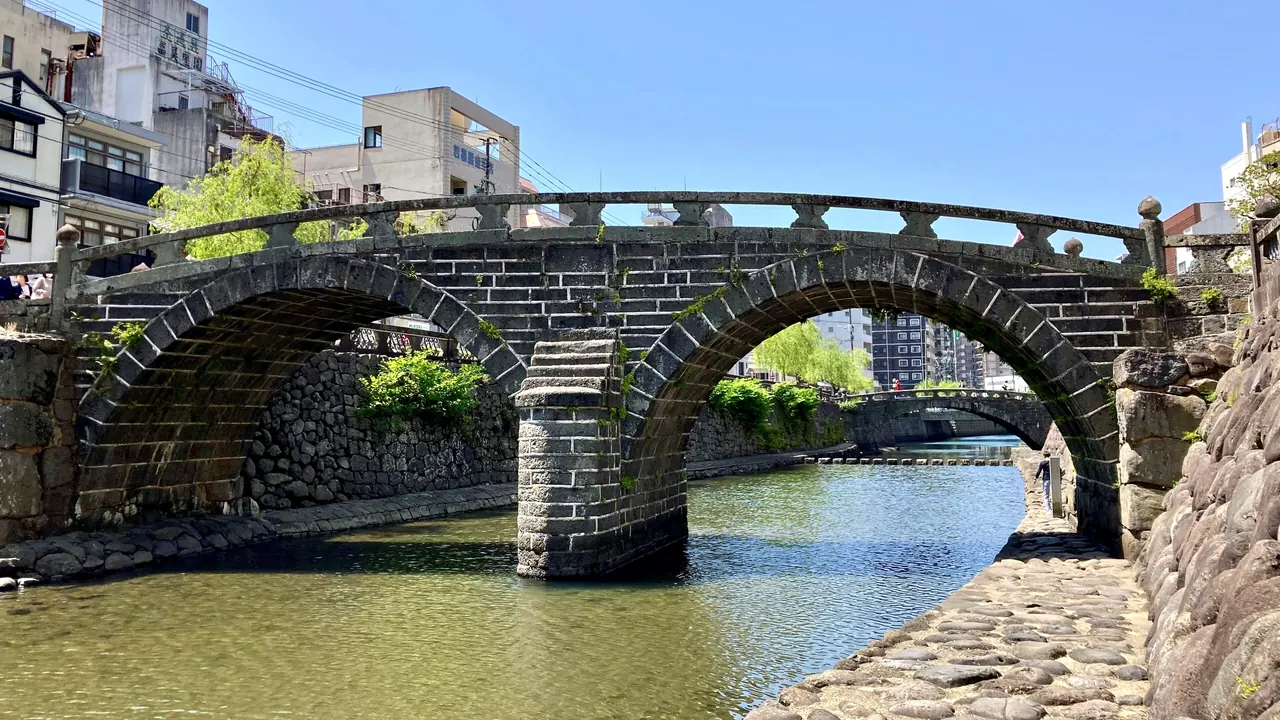
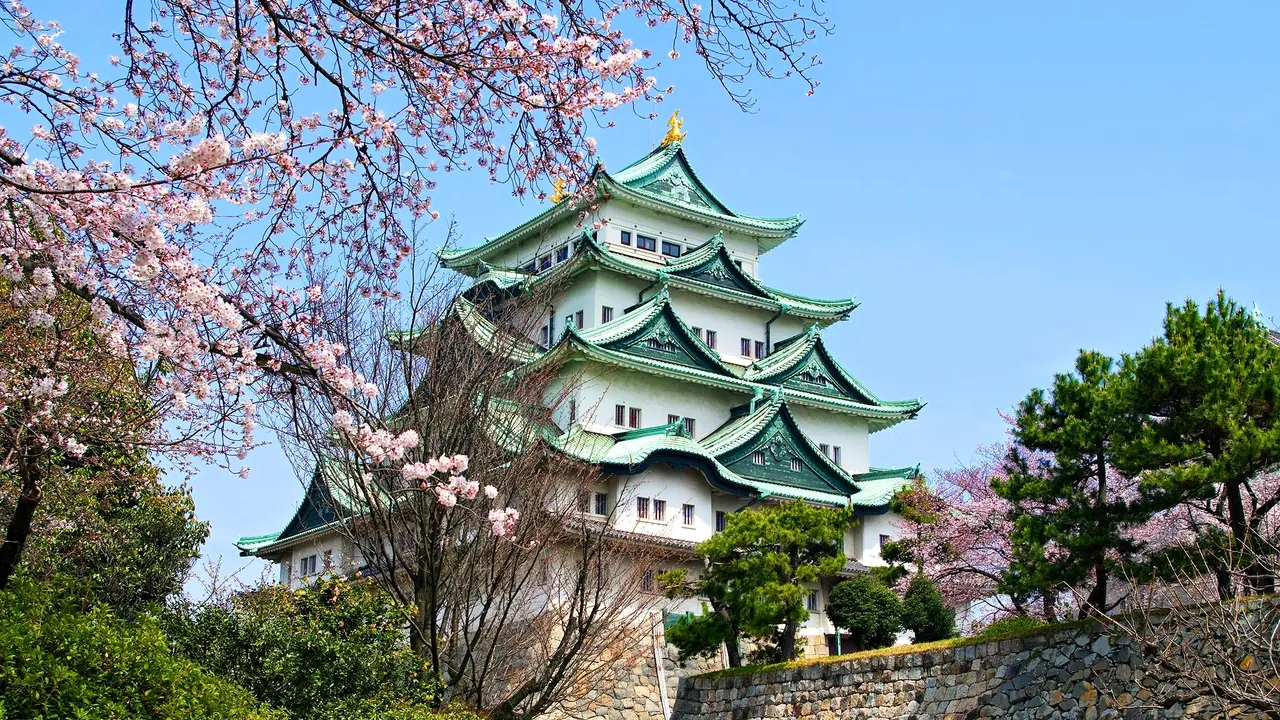
Photos: Nagasaki by Dudva, CC0; Nagoya by Hiroaki Kaneko, CC BY-SA 3.0, cropped.
Nagasaki or Nagoya?
Our verdict in twelve categories, each scored against the same fixed benchmark cities, and the climate month by month, so you can choose for your trip.
Choose Nagasaki for
- culture and sights
- beaches
- nature and the outdoors
Nagasaki suits travellers who want a city with one strong story to tell. The atomic bomb sites in Urakami, the Dutch trading post on Dejima, the merchant houses of Glover Garden and the Chinese temples all sit within a tram ride of one another, around a steep green harbour. It is a two or three day stop with a slow pace and quiet evenings. Choose it for history and setting, not for nights out, shopping or keeping children busy.
Choose Nagoya for
- families
- shopping
- live music and the arts
For a trip that reaches beyond one city, Nagoya is the better choice. It sits on the bullet train line, so Kyoto, Ise Jingu, Inuyama's original castle and the Kiso Valley post towns all make easy days out from a cheaper base. Families get a big aquarium, Legoland and Ghibli Park, and food lovers get a whole regional cuisine of eel, miso and chicken wings. The city's own sights are fewer and more scattered, but it is the place to make a busy, varied week.
Scoreboard
Twelve categories on one fixed scale from 0 to 100. The shaded stretch is the gap between the two.
Your match
Pick a travel style or drag the sliders, and both match scores follow your weighting.
Wins on culture and sights and beaches with your weighting.
Wins on families and shopping with your weighting.
What matters to you?
Category by category
What the scores mean for a trip.
Beaches & swimming
Neither city has a beach of its own, and in both a swim means about an hour's journey from a working harbour. The difference is the water. Nagasaki's Takahama on the Nomo coast faces the open sea, and Iojima's small resort beach is a short ferry ride from the harbour.
Nagoya's beaches on the Chita Peninsula, such as Utsumi, are wider but sit on sheltered Ise Bay, where the water is less clear and local families fill the sand on summer weekends. Shinojima is a ferry hop beyond.
Food & drink
Nagoya eats better. Its cooking, rich with dark red miso, covers hitsumabushi eel, miso katsu, tebasaki wings, kishimen and misonikomi udon, and each dish has its own specialist restaurants. Add the morning service breakfast custom, the department store food halls and Osu's street snacks, and there is far more to plan meals around.
Nagasaki's food has the better back story: champon, sara udon, Portuguese castella and the shippoku banquet all come from its centuries of trade with China and Europe. The range is narrow, though, and the real pleasure is simple local fish in the izakaya of Shianbashi.
Culture & sights
Nagasaki has the more moving and connected set of sights. The Peace Park and the Atomic Bomb Museum stand in Urakami, and Dejima, Glover Garden, Oura Cathedral and the Ming-style Sofukuji trace four centuries of contact with the outside world. All of it fits into two or three days.
Nagoya lost most of its old town in 1945, so its highlights are spread across a modern grid: the rebuilt castle and its painted Honmaru Palace, the forest shrine of Atsuta and the Tokugawa Art Museum. Its unusual strength is industry, with the Toyota museum and the railway museum explaining how modern Japan was built.
Nightlife
Nagoya offers more after dark, though neither city is a reason to travel for nightlife. In Sakae and Nishiki, narrow buildings hold cocktail and whisky bars and a few dance clubs that fill on weekends, and some places stay open until morning.
Nagasaki's Shianbashi is older and smaller: izakaya, karaoke and snack bars that cater mostly to regulars, with the streets emptying before midnight. Here the evening highlight is the night view from Mount Inasa rather than a bar.
Nature & outdoors
The two are evenly matched outdoors, but the landscape sits in different places. In Nagasaki it is part of the city itself: a deep harbour, steep green hills and the ropeway up Mount Inasa. Further out are the steaming volcanic peaks of Unzen and the wooded islands of Kujukushima.
Nagoya lies on a flat, built-up plain, so in town nature means parks and gardens. The real scenery starts about an hour away: Mount Gozaisho in the Suzuka Mountains, the maples of Korankei, the Nakasendo trail through the Kiso Valley and the pearl-farming inlets of Ise-Shima.
Day trips
Nagoya is one of the best bases in Japan for day trips. Kyoto is about 35 minutes away by bullet train and Osaka under an hour, and Ise Jingu and Nara are easy reaches. Closer to the city are original castle keeps at Inuyama and Hikone, cormorant fishing at Gifu, and the post towns of Tsumago and Magome.
Nagasaki has one trip nobody else can match: the boat out to the ruined coal-mining island of Hashima, though landings depend on the weather. Beyond that, Shimabara, Unzen, Huis Ten Bosch and the porcelain towns of Arita are good outings, but they involve longer journeys, and the Goto Islands need a night away.
Good for families
Nagoya is much easier with children. The port aquarium has orcas, belugas and dolphins, and the city adds Legoland, Ghibli Park, the huge Higashiyama Zoo, a giant planetarium and full-size bullet trains, with Nagashima Spa Land's roller coasters under an hour away. The main drawback is the long train rides between them.
Nagasaki has charms on a smaller scale: trams, the Inasa ropeway, the Penguin Aquarium and a day at Huis Ten Bosch. But its stairway streets are tough with a pushchair, and the bomb museum needs careful judgement with young children.
Getting around
Both cities are easy without a car, but the experience is different. In Nagasaki, a few tram lines with a flat fare run along the valley floor past nearly every sight. The effort comes when you leave the trams, as the hillside lanes and long flights of steps make any walk off the valley floor a climb.
Nagoya is flat and laid out on wide postwar avenues. It is simple to find your way, if dull to walk, and one IC card covers the subway and the regional railways. The outlying attractions take thirty to fifty minutes each way.
Shopping & style
Nagoya is the real shopping city of the two. Large department stores stand around Sakae and in the towers above the station, luxury brands line the avenues between them, and the Osu arcades by the Kannon temple add secondhand clothing, anime, electronics and a regular flea market.
Nagasaki's Hamanomachi arcade and the station mall cover everyday needs. What it does well is gifts: boxed castella, local glassware, Chinatown sweets and porcelain from Hasami, Mikawachi and Arita.
Affordability
Costs are much the same, and both cities rely on business hotels for fair room rates. Nagasaki stays cheap as long as you stick to champon, the tram and its low-cost sights, and the money goes on the Hashima boat, the ropeway and evenings of sake and sashimi.
Nagoya's cheap side is morning service breakfasts, set lunches and hotels priced below Kyoto's. Its expense comes from the very things it is best at: eel, bullet train day trips and the theme parks.
Live music & performing arts
Nagoya has a year-round programme to choose from. There is opera and ballet at the Aichi Arts Center, a resident philharmonic, kabuki at the Misono-za, Noh near the castle and jazz in the live houses of Sakae and Osu, though most of it is in Japanese.
Nagasaki's highlights are its festivals: the Kunchi at Suwa Shrine every October, with dragon dances and ship floats, and the Lantern Festival around Chinese New Year. Outside those dates there is little a visitor can plan around.
Wellness & relaxation
For bathing, Nagoya is the easier city. Super sento with saunas and open-air tubs are found all over town, the Nagashima hot-spring complex is under an hour away, and Gero Onsen makes a fine overnight trip into the mountains. Calm in the city itself comes mainly from the pond gardens of Tokugawaen and Shirotori.
Nagasaki has few baths of its own, and its best onsen, seaside Obama and mountain Unzen, are on the Shimabara peninsula and call for a ryokan night. The city itself, with its hillside temples and harbour walks, is the more restful place to simply spend time.
When should you go?
Pick your month. The climate figures are measured averages, not a forecast.
Nagasaki in July
Nagoya in July
Daytime high, °C
Rainfall in the month, mm
Temperature and rainfall are climate normals, averaged over the years shown. Nagasaki: 1991-2020 normals, Nagasaki (2.2 km from centre). Nagoya: 1991-2020 normals, Nagoya (5.7 km from centre).
The two share the same basic pattern: mild springs, hot and sticky summers with August highs around 33°C, and cool winters. April, May, October and November are the best months for walking either city, and in Nagasaki that matters more, because so much of the town is stairways up the hills. The rainy season hits Nagasaki harder, with June bringing about 334mm and July nearly as much, while in Nagoya the wettest spell spreads from June to October and peaks in September.
For a swim, both seas are warmest in August at around 28°C off Nagasaki and slightly less in Ise Bay, and July to early September is the season in both. Winter is where they really differ. Nagoya is a little colder but much sunnier, with about 173 hours of sun in January against roughly 100 in Nagasaki. That makes it the brighter choice for a winter city trip.
Which traveller are you?
On a culture and arts trip, Nagasaki gives the deeper visit. Its story of war and centuries of foreign contact runs unbroken from one sight to the next, and nowhere else in Japan tells it. Nagoya is the better choice only for evenings of theatre or concerts.
On a family trip with young children, Nagasaki suits a gentle few days, but its steep streets and difficult history limit what it can offer. Nagoya can keep children happy for a full week of big days out, and its flat layout makes a pushchair easy.
For a shopping trip, Nagasaki is good for an afternoon of buying gifts to take home, and not much more. Nagoya has enough to fill whole days, from smart flagship floors to cheap and quirky finds in an old temple quarter, so both luxury and bargain hunters do well.
Before you go
| Measure | Nagasaki | Nagoya |
|---|---|---|
| Official language | Japanese | Japanese |
| Currency | Yen (JPY) | Yen (JPY) |
| Sockets | AB100 V, 50 and 60 Hz depending on the region | AB100 V, 50 and 60 Hz depending on the region |
| Driving side | Left | Left |
| Time zone | UTC+9 | UTC+9 |
| Emergency number | Police 110, fire 119 | Police 110, fire 119 |
| Elevation | 105 m | 25 m |
| Main airport | Nagasaki Airport (NGS)19 km from centre10 non-stop destinations | Chubu Centrair International Airport (NGO)37 km from centre43 non-stop destinations |
| Public holidays this year | 16 days | 16 days |
By the numbers
| Measure | Nagasaki | Nagoya |
|---|---|---|
| City population | 404,656 | 2,326,844 |
| People per km² | 996 | 7,129 |
| Museums within 10 km | 26 | 63 |
| UNESCO World Heritage sites within 50 km | 2 | 0 |
| Swim season, months above 21 °C | 6 months | 5 months |
Where else could you go?
Every comparison below shares a destination with this one, so you can follow Nagasaki or Nagoya somewhere new.