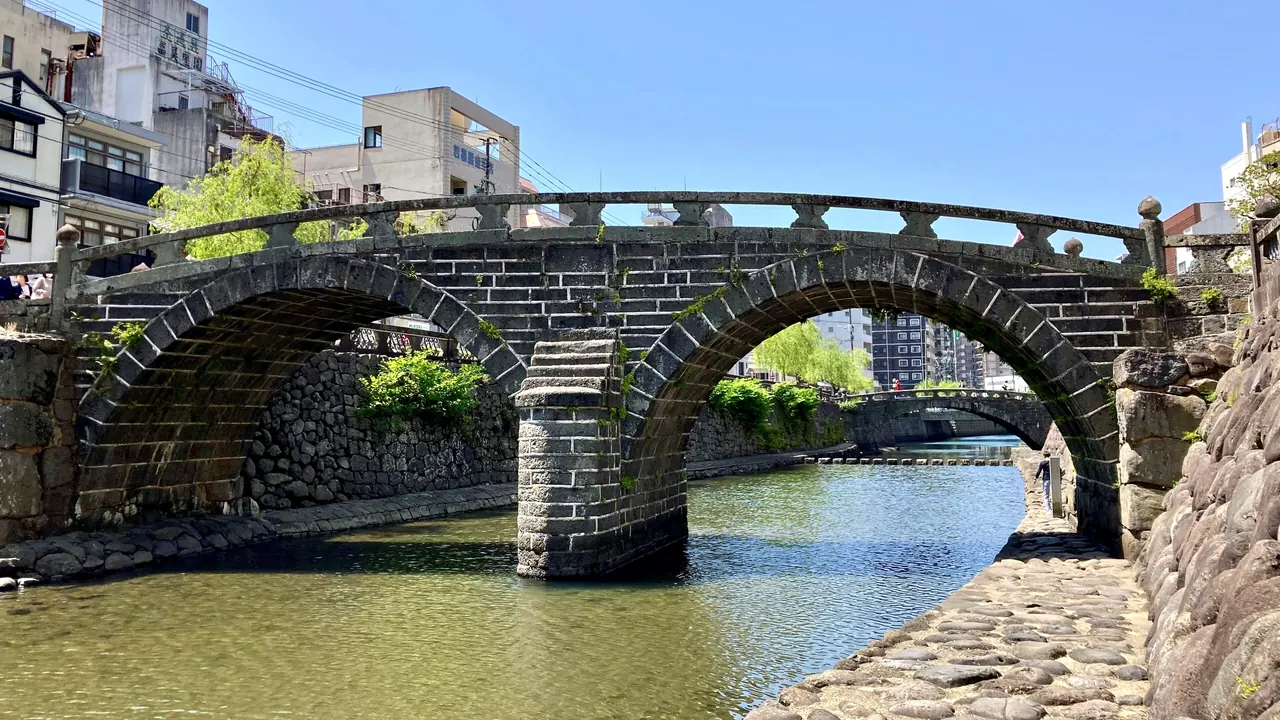
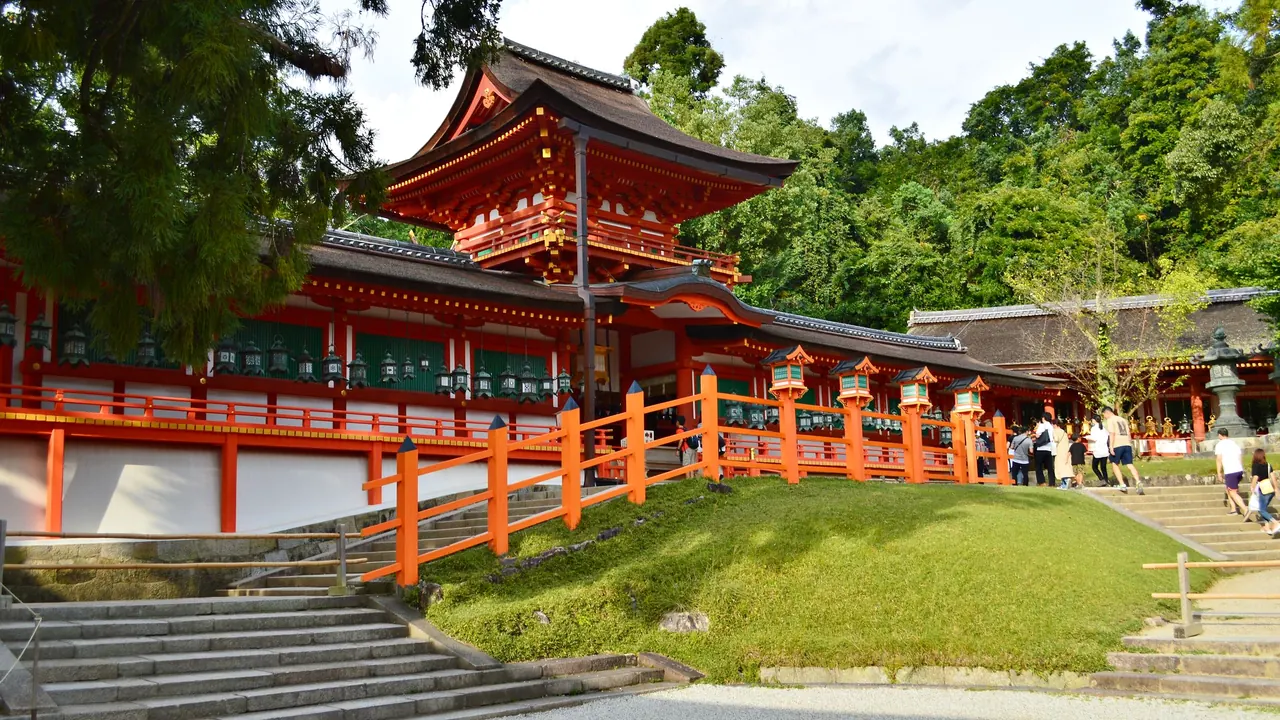
Photos: Nagasaki by Dudva, CC0; Nara by Saigen Jiro, CC0.
Nagasaki or Nara?
Our verdict in twelve categories, each scored against the same fixed benchmark cities, and the climate month by month, so you can choose for your trip.
Choose Nagasaki for
- beaches
- food and drink
- nightlife
Nagasaki suits travellers who want a city with a story of its own and something to do in the evening. Its sights trace the atomic bombing and four centuries of foreign trade, its food is the more interesting of the two, and Shianbashi gives you somewhere to go after dinner. A sandy beach and the hot springs of Shimabara are also within reach. It rewards a stay of a few days in its own right.
Choose Nara for
- day trips
- culture and sights
- getting around
If ancient Japan is the point of the trip, choose Nara. Its temples and shrines are among the finest in the country and sit close together around the deer park. Kyoto, Osaka and Horyu-ji are all a short train ride away, which makes it an excellent base for exploring the region. Expect quiet nights and plan your dinners with that in mind.
Scoreboard
Twelve categories on one fixed scale from 0 to 100. The shaded stretch is the gap between the two.
Your match
Pick a travel style or drag the sliders, and both match scores follow your weighting.
Wins on beaches and food and drink with your weighting.
Wins on day trips and culture and sights with your weighting.
What matters to you?
Category by category
What the scores mean for a trip.
Beaches & swimming
Neither city is a beach destination, but only Nagasaki gives you the choice. Takahama's sandy bay on the Nomo coast is about an hour away by bus, Iojima's small resort beach is a short ferry ride from the harbour, and the water is warm enough from July to early September.
Nara sits in an inland basin. The nearest beaches are on the industrial Osaka Bay shore, and the clear water of the Kii Peninsula takes most of a day to reach. In summer, a pool is the realistic place to swim.
Food & drink
Nagasaki's food is the more rewarding of the two, shaped by its centuries as Japan's trading port. There is champon and sara udon, castella sponge cake, the shared shippoku banquet and good local fish in the izakaya of Shianbashi and Hamanomachi, so dinner is never a problem.
Nara's food is a smaller affair. Persimmon-leaf sushi, sake-lees pickles, Miwa somen and the sake counters of Naramachi are worth finding. But the places near the park mostly serve day visitors and close early, so a serious dinner often means taking the train to Osaka or Kyoto.
Culture & sights
Nara has the deeper set of sights. There is Todai-ji's Great Buddha, Kofuku-ji's pagoda, the lantern-lined paths to Kasuga Taisha and the Buddhist sculpture of the National Museum, with Toshodai-ji, Yakushiji and the Heijo Palace site further west. It is the eighth-century capital still standing, and it repays slow days.
Nagasaki's sights tell a more recent story: the atomic bombing and the city's long contact with the outside world. The Atomic Bomb Museum and Peace Park, Dejima, Glover Garden, Oura Cathedral and the Chinese temples are moving and unlike anything else in Japan. Taken together, though, they don't match the weight of Nara's temples.
Nightlife
Neither city is a place for clubbing, but Nagasaki at least has a district for going out. Shianbashi's tight grid of izakaya, counter bars and karaoke keeps a few places open late, and the night view from Mount Inasa makes a good evening on its own.
Nara goes quiet once the day visitors leave. An evening there means a meal near Kintetsu Nara station or a glass at a sake counter, and most places close early. Osaka's bars are under an hour away, but the last train back ends the night.
Nature & outdoors
Both cities have good outdoors, in very different settings. Nagasaki's is coastal and volcanic: steep green hills around the harbour, the ropeway up Mount Inasa, the rocky Nomo coast and, further out, the steaming hells and lava dome of Unzen and the wooded islands of Kujukushima.
Nara's is gentler and starts in the middle of town. Deer roam Nara Park, the Kasugayama forest has been protected for more than a thousand years, the old Yamanobe-no-michi path runs past orchards and rice fields, and the blossom hills of Yoshino are under two hours away.
Day trips
Nara is one of the best bases in Japan for day trips. Kyoto and Osaka are each under an hour away and Horyu-ji is a short ride. Asuka, Uji, the mountain temples of Hase-dera and Muro-ji, and even Kobe and Himeji all fit into a day.
Nagasaki's outings are fewer and take longer, though they are distinctive. You can take the boat to the ruined island of Gunkanjima, visit the castle and samurai street at Shimabara, spend a day at Huis Ten Bosch or go to the porcelain towns of Arita and Imari. Several of them work better with a night away.
Good for families
Nagasaki has a little more for children: the trams, the ropeway, the Penguin Aquarium where the birds walk out onto a beach, and Huis Ten Bosch for a big day out. On the other hand, its stairways are hard going with a pushchair, and the Atomic Bomb Museum needs some thought with young children.
Nara's highlight is feeding the deer, along with the Great Buddha and the wooden pillar children squeeze through, all on flat, compact ground. Beyond that there is no aquarium or theme park, so most families spend a day or two there and move on.
Getting around
Both cities are easy without a car, but in different ways. Nagasaki runs on a simple flat-fare tram network along the valley floor that links nearly every sight. Anything up the hillsides, though, means steps and steep lanes.
Nara is mostly seen on foot across flat ground. The park, the great temples, the museum and Naramachi are all within walking distance of Kintetsu Nara station. For the western temples and Horyu-ji you take a local train or bus, or hire a bicycle.
Shopping & style
Nagasaki's souvenirs carry the marks of its trading past: boxed castella from the long-established bakeries, Nagasaki glassware, Chinatown sweets and porcelain from Hasami, Mikawachi and nearby Arita. For everyday needs there is the covered Hamanomachi arcade and the mall by the station.
Nara's are older crafts with deep roots in the city, such as sumi ink and calligraphy brushes, Nara-zarashi linen, Akahada pottery and carved Ittobori dolls, sold in the specialist shops of Naramachi and the Higashimuki arcade. Fashion is thin in both, so serious shoppers go from Nara to Osaka, and from Nagasaki to a larger city such as Fukuoka.
Affordability
Costs are much the same in both, with business hotels near the stations, cheap set lunches and modest temple fees keeping daily spending down. The difference is in the extras. In Nagasaki the money goes on the Gunkanjima boat, the ropeway and evenings of sake and sashimi, while in Nara it goes on rail fares if you use the city as a base, and on ryokan stays with dinner.
Live music & performing arts
In both cities the performances worth planning around are festivals, not theatre seasons, so timing matters. Nagasaki's Kunchi in October brings dragon dances and ship floats, and the Lantern Festival adds acrobatics in Chinatown. Nara's are older and more ceremonial: gagaku court music and bugaku dance at the winter On-matsuri of Kasuga Taisha, and the Omizutori fire rites at Todai-ji in early spring.
Outside those dates, each city has only a concert hall and a few small venues.
Wellness & relaxation
Nagasaki is the better choice for a proper soak, because the onsen towns of the Shimabara peninsula are within reach. Obama has scalding springs and a seaside footbath, and Unzen is a mountain spa among steaming vents. Both are best with a night at a ryokan.
Nara has old bathhouses and a few large bathing complexes, but no real hot springs close by. What it offers instead is calm: early mornings in the park, tea houses near temple gardens and a quiet old town after dark.
When should you go?
Pick your month. The climate figures are measured averages, not a forecast.
Nagasaki in July
Nara in July
Daytime high, °C
Rainfall in the month, mm
Where the figures come from
Nara's sunshine is measured 26 km from the centre, at Osaka.
Temperature and rainfall are climate normals, averaged over the years shown. Nagasaki: 1991-2020 normals, Nagasaki (2.2 km from centre). Nara: 1971-2000 (sunshine 1991-2020, rainfall 1991-2020) normals, Nara (2.6 km from centre).
Both cities follow the same Japanese pattern: mild, fairly dry winters, a wet early summer and sticky heat in July and August, when daytime highs reach 32°C in both. The big difference is how wet Nagasaki gets. Its rainy season is much heavier, with about 334mm in June, roughly twice what falls in Nara, and the rain keeps on through September. The sea off Nagasaki is warmest in August at around 28°C, so July to early September is its beach season, but those are also the months when walking its hills is hardest.
Spring and autumn are the best seasons for both. April, May, October and November are good walking months. Nara is the drier and sunnier of the two in spring, while Nagasaki has a bright, fairly dry October. Winter is milder by the harbour. In Nara, January highs of about 9°C mean cold mornings in the park, though it gets more winter sunshine than Nagasaki.
Which traveller are you?
On a culture and arts trip, Nara is the stronger choice. Its eighth-century temples, the Great Buddha and the National Museum's Buddhist sculpture are among Japan's finest, and Kyoto and Horyu-ji are close enough to add more without changing hotels.
For a food and nightlife trip, Nagasaki is the better pick. Champon, shippoku and local fish make eating out a pleasure, and Shianbashi has izakaya and counter bars into the late evening. In Nara, kitchens close early and the streets empty after dark.
On a beach and sun trip, Nagasaki is the only real option of the two. Takahama and Iojima have swimming from July to early September, while Nara is far inland. Still, treat Nagasaki's beaches as a break from sightseeing, not the main event.
Before you go
| Measure | Nagasaki | Nara |
|---|---|---|
| Official language | Japanese | Japanese |
| Currency | Yen (JPY) | Yen (JPY) |
| Sockets | AB100 V, 50 and 60 Hz depending on the region | AB100 V, 50 and 60 Hz depending on the region |
| Driving side | Left | Left |
| Time zone | UTC+9 | UTC+9 |
| Emergency number | Police 110, fire 119 | Police 110, fire 119 |
| Elevation | 105 m | 70 m |
| Main airport | Nagasaki Airport (NGS)19 km from centre10 non-stop destinations | Kansai International Airport (KIX)59 km from centre62 non-stop destinations |
| Public holidays this year | 16 days | 16 days |
By the numbers
| Measure | Nagasaki | Nara |
|---|---|---|
| City population | 404,656 | 352,377 |
| People per km² | 996 | 1,273 |
| Museums within 10 km | 26 | 31 |
| UNESCO World Heritage sites within 50 km | 2 | 6 |
| Swim season, months above 21 °C | 6 months | 5 months |
Where else could you go?
Every comparison below shares a destination with this one, so you can follow Nagasaki or Nara somewhere new.