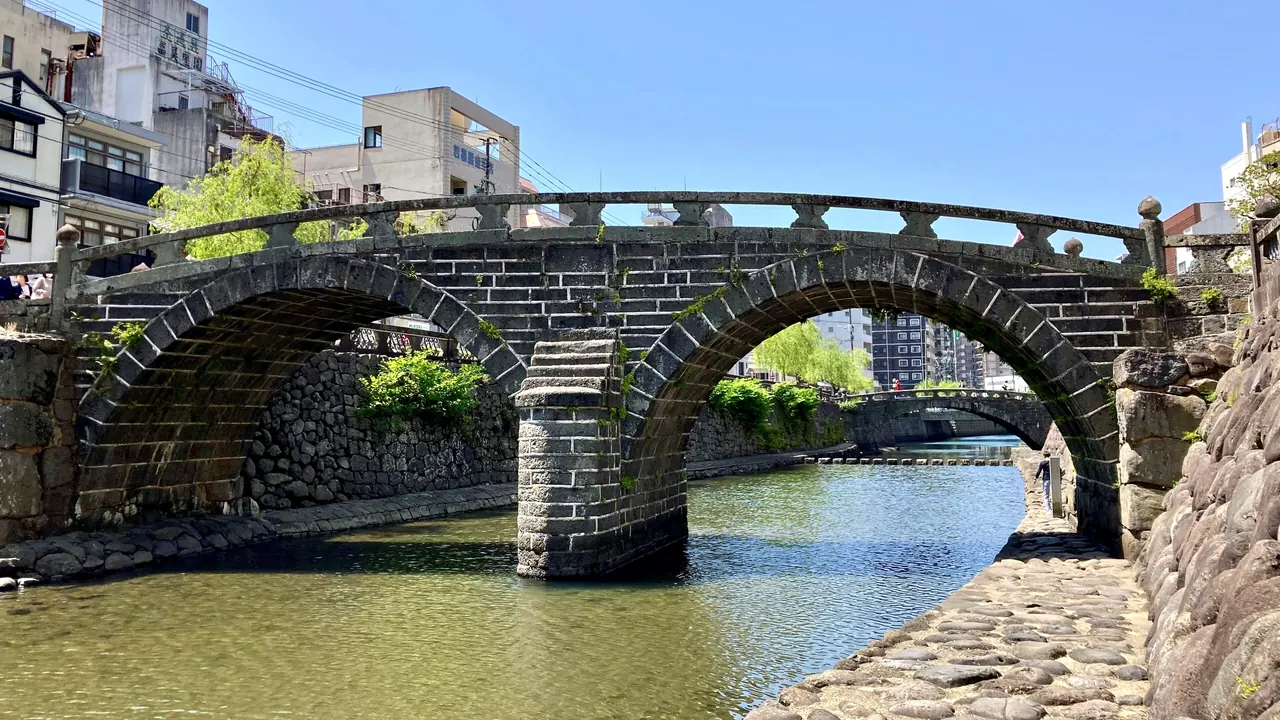
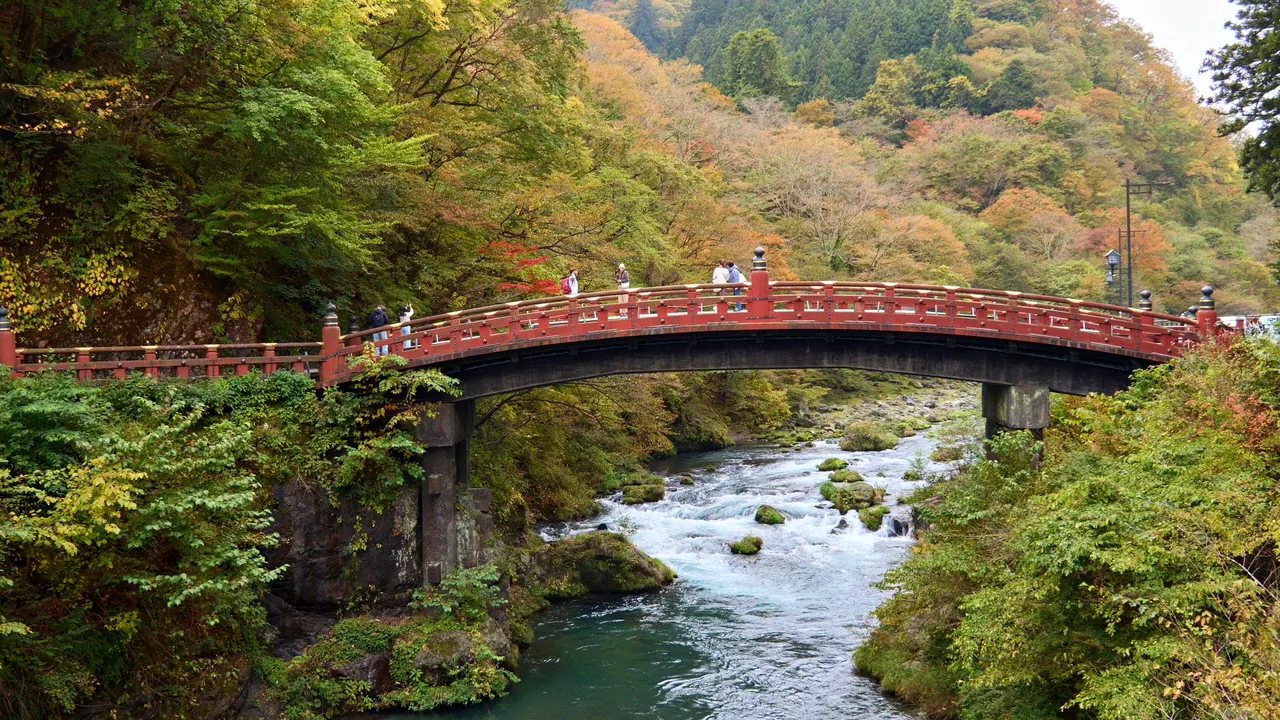
Nagasaki or Nikko?
Our verdict in twelve categories, each scored against the same fixed benchmark cities, and the climate month by month, so you can choose for your trip.
Choose Nagasaki for
- beaches
- food and drink
- nightlife
Nagasaki suits a traveller who wants a real city to come back to each evening. Its story of foreign contact and the atomic bomb comes with a cuisine of its own, a simple tram network, the izakaya of Shianbashi and enough shops for gifts. Of the two, it is also the only one with a sea to swim in during summer.
Choose Nikko for
- wellness
- nature and the outdoors
Choose Nikko for forest, mountains and hot water. Its cedar-shaded shrines hold their own against anything in Nagasaki, but the real difference is what lies above the town: lakes, waterfalls and marsh trails in the national park, and onsen from Kinugawa to Yumoto. It rewards early nights and a ryokan dinner, and it will disappoint anyone hoping to eat or drink out.
Scoreboard
Twelve categories on one fixed scale from 0 to 100. The shaded stretch is the gap between the two.
Your match
Pick a travel style or drag the sliders, and both match scores follow your weighting.
Wins on beaches and food and drink with your weighting.
Wins on wellness and nature and the outdoors with your weighting.
What matters to you?
Category by category
What the scores mean for a trip.
Beaches & swimming
Neither is a beach destination, but only Nagasaki offers a swim at all. The bay is a working harbour, but Takahama's sandy bay on the Nomo coast and the small resort beach on Iojima make a summer afternoon off from sightseeing possible.
Nikko is far inland, and its highland lakes, Chuzenji and Yunoko, are for boating and fishing rather than bathing. In summer, the water you get into there is a hot spring.
Food & drink
Nagasaki eats far better. Centuries of Chinese, Portuguese and Dutch contact gave it dishes found nowhere else in Japan, from champon and sara udon to the shippoku banquet and castella. It also has good fish in the izakaya around Shianbashi and casual plates in Chinatown.
Nikko's short list centres on yuba from the temple tradition, with mountain soba and river fish beside it, and most places serve lunch to day visitors. The best meal is usually the multi-course dinner at your ryokan, so in Nikko good food comes with the room rather than with a night out.
Culture & sights
Both carry great historical weight, but of very different kinds. Nagasaki's story is one of foreign contact and catastrophe, and it is spread across the city: the Atomic Bomb Museum and Peace Park in Urakami, Dejima, Glover Garden, Oura Cathedral and the Chinese temples around Teramachi.
Nikko's history is a single, concentrated ensemble in cedar forest, built around the gold and lacquer of Toshogu, with Rinnoji, Futarasan and Taiyuinbyo beside it. Nagasaki gives two or three days of varied stories. Nikko gives one or two days of overwhelming decoration and has few museums beyond it.
Nightlife
Nagasaki at least has an evening. Shianbashi's grid of izakaya, counter bars and karaoke makes for a relaxed night of drinks, even though there are few clubs and the streets empty before midnight, and the night view from Mount Inasa is the other way to spend an evening. In Nikko the main street goes dark once the day visitors leave, and the night belongs to dinner and the bath.
Nature & outdoors
Nikko is much stronger here. The town is the gateway to a national park. The Irohazaka road climbs to Lake Chuzenji beneath Mount Nantai, Kegon Falls pours out of the lake, and the Senjogahara boardwalks lead through marshland to Lake Yunoko. For the energetic there are harder climbs and rafting in the gorge.
Nagasaki's setting is a steep harbour ringed by green hills, with the ropeway up Mount Inasa and a rocky peninsula coast. Its volcanic country at Unzen is about two hours away, so wilder scenery takes a full day rather than a short bus ride.
Day trips
Both make good bases, but the trips lead in opposite directions. From Nagasaki the outings are mostly about history and the sea: the boat to the ruined island of Gunkanjima, Shimabara's castle and samurai street, the porcelain towns of Arita and Imari, and Huis Ten Bosch.
Nikko's great advantage is Tokyo, about two hours away. Gyoza in Utsunomiya, the kilns of Mashiko and the thatched post town of Ouchi-juku are also within reach. Beyond these, the area around Nikko is mostly mountains and lakes rather than towns.
Good for families
Nagasaki has a slight edge for families. Trams, the Inasa ropeway, the Penguin Aquarium and Huis Ten Bosch give children plenty to do. On the other hand, the stepped hillside streets are hard work with a pushchair, and the bomb museum needs some thought with young children.
Nikko works for a shorter stay. The Edo theme village and the miniature landmarks park at Kinugawa appeal to children, and older ones enjoy the boats on Lake Chuzenji. The shrine staircases and long bus rides between scattered sights tire toddlers sooner.
Getting around
Nagasaki is easier to get around. A handful of flat-fare tram lines run along the valley floor past nearly every major sight, so the only real effort is climbing the hillside lanes and steps.
Nikko's town is a single 2km road from the stations up to the shrines, which is easy on foot. The lake, the falls and the marshland, however, depend on buses up the Irohazaka road, which can crawl on autumn weekends, so you cover less ground in a day.
Shopping & style
Neither is a place to come for shopping, but Nagasaki has more to browse. The covered Hamanomachi arcade, a department store and the station mall cover everyday needs. Boxed castella, local glassware and porcelain from Hasami, Mikawachi and Arita make good gifts.
Nikko has a single street of souvenir and food shops. It is worth a look for Nikko-bori carving, straw-soled geta and packaged yuba, but for anything else you wait for Tokyo.
Affordability
Costs are broadly similar, and the difference lies in where the money goes. In Nagasaki, business hotels, cheap champon lunches and a day of tram rides keep things moderate, while the Gunkanjima boat, the ropeway and evenings of sashimi are what push the total up. In Nikko the guesthouses and soba meals are reasonably priced, but the classic ryokan stay with dinner is the big expense, and it costs most in autumn.
Live music & performing arts
Both places save their performances for festival days, but Nagasaki has more of them. Kunchi fills three October days at Suwa Shrine with dragon dances and ship floats, and the Lantern Festival brings acrobatics to Chinatown. For the rest of the year, a municipal concert hall hosts touring shows.
Nikko has no theatre or concert life. Its great occasion is the Toshogu procession of armoured samurai and horseback archery in spring and autumn. On other days, live performance is limited to the theme-park shows at Kinugawa.
Wellness & relaxation
This is where Nikko pulls well ahead. Hot springs run through the whole area, from the large inns along the Kinugawa gorge to the remote baths of Yumoto, and the shrine paths and early nights set an unhurried pace. On winter weekdays the mountain resorts fall deeply quiet, with snow on the outdoor pools.
Nagasaki has sento and a few hot-spring facilities, but its real onsen towns, Obama on the shore and Unzen in the hills, are on the Shimabara peninsula and need an overnight stay. In the city itself, calm comes from hillside temples and evening walks by the harbour.
When should you go?
Pick your month. The climate figures are measured averages, not a forecast.
Nagasaki in July
Nikko in July
Daytime high, °C
Rainfall in the month, mm
Where the figures come from
Nikko has no weather station within reach, so its figures come from a gridded climate model rather than a measured record, and read a broad area rather than the city itself.
Temperature and rainfall are climate normals, averaged over the years shown. Nagasaki: 1991-2020 normals, Nagasaki (2.2 km from centre). Nikko: 2001-2020 normals, NASA POWER reanalysis grid, no weather station within 90 km.
Nagasaki is mild through winter and at its most comfortable in April, May, October and November, when the hillside lanes are pleasant to climb. June and July bring the rainy season, and June is the wettest month at 334mm. August is hot and humid at 32°C, though it is also the sunniest month. The sea peaks at about 28°C in August, so July to early September is the swimming window.
Nikko is far colder in winter, with January highs of about 3°C and snow. Its summer stays cooler than Nagasaki's and suits walking, though July to October are all fairly wet, with July the peak at 202mm. October, when the maples turn, is its finest month, and May is the other good window. Both places are at their best in spring and autumn. Nagasaki is the easier winter trip, while Nikko is more comfortable in high summer.
Which traveller are you?
For a food and nightlife trip, Nagasaki is the clear pick. Champon, sara udon, shippoku banquets and fresh fish in the izakaya of Shianbashi make evenings worth planning. In Nikko the restaurants close early and the night ends at the ryokan table.
On an outdoors trip, Nikko wins easily. Its national park climbs from the town to Lake Chuzenji, Kegon Falls and the Senjogahara boardwalks, with Mount Nantai to climb and rafting in the Kinugawa gorge. Nagasaki's harbour hills are a much smaller offer.
For a relaxing and wellness trip, Nikko is far better. Kinugawa's riverside inns and the milky sulphur water of Yumoto are close at hand, with open-air baths looking onto forest. Nagasaki's real onsen lie two hours away on the Shimabara peninsula.
Before you go
| Measure | Nagasaki | Nikko |
|---|---|---|
| Official language | Japanese | Japanese |
| Currency | Yen (JPY) | Yen (JPY) |
| Sockets | AB100 V, 50 and 60 Hz depending on the region | AB100 V, 50 and 60 Hz depending on the region |
| Driving side | Left | Left |
| Time zone | UTC+9 | UTC+9 |
| Emergency number | Police 110, fire 119 | Police 110, fire 119 |
| Elevation | 105 m | 660 m |
| Main airport | Nagasaki Airport (NGS)19 km from centre10 non-stop destinations | Tokyo Haneda International Airport (HND)134 km from centre98 non-stop destinations |
| Public holidays this year | 16 days | 16 days |
By the numbers
| Measure | Nagasaki | Nikko |
|---|---|---|
| City population | 404,656 | 77,027 |
| People per km² | 996 | 53 |
| Museums within 10 km | 26 | 5 |
| UNESCO World Heritage sites within 50 km | 2 | 1 |
| Swim season, months above 21 °C | 6 months | - |
Where else could you go?
Every comparison below shares a destination with this one, so you can follow Nagasaki or Nikko somewhere new.