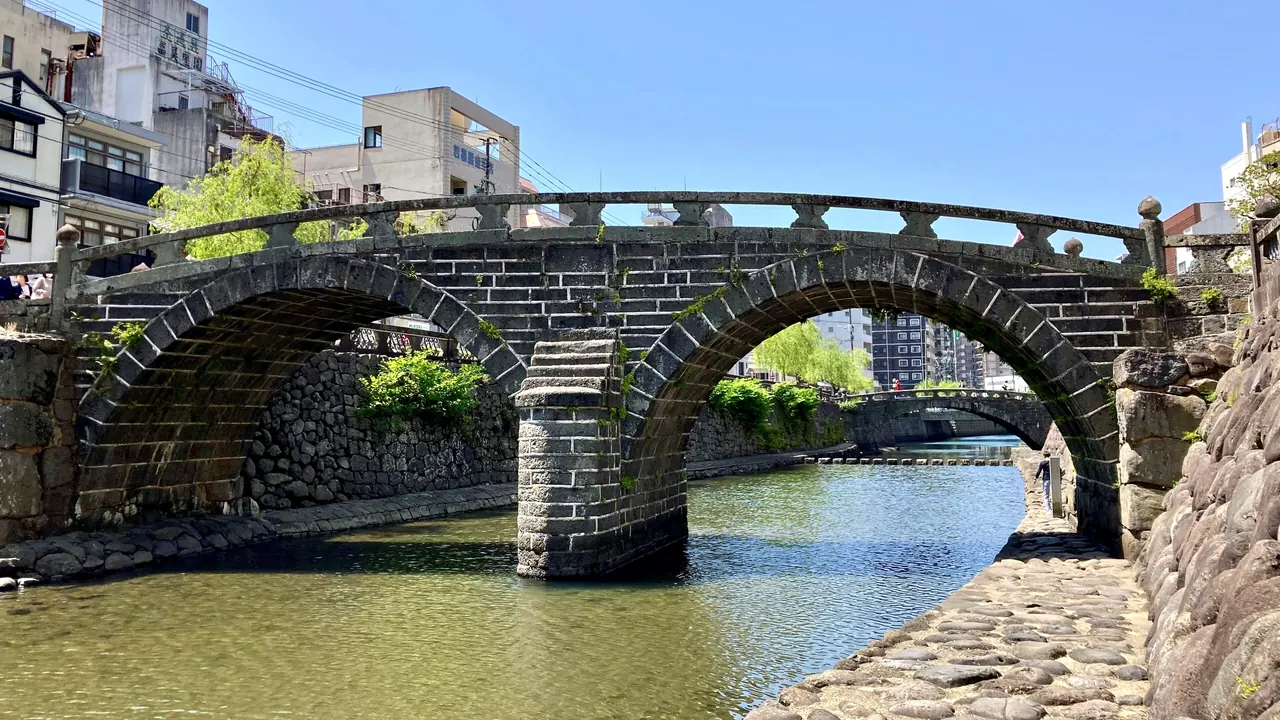
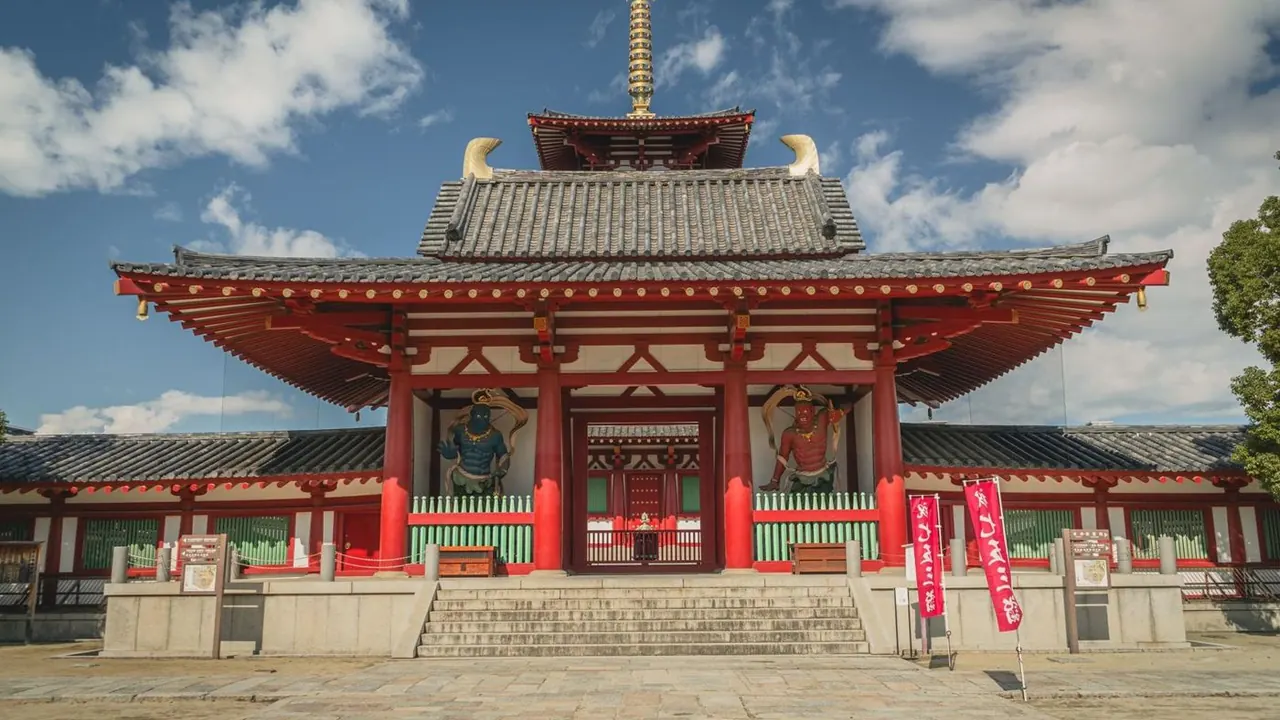
Photos: Nagasaki by Dudva, CC0; Osaka by Sarmat Batagov, Pexels License.
Nagasaki or Osaka?
Our verdict in twelve categories, each scored against the same fixed benchmark cities, and the climate month by month, so you can choose for your trip.
Choose Nagasaki for
- culture and sights
- beaches
- nature and the outdoors
Nagasaki suits travellers who want one city with a story of its own and are happy to take it slowly. Its history is the draw: the atomic bomb sites in Urakami, Dejima, Glover Garden and the Chinese temples together tell of centuries of contact with the outside world. Add a boat to Gunkanjima and evenings on the harbour, and you have a quiet, thoughtful few days. It is a poor choice if you want big nights out or serious shopping.
Choose Osaka for
- nightlife
- shopping
- live music and the arts
Osaka is the better base for almost everything else. The food is the reason many people come, the bar streets of Minami stay busy until the first train, and Kyoto, Nara, Kobe and Himeji are all close enough for a day out. Families get a theme park and a world-class aquarium, and getting around by subway and rail is easy. What it lacks is a historic townscape of its own.
Scoreboard
Twelve categories on one fixed scale from 0 to 100. The shaded stretch is the gap between the two.
Your match
Pick a travel style or drag the sliders, and both match scores follow your weighting.
Wins on culture and sights and beaches with your weighting.
Wins on nightlife and shopping with your weighting.
What matters to you?
Category by category
What the scores mean for a trip.
Beaches & swimming
Neither city is made for a beach vacation, but Nagasaki has slightly the better swimming. About an hour by bus down the peninsula, Takahama's clean sand looks straight out onto open water, not a closed-in harbour. Iojima's small resort beach is a short ferry hop from the city, and the season runs on into early September, when the jellyfish arrive.
Osaka's summer beaches at Suma, Nishikinohama and Tannowa take about as long to reach by train. They lie on an enclosed, heavily built-up bay, though, with coarse sand and suburbs behind them, and they are open for little more than July and August. Locals treat them as a day out with friends, and in either city a swim is a break from sightseeing rather than a reason to go.
Food & drink
Eating is the main reason to come to Osaka, and it beats Nagasaki easily. Osaka has street griddles of takoyaki, okonomiyaki cooked at the table, kushikatsu counters, Kuromon Market and the cramped izakaya of Ura-Namba and Tenma. At the top end there are the kaiseki and sushi counters of Kitashinchi, and few places in Japan offer as much range.
Nagasaki's cooking is more unusual but much narrower. Champon, sara udon, castella and the shared shippoku banquet carry its Chinese, Portuguese and Dutch past, and the local fish is excellent in the Shianbashi izakaya. You will eat well there, but within a few days you will have tried most of it, and there is little fine dining.
Culture & sights
Nagasaki has the stronger set of sights, because they all belong to one story. The Atomic Bomb Museum and the hypocentre in Urakami stand alongside Dejima's trading post, the merchant houses of Glover Garden, Oura Cathedral and the Ming-style Sofukuji. Together they explain why this city's history is different from the rest of Japan's.
Osaka's heritage comes in separate pieces. There is the reconstructed castle on its original walls, Shitennoji and Sumiyoshi Taisha, and the ceramics and art museums on Nakanoshima. Much of what is worth seeing is the modern city itself, from the neon of Dotonbori to Shinsekai under Tsutenkaku tower.
Nightlife
Osaka is one of Japan's great cities for a night out. Nagasaki is a pleasant place for a quiet drink. In Minami you can bar-hop through Dotonbori, the standing bars of Ura-Namba and the small clubs of Amerikamura. Strangers chat at the counter, and plenty of people stay out until the first train.
Nagasaki's evenings centre on Shianbashi, an old grid of izakaya, karaoke and snack bars, many of which mainly serve regulars. Grilled fish and sake are easy to find, but the streets empty early. For many visitors the best part of the evening is the night view from Mount Inasa.
Nature & outdoors
The two are about level outdoors, but the landscapes are very different. Nagasaki itself is the scenery: a deep harbour ringed by steep green hills, with the ropeway up Mount Inasa and the rocky Nomo coast nearby. Two hours away, Unzen has volcanic vents and the climb up Mount Fugen.
Osaka is flat concrete, and its green escapes lie within an hour by train. Minoo's forest trail climbs to a waterfall, and there are ridge walks in the Rokko mountains above Kobe. These are easier to reach than Nagasaki's wilder places, but they are gentler and suit day walkers.
Day trips
From Nagasaki, the outing everyone remembers is the boat to the concrete ruins of Gunkanjima, though whether you can land depends on the weather. After that the distances grow. Shimabara and Unzen, the porcelain towns of Arita and Imari, and Hirado each take a long day, and the churches of the Goto Islands need a night away.
Kyoto, by contrast, is under half an hour from Osaka by train, and Nara about forty minutes. Kobe is closer still, and Himeji Castle, the tea houses of Uji and the monasteries of Koyasan are all easy to reach. With trains this frequent and quick, you could spend two weeks on day trips without ever changing hotel.
Good for families
Osaka is much the easier city with children. Universal Studios Japan is a short train ride from the centre, the Kaiyukan aquarium has whale sharks in its huge central tank, and Tennoji Zoo, Kids Plaza and Expo '70 Park fill any days left over. Stations and department stores have lifts and baby rooms.
Nagasaki has gentler treats: trams, the ropeway, the Penguin Aquarium where the birds walk out onto a beach, and a big day out at Huis Ten Bosch. Its stepped hillside streets are hard going with a pushchair, though, and the Atomic Bomb Museum needs some thought with younger children.
Getting around
Osaka's subway and JR network covers far more ground. The Midosuji line links Umeda, Namba and Tennoji, and the same IC card takes you on to Kyoto, Nara and Kobe. The catch is the stations themselves: changing lines inside the Umeda maze can take a long walk.
Nagasaki is simpler but smaller. A handful of flat-fare tram lines run along the valley floor past nearly every sight. Once you leave that valley floor, though, getting anywhere means climbing steps up the hillsides.
Shopping & style
For shopping, Osaka is in a different league. It has the long Shinsaibashi-suji arcade, the old department stores and food halls of Umeda, international flagships on Midosuji, vintage clothing in Amerikamura and the electronics and anime shops of Den Den Town. Kitchen knives from Doguyasuji are the souvenir to remember.
Nagasaki's Hamanomachi arcade covers everyday needs, and the best things to buy are local. Look for boxed castella, glassware and porcelain from Hasami, Mikawachi and Arita, which is easier to find here than in Osaka.
Affordability
Both are fair-priced by Japanese standards, so the difference is in where the money goes. In Nagasaki, rooms and meals stay modest, and the costs build up with the Hashima boat tours, the ropeway and long evenings of sashimi and sake.
In Osaka, food is the great bargain, from takoyaki to izakaya meals. The pressure falls on rooms in cherry-blossom and autumn-leaf season and at weekends, and on big tickets such as Universal Studios Japan.
Live music & performing arts
Osaka has a proper stage culture. The National Bunraku Theatre puts on full puppet seasons with English guides, and kabuki comes to the city in seasonal runs. Festival Hall and Symphony Hall host concerts, there are live houses for rock and jazz, and the Takarazuka Revue's home theatre is close by.
Nagasaki's great performance is a festival rather than a season. The Kunchi brings three October days of dragon dances and ship floats to Suwa Shrine, and the Lantern Festival fills Chinatown around Chinese New Year. Outside those dates there is little to plan a trip around.
Wellness & relaxation
Bathing is easier to fit into an Osaka stay. Neighbourhood sento and large super sento complexes make an evening soak simple. Arima Onsen, one of Japan's oldest spa towns, is only about an hour away, close enough for an afternoon.
Nagasaki's best springs at Obama and Unzen really need an overnight stay at a ryokan. On the other hand, the city itself is calmer, with hillside temples and harbour walks, while Osaka is fast and noisy.
When should you go?
Pick your month. The climate figures are measured averages, not a forecast.
Nagasaki in July
Osaka in July
Daytime high, °C
Rainfall in the month, mm
Temperature and rainfall are climate normals, averaged over the years shown. Nagasaki: 1991-2020 normals, Nagasaki (2.2 km from centre). Osaka: 1991-2020 normals, Osaka (1.8 km from centre).
The two cities follow much the same Japanese year: mild, comfortable springs and autumns, cool winters and a hot, sticky summer. April and May, then October and November, are the best months in both for walking the streets. The rainy season hits Nagasaki much harder, though. June brings around 334mm there, nearly double Osaka's total, and July stays very wet, so early summer on the hilly streets can mean days of steady rain. Osaka's August is the harsher heat, with highs around 34°C in a flat, concrete city that holds the warmth.
For a swim, both seas are warm from July to September. Nagasaki's water is a touch warmer, reaching about 28°C in August. In winter both cities are cool but rarely bitter, and Osaka is noticeably sunnier, which makes it the more cheerful choice for a January or December visit.
Which traveller are you?
On a culture trip built around history, Nagasaki is the more rewarding city. The Peace Park, Dejima, Oura Cathedral and the Chinese temples tell a story of war and foreign contact found nowhere else in Japan. Osaka is the better pick for theatre and live performance.
For a food and nightlife trip, choose Osaka without hesitation. Takoyaki stalls, okonomiyaki counters and Kuromon Market fill the day, and then Ura-Namba, Amerikamura and the Umeda lanes keep going until morning. Nagasaki's evenings in Shianbashi wind down well before midnight.
On a family trip with children, Osaka has far more to offer. Universal Studios Japan, the Kaiyukan aquarium with its whale sharks and Expo '70 Park are all near flat streets and stations with lifts. Nagasaki's stairways make pushchairs hard work, and its museum needs care with younger children.
Before you go
| Measure | Nagasaki | Osaka |
|---|---|---|
| Official language | Japanese | Japanese |
| Currency | Yen (JPY) | Yen (JPY) |
| Sockets | AB100 V, 50 and 60 Hz depending on the region | AB100 V, 50 and 60 Hz depending on the region |
| Driving side | Left | Left |
| Time zone | UTC+9 | UTC+9 |
| Emergency number | Police 110, fire 119 | Police 110, fire 119 |
| Elevation | 105 m | 20 m |
| Main airport | Nagasaki Airport (NGS)19 km from centre10 non-stop destinations | Kansai International Airport (KIX)38 km from centre62 non-stop destinations |
| Public holidays this year | 16 days | 16 days |
By the numbers
| Measure | Nagasaki | Osaka |
|---|---|---|
| City population | 404,656 | 2,751,862 |
| People per km² | 996 | 12,340 |
| Museums within 10 km | 26 | 44 |
| UNESCO World Heritage sites within 50 km | 2 | 6 |
| Swim season, months above 21 °C | 6 months | 5 months |
Where else could you go?
Every comparison below shares a destination with this one, so you can follow Nagasaki or Osaka somewhere new.