
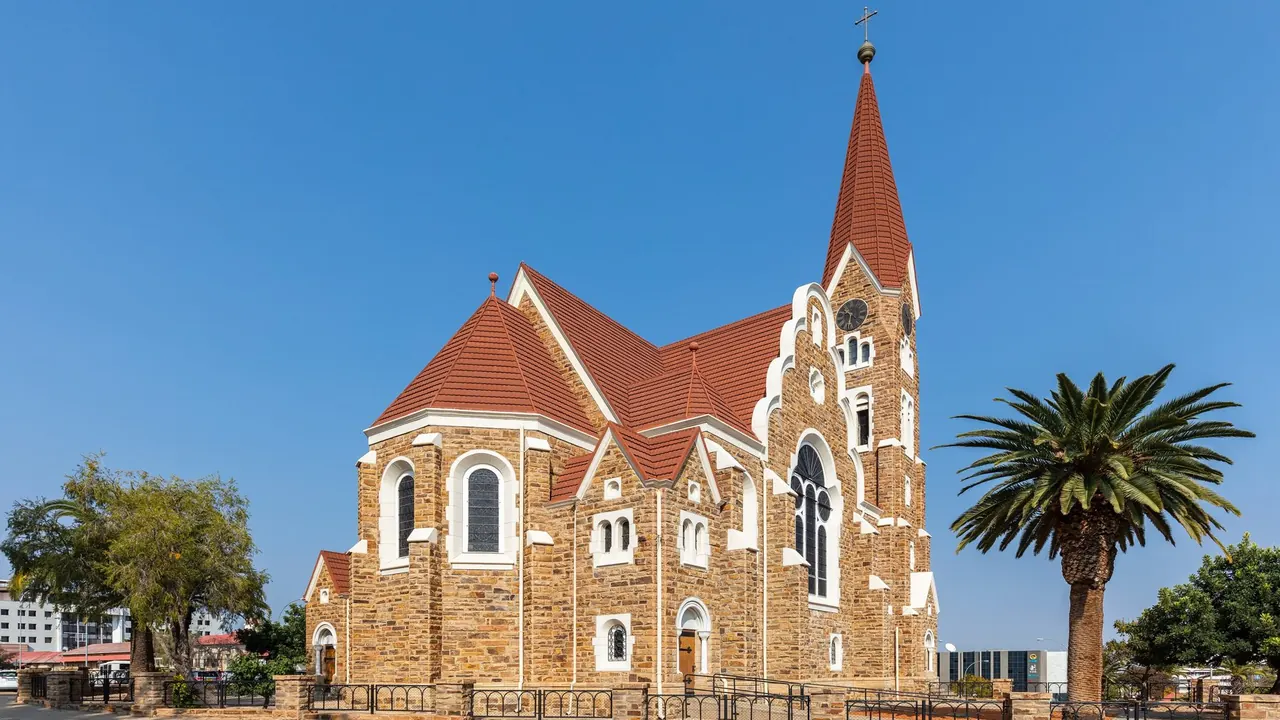
Photos: Nairobi by Lmwangi, CC BY-SA 3.0, cropped; Windhoek by Diego Delso, CC BY-SA 4.0, cropped.
Nairobi or Windhoek?
Our verdict in twelve categories, each scored against the same fixed benchmark cities, and the climate month by month, so you can choose for your trip.
Choose Nairobi for
- nightlife
- nature and the outdoors
- families
Nairobi is the stronger choice for most city stays, and above all for anyone who wants wildlife without leaving town. Lions and rhinos roam open savanna within sight of office towers, baby elephants are bottle-fed in Langata, and the Rift Valley is close enough for a day of cycling among zebras. Add a late, confident night scene in Westlands, good Indian food and a large coffee culture, and the city gives you plenty to do over several days, as long as you can put up with the traffic.
Choose Windhoek for
- wellness
- getting around
- prices
Windhoek is a quieter and smaller place, and it works best as the first or last night of a Namibian road trip. Its sights fit onto one ridge, its evenings end early and its garden guest houses are calm. Choose it if your real destination is Sossusvlei, Etosha or the coast and you want a gentle, low-rise capital with a frank museum on the country's history, a German-era church and clear winter skies before you set off.
Scoreboard
Twelve categories on one fixed scale from 0 to 100. The shaded stretch is the gap between the two.
Your match
Pick a travel style or drag the sliders, and both match scores follow your weighting.
Wins on nightlife and nature and the outdoors with your weighting.
Wins on wellness and getting around with your weighting.
What matters to you?
Category by category
What the scores mean for a trip.
Beaches & swimming
Neither city works for a beach trip. Both sit on high inland plateaus, and swimming in either means a hotel pool.
The difference is in how you would add a coast. From Nairobi it is a short flight or a long train ride to the warm Indian Ocean. From Windhoek it is four hours across the desert to Swakopmund, where the cold Atlantic rarely invites a swim.
Food & drink
Nairobi has more range at the table. Beyond nyama choma and ugali there is the cooking of its long-settled South Asian community, plenty of Ethiopian restaurants, Swahili dishes with coconut from the coast, and fresh Kenyan coffee in the cafés of Westlands and Kilimani.
Windhoek's cooking draws on two narrower traditions: game meat such as oryx and kudu, and German bakeries and beer halls. Grilled kapana eaten standing in Katutura is the most memorable meal, but for a longer stay the choice soon runs thin.
Culture & sights
Both are young colonial-era capitals that most visitors see in a day or two, so neither gives much reason to stay for its sights. What differs is the focus. Nairobi's strength is human origins and Kenyan peoples, with the early fossils at the National Museum and the Out of Africa farmhouse at the Karen Blixen Museum.
Windhoek has more of a townscape, with the sandstone Christuskirche, the Tintenpalast and the white Alte Feste together on one ridge. The Independence Memorial Museum tells the story of the Herero and Nama genocide and the liberation struggle with unusual frankness.
Nightlife
Nairobi has the far bigger night out. Westlands rooftop bars and clubs play Afrobeats, gengetone and bongo flava until dawn from Thursday on, and Kilimani has quieter cocktail bars for an easier evening.
In Windhoek a night out usually means a long dinner and a beer garden, with only a handful of clubs at weekends and the Katutura shebeens best visited with a local. The two share one rule: it is not safe to walk between venues after dark, so you take a car door to door.
Nature & outdoors
Nairobi has wildlife few cities can match. Its national park starts at the southern edge of the city, so a dawn game drive is a real safari, and Karura Forest and the Ngong Hills give walks without leaving town. Within two hours you can reach Hell's Gate, the hippos of Lake Naivasha and the crater rim of Longonot.
Windhoek's surroundings are gentler: thornbush highland, granite koppies and hiking among zebra and oryx at Daan Viljoen. Namibia's famous dunes and Etosha's wildlife need an overnight trip, while Nairobi's best scenery fits into a day.
Day trips
Neither city is a good base for days out, but Nairobi has a little more to offer. You can spend a half-day among the Limuru tea estates or see the hand axes lying where they were found at Olorgesailie in the Rift Valley.
From Windhoek, the woodcarvers' market at Okahandja and the springs at Gross Barmen are about the limit. Everything else Namibia is known for, including Swakopmund, belongs on a road trip with overnight stops.
Good for families
Nairobi gives children experiences they will remember: feeding Rothschild's giraffes from a raised platform, watching baby elephants roll in the mud and seeing lions on a short morning drive. The price is long journeys in traffic and few pavements, so staying in Karen or Langata helps.
Windhoek has no zoo, aquarium or theme park, and a farm game drive is the main event for children. It is calmer and easy to manage with a hire car, but families mostly pass through on the way to Etosha.
Getting around
Both cities are hard to get around without a car, and in both the small centre is walkable by day while walking after dark is a bad idea. Nairobi's difficulty is congestion: its sights are spread across the suburbs, short trips can take an hour at rush hour and the matatu routes are hard to work out, so you rely on ride-hailing.
Windhoek's roads are quieter, but there is no bus service a visitor can use and the shared taxis run informal routes. Most people hire a car, which they need anyway for the drive beyond the city.
Shopping & style
Both cities are for craft shopping rather than fashion, and Nairobi has more to see. The Maasai Market moves around the city and is full of beadwork, soapstone and kiondo baskets, and Karen workshops let you watch glass being blown. Kenyan coffee and tea make easy gifts to take home.
Windhoek gathers its crafts in one place, the Namibia Craft Centre in the old brewery, with Herero dolls, ostrich-shell jewellery and leather goods. Semi-precious stones and karakul wool are local specialities, and its malls are mainly useful for stocking up before a road trip.
Affordability
The two cost about the same and follow a similar pattern: local food and drink are cheap, and the visitor's bill rises with lodging and wildlife. In Nairobi, the expense is secure international hotels and the higher park fees for non-residents, plus a vehicle and driver for game drives.
Windhoek's suburban guest houses are better value than Nairobi's business hotels. What costs money there is car hire and the internationally priced lodges and safaris of the wider Namibian trip.
Live music & performing arts
Nairobi has a real live music scene, with benga, rumba and jazz bands in clubs and garden venues at weekends. At Bomas of Kenya, troupes perform dances from Kenya's many communities, and there are spoken-word and comedy nights as well.
Windhoek depends mostly on the National Theatre of Namibia and occasional student concerts, and shambo and Namibian kwaito turn up only now and then. Neither city has much opera or classical music, so in both it pays to check the listings.
Wellness & relaxation
Neither has a spa tradition, and treatments in both mean hotel spas. The difference is in the setting. In Nairobi, calm is something you have to look for, away from the noise in the garden hotels and veranda breakfasts of Karen and Langata.
Windhoek is quiet as a whole, a small low-rise capital with clear, cool winter nights. It also has thermal pools at Gross Barmen within an hour's drive, which Nairobi cannot offer.
When should you go?
Pick your month. The climate figures are measured averages, not a forecast.
Nairobi in July
Windhoek in July
Daytime high, °C
Rainfall in the month, mm
Temperature and rainfall are climate normals, averaged over the years shown. Nairobi: 1991-2020 normals, Nairobi ACC/FIC/RCC/MET/COM/ (13.3 km from centre). Windhoek: 1991-2020 normals, Windhoek (1.7 km from centre).
Nairobi's altitude keeps it mild all year, with daytime highs that hardly move from the mid-20s, so the question is rain rather than heat. The long rains fall around April and May and the short rains in November, when monthly totals pass 120mm. January and February are the sunniest and most settled months for game drives and walking. June to September stays dry, but July is the coolest and greyest stretch of the year.
Windhoek has much clearer seasons. Its summer is hot, around 33°C in December, and the rain comes in heavy bursts from January to March. From May to September there is almost no rain at all, and days of about 22°C in midwinter make this the best time for walking the centre and hiking in Daan Viljoen. The two cities line up best in the dry months around August and September, when both are pleasant at once.
Which traveller are you?
On a food and nightlife trip, Nairobi is the clear pick. Weekend nyama choma around the grill, strong Indian and Ethiopian cooking and Westlands clubs playing amapiano until dawn give far more than Windhoek's beer gardens and early nights.
For a family trip with children, Nairobi offers more. Children can feed giraffes at the Giraffe Centre, watch orphaned elephants and go on a morning safari next to the city. Windhoek has almost nothing built for children beyond game drives on nearby farms.
On a relaxing and wellness trip, Windhoek is the easier place to slow down. It is a small, quiet capital with garden guest houses and wide skies, and the Gross Barmen hot springs are an hour away. Nairobi's noise and traffic stop you resting until you reach Karen.
Before you go
| Measure | Nairobi | Windhoek |
|---|---|---|
| Official language | English, Swahili | English |
| Currency | Kenyan Shilling (KES) | Namibia Dollar (NAD) |
| Sockets | G240 V, 50 Hz | M220 V, 50 Hz |
| Driving side | Left | Left |
| Time zone | UTC+3 | UTC+2 |
| Emergency number | Police 112/999, ambulance 112/999, fire 112/999 | 112 |
| Elevation | 1,661 m | 1,650 m |
| Main airport | Jomo Kenyatta International Airport (NBO)13 km from centre60 non-stop destinations | Hosea Kutako International Airport (WDH)41 km from centre16 non-stop destinations |
| Public holidays this year | 10 days | 13 days |
By the numbers
| Measure | Nairobi | Windhoek |
|---|---|---|
| City population | 5,545,000 | 486,169 |
| People per km² | 7,967 | 95 |
| Museums within 10 km | 4 | 5 |
| UNESCO World Heritage sites within 50 km | 0 | 0 |
Where else could you go?
Every comparison below shares a destination with this one, so you can follow Nairobi or Windhoek somewhere new.