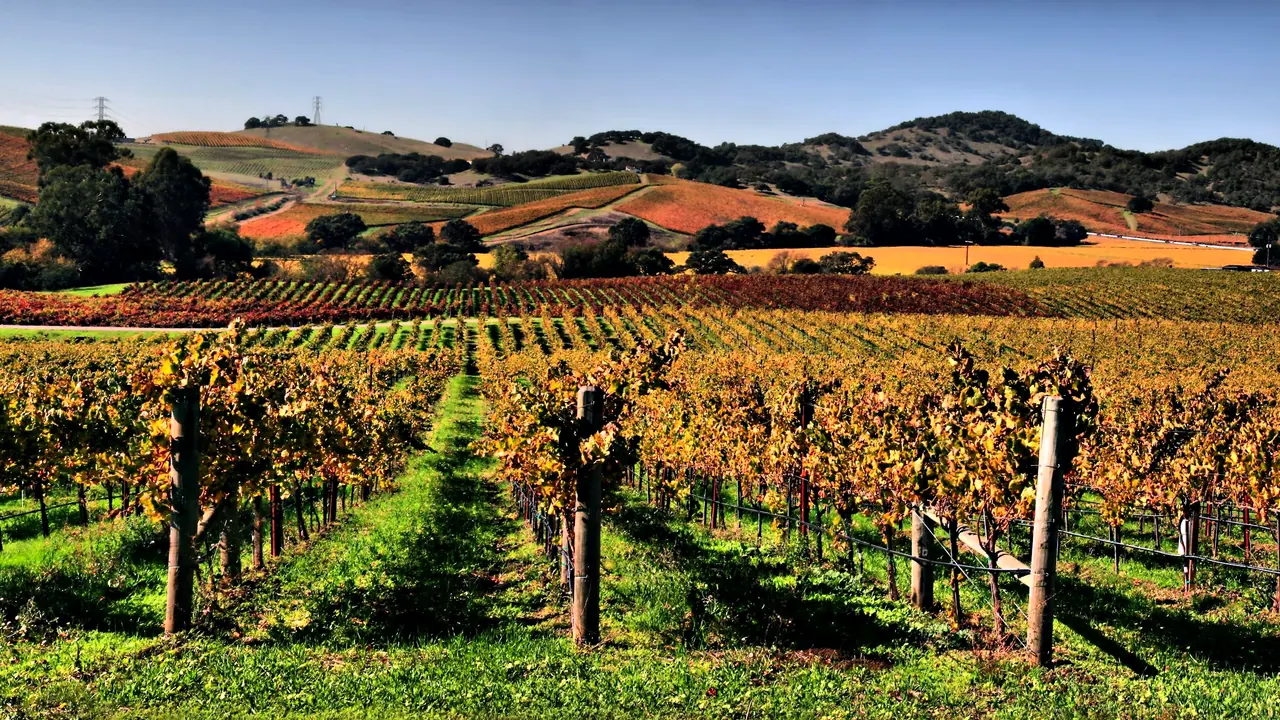
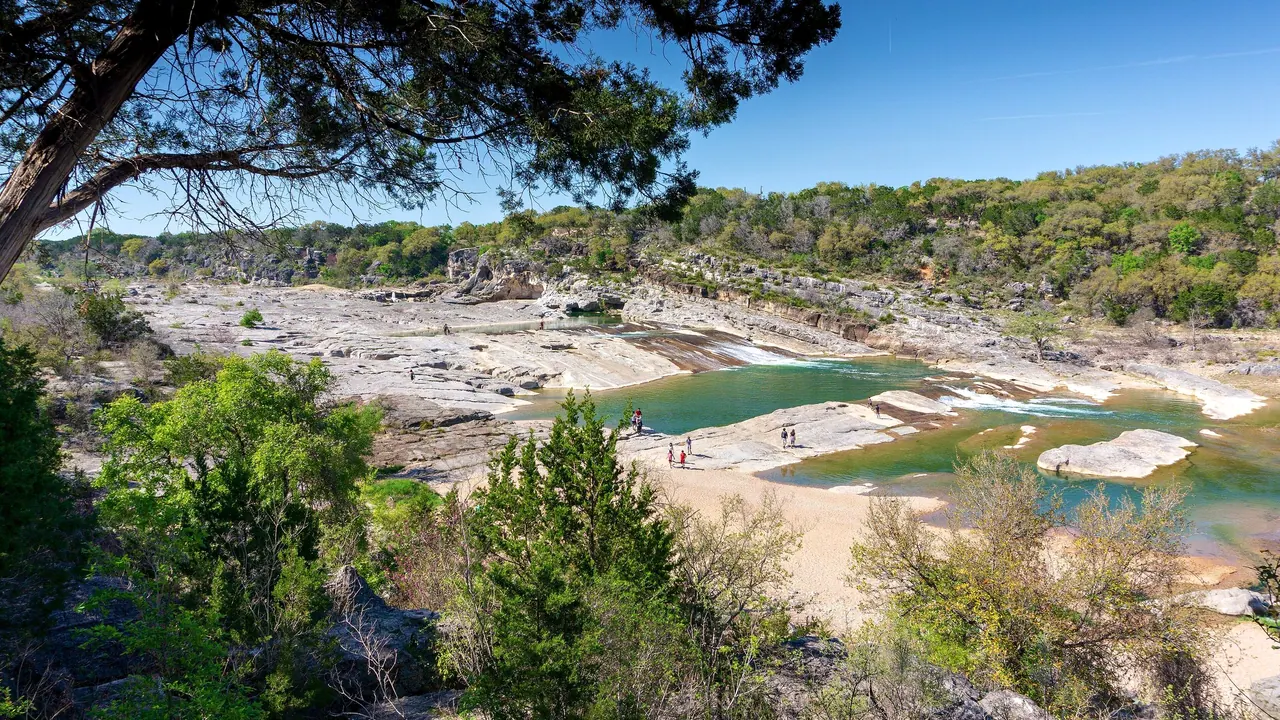
Photos: Napa Valley by Brocken Inaglory, CC BY-SA 3.0, cropped; Texas Hill Country by Aleksomber, CC BY-SA 4.0, cropped.
Napa Valley or Texas Hill Country?
Our verdict in twelve categories, each scored against the same fixed benchmark cities, and the climate month by month, so you can choose for your trip.
Choose Napa Valley for
- wellness
- food and drink
- day trips
Napa Valley suits couples and grown-up groups who want the trip to revolve around the table and the glass. Its Cabernet estates, appointment-only mountain cellars and the run of fine dining in Yountville are a level above anything in Texas wine country, and Calistoga's mud baths and mineral pools make slow days easy. It is a splurge and a quiet one, best kept short and without children.
Choose Texas Hill Country for
- families
- prices
- beaches
The Texas Hill Country is the better pick for a looser, cheaper road trip, and for families. You drive between German-founded towns, swim in spring-fed holes, two-step in old dance halls and eat brisket off butcher paper. There is more to do after dark and more for children, and a stay costs far less, though the food and spa sides are plainer than Napa's.
Scoreboard
Twelve categories on one fixed scale from 0 to 100. The shaded stretch is the gap between the two.
Your match
Pick a travel style or drag the sliders, and both match scores follow your weighting.
Wins on wellness and food and drink with your weighting.
Wins on families and prices with your weighting.
What matters to you?
Category by category
What the scores mean for a trip.
Beaches & swimming
Neither has a coast, but the Hill Country makes much more of its water. Spring-fed pools such as Jacob's Well, Hamilton Pool and Barton Springs stay cool all year, and in summer crowds float the Comal and Guadalupe on inner tubes. Swimming there is part of the trip.
In Napa, swimming mostly means the hotel pool. Lake Berryessa over the eastern hills is the one real summer option, and the cold Pacific at Bodega Bay is for looking at, not bathing.
Food & drink
Napa Valley is the stronger eating trip. It has hundreds of wineries, Cabernet from estates on Highway 29 and from small cellars on Howell and Spring Mountain, and in Yountville a cluster of fine dining that the Hill Country has nothing to match. The drawback is that nearly every meal is an occasion, and cheap everyday food is hard to find.
The Hill Country is earthier and more casual. Post-oak brisket sold by weight in old meat markets, German bakeries and beer gardens in Fredericksburg and New Braunfels, and breakfast tacos are the high points. Its wineries along the Johnson City road are pleasant, but for refined cooking you have to go to Austin, and small-town menus repeat after a few days.
Culture & sights
Almost all of Napa's heritage comes from wine. You see it in the nineteenth-century stone cellars, the Greystone building in St. Helena, the Bale Grist Mill and the Victorian buildings along the river in downtown Napa. They make a pleasant setting for tastings, but they are not a reason to come.
The Hill Country gives you more to visit, and most of it is in Fredericksburg. There you will find the limestone Sunday houses, the Vereins Kirche and the National Museum of the Pacific War, which is much bigger than you would expect in a small town. The LBJ ranch on the Pedernales easily fills half a day.
Nightlife
In Napa, the evening ends with dinner. The wine bars and cocktail bars along the river in downtown Napa are the only places to go out, and Yountville, St. Helena and Calistoga close soon after the restaurants do.
The Hill Country has more going on after dark, though it is still small-town. There are saloons, honky-tonks and brewery taprooms on Fredericksburg's Main Street, and in summer the river towns around New Braunfels fill up as the tubing crowd comes off the water. For a big night out, Austin is about an hour away, as long as someone else drives.
Nature & outdoors
The Hill Country has a little more character outdoors. You can climb the pink granite dome of Enchanted Rock, paddle cypress-lined rivers, visit show caves and watch bat flights at dusk, and in spring the bluebonnets cover the roadsides. Summer heat, though, keeps hikes short and early.
Napa is gentler, a tidy vineyard floor between oak-covered ranges. Its signature outing is a dawn balloon flight, and Mount St. Helena and the redwoods at Bothe-Napa give it proper walks.
Day trips
Napa has the better trips out, mostly because San Francisco is within reach by road or by ferry from Vallejo, with Berkeley and Sausalito on the way. Sonoma's mission plaza and Healdsburg are easy too, though they are more wine country.
The Hill Country's best outing is San Antonio, with the Alamo, the River Walk and the World Heritage missions, and Austin has the capitol. The rest are small towns such as Comfort, Luckenbach and Bandera. They are charming but look alike after a few days.
Good for families
The Hill Country is much better for children. New Braunfels makes an obvious base, with its spring-fed water park, gentle tubing, Natural Bridge Caverns and a drive-through wildlife ranch, and the small towns are relaxed about kids. Only the high-summer heat counts against it.
Napa caters to adults. A geyser and a petrified forest at Calistoga, creekside trails and warm resort pools are enough for a short stop, but not for a whole family vacation.
Getting around
You need a car in both regions, and the buses are no help for planning a day. Napa is a single narrow valley about 50km long, so everything is close. The problems are slow weekend traffic on the main valley highway and the need for a driver once the tasting starts, though you can cycle the flat valley floor.
The Hill Country is more spread out, and its towns lie between half an hour and an hour apart on quiet two-lane roads that are easy to drive. The traffic jams are on the interstate between Austin and San Antonio.
Shopping & style
The Hill Country has more range. There are big outlet malls at San Marcos, western wear and gourmet shops along Fredericksburg's Main Street, antiques and craft fairs in Gruene and Wimberley, and hand-tooled leather and boots across the region.
Napa's best buy is wine from the cellar door, often bottles you won't find elsewhere, shipped home by the case. Beyond that there are polished homeware boutiques on St. Helena's Main Street and an outlet centre, but few markets or crafts.
Affordability
The gap in cost is wide. Napa is a true splurge, with up-valley inns priced for special occasions, tasting fees that add up fast and expensive dinners. Staying in Napa town and picnicking only softens it.
In the Hill Country, costs are moderate. Fredericksburg B&Bs are expensive on peak weekends, but weekday stays, Kerrville motels, barbecue and state park entry keep a trip within reach, even with car hire and fuel.
Live music & performing arts
Napa has more on than its size suggests, but it comes in seasons. In summer there is classical music and jazz at wineries and at Yountville's theatre, and a rock festival takes over in late spring. All year, the restored opera house and the Art Deco theatre downtown book touring acts, but there is no resident company of note.
Live music is one of the Hill Country's real strengths. You can two-step at Gruene Hall, the oldest of the region's dance halls, join the picking circles under the oaks at Luckenbach or go to the long-running Kerrville Folk Festival. Rural halls still have bands on Saturday nights, and Austin's clubs are close to the eastern towns.
Wellness & relaxation
Napa is the clear choice for wellness. Calistoga was founded as a hot-springs resort, and its mud baths and mineral pools are its own tradition, while resort spas among the vines and olive trees, near Yountville and along the Silverado Trail, add polish.
The Hill Country relaxes you in a different way: a porch over a river, quiet roads, cottages with hot tubs, and spa resorts around Lake Travis. It has no thermal baths, and its busy weekends can feel crowded.
When should you go?
Pick your month. The climate figures are measured averages, not a forecast.
Napa Valley in July
Texas Hill Country in July
Daytime high, °C
Rainfall in the month, mm
Where the figures come from
Napa Valley has no rain gauge within 25 km of the centre, so its rainfall comes from a gridded climate dataset read at the destination rather than from a gauge further away.
Napa Valley's sunshine is measured 76 km from the centre, at Sacramento Executive Airport.
Texas Hill Country has no rain gauge within 25 km of the centre, so its rainfall comes from a gridded climate dataset read at the destination rather than from a gauge further away.
Temperature and rainfall are climate normals, averaged over the years shown. Napa Valley: 1991-2020 (sunshine 1981-2010) normals, Napa / Middleton (21.9 km from centre). Texas Hill Country: 2011-2025 (rainfall 1991-2020) normals, Fredericksburg (5 km from centre).
Napa Valley has a dry, sunny summer and a wet winter. From June to September it barely rains and afternoons reach about 26°C, warm enough for vineyard lunches and a swim in a pool or at Lake Berryessa, without being punishing. October is still dry and pleasant, which makes harvest time a lovely season to visit. From November the rain returns, and December to February is wet, with around 140mm a month and cool days in the low teens. Late winter is also the time of the mustard flowers.
The Hill Country runs much hotter, and its rain is spread across the year. July and August reach about 35°C, which suits the rivers and springs but limits walking and hiking to early morning. The wettest spells come in late spring and early autumn, at around 90mm a month. Spring, with highs in the low to mid twenties and the wildflowers out, is the best time, followed by October and November. Winter there is mild and fairly dry, while Napa's is damp.
Which traveller are you?
For a relaxing and wellness trip, Napa Valley is the better choice. It has an old bathing tradition at its northern end and spas set among the vines, and the slow pace of long lunches and quiet roads does the rest. The Hill Country's calm is simpler.
On a family trip with children, choose the Texas Hill Country. Its rivers, swimming holes and family attractions keep children busy for several days, and the small towns welcome them. Napa is built for adults, and children soon tire of tasting rooms.
On a tight budget, the Texas Hill Country is the realistic option. It costs about what rural America costs, and midweek stays and the plainer towns bring it down further. Napa stays expensive however carefully you plan, so it suits a short splurge, not a budget trip.
Before you go
| Measure | Napa Valley | Texas Hill Country |
|---|---|---|
| Currency | US Dollar (USD) | US Dollar (USD) |
| Sockets | AB120 V, 60 Hz | AB120 V, 60 Hz |
| Driving side | Right | Right |
| Time zone | UTC-8, UTC-7 in summer | UTC-6, UTC-5 in summer |
| Emergency number | 911 | 911 |
| Main airport | San Francisco International Airport (SFO)143 non-stop destinations | San Antonio International Airport (SAT)48 non-stop destinations |
| Public holidays this year | 13 days | 13 days |
Where else could you go?
Every comparison below shares a destination with this one, so you can follow Napa Valley or Texas Hill Country somewhere new.
- Sonomavs Napa Valley
- Austinvs Texas Hill Country
- Lake Tahoevs Napa Valley
- Big Survs Napa Valley
- Yosemitevs Napa Valley
- Kings Canyonvs Napa Valley