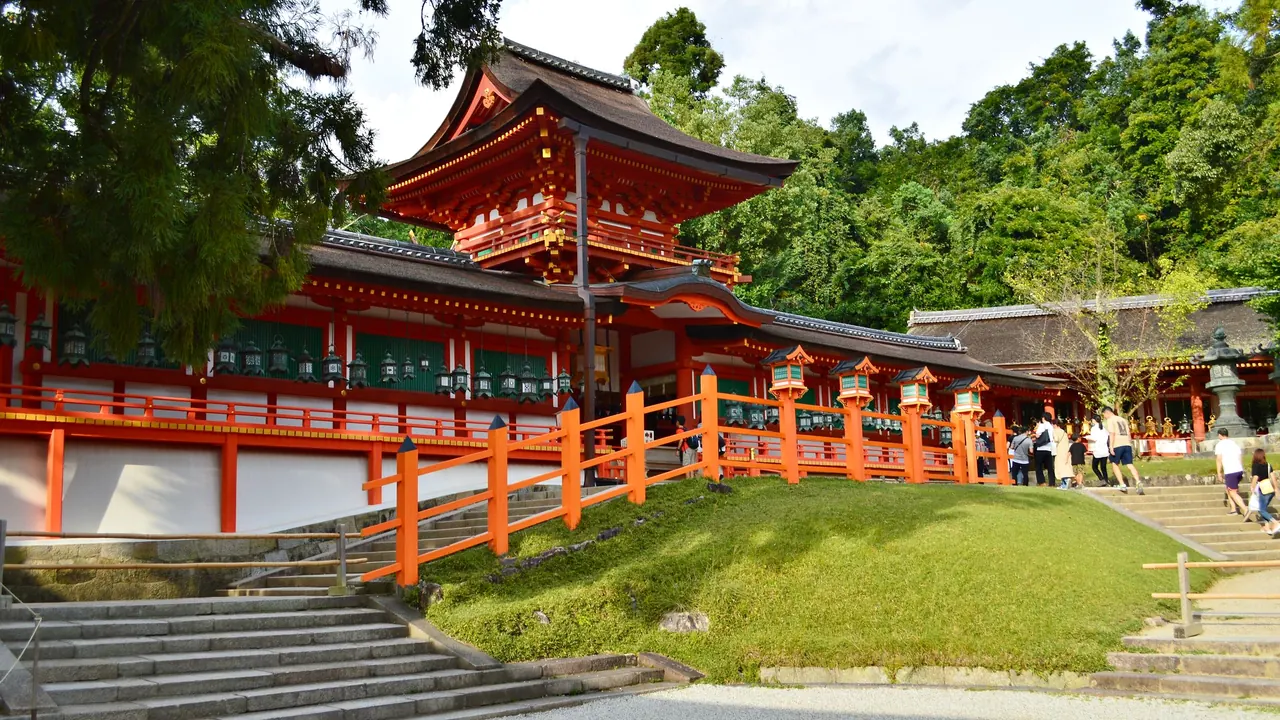
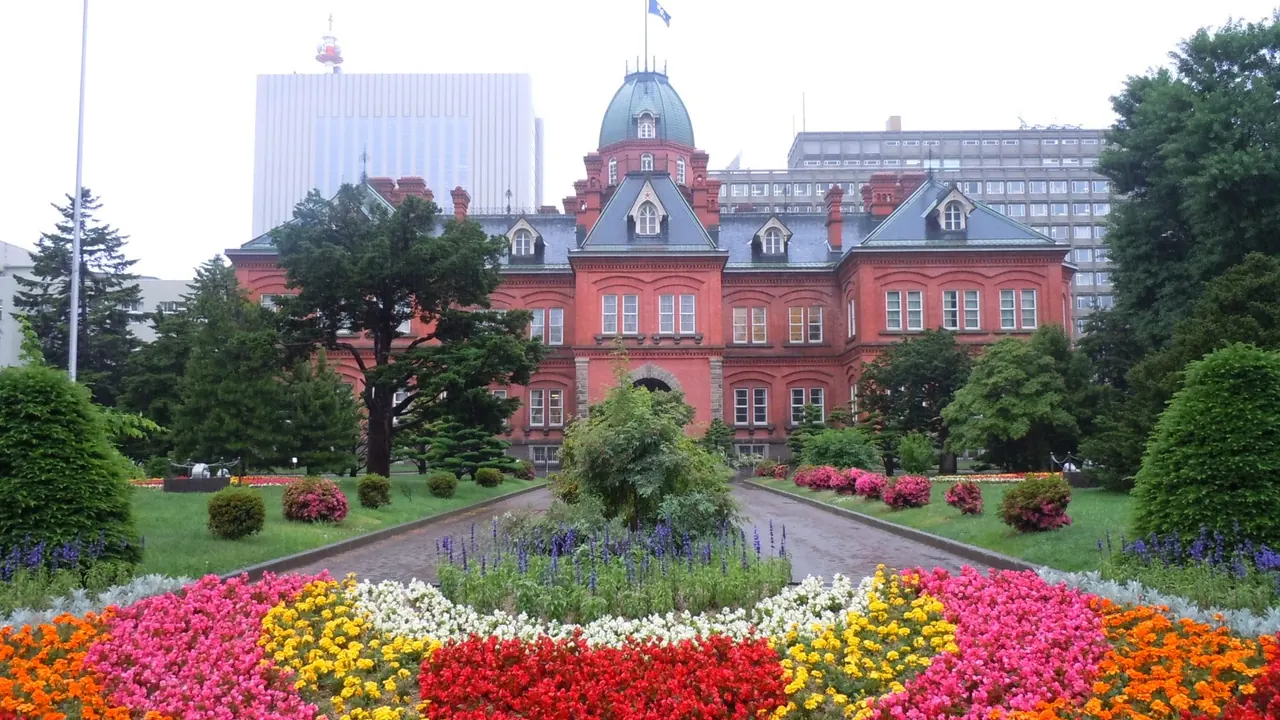
Photos: Nara by Saigen Jiro, CC0; Sapporo by Feri88, CC BY 3.0, cropped.
Nara or Sapporo?
Our verdict in twelve categories, each scored against the same fixed benchmark cities, and the climate month by month, so you can choose for your trip.
Choose Nara for
- culture and sights
- day trips
Nara suits travellers who come for Japan's early history. The Great Buddha at Todai-ji, the lantern paths to Kasuga Taisha and the Tang-era temples to the west are all a walk or a short ride apart. It is also a calm base for the wider region, with Kyoto, Osaka and Horyu-ji close by train, as long as you can live with quiet evenings and a narrow local menu.
Choose Sapporo for
- nightlife
- food and drink
- wellness
Pick Sapporo if the trip is about eating, landscape and hot water rather than temples. Miso ramen, morning seafood bowls at Nijo Market and the bars of Susukino take care of the evenings. Ski slopes inside the city, Shikotsu-Toya National Park and the open-air baths of Jozankei fill the days. Families and winter travellers do especially well here, provided they pack properly warm clothes.
Scoreboard
Twelve categories on one fixed scale from 0 to 100. The shaded stretch is the gap between the two.
Your match
Pick a travel style or drag the sliders, and both match scores follow your weighting.
Wins on culture and sights and day trips with your weighting.
Wins on nightlife and food and drink with your weighting.
What matters to you?
Category by category
What the scores mean for a trip.
Beaches & swimming
Neither city is a beach destination, but Sapporo at least has the sea within reach. Ishikari and the shore near Otaru are under an hour away, with wide sand and water warm enough to swim for a few weeks in high summer.
From Nara the nearest beaches are on the industrial Osaka Bay shore, more than an hour away. The good sand of the Kii Peninsula takes most of a day to reach, so in practice a summer swim means a pool.
Food & drink
Nara's food is limited but distinctive: persimmon-leaf sushi, narazuke pickles, Miwa somen and local sake tasted around Naramachi. Many kitchens close early, though, and a serious meal often means a train to Osaka or Kyoto.
Sapporo is worth a trip for the food alone. Miso ramen, soup curry and jingisukan grilled at the table are all home-grown, and the morning seafood bowls at Nijo Market come heaped with sea urchin and crab. The brewery beer halls and Susukino's counters carry on into the evening. The range is mostly Japanese, but within that it is deep.
Culture & sights
Culture is Nara's great strength. As Japan's eighth-century capital it keeps Todai-ji and the Great Buddha, Kofuku-ji's pagoda, the lantern-lined paths of Kasuga Taisha and the calm halls of Toshodai-ji and Yakushiji, enough for two or three unhurried days.
Sapporo was laid out only in the 1870s, so its sights are Meiji pioneer buildings such as the Clock Tower and the red-brick former government building, along with the Ainu collections at the Hokkaido Museum. Isamu Noguchi's Moerenuma Park is the most original thing in the city, and the whole set takes about two days.
Nightlife
After dark the two cities part company. Nara empties once the day visitors leave, and an evening out means an izakaya near Kintetsu Nara station or a sake counter. Osaka's bars are under an hour away, but the last train back sets the limit.
Sapporo has Susukino, a district of neon towers stacked with tiny bars, karaoke boxes and late ramen counters that stays busy past midnight even in winter. It is made for bar-hopping rather than clubbing, and the side streets are a better place to start than the corners where touts work.
Nature & outdoors
Nara's green space is gentle and close at hand. Deer roam the lawns of Nara Park, the Kasugayama forest has been protected for more than a thousand years, Mount Wakakusa is an easy climb, and the Yamanobe-no-michi runs past orchards and rice fields, with Yoshino's blossom hills further out.
Sapporo's outdoors works on a bigger scale. Teine and Kokusai have ski slopes inside the city, and Niseko's powder is about two hours away. In summer, Shikotsu-Toya National Park offers a caldera lake, volcanoes and steaming fumaroles, with the flower fields of Furano and Biei beyond.
Day trips
Nara has by far the richer choice. Kyoto and Osaka are each under an hour by train, and the ancient wooden buildings of Horyu-ji are a short ride. Asuka, the Byodo-in at Uji and the mountain temples of Hase-dera and Muro-ji add history in every direction.
Sapporo's outings are good but fewer: canal-side Otaru with the Yoichi distillery nearby, Upopoy's Ainu museum at Shiraoi and the volcanic springs of Noboribetsu. Beyond those, most trips lead to lakes and mountains rather than towns.
Good for families
Children remember feeding Nara's bowing deer and squeezing through the hole in the Todai-ji pillar. Beyond that the city has no zoo, aquarium or theme park, and the summer heat makes temple walks tiring, so one or two days usually covers it.
Sapporo has enough to plan a whole trip around: the slides and sculptures of the Snow Festival, beginner ski slopes within the city, polar bears at Maruyama Zoo and the playground hills of Moerenuma Park in summer. The underground walkway helps with small children in bad weather, though January calls for proper winter gear.
Getting around
Both are easy to get around, in different ways. Nara is a walking city: the main temples, the museum and Naramachi are all close to Kintetsu Nara station. Local trains, buses or a rental bicycle on the flat basin reach the western temples, though buses fill up in blossom season.
Sapporo is larger and relies on three subway lines and a streetcar loop, laid over a numbered grid that makes addresses easy to read. Its underground walkway keeps you off icy pavements in midwinter, when good footwear matters.
Shopping & style
Shopping in Nara is mostly crafts. Naramachi sells sumi ink, calligraphy brushes, Nara-zarashi linen, Akahada pottery and carved Ittobori dolls, and the covered arcades add sweet shops and deer souvenirs. There is little fashion.
Sapporo has more range: department stores and fashion malls above the station, the long Tanukikoji arcade, and food halls full of Hokkaido chocolate, cheese and butter biscuits. Neither rivals Japan's largest cities, but Sapporo covers everyday shopping much better.
Affordability
Costs come out much the same, with comfortable business hotels and cheap noodle lunches in both. What differs is where the money goes.
In Nara the free park and modest temple fees keep sightseeing cheap, but rail fares mount up if you use the city as a base for day trips. In Sapporo it is crab and sea-urchin dinners, ski passes and the Snow Festival, when central rooms become scarce, that push the budget up.
Live music & performing arts
Nara's performances are rooted in ritual: gagaku and bugaku at Kasuga Taisha, the winter On-matsuri and the Omizutori fire rites at Todai-ji in early spring. Outside those occasions there is little to see on stage.
Sapporo has a regular programme, led by the Sapporo Symphony Orchestra at Kitara hall and the Pacific Music Festival each July. Touring opera and musicals, jazz bars in Susukino and the Yosakoi Soran dance teams in June fill out the year.
Wellness & relaxation
In Nara, rest comes from the quiet itself: early walks in the park before the crowds, tea beside a temple garden and a hushed old town in the evening. There are bathhouses and a few bathing complexes, but no hot springs.
Sapporo has proper onsen within easy reach. Jozankei's open-air baths in a forested gorge are inside the city limits, and Noboribetsu, one of Japan's best-known spa towns, makes an easy overnight stay. Soaking outdoors while the snow falls is a reason in itself to come in winter.
When should you go?
Pick your month. The climate figures are measured averages, not a forecast.
Nara in July
Sapporo in July
Daytime high, °C
Rainfall in the month, mm
Where the figures come from
Nara's sunshine is measured 26 km from the centre, at Osaka.
Temperature and rainfall are climate normals, averaged over the years shown. Nara: 1971-2000 (sunshine 1991-2020, rainfall 1991-2020) normals, Nara (2.6 km from centre). Sapporo: 1991-2020 normals, Sapporo (2.2 km from centre).
Nara is at its best in spring and autumn, from April to May and again in October and November, when the days are mild enough for long temple walks. The rainy season peaks in July at about 200mm. High summer is hot and sticky, with highs near 32°C that make the park hard going by midday. Winter is cool but fairly dry and bright, fine for sightseeing in a coat.
Sapporo runs on a different calendar. From December to March, daytime highs hover around 0°C with steady snow and short, dull days, which is exactly what skiers and Snow Festival visitors come for. Summer is mild by contrast, with highs around 26°C in August, when Nara is at its most oppressive, and the Sea of Japan briefly reaches about 22°C for a swim. Late summer into autumn is the wettest stretch, though the October leaves make it worth the rain.
Which traveller are you?
On a culture and arts trip, Nara is the clear choice. Todai-ji, Kofuku-ji, Kasuga Taisha and the Buddhist sculpture of the National Museum sit within a short walk of each other. Sapporo's Meiji-era landmarks fill two days at most.
For a food and nightlife trip, Sapporo wins easily. Miso ramen, soup curry, jingisukan and market seafood are all local, and Susukino's stacked bars stay busy past midnight. Nara's kitchens close early and its streets empty after dark.
On a relaxing and wellness trip, Sapporo has the hot springs that Nara lacks. Jozankei's open-air baths are inside the city limits, and Noboribetsu is an easy outing. Nara offers calm mornings in the park and tea houses, but bathing there means neighbourhood bathhouses.
Before you go
| Measure | Nara | Sapporo |
|---|---|---|
| Official language | Japanese | Japanese |
| Currency | Yen (JPY) | Yen (JPY) |
| Sockets | AB100 V, 50 and 60 Hz depending on the region | AB100 V, 50 and 60 Hz depending on the region |
| Driving side | Left | Left |
| Time zone | UTC+9 | UTC+9 |
| Emergency number | Police 110, fire 119 | Police 110, fire 119 |
| Elevation | 70 m | 5 m |
| Main airport | Kansai International Airport (KIX)59 km from centre62 non-stop destinations | New Chitose Airport (CTS)42 km from centre42 non-stop destinations |
| Public holidays this year | 16 days | 16 days |
By the numbers
| Measure | Nara | Sapporo |
|---|---|---|
| City population | 352,377 | 1,959,313 |
| People per km² | 1,273 | 1,747 |
| Museums within 10 km | 31 | 33 |
| UNESCO World Heritage sites within 50 km | 6 | 1 |
| Swim season, months above 21 °C | 5 months | 1 month |
Where else could you go?
Every comparison below shares a destination with this one, so you can follow Nara or Sapporo somewhere new.