Photos: Nikko by lumoplank, CC0; Osaka by Sarmat Batagov, Pexels License.
Nikko or Osaka?
Our verdict in twelve categories, each scored against the same fixed benchmark cities, and the climate month by month, so you can choose for your trip.
Choose Nikko for
- nature and the outdoors
- wellness
- culture and sights
Nikko suits travellers who want Japan at a slower pace: a forest of giant cedars around the UNESCO-listed shrines, waterfalls and highland lakes in the national park above, and evenings in an onsen inn rather than out in town. It works best as a stay of two or three days, ideally with a hike, a long soak and a ryokan dinner, and it asks you to accept quiet nights and a short list of places to eat.
Choose Osaka for
- nightlife
- shopping
- food and drink
Anyone who wants energy, food and easy movement should pick Osaka instead. It is one of the great eating cities of Japan, with sociable bars, a fast metro and a theme park and aquarium for children, and Kyoto, Nara, Himeji and Kobe are all within easy train range. It makes a better base for a week or more, though its own heritage is patchier and its countryside is gentler than Nikko's mountains.
Scoreboard
Twelve categories on one fixed scale from 0 to 100. The shaded stretch is the gap between the two.
Your match
Pick a travel style or drag the sliders, and both match scores follow your weighting.
Wins on nature and the outdoors and wellness with your weighting.
Wins on nightlife and shopping with your weighting.
What matters to you?
Category by category
What the scores mean for a trip.
Beaches & swimming
Neither is a beach destination, but Osaka at least offers a summer swim. Suma and the beaches towards Wakayama are about an hour away by train and warm enough in July and August, even if the sand is coarse and the setting suburban.
Nikko is far inland, and its highland lakes are for boating and fishing, not bathing. Here, cooling off in summer means a hot spring or a hotel pool.
Food & drink
Osaka is the far stronger food city, and eating is half the reason to go. Street griddles of takoyaki in Dotonbori, okonomiyaki cooked at the table, kushikatsu counters and snacks at Kuromon Market run alongside Umeda's basement food halls and the refined kaiseki and sushi counters of Kitashinchi.
Nikko has a handful of distinctive dishes, above all fresh yuba from the temple cooking tradition, plus mountain soba and grilled river fish. Lunch spots line the shrine road and thin out by evening, so the memorable meal is usually the multi-course dinner at your ryokan.
Culture & sights
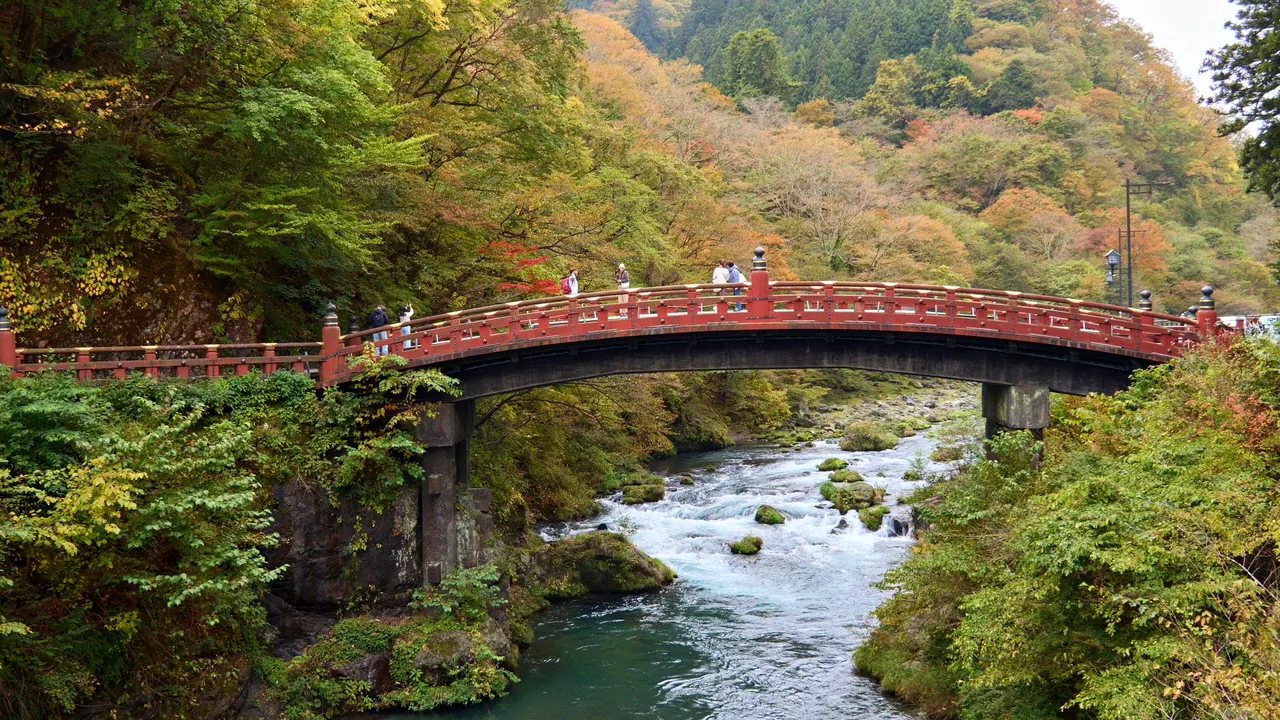
Nikko has the more concentrated heritage. Toshogu, Rinnoji, Futarasan and Taiyuinbyo form one ensemble under ancient cedars, and the gold and lacquer of the Yomeimon gate make it the most richly decorated shrine complex in Japan, with the Kanmangafuchi Jizo statues and the Shinkyo bridge close by.
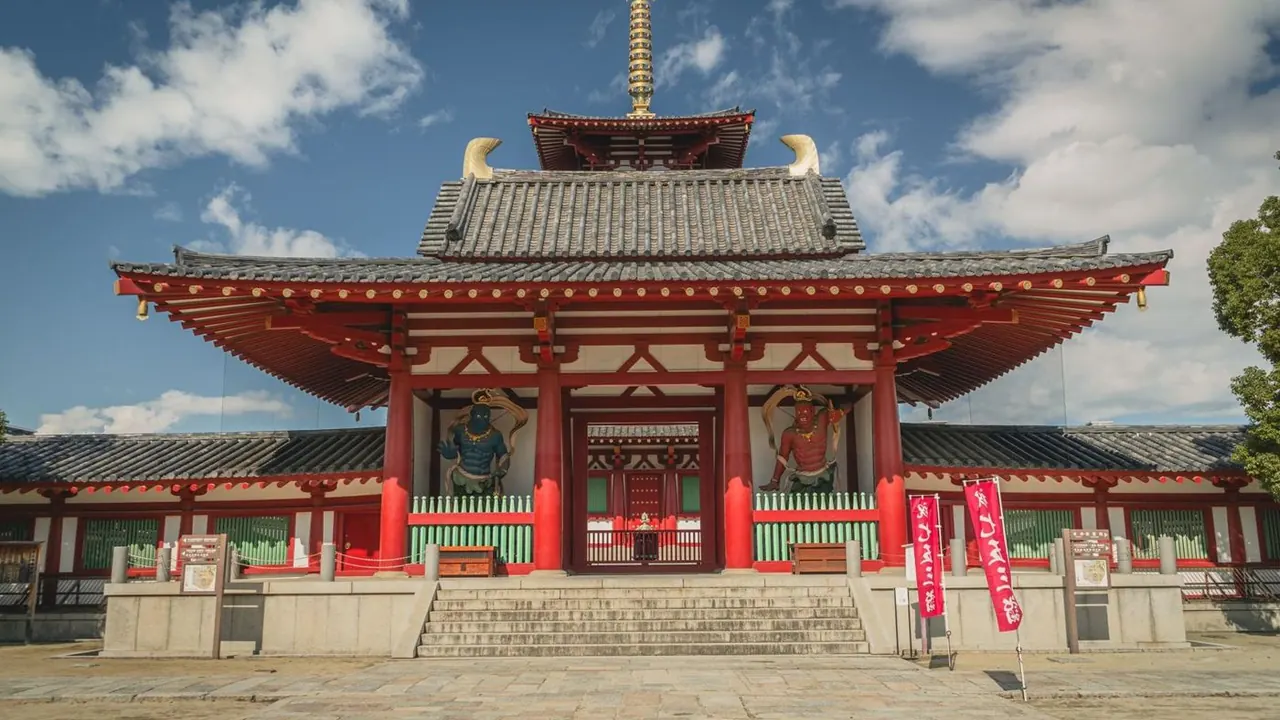
Osaka's history comes in separate pieces: the reconstructed castle on its original walls, Shitennoji and Sumiyoshi Taisha. In exchange it has proper museums, such as the Museum of Oriental Ceramics and the Nakanoshima galleries, and a modern streetscape in Shinsekai and Dotonbori that Nikko lacks entirely.
Nightlife
This is the widest gap between them. Osaka is famous across Japan for its friendly, noisy evenings: standing bars in Ura-Namba, DJ bars and small clubs in Amerikamura, tiny bars around Ohatsutenjin and whisky lounges in Kitashinchi, with people talking across the counter and staying out until the first train.
In Nikko the day visitors have gone by late afternoon and the main street goes dark early. An evening there means dinner at the inn and a hot bath, with a hotel lounge in Kinugawa at most.
Nature & outdoors
Nikko is the place for landscape. The Irohazaka hairpins climb to Lake Chuzenji under Mount Nantai, Kegon Falls drops from the lake, and the Senjogahara marsh leads to Ryuzu and Yudaki falls, with autumn colour spreading down the mountains over several weeks and snow in winter.
Osaka itself is flat concrete, but the train reaches greener places within an hour: the waterfall trail at Minoo, ridge walks in the Rokko mountains above Kobe and wooded paths on Mount Ikoma. Those are good half-day outings, not an outdoor vacation.
Day trips
Osaka is one of the best bases in the country. Kyoto takes under half an hour, Nara with its deer and great Buddha about forty minutes, and Himeji Castle and Kobe are both quick runs, with Koyasan's monasteries and Uji's tea houses further out.
Nikko's main outing is Tokyo, a long day at about two hours each way, plus Utsunomiya's gyoza, the pottery town of Mashiko and the thatched post town of Ouchi-juku. Beyond these the options are mostly mountains and lakes.
Good for families
For a family, Nikko works best as a short stay of two or three days. Older children enjoy the boats on Lake Chuzenji, the waterfalls and the Senjogahara boardwalks, and the Kinugawa side adds ninja and samurai shows and a park of miniature world landmarks. The long shrine staircases, gravel paths and bus rides between sights are hard going with toddlers, though.
With Universal Studios Japan on the bay, whale sharks at Kaiyukan, Tennoji Zoo, Kids Plaza and the Expo '70 Commemorative Park, Osaka can keep children busy for a week, which makes it the far stronger family choice. Stations and department stores have lifts and baby rooms, and spring and autumn avoid the sticky summer heat.
Getting around
Bus timetables shape a visit to Nikko. From the two stations to the shrines is about 2km of gentle uphill walking or a short bus ride. Lake Chuzenji, Kegon Falls and Senjogahara all depend on buses up the Irohazaka road, which can crawl for hours on autumn foliage weekends, so this small area takes longer to cover than you would expect.
Getting around is far quicker in Osaka, where one IC card and a few lines do most of the work. The Midosuji subway runs north to south through Umeda, Namba and Tennoji, the JR loop fills in the rest, and the same card works on trains to Kyoto, Nara and Kobe. The flat streets suit cycling, and the only real headache is changing lines inside the underground maze of Umeda.
Shopping & style
Osaka is a proper shopping city. It has the covered Shinsaibashi-suji arcade, generations-old department stores in Umeda, flagships along Midosuji, vintage shops in Amerikamura, electronics and anime in Den Den Town and kitchen knives on Doguyasuji.
Nikko has a single street of souvenir and food shops. Its worthwhile buys are Nikko-bori wood carving, straw-soled Nikko geta and packaged yuba, while anything in fashion or design will have to wait for Tokyo.
Affordability
Day to day, the two cost about the same, but the spending goes in different places. In Nikko, meals, buses and shrine entry are modest and there are plain guesthouses, but the classic ryokan stay with dinner and breakfast, especially at the lake or in foliage season, takes most of the budget.
In Osaka, cheap street food and izakaya keep eating costs down and many temples and parks are free. Here the larger costs are rooms at weekends and in blossom season, plus big tickets such as the theme park. Compact business hotels outside Namba and Umeda help keep it reasonable.
Live music & performing arts
Osaka has a real stage life. The National Bunraku Theatre puts on full puppet-theatre seasons with English guides, Festival Hall and Symphony Hall host orchestras, manzai comedy fills the Namba theatres, and the Takarazuka Revue's home stage is a short train ride away.
Nikko has no theatre or concert life. What it has instead is the Toshogu festival in spring and autumn, when about a thousand men in samurai armour re-enact the shogun's funeral procession, with horseback archery. It is well worth timing a visit around.
Wellness & relaxation
Nikko is built for slowing down. Kinugawa's riverside inns, the milky sulphur springs of Yumoto by Lake Yunoko and open-air baths looking out on forest make the daily soak the centre of a stay, and weekdays and winter are deeply quiet.
Osaka treats bathing as an everyday habit, with neighbourhood sento and large super sento for a long evening in the pools, and Arima Onsen is about an hour away. The city around them, though, stays fast and loud, so calm comes in short moments rather than whole days.
When should you go?
Pick your month. The climate figures are measured averages, not a forecast.
Nikko in July
Osaka in July
Daytime high, °C
Rainfall in the month, mm
Where the figures come from
Nikko has no weather station within reach, so its figures come from a gridded climate model rather than a measured record, and read a broad area rather than the city itself.
Temperature and rainfall are climate normals, averaged over the years shown. Nikko: 2001-2020 normals, NASA POWER reanalysis grid, no weather station within 90 km. Osaka: 1991-2020 normals, Osaka (1.8 km from centre).
Nikko sits high in the mountains and has proper seasons. Winter is cold, with daytime highs around 3°C in January, snow on the outdoor baths and frozen waterfalls, which suits a quiet onsen stay more than long days of sightseeing. Spring and late autumn are the most comfortable for walking, and summer stays mild by Japanese standards, although it is also the wettest stretch, with July bringing about 202mm and September and October not much drier.
Osaka is warmer all year and much hotter in summer. August reaches around 34°C, sticky enough to make street walking and hiking hard work, though the sea warms to about 27°C and that is also the sunniest month, the only real window for its few beaches. The rainy season peaks in June at about 185mm. Spring and autumn are the best months in both places, and winter is mild enough in Osaka for comfortable city days while Nikko is snowbound.
Which traveller are you?
On an outdoors trip, Nikko is the clear choice. The national park climbs straight from town to Lake Chuzenji, Kegon Falls and the Senjogahara boardwalks, with real climbs on Nantai and rafting in the Kinugawa gorge. Around Osaka you get pleasant day hikes, not mountain country.
For a food and nightlife trip, Osaka has no rival here. Takoyaki stalls, okonomiyaki, Kuromon Market and izakaya alleys in Ura-Namba and Tenma fill the evenings, and the bars keep going until the first train. Nikko's restaurants close early and its streets go dark.
On a relaxing and wellness trip, Nikko suits better. Kinugawa Onsen and the remote, sulphurous baths of Yumoto lie close by, and the days settle into shrine walks, an afternoon soak and an early night. Osaka has fine sento, but the city itself rarely slows down.
Before you go
| Measure | Nikko | Osaka |
|---|---|---|
| Official language | Japanese | Japanese |
| Currency | Yen (JPY) | Yen (JPY) |
| Sockets | AB100 V, 50 and 60 Hz depending on the region | AB100 V, 50 and 60 Hz depending on the region |
| Driving side | Left | Left |
| Time zone | UTC+9 | UTC+9 |
| Emergency number | Police 110, fire 119 | Police 110, fire 119 |
| Elevation | 660 m | 20 m |
| Main airport | Tokyo Haneda International Airport (HND)134 km from centre98 non-stop destinations | Kansai International Airport (KIX)38 km from centre62 non-stop destinations |
| Public holidays this year | 16 days | 16 days |
By the numbers
| Measure | Nikko | Osaka |
|---|---|---|
| City population | 77,027 | 2,751,862 |
| People per km² | 53 | 12,340 |
| Museums within 10 km | 5 | 44 |
| UNESCO World Heritage sites within 50 km | 1 | 6 |
| Swim season, months above 21 °C | - | 5 months |
Where else could you go?
Every comparison below shares a destination with this one, so you can follow Nikko or Osaka somewhere new.