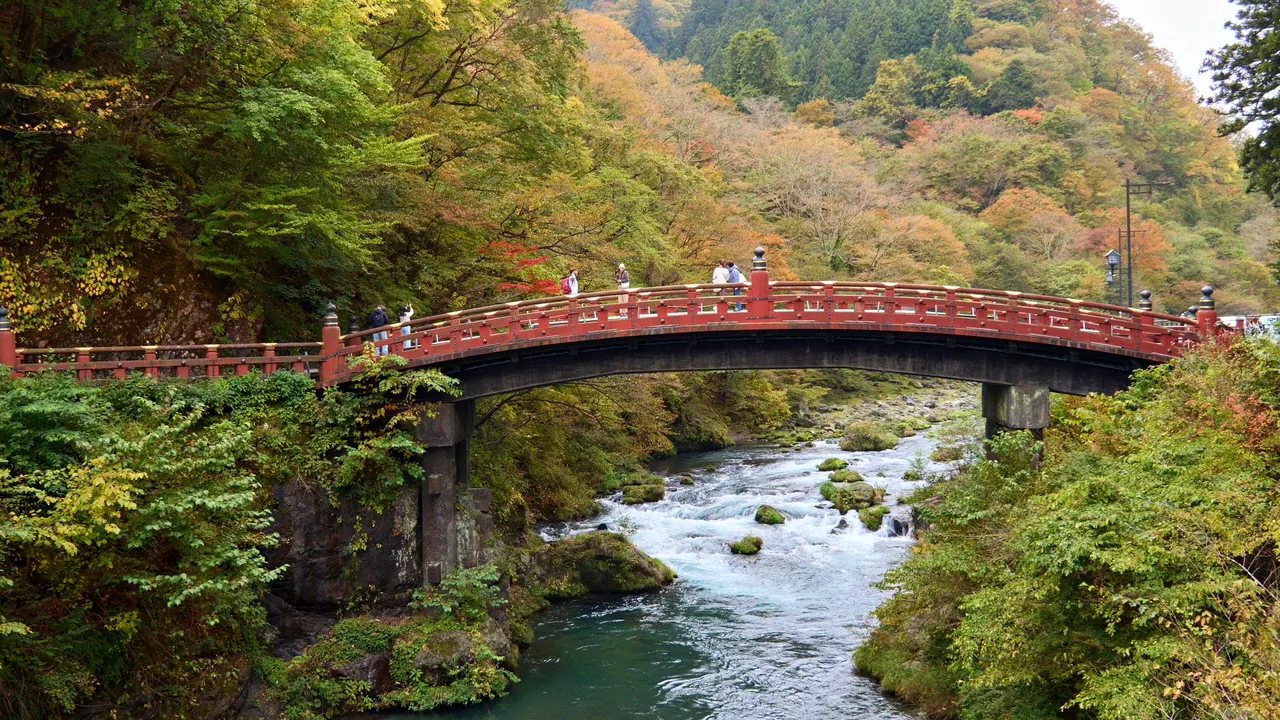
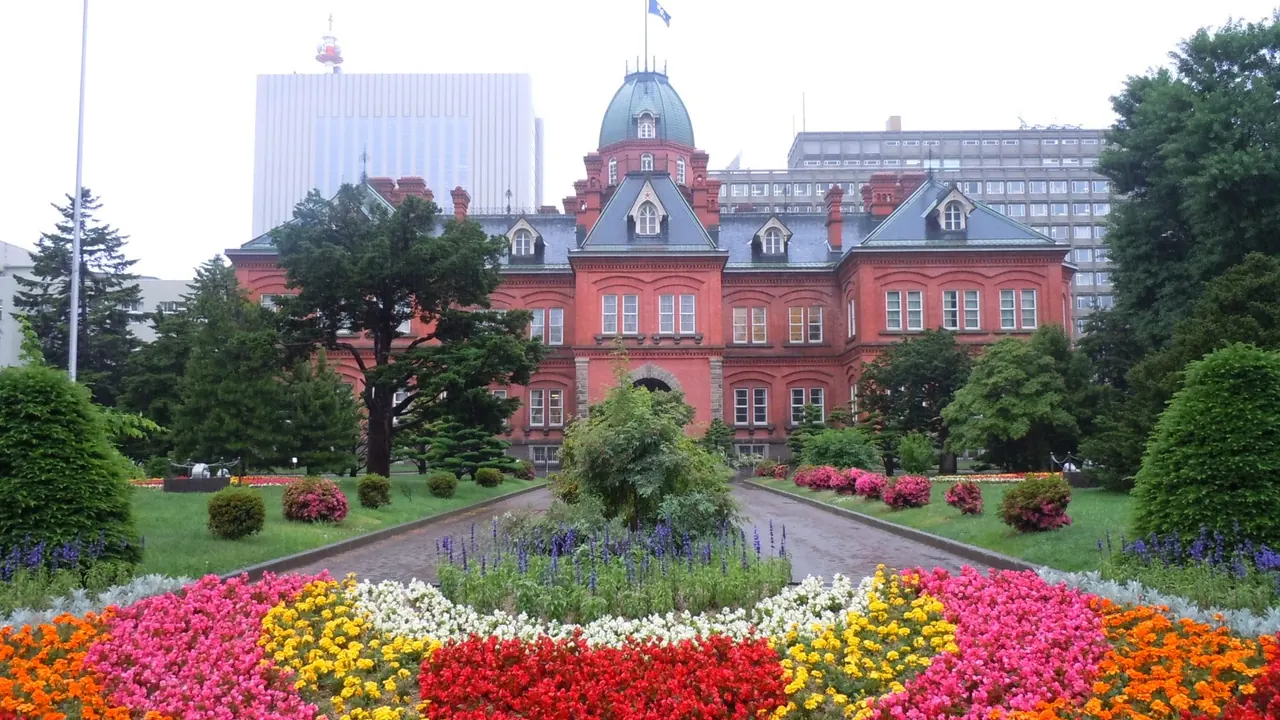
Photos: Nikko by lumoplank, CC0; Sapporo by Feri88, CC BY 3.0, cropped.
Nikko or Sapporo?
Our verdict in twelve categories, each scored against the same fixed benchmark cities, and the climate month by month, so you can choose for your trip.
Choose Nikko for
- culture and sights
- wellness
Nikko suits a traveller who wants two or three days among Japan's most ornate shrines followed by the mountains: the gilded Toshogu under the cedars, Kegon Falls and the boardwalks of Senjogahara, and evenings that end in an onsen inn with a long dinner. It is a quiet place, best taken slowly. If you want restaurants, bars or shops after dark, you will find almost none.
Choose Sapporo for
- nightlife
- food and drink
- shopping
Choose Sapporo for a city stay where eating and going out matter as much as the scenery. Miso ramen, morning seafood bowls at Nijo Market and a night of bar-hopping in Susukino sit alongside ski slopes inside the city limits and hot springs at Jozankei. The subway and underground walkway also make it far easier with children or in snow. What it lacks is old heritage, because its sights date from the Meiji pioneers.
Scoreboard
Twelve categories on one fixed scale from 0 to 100. The shaded stretch is the gap between the two.
Your match
Pick a travel style or drag the sliders, and both match scores follow your weighting.
Wins on culture and sights and wellness with your weighting.
Wins on nightlife and food and drink with your weighting.
What matters to you?
Category by category
What the scores mean for a trip.
Beaches & swimming
Neither city is a beach destination. Nikko has no beach at all: its highland lakes are for boats and fishing, and cooling off in summer means an onsen or a hotel pool.
Sapporo at least has the Sea of Japan within an hour, with wide sand at Ishikari and around Otaru where families swim for a few weeks in high summer. That makes a pleasant afternoon out, not a reason to go.
Food & drink
This is one of the widest gaps between the two. Nikko's cooking is a short, gentle list rooted in temple tradition: yuba in its many forms, buckwheat soba and river fish. Most of it is served at lunch along the road to the shrines, and the ryokan dinner is the real meal of the evening.
People go to Sapporo just to eat. Miso ramen, soup curry and jingisukan grilled at the table are the city's own dishes, and the morning markets serve sea urchin and crab over rice. The brewery halls and Susukino's izakaya keep going long after Nikko's kitchens have closed.
Culture & sights
Here Nikko has the clear advantage. Toshogu and its neighbours Rinnoji, Futarasan and Taiyuinbyo form a UNESCO-listed group of lacquer, gold leaf and carving in a cedar forest, with the red Shinkyo bridge and the Jizo statues of Kanmangafuchi close by. Few places in Japan pack this much shogun-era splendour into so small an area.
Sapporo was laid out on a grid in the 1870s. It offers Meiji pioneer buildings, the Ainu collections of the Hokkaido Museum and Noguchi's Moerenuma Park. These are pleasant and fill a day or two, but they are rarely the reason for the journey.
Nightlife
Nikko goes dark by early evening, and the night belongs to a ryokan dinner and a soak. Sapporo has Susukino, a neon-lit block of towers full of tiny counter bars, izakaya and karaoke boxes that stays busy past midnight even in winter. It is made for bar-hopping rather than clubbing, and the side streets are a better place to start than the main corners where touts work.
Nature & outdoors
Both are superb for the outdoors, but in different ways. Nikko's landscape is volcanic highland and waterfalls: the hairpin climb to Lake Chuzenji, Kegon Falls, the Senjogahara boardwalks and the peaks of Nantai. It is at its finest when the autumn colour comes down from the marsh to the town.
Sapporo is the stronger choice in winter, with deep, reliable powder at Teine and Kokusai inside the city and Niseko within reach. In summer, hikers and canoeists head for the caldera lake in Shikotsu-Toya and the flower fields of Furano and Biei.
Day trips
The two offer about the same range of outings, but of different kinds. From Nikko the big trip is Tokyo, about two hours away. Smaller options are gyoza in Utsunomiya, the kilns of Mashiko and the thatched post town of Ouchi-juku.
Sapporo's day trips stay within Hokkaido: the canal and glass workshops of Otaru, the Yoichi whisky distillery, Ainu culture at Upopoy and the smoking volcanic valley above Noboribetsu.
Good for families
Nikko is calm and safe for children, but what they enjoy is scattered. The costume-show village and the park of world landmarks in miniature are down at Kinugawa, while the lake boats and waterfalls are high up the mountain, with the shrines in between. A family ends up spending much of each day getting from one area to the next. A cruise beneath Mount Nantai or the flat walk across the marsh will hold older children's attention far longer than gilded carvings, and a few days covers all of it.
Sapporo keeps everything in one place that is easy to manage over a longer stay. Its large parks work as playgrounds, from the fountains and grassy mounds of Noguchi's Moerenuma to the open lawns of Takino, and the zoo at Asahikawa is an easy rail outing for a full day. The one real catch is midwinter, when small children need proper cold-weather gear before going out at all.
Getting around
Nikko is one long road from the stations up to the shrines, which is easy to walk. Everything beyond depends on buses up the Irohazaka road, and these can stall for hours on autumn weekends.
Sapporo is much simpler. Its numbered grid, three subway lines and streetcar loop cover most of what a visitor needs, and in winter the underground walkway takes you from the station to Susukino without setting foot on the ice.
Shopping & style
Nikko's shopping is a single souvenir street, where the things worth taking home are carved Nikko-bori trays, straw-soled geta and packaged yuba and yokan. Sapporo offers far more: department stores above the station, the long covered Tanukikoji arcade, and basement food halls stocked with Hokkaido chocolate, cheese and dried seafood. For luxury or independent fashion, though, you still need one of Japan's largest cities.
Affordability
Day-to-day costs are similar in both, and simple noodle meals and local transport are easy on the budget. The big expenses differ. In Nikko it is the classic ryokan stay with dinner, especially in foliage season. In Sapporo it is crab dinners, ski passes and the scarce hotel rooms during the Snow Festival.
Live music & performing arts
Nikko has no theatre or concert life. The event to plan around is the Toshogu festival in spring and autumn, when about a thousand men in samurai armour re-enact the shogun's funeral procession, with horseback archery. Sapporo has a modest regional programme led by the Sapporo Symphony Orchestra at Kitara hall and the Pacific Music Festival each July, plus jazz bars in Susukino and the Yosakoi Soran dance teams in June.
Wellness & relaxation
Both are fine places to soak, and Nikko has a slight edge because hot springs run through the whole stay. There are the big riverside inns of Kinugawa, the milky sulphur water of remote Yumoto on Lake Yunoko, and a slow daily pattern of shrine walks, soaks and early nights.
Sapporo's onsen take a little more effort, with Jozankei about an hour away by bus and Noboribetsu further still. The city itself is calm for its size, though, with public bathhouses and rooftop hotel baths in town.
When should you go?
Pick your month. The climate figures are measured averages, not a forecast.
Nikko in July
Sapporo in July
Daytime high, °C
Rainfall in the month, mm
Where the figures come from
Nikko has no weather station within reach, so its figures come from a gridded climate model rather than a measured record, and read a broad area rather than the city itself.
Temperature and rainfall are climate normals, averaged over the years shown. Nikko: 2001-2020 normals, NASA POWER reanalysis grid, no weather station within 90 km. Sapporo: 1991-2020 normals, Sapporo (2.2 km from centre).
Nikko is at its best in May and October. Both months are mild enough for walking the shrine paths, and in October the maples turn down the mountainside. Summer is warm and very wet, with July the rainiest month at around 202mm, and rain stays heavy into October. In winter the highs are only a few degrees and snow settles in the mountains, so the season suits snowy hot springs more than sightseeing.
Sapporo has the colder winter, with highs around 0°C in January and February and steady snow, which is just what skiers and Snow Festival visitors want. Late spring is its driest and sunniest stretch. Summer stays comfortable at about 26°C in August, without the downpours Nikko gets at that time. The sea only reaches about 22°C in August, which is the one real window for a swim.
Which traveller are you?
For a culture and arts trip, Nikko is the clear pick. Together, Toshogu's gilded carvings, the Buddhas of Rinnoji and the quieter Taiyuinbyo mausoleum make a heritage site that Sapporo's Meiji-era landmarks cannot match, although Sapporo does have the concert hall and orchestra.
On a food and nightlife trip, Sapporo wins easily. Miso ramen, crab, market seafood bowls and lamb grilled at the table fill the day. At night there are Susukino's stacked counter bars and late ramen, while Nikko goes quiet soon after dark.
On a family trip with children, Sapporo is easier to manage. The subway, the underground walkway, the Snow Festival slides, beginner ski slopes and Maruyama Zoo keep things simple. Nikko's shrine staircases and long bus rides suit a short stay with older children.
Before you go
| Measure | Nikko | Sapporo |
|---|---|---|
| Official language | Japanese | Japanese |
| Currency | Yen (JPY) | Yen (JPY) |
| Sockets | AB100 V, 50 and 60 Hz depending on the region | AB100 V, 50 and 60 Hz depending on the region |
| Driving side | Left | Left |
| Time zone | UTC+9 | UTC+9 |
| Emergency number | Police 110, fire 119 | Police 110, fire 119 |
| Elevation | 660 m | 5 m |
| Main airport | Tokyo Haneda International Airport (HND)134 km from centre98 non-stop destinations | New Chitose Airport (CTS)42 km from centre42 non-stop destinations |
| Public holidays this year | 16 days | 16 days |
By the numbers
| Measure | Nikko | Sapporo |
|---|---|---|
| City population | 77,027 | 1,959,313 |
| People per km² | 53 | 1,747 |
| Museums within 10 km | 5 | 33 |
| UNESCO World Heritage sites within 50 km | 1 | 1 |
| Swim season, months above 21 °C | - | 1 month |
Where else could you go?
Every comparison below shares a destination with this one, so you can follow Nikko or Sapporo somewhere new.