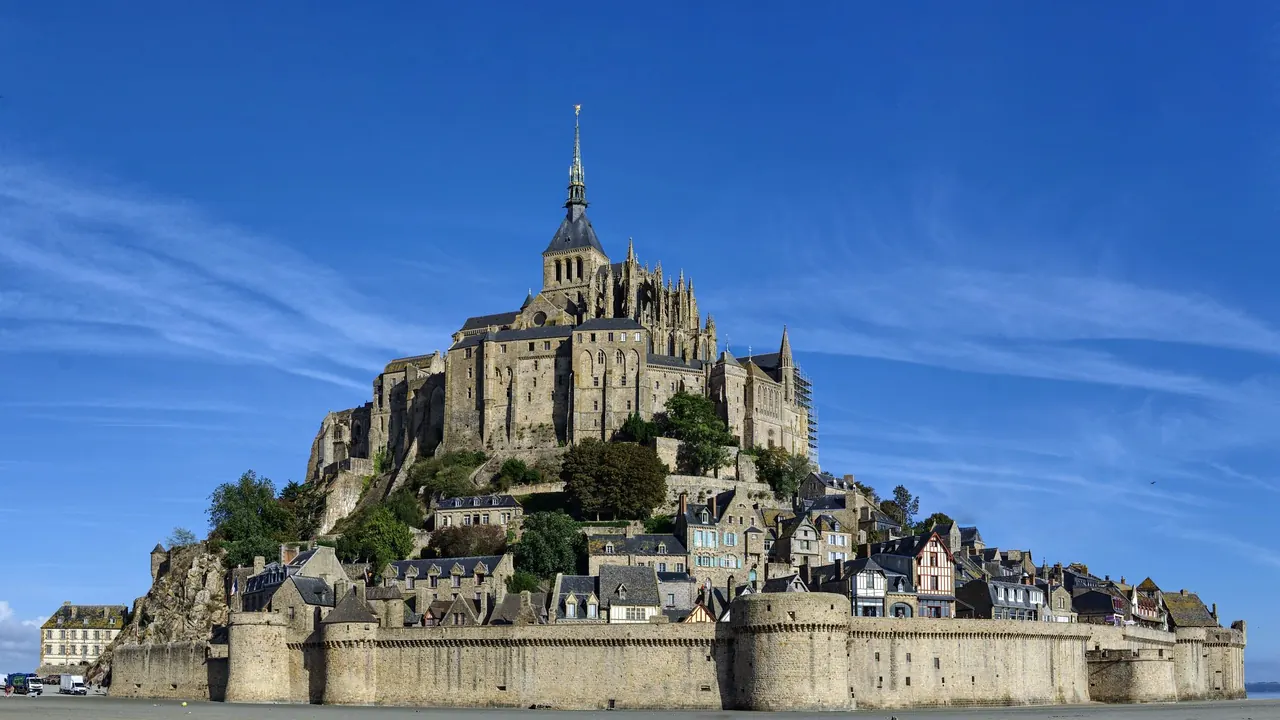
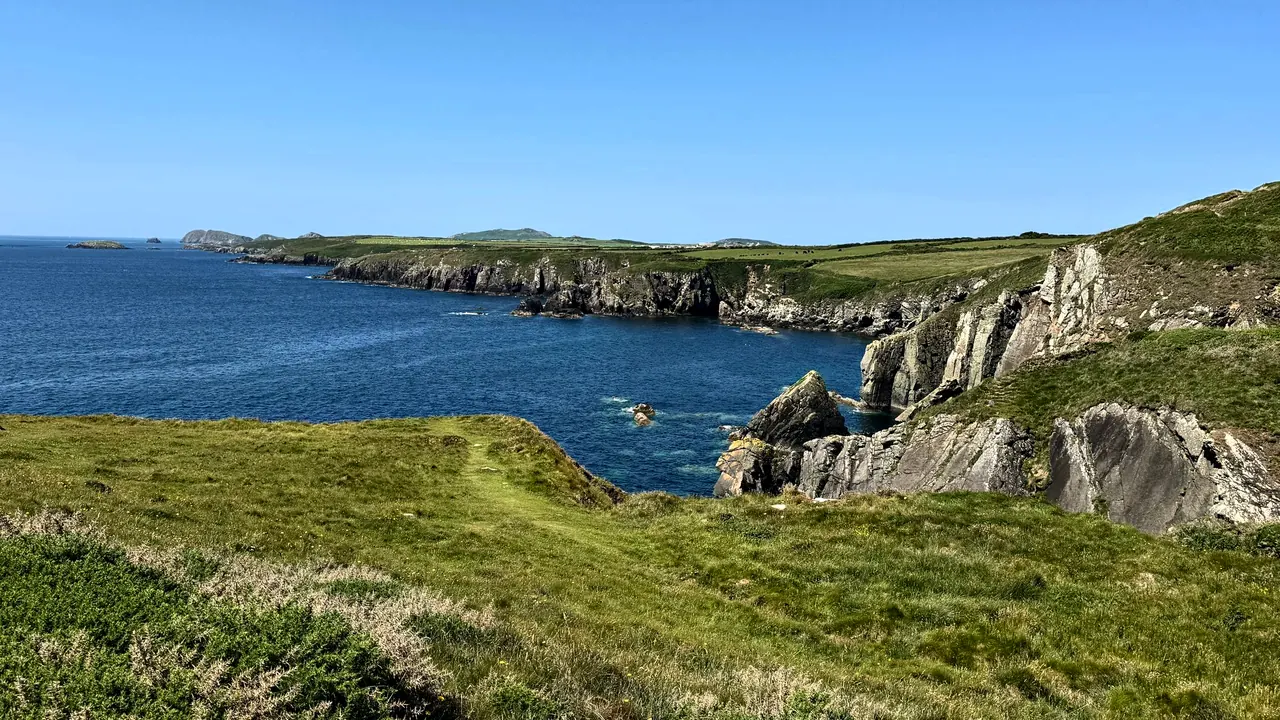
Photos: Normandy by Jan, Pexels License; Pembrokeshire by Petra Nesti, Pexels License.
Normandy or Pembrokeshire?
Our verdict in twelve categories, each scored against the same fixed benchmark cities, and the climate month by month, so you can choose for your trip.
Choose Normandy for
- food and drink
- day trips
- wellness
Normandy is the stronger choice for a trip built around history, food and touring. Mont-Saint-Michel, the D-Day beaches, the Bayeux Tapestry and Rouen's cathedral give it sights known around the world, and the cheese, cider and harbour seafood make lunch part of the point of each day. With a base in Bayeux or Caen and a car, it fills a week with varied outings. The coastal spas are there for slower days.
Choose Pembrokeshire for
- beaches
- nature and the outdoors
- families
Pick Pembrokeshire if you want to spend your days outside. The national park coast path, the puffins on Skomer, the seals off Ramsey and the surf at Freshwater West make its coast wilder and better for an active trip. Its sandy beaches, from Barafundle to Whitesands, are the main reason people come. It has no grand monuments, simpler food and quieter evenings, and the weather is cooler and wetter. For walkers, wildlife watchers and families who want to spend the day on the sand, it is still the better fit.
Scoreboard
Twelve categories on one fixed scale from 0 to 100. The shaded stretch is the gap between the two.
Your match
Pick a travel style or drag the sliders, and both match scores follow your weighting.
Wins on food and drink and day trips with your weighting.
Wins on beaches and nature and the outdoors with your weighting.
What matters to you?
Category by category
What the scores mean for a trip.
Beaches & swimming
Pembrokeshire is the better beach destination, and its beaches are the main reason people go. Barafundle, Whitesands, Newgale and the coves of Dale and Marloes offer outstanding sand in many different settings, with lifeguards in summer and enough choice to find a quiet beach even in August.
Normandy's best sand is on the Côte Fleurie, where Deauville and Cabourg have boardwalks and striped beach cabins. The Alabaster Coast is shingle under the cliffs, and the huge tides leave the sea far out at low water. Both coasts have cool water, so swims are short wherever you go.
Food & drink
Normandy eats far better. Its cheeses, cream, cider and calvados are known well beyond France, and buying from the farms along the Pays d'Auge cider route makes a good day out. Honfleur, Trouville and Granville serve oysters, scallops and mussels by the harbour, and Rouen has the more serious restaurants.
Pembrokeshire has excellent ingredients, such as crab and lobster, salt-marsh lamb and early potatoes, but few restaurants that do much with them. Outside Fishguard, St Davids and Narberth the menus repeat. It suits self-caterers with a farm shop nearby better than people who plan their trip around dinner.
Culture & sights
Normandy has some of Europe's best-known sights: Mont-Saint-Michel, the D-Day beaches and the Caen Memorial, the Bayeux Tapestry, and Rouen with its cathedral and half-timbered streets. Le Havre's rebuilt centre and Giverny add art and architecture, and together they can fill a long trip.
Pembrokeshire's heritage feels older and is smaller in scale. It has St Davids Cathedral beside the ruined Bishop's Palace, Pembroke Castle and its ring of Norman fortresses, and the Pentre Ifan burial chamber in the Preseli Hills. It is rewarding, but a few days cover it, and the museums are small and local.
Nightlife
Neither region is a place for a night out, though Normandy has a little more. Rouen and Caen are university cities, with bars and a few clubs around the cathedral and in the Vaugueux quarter, and Deauville adds a casino. Evenings in Pembrokeshire mean the pub: Tenby's harbour fills on summer weekends, and elsewhere it is a village inn with a quiz or a folk session.
Nature & outdoors
Pembrokeshire is the stronger choice outdoors. Almost its whole coast is national park, and the coast path runs some 300km past sea stacks and arches. The wildlife is the main draw: puffins on Skomer, seal pups on Ramsey, gannets on Grassholm and dolphins in the bays. Surfing, coasteering and sea kayaking make it a place for an active trip.
Normandy has some fine scenery: the chalk arches at Étretat, the granite headlands of La Hague and guided walks across the bay of Mont-Saint-Michel. Inland, though, it is gentle hedged farmland for cycling, and only the Suisse Normande offers anything rugged.
Day trips
Normandy gives you far more to reach from your base. From Caen or Bayeux you can go to Honfleur, the Côte Fleurie and the villages of the Pays d'Auge. Saint-Malo in Brittany lies to the west, and Paris is under two hours by train from Rouen.
Pembrokeshire's day trips are pleasant but small: a boat to the monks' island of Caldey, Aberaeron's harbour, and Laugharne with Dylan Thomas's boathouse. Gower and Swansea are about as far as a day out will take you.
Good for families
Both regions are calm and easy with children, with sand, rock pools and farm days, so the difference is in kind. Normandy has more to visit, including the walk-through submarine at Cité de la Mer, the Cerza safari zoo and the ramparts of Mont-Saint-Michel, but the drives between them are longer. Pembrokeshire is simpler and more compact, with crabbing off harbour walls, boat trips to see puffins and seals, and Tenby and Saundersfoot, which are walkable and have beaches in town.
Getting around
Both really need a car, but Normandy is easier without one. Trains reach Rouen, Caen, Bayeux, Le Havre, Cherbourg and Deauville, although the landing beaches and Mont-Saint-Michel need a tour. Distances are long enough that two bases work better than one.
Pembrokeshire is small and takes about an hour to cross. Many of its beaches, though, lie down narrow lanes, and their car parks fill early in summer. Branch railway lines reach only a few towns, but seasonal coastal buses make one-way walks on the coast path possible.
Shopping & style
Neither region is for a shopping trip, and in both the best buys come from the land. Normandy has the wider choice: calvados and cheese from the farms, lace from Alençon and Bayeux, copper from Villedieu-les-Poêles and Rouen faience, with Rouen's pedestrian streets and Deauville's boutiques for clothes. In Pembrokeshire the purchases worth taking home are Welsh blankets from the woollen mills, finds from Narberth's independent shops and local art from the galleries of St Davids.
Affordability
The two cost about the same, and both are most expensive in July and August. In Normandy you save with chambres d'hôtes, set lunches in market towns and the free D-Day sites, while Deauville, Honfleur and the area around Mont-Saint-Michel charge more.
In Pembrokeshire the pressure is on rooms during the British school summer break. Pubs and cafés stay moderately priced, and spring and early autumn are cheaper. In both regions, budget for a car.
Live music & performing arts
Normandy has more to see on stage. Rouen's Théâtre des Arts runs opera, ballet and an orchestral season, Caen and Le Havre have good modern venues, and Coutances holds the Jazz sous les Pommiers festival each spring.
Pembrokeshire's highlight is the classical music festival in St Davids Cathedral in early summer. Otherwise there are small theatres in Milford Haven and Fishguard showing touring productions, folk sessions in pubs and the occasional choir.
Wellness & relaxation
Normandy has a real spa culture. Thalassotherapy centres line the coast at Deauville, Cabourg and Granville, and inland there is the belle-époque spa town of Bagnoles-de-l'Orne. Pembrokeshire relaxes you with quiet lanes and sea views rather than treatments, and has only a few hotel spas and farmhouse retreats. Both are slow-paced away from the August peak.
When should you go?
Pick your month. The climate figures are measured averages, not a forecast.
Normandy in July
Pembrokeshire in July
Daytime high, °C
Rainfall in the month, mm
Where the figures come from
Pembrokeshire's temperatures are measured 46 km from the centre, at Aberporth.
Pembrokeshire has no rain gauge within 25 km of the centre, so its rainfall comes from a gridded climate dataset read at the destination rather than from a gauge further away.
Temperature and rainfall are climate normals, averaged over the years shown. Normandy: 1991-2020 normals, Caen (21 km from centre). Pembrokeshire: 1991-2020 normals, Aberporth (46.2 km from centre).
Normandy is the warmer of the two in summer. Its highs reach about 23°C in July and August, against 18°C in Pembrokeshire, and its sea peaks at 18°C in August and September, a degree above the Welsh coast. Neither sea is warm, so in both the beach months are July to early September, and swims are short. Normandy's rain is light and spread fairly evenly until October, when the wetter, darker half of the year begins. From May to September it is mild enough for long days of sightseeing on foot.
Pembrokeshire is wetter than Normandy in every month but May, and its sunniest month comes early. May gets the most sun, while August is its wettest summer month. Late spring and early summer are the best time for the coast path and the seabirds, and September comes second. From October to December the Pembrokeshire coast gets more than 100mm of rain a month. That makes winter a poor time for either region, and especially for Pembrokeshire.
Which traveller are you?
For a culture and arts trip, Normandy is the clear choice. Mont-Saint-Michel, the D-Day landing beaches, the Bayeux Tapestry, Rouen's cathedral and Monet's garden at Giverny outclass Pembrokeshire's castles and cathedral. Rouen and Caen add opera, theatre and a fine art museum.
On an outdoors trip, Pembrokeshire wins. Its coast path runs about 300km over cliffs and coves inside a national park, with puffins on Skomer, seals on Ramsey, surf and coasteering. Normandy's Étretat cliffs and the Suisse Normande are fine but gentler.
On a beach and sun trip, Pembrokeshire has the better sand, from Barafundle's dune-backed cove to the open sweep of Newgale, with lifeguards in summer. Normandy is warmer, but its beaches are usually fitted around the sightseeing, and in both the sea is cold.
Before you go
| Measure | Normandy | Pembrokeshire |
|---|---|---|
| Official language | French | English |
| Currency | Euro (EUR) | Pound Sterling (GBP) |
| Sockets | CE230 V, 50 Hz | G230 V, 50 Hz |
| Driving side | Right | Left |
| Time zone | UTC+1, UTC+2 in summer | UTC, UTC+1 in summer |
| Emergency number | 112 | 112 or 999 |
| Main airport | Caen Carpiquet airport (CFR)10 non-stop destinations | Cardiff International Airport (CWL)32 non-stop destinations |
| Public holidays this year | 11 days | 8 days |
By the numbers
| Measure | Normandy | Pembrokeshire |
|---|---|---|
| Population | - | 125,818 |
| People per km² | - | 78 |
| Swim season, months above 21 °C | None | None |
Where else could you go?
Every comparison below shares a destination with this one, so you can follow Normandy or Pembrokeshire somewhere new.
- Cornwallvs Pembrokeshire
- Isle of Wightvs Normandy
- Snowdoniavs Pembrokeshire
- Devonvs Pembrokeshire
- Jurassic Coastvs Pembrokeshire
- Jurassic Coastvs Normandy