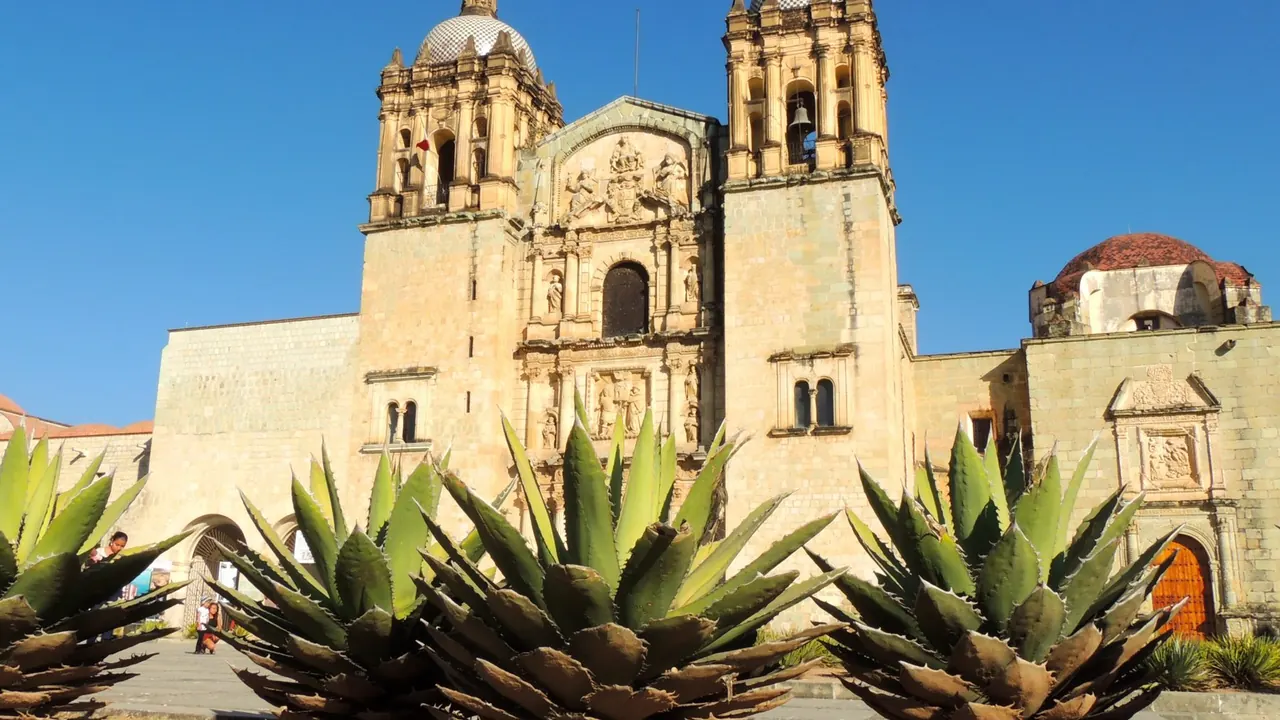
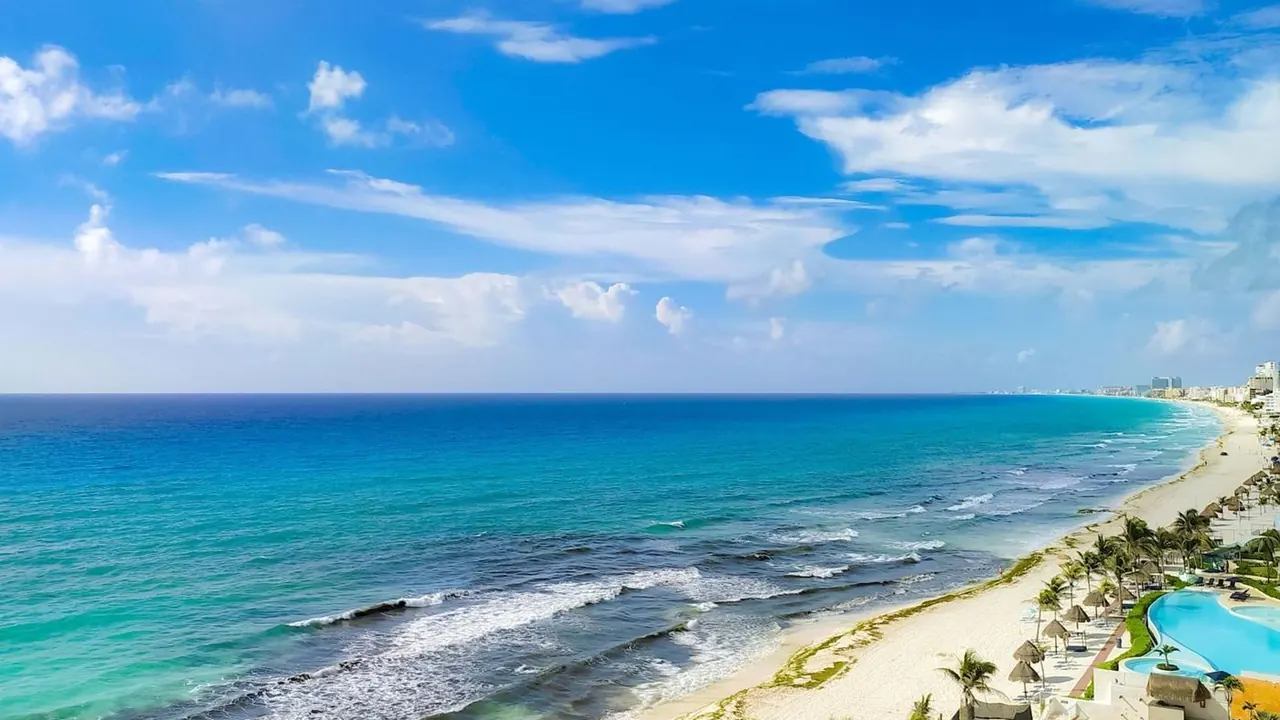
Photos: Oaxaca by Öskr Rck, CC BY-SA 3.0, cropped; Cancun by Tellez Erik, Pexels License.
Oaxaca or Cancun?
Our verdict in twelve categories, each scored against the same fixed benchmark cities, and the climate month by month, so you can choose for your trip.
Choose Oaxaca for
- culture and sights
- food and drink
- prices
Travellers who come for what they eat and what they see will be happier in Oaxaca. The green-stone colonial centre, Monte Albán on its mountaintop, the moles and mezcal, and the craft villages of the Central Valleys give every day substance. It also costs noticeably less than the Hotel Zone. There is no beach within reach, though, and small children may find the ruins a long slog.
Choose Cancun for
- beaches
- families
- nightlife
Cancun is the choice when the sea is the point of the trip. Its long coral-sand shore, warm turquoise water and reef snorkelling, along with resorts built around kids' clubs and shallow pools, make it the easier pick for families. It also suits anyone who wants loud, late nights in the Party Center. Culture here is something you drive out to.
Scoreboard
Twelve categories on one fixed scale from 0 to 100. The shaded stretch is the gap between the two.
Your match
Pick a travel style or drag the sliders, and both match scores follow your weighting.
Too close to call, 2 points apart
Wins on culture and sights and food and drink with your weighting.
Wins on beaches and families with your weighting.
What matters to you?
Category by category
What the scores mean for a trip.
Beaches & swimming
Here the gap is as wide as it gets. Cancun has some 22km of pale coral sand along the Hotel Zone. The northern arm has calm bay water for small swimmers, the eastern shore has open-Caribbean surf, and Playa Norte on Isla Mujeres is a ferry ride away.
Oaxaca sits high in a mountain valley, and in town swimming means a hotel pool. Its Pacific beaches at Puerto Escondido, Mazunte and Huatulco are a separate leg of the journey, which is why many visitors add a few days on the coast at the end.
Food & drink
Cancun eats well only once you leave the beach strip. Downtown taco stands, Mercado 28 and Yucatecan dishes such as cochinita pibil and sopa de lima are worth the bus ride, while the Hotel Zone runs mostly on buffets and international menus.
Oaxaca is a reason to travel in itself. Its moles, charcoal-crisped tlayudas, the grill aisle of Mercado 20 de Noviembre, village mezcal and morning hot chocolate are part of daily life, and chef-led tasting menus built on local maize take it further. Both cities cook regional Mexican food, but Oaxaca's kitchen has far more depth.
Culture & sights
Cancun was built as a resort from the 1970s. Apart from the Maya Museum, with the San Miguelito ruins in its grounds, its history lies elsewhere.
Oaxaca's UNESCO-listed centre of pale green stone, the gilded interior of Santo Domingo, the Tomb 7 gold in the Museo de las Culturas and the printmaking tradition behind its galleries fill two or three full days. Monte Albán is only twenty minutes away.
Nightlife
For a big night out, Cancun wins easily. The Party Center at the bend of the Hotel Zone has huge clubs with shows and open bars, and the crowds stay until four or five in the morning, though nearly every venue aims at the same vacation crowd.
Oaxaca's evenings are slower and more personal. Think mezcal tasting bars in the centre and Jalatlaco, rooftop terraces facing the domes of Santo Domingo and the odd salsa night. It is the place for good drinks after a long dinner, not for serious clubbing.
Nature & outdoors
Both have a strong outdoor side, but of opposite kinds. Cancun's is all water: reef snorkelling and diving off Puerto Morelos and Isla Mujeres, the MUSA sculptures, cenotes inland, whale sharks in summer and kayaking through the lagoon's mangroves. There is no hiking to speak of.
Oaxaca's outdoors is on foot and in the hills. The Sierra Norte villages run trails and cabins through pine-oak and cloud forest, the mineral cliffs of Hierve el Agua make an easy half-day, and the valley floor suits mountain biking among the agave fields.
Day trips
Both make good bases, but the distances differ. From Cancun, the big Maya sites of Chichen Itza, Coba and Ek Balam each take two hours or more by road, while Isla Mujeres, Playa del Carmen and Tulum are the easier outings along the coast.
Oaxaca's excursions are smaller and closer, most of them within an hour in the Central Valleys. They include the Tule cypress, Teotitlán's weavers, Mitla's stone fretwork and the mezcal distilleries of Matatlán, with the remote monasteries of the Mixteca Alta for a longer day. Cancun has the grander sites, and Oaxaca lets you fit more stops into a day.
Good for families
Cancun is far easier with children. Kids' clubs, shallow pools, the gentle bay beaches, an aquarium and the eco-parks down the coast fill a week without effort, though the summer heat and the eastern currents need watching.
Oaxaca welcomes children warmly, and older ones enjoy painting alebrijes or joining a chocolate-making session. With no zoo or theme park, unshaded ruins and cobbles that defeat pushchairs, though, younger children may tire of it.
Getting around
Cancun is spread along one long boulevard, where walking is hot and the pavements are patchy. Buses along Boulevard Kukulcan are frequent and the ADO coaches are reliable, but most outings still mean a tour, a taxi or a hire car on the peninsula's straight roads.
Oaxaca is the easier city to move about in, because its centre is compact. Most sights lie within a twenty-minute walk of the zócalo on a simple grid, and cheap taxis and colectivos cover the valley villages.
Shopping & style
Cancun's shopping is mainly in air-conditioned malls, with international labels and duty-free along the Hotel Zone. Mercado 28 sells crafts, but the same stock repeats from stall to stall.
Oaxaca is much the better place to buy something worth keeping. Cooperative galleries around the Macedonio Alcalá sell handwoven textiles, black pottery and alebrijes, and in the villages where these things are made you can often buy from the maker. The weekly markets at Tlacolula and Ocotlán are a pleasure to wander.
Affordability
Cancun's Hotel Zone is priced for foreign visitors, and resort meals, drinks in the Party Center and tours add up fast. Staying and eating downtown narrows the gap considerably.
Oaxaca stretches a budget much further. Market meals, family-run fondas, colectivos and simple guesthouses cost little. Only the boutique hotels, the tasting menus and the festival weeks push prices up.
Live music & performing arts
Cancun's live entertainment is staged for visitors. It means dinner shows with mariachi, resort entertainment and big evening spectacles at the eco-parks.
Neither city is a place for opera or orchestras, but Oaxaca has the more genuine performance life. The Guelaguetza each July brings dancers from across the state to a hillside auditorium, and the Day of the Dead fills the streets with music. Through the rest of the year there are concerts at the Teatro Macedonio Alcalá and marimba players in the zócalo.
Wellness & relaxation
The two are about level for unwinding, but the rest they offer is quite different. In Cancun you buy it from a resort. The large beach hotels run full spa circuits with the Caribbean in view, and an all-inclusive week asks nothing of you. The catch is the strip itself, which stays busy and loud late into the night, so anyone wanting real peace does better at its quiet southern tip or across the water on Isla Mujeres.
Oaxaca has less luxury and more stillness. Here the temazcal is a ritual still kept in Zapotec and Mixtec villages and led by a healer, not just an item on a spa menu, and joining one in the valley feels nothing like a hotel treatment. The town does the rest, with its unhurried rhythm, cool patios behind the colonial walls and the leafy lanes of Jalatlaco. It has no large thermal baths, though, and festival weeks bring fireworks and crowds.
When should you go?
Pick your month. The climate figures are measured averages, not a forecast.
Oaxaca in July
Cancun in July
Daytime high, °C
Rainfall in the month, mm
Where the figures come from
Cancun has no weather station within reach, so its figures come from a gridded climate model rather than a measured record, and read a broad area rather than the city itself.
Temperature and rainfall are climate normals, averaged over the years shown. Oaxaca: 1961-1990 (rainfall 1991-2020) normals, Oaxaca, Oax. (1.1 km from centre). Cancun: 2001-2020 normals, NASA POWER reanalysis grid, no weather station within 90 km.
Cancun is warm enough for the beach in every month. Daytime highs run from 26°C in January to 30°C through the summer, and the sea never really cools. The driest, most settled spell is from about February to April. Rain picks up in June and is heaviest in autumn, with October the wettest month at 224mm, and the humid summer heat makes walking far from the sand tiring.
Oaxaca's year splits cleanly in two. From November to April it hardly rains and the sun shines through most of the day, which is ideal for the streets and the ruins. March to May is the hottest stretch, though, peaking near 33°C in April. The rains run from late May to September, turning the valleys green and bringing cloudier afternoons. Both cities are at their best in winter and early spring, when Cancun is dry and Oaxaca's skies are clear.
Which traveller are you?
On a beach and sun trip, Cancun is the only real option of the two. Warm turquoise water all year, long coral-sand beaches and reef snorkelling are on the doorstep, while Oaxaca's coast lies hours away over the mountains.
For a culture and arts trip, Oaxaca is the clear pick. A UNESCO-listed colonial centre, Monte Albán twenty minutes away, strong museums and printmaking workshops fill several days, while Cancun has one good museum and long drives to the ruins.
On a family trip with young children, Cancun makes life simpler. Kids' clubs, shallow pools, calm bay beaches and eco-parks keep everyone busy. Oaxaca's shadeless ruins and cobbled streets suit older, curious children better than toddlers.
Before you go
| Measure | Oaxaca | Cancun |
|---|---|---|
| Official language | Spanish, Nahuatl, Yucatec Maya | Spanish, Nahuatl, Yucatec Maya |
| Currency | Mexican Peso (MXN) | Mexican Peso (MXN) |
| Sockets | AB127 V, 60 Hz | AB127 V, 60 Hz |
| Driving side | Right | Right |
| Time zone | UTC-6 | UTC-5 |
| Emergency number | 911 | 911 |
| Elevation | 1,555 m | 5 m |
| Main airport | Xoxocotlán International Airport (OAX)7 km from centre14 non-stop destinations | Cancún International Airport (CUN)14 km from centre135 non-stop destinations |
| Public holidays this year | 9 days | 9 days |
By the numbers
| Measure | Oaxaca | Cancun |
|---|---|---|
| City population | 258,913 | 888,797 |
| People per km² | 3,028 | - |
| Museums within 10 km | 10 | 1 |
| UNESCO World Heritage sites within 50 km | 2 | 0 |
| Swim season, months above 21 °C | - | 12 months |
Where else could you go?
Every comparison below shares a destination with this one, so you can follow Oaxaca or Cancun somewhere new.
- Playa del Carmenvs Cancun
- Akumalvs Cancun
- Tulumvs Cancun
- Puerto Escondidovs Oaxaca
- Huatulcovs Oaxaca
- Meridavs Cancun