Oman
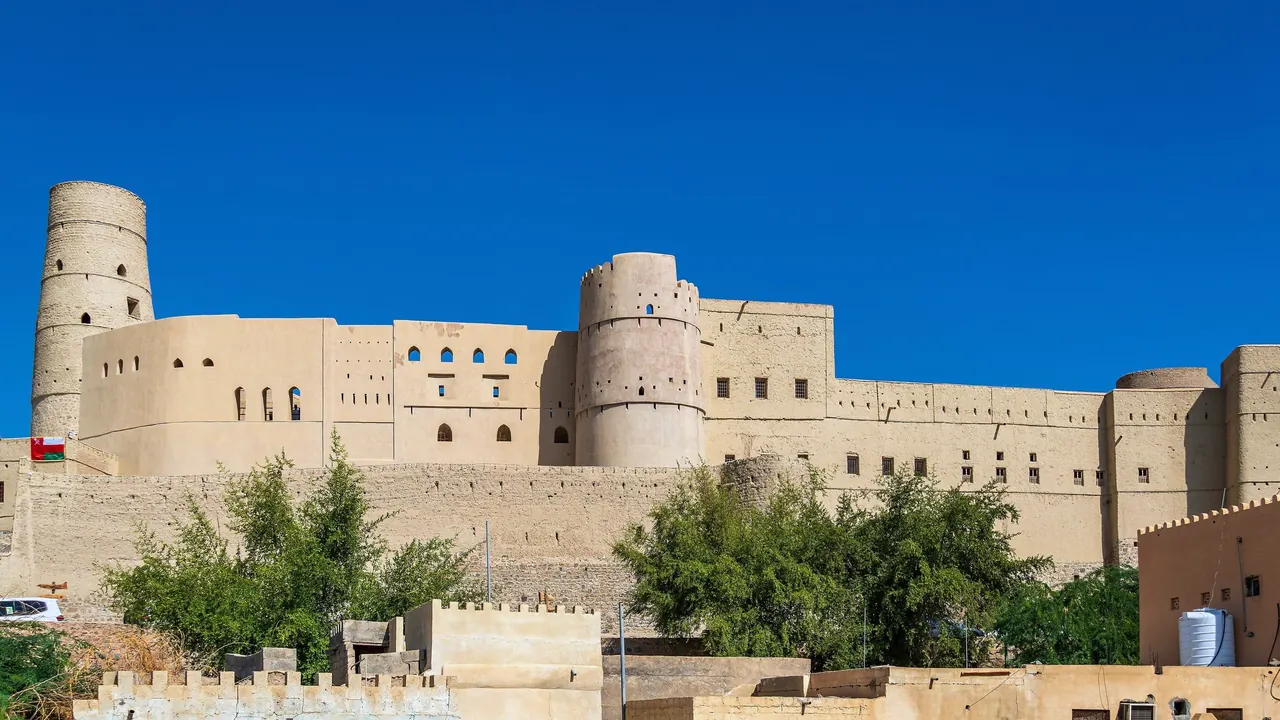
Bahla Fort seen from its oasis
- Nature & outdoors84
- Culture & sights66
- Beaches65
Photo: dconvertini, CC BY-SA 2.0, cropped
Match
48
Every category weighted equally
- Beach & sun50
- Culture & arts45
- Food & nightlife39
- Family trip53
- Outdoors56
- Relax & unwind53
- Shopping & style43
- On a budget48
Oman in twelve categories
Our verdict on the country as a whole, scored 0 to 100 against the same fixed benchmark cities as every destination, so a score means the same thing on every page.
Beaches & swimming. Scores 65 out of 100.
Food & drink. Scores 42 out of 100.
Culture & sights. Scores 66 out of 100.
Nightlife. Scores 10 out of 100.
Nature & outdoors. Scores 84 out of 100.
Day trips. Scores 56 out of 100.
Good for families. Scores 48 out of 100.
Getting around. Scores 30 out of 100.
Shopping & style. Scores 40 out of 100.
Affordability. Scores 48 out of 100.
Live music & performing arts. Scores 32 out of 100.
Wellness & relaxation. Scores 50 out of 100.
Oman category by category
Under each: where in Oman it is best, and our destinations in Oman that score highest on it.
Beaches & swimming
65Oman's coast is long and the water is warm. From October to April the sea off Muscat is between about 24°C and 30°C. The capital has its own sand at Qurum and Shatti al Qurum, and quieter coves lie towards Bandar Jissah, where most of the beach resorts are. Offshore, the Daymaniyat Islands have some of the clearest water in the region, reached by boat from the Muscat coast for a day on empty sand.
The Sur coast, along the road south-east from the capital, has the wildest beaches: at Fins and Tiwi, pale sand lies against dark cliffs, with few people and no facilities. In the south, the long beaches near Salalah are a separate trip, best from October to spring, because the summer monsoon makes the sea rough and unsafe. Musandam's small rocky coves are reached by boat. Away from the resorts, beaches are calm and used by families, and modest dress is expected. From May to September the heat keeps most people off the sand by day.
Food & drink
42Omani cooking is worth seeking out, but you won't find it everywhere. The signature dishes are shuwa, lamb slow-cooked for a day in an underground pit, and rice dishes with fish or meat, spiced lightly with cardamom, lime and rosewater. Dates and bitter cardamom coffee, kahwa, are offered at every welcome. Sticky halwa is a speciality, especially in Nizwa and around Muttrah. Restaurants serving traditional food are few, and the best Omani meals often happen in homes or at festivals.
Day to day, Muscat eats Indian, Pakistani, Lebanese and Gulf food, which is cheap and good, with grilled fish along the corniche. Fine dining and wine are found almost only in hotels. Outside the capital and Salalah, choice narrows to simple cafés and grills.
Culture & sights
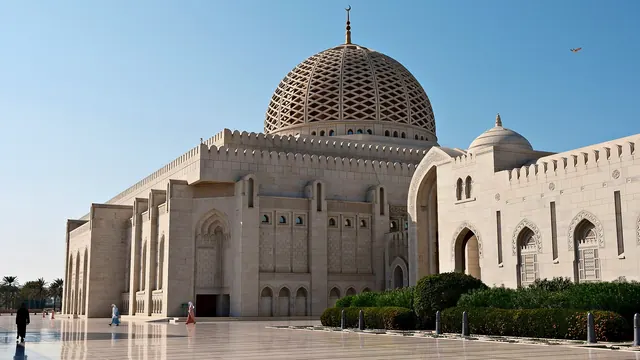
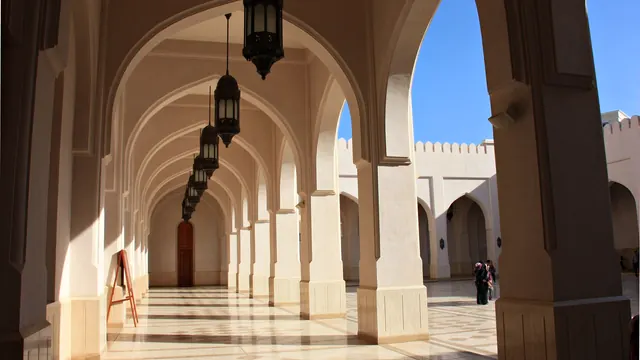
66Oman's heritage is a landscape of forts, oasis towns and ancient trade. Muscat has the Sultan Qaboos Grand Mosque, one of the finest modern mosques anywhere, with its vast prayer carpet and chandelier. It also has the National Museum, the old walled quarter with its palace and Portuguese forts, and the Muttrah corniche. Inland, the Dakhiliyah region has the densest heritage. Nizwa's round fort tower stands near the market. The great walls of Bahla fort are listed by UNESCO. Jabrin castle has painted ceilings, and Al Hamra and Birkat al Mouz have mud-brick villages and ancient falaj water channels.
Older sites are farther apart: the beehive tombs of Bat and Al Ayn, and the ruins of Qalhat near Sur. In Dhofar, Al Baleed and Sumhuram are frankincense ports with a museum, best seen on a separate trip to Salalah. Museums are few, and much of what you see is restored fortification, so the pleasure lies in setting rather than in collections.
Where: Muscat, Nizwa and the Dakhiliyah, Bahla, Salalah and Dhofar
Nightlife
10Oman has very little nightlife. Alcohol is served mainly in licensed hotel bars and restaurants in Muscat, with a few more in Salalah and the big resorts. Some of these bars have a band or a DJ, but nothing makes a scene. Evenings in Oman happen outdoors: families stroll the Muttrah corniche, people sit in shisha cafés and coffee shops after the heat of the day, and dinner runs late. Away from the capital, towns are quiet soon after dark.
Where: Muscat
Nature & outdoors
84Nature is the main reason to choose Oman. The Hajar Mountains run behind the coast. Jebel Shams rises above 3,000m, with a rim walk along the edge of Wadi Ghul's deep gorge, and the terraces of Jebel Akhdar grow roses and pomegranates. Between the ranges, wadis cut green, palm-lined canyons with turquoise pools: Wadi Shab, Wadi Bani Khalid and Wadi Tiwi are the best known. Inland, the Wahiba Sands are proper dune desert, where you can drive by 4x4 or stay overnight in a camp.
The coast has its own wildlife. Green turtles nest at Ras al Jinz, boat trips go out to see dolphins, and divers and snorkellers head to the Daymaniyat reefs. Musandam is a separate trip in the far north, with fjord cruises and kayaking under bare cliffs. Dhofar, in the far south, is another one: the summer monsoon turns the hills around Salalah green just when the north is too hot. The north is best from October to April, when walking and camping are comfortable.
Where: Hajar Mountains, Wahiba Sands, Musandam, Dhofar
Day trips
56Most visitors base themselves in Muscat and Nizwa, and both put a good set of towns within a day's drive. From Muscat, it is about two hours to Nizwa, and a loop to the west takes in the forts at Nakhal and Rustaq among date gardens. Sur is about two and a half hours along the coast, with its shipyard where wooden dhows are still built.
From Nizwa, the outings are shorter. Bahla and Jabrin are less than an hour away, and the old mud-brick quarters of Al Hamra and Birkat al Mouz are closer still. A morning on the terraces of Misfat al Abriyeen fits in easily. Most of these places share a character of fort, souq and falaj, so a few days covers them well. Nearly every trip needs a car or a driver.
Where: Nizwa, Muscat, Sur
Good for families
48Oman is safe, orderly and warm towards children, so a family trip here is relaxed. Little is built specially for children, though. The best family stays are at the beach resorts around Muscat, which have pools and calm water. Outings that children enjoy are a dolphin boat from the Muscat coast, an evening turtle watch at Ras al Jinz, a night in a Wahiba desert camp and splashing in the shallow pools of the wadis. Muscat has an aquarium and malls with play areas, but no theme parks or major zoo. Plan for long car journeys between places, and travel from November to March. From May to September the heat makes it hard going with young children.
Where: Muscat, Ras al Jinz, Wahiba Sands
Getting around
30In Oman you need a car. The country has no railway, intercity buses are few, and Muscat stretches for tens of kilometres along the coast, so it is not walkable in practice. The good news is that the roads are excellent, the signs are bilingual and traffic is calm, so a self-drive trip from Muscat to Nizwa, Wahiba and Sur is easy. Mountain tracks such as the road up to Jebel Akhdar need a 4x4, and some desert camps need one too. Many visitors hire a driver for those stretches. Salalah and Musandam are separate trips, best reached by domestic flight.
Where: Muscat, Nizwa
Shopping & style
40Shopping in Oman comes down to a few traditional crafts and two good souqs. Muttrah souq, behind the Muscat corniche, is a covered maze of frankincense, silver jewellery, embroidered caps, pashminas and antiques. Nizwa's souq, around the fort, is good for pottery, silverwork and khanjar daggers, and its Friday morning livestock market is worth seeing in itself. Salalah's market is the place for frankincense in all its grades. Elsewhere, shopping means large air-conditioned malls in Muscat with international chains, plus Omani perfumery, which is sold in hotels and malls. Fashion, design and independent shopping hardly exist.
Affordability
48Oman sits in the middle on price. Eating at local Indian and Omani cafés is cheap, fuel costs little, and the forts charge only modest entry. The costs come from places to stay and from getting around. Muscat's hotels and beach resorts are priced like the rest of the Gulf in the winter season, and they make up the largest part of most budgets. A car is almost essential, and 4x4 trips, desert camps and boat outings add up. Alcohol is only sold in hotels and is expensive there. Simple guesthouses in Nizwa and the mountain villages around it are where a trip becomes cheaper, and the capital's own Indian eateries and souq stalls keep meals there cheap.
Where: Nizwa, Muscat
Live music & performing arts
32Oman's performing arts centre on one building. The Royal Opera House Muscat is a striking white stone opera house that runs a season from autumn to spring. Touring opera companies, ballet, orchestras, jazz and Arabic music all perform there, and it is worth timing a visit around. Beyond it there is little: no theatre district and few live-music venues. Traditional song and dance, such as sword dances, drumming and the sea songs of the coast, mostly appear at festivals, weddings and national celebrations, and the Muscat and Salalah festival seasons give you the best chance to see them.
Where: Muscat
Wellness & relaxation
50Oman is calm by nature. Its towns are quiet, the roads are empty and evenings are unhurried. Its wellness offer is mostly in its resorts rather than in a bathing tradition. The best places to unwind are the cliff-top spa hotels on Jebel Akhdar, where the mountain air stays cool, the secluded resorts in Musandam's coves and the beach resorts around Muscat, all with full spa programmes. A night in a Wahiba desert camp gives silence and stars. Natural hot springs such as Ain al Kasfa at Rustaq are local bathing spots, not spas. You won't find public bathhouses or a hammam culture comparable to that of the wider region.
Where: Jebel Akhdar, Muscat coast, Musandam, Wahiba Sands
Where to go in Oman
Most trips to Oman start in Muscat, and it suits a first visit well. The capital stretches a long way along the coast, so it works as a string of bases rather than a walkable city. It has the Grand Mosque, the old walled quarter with its forts and the Muttrah souq and corniche, where evenings are spent outdoors. Families and anyone after beach days do best at the resorts towards Bandar Jissah, with boat trips out to see dolphins or to snorkel off the Daymaniyat Islands. If you can, time a visit around the Royal Opera House season. Nightlife is limited to a few hotel bars.
The rest of the north fits into one road trip by car, best from October to April. Nizwa is about two hours inland and the natural base for culture and history: the forts of Bahla and Jabrin, the mud-brick villages of Al Hamra and Birkat al Mouz, and simple guesthouses that bring costs down. Above it rise the Hajar Mountains, with the rim walk on Jebel Shams and the cool terraces and spa hotels of Jebel Akhdar, reached by 4x4. From there the route can go on to a night in a Wahiba Sands camp, then the Sur coast with its empty beaches at Fins and Tiwi, swims in Wadi Shab and Wadi Bani Khalid, and the turtle watch at Ras al Jinz, before following the coast road back to the capital.
Two regions are trips of their own, each best reached by a domestic flight. In the far south, Salalah and Dhofar offer long beaches from October to spring, frankincense ports and markets, and green monsoon hills in summer, when the north is too hot. In the far north, Musandam is for fjord cruises, kayaking under bare cliffs and a quiet stay in a secluded cove.
When should you go?
Oman has no single climate. Its months are measured at Muscat and Salalah; pick one to see it. The figures are measured averages, not a forecast.
Where in Oman
Muscat in July
Daytime high, °C
Rainfall in the month, mm
Where the figures come from
Muscat's sunshine is measured 32 km from the centre, at Seeb, International Airport.
Temperature and rainfall are climate normals, averaged over the years shown. Muscat: 1991-2020 normals, Qaboos Port (3.4 km from centre).
Compare Oman with
Every comparison with a written verdict behind it, and any other country below.
Our destinations in Oman
Every place in Oman with its own page: its twelve scores, its texts and its months.