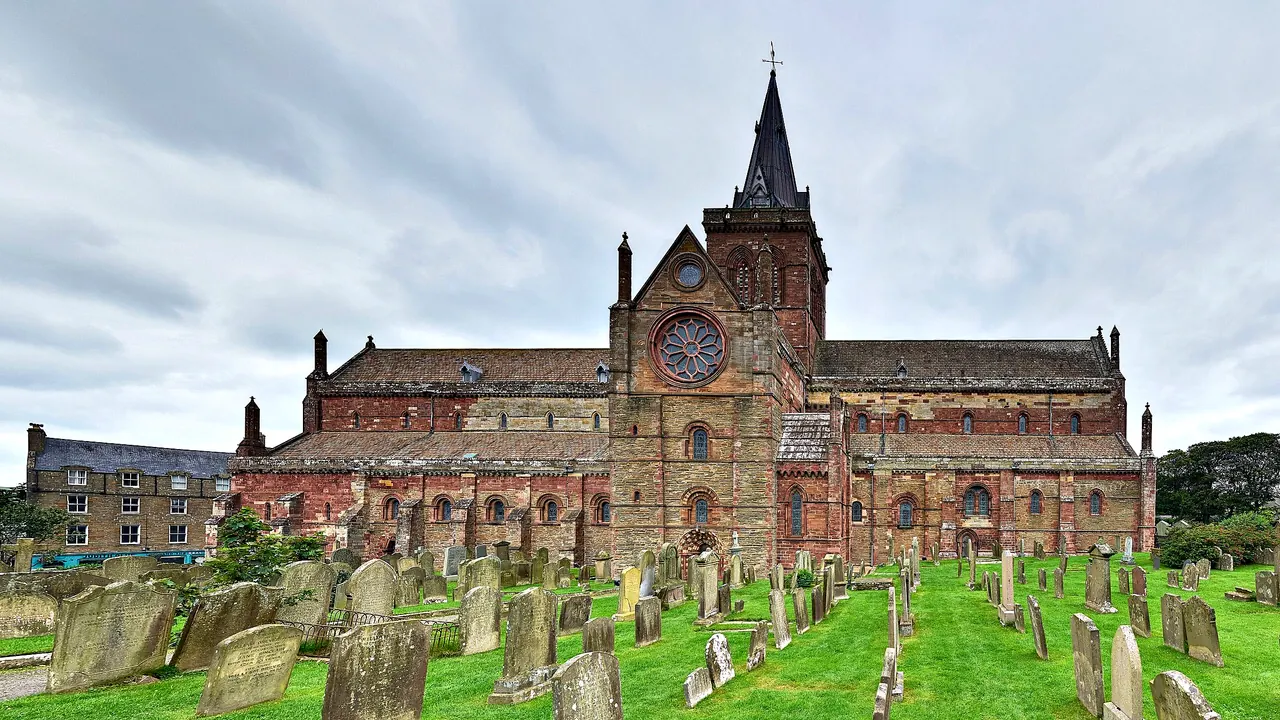
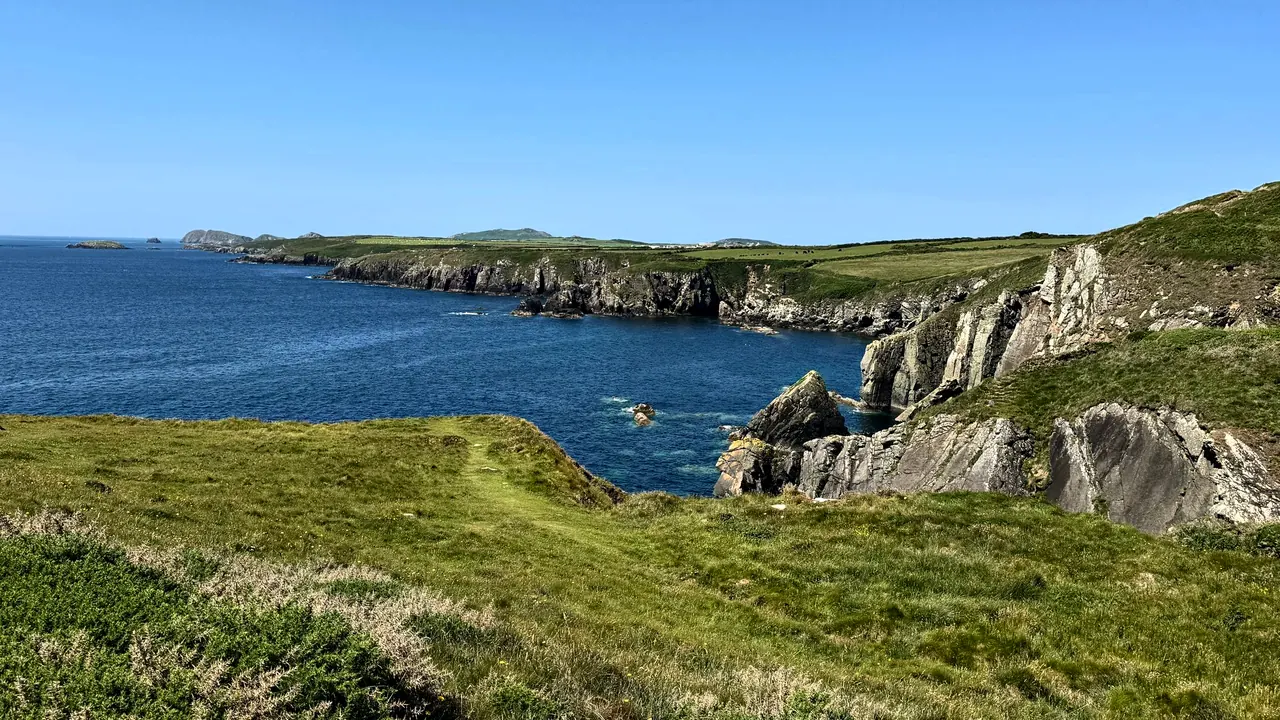
Photos: Orkney by Virtual-Pano, CC BY-SA 4.0, cropped; Pembrokeshire by Petra Nesti, Pexels License.
Orkney or Pembrokeshire?
Our verdict in twelve categories, each scored against the same fixed benchmark cities, and the climate month by month, so you can choose for your trip.
Choose Orkney for
- culture and sights
- getting around
- live music and the arts
Orkney is the choice for travellers drawn by deep history and remoteness. Its Neolithic villages, tombs and stone circles, the Norse cathedral in Kirkwall and the wartime story of Scapa Flow add up to a past you can walk through in a few days with a car. Its North Isles also reward anyone who enjoys planning around small ferries. Accept that the beaches are for walking, the evenings are quiet and the weather decides a good deal.
Choose Pembrokeshire for
- beaches
- families
- nature and the outdoors
Pembrokeshire suits an active seaside trip, and it is the easier of the two with children. The sandy bays, many lifeguarded in summer, and the national park coast path come first here. Add boats out to puffin and seal islands, surfing and coasteering, and a few castles and the tiny cathedral city of St Davids for wet days. It is less remote than Orkney and has more laid on for families, but its history is thinner.
Scoreboard
Twelve categories on one fixed scale from 0 to 100. The shaded stretch is the gap between the two.
Your match
Pick a travel style or drag the sliders, and both match scores follow your weighting.
Wins on culture and sights and getting around with your weighting.
Wins on beaches and families with your weighting.
What matters to you?
Category by category
What the scores mean for a trip.
Beaches & swimming
Both places have beautiful sand, but only Pembrokeshire is a real beach destination. Its bays range from the town beaches of Tenby to Barafundle, which you reach on foot, and the long sweeps of Newgale and Whitesands. Many are lifeguarded in summer, there is good surf at Whitesands and Freshwater West, and by late summer the sea is warm enough for a proper swim in a wetsuit.
Orkney's shell-sand bays at Waulkmill, Birsay and on Sanday are emptier and can look tropical on a bright day. But the water stays several degrees colder and the wind seldom drops, so a beach day there means beachcombing and watching seals, with a quick dip at most.
Food & drink
Both regions eat well from local produce, and neither has a real restaurant scene. Orkney is the stronger choice for drink. Kirkwall's two whisky distilleries, plus island beer and gin, turn a visit into a tasting tour, and hand-dived scallops and bere bannocks are worth seeking out. On the outer islands, though, there may be nowhere to eat at all.
Pembrokeshire has a few more places to eat and more variety. There are good restaurants in St Davids, Narberth and Fishguard, plus beach cafés, fish-and-chip shops and harbour pubs serving local crab. Farmers' markets help if you are self-catering.
Culture & sights
Orkney's history is older and far more concentrated. On a narrow stretch of the West Mainland you can see Skara Brae, Maeshowe and the stones of Brodgar and Stenness, which together form a World Heritage Site. The coast adds two later chapters: Iron Age brochs such as Gurness, and then Norse sites such as the tidal Brough of Birsay. In Kirkwall there is the red sandstone St Magnus Cathedral, and the Italian Chapel tells a moving wartime story.
Pembrokeshire's heritage is mostly medieval: the cathedral and ruined Bishop's Palace at St Davids, Pembroke Castle and a ring of Norman fortresses, and Tenby's town walls. Its links to prehistory are the Pentre Ifan burial chamber and the Preseli Hills, where some of Stonehenge's bluestones came from, but nothing here matches Skara Brae.
Nightlife
Neither place is for a night out. Pembrokeshire has slightly more going on, because Tenby's harbour pubs fill with weekend groups in summer and a few bars stay open late.
Orkney's evenings are smaller and more local. Expect a fiddle session starting up in a Kirkwall or Stromness pub, or a midsummer walk in light that hardly fades.
Nature & outdoors
Pembrokeshire is the better place for active days outdoors. The coast path follows about 300km of national park cliffs, arches and coves, and boats run to Skomer for puffins, Ramsey for seals and Grassholm's huge gannet colony. Surfing, sea kayaking and coasteering, which began on these cliffs, fill the rest of the week.
Orkney's landscape is barer and windier, and its drama is at the edges. The Old Man of Hoy, the seabird cliffs at Yesnaby and Noup Head, and the occasional passing orca are the highlights. It also has a real advantage underwater, where the wrecks of Scapa Flow draw divers from across Europe.
Day trips
The day trips are about equally good, but they work differently. In Orkney, an outing means a ferry or a tiny plane to another island: Rousay for its cairns, Westray for its castle and sands, or the famously short flight to Papa Westray. Each trip has to be planned around the timetable.
Pembrokeshire's outings are mostly by road. You can drive up the coast to Cardigan and Aberaeron, or east to Dylan Thomas's Laugharne, and the Gower is within reach. The boat to the monks' island of Caldey is the one island trip.
Good for families
Pembrokeshire is much easier with children. It has lifeguarded sandy beaches, crabbing off harbour walls, and boat trips to see seals. On wet days there are a farm park with an indoor funfair, a wildlife park and soft-play centres. Tenby and Saundersfoot let you walk from your room to the beach.
Orkney appeals to outdoor families who are happy with simple pleasures: puffins, rock pools, the walk-in replica house at Skara Brae and the fun of a short ferry ride. Beyond Kirkwall's swimming pool, though, there is almost nothing to fall back on when the weather closes in.
Getting around
Both regions need a car, but Orkney's Mainland is easier to drive. The roads are quiet, and the towns and Neolithic sites are all within about half an hour of each other, linked to the southern isles by the Churchill Barriers. Going further means booking small ferries and planes, and the weather can stop both.
In Pembrokeshire you can expect narrow hedge-lined lanes with passing places, and car parks at the popular beaches fill early in summer. In return, it has branch railway lines to its main towns and seasonal coastal buses that make one-way walks on the coast path possible.
Shopping & style
Both offer craft shopping and nothing else, with no fashion or department stores in either. Orkney's speciality is silver jewellery based on Norse and Neolithic designs, sold along Kirkwall's flagstoned Albert Street, along with the straw-backed Orkney chair.
Pembrokeshire's best buys are woollen-mill blankets and throws. Narberth is a small town of independent shops and antiques that is worth an afternoon.
Affordability
Neither is a cheap trip, and they cost about the same. Orkney's extra costs come from getting there and getting around: a flight or a crossing of the Pentland Firth, then a hire car and inter-island ferries.
Pembrokeshire can be reached by road or rail, but cottages and campsites charge peak rates during the school summer break. Spring and early autumn are clearly cheaper. In both places the walks, beaches and many of the sights are free, and self-catering with local produce keeps daily costs down.
Live music & performing arts
Orkney has the edge if you time your visit to a festival. The St Magnus International Festival, founded by Peter Maxwell Davies, fills the cathedral with music and drama around midsummer, and the Orkney Folk Festival takes over Stromness in late spring. Fiddle music is also a living part of island life.
Pembrokeshire's offer is smaller and spread more thinly. The highlights are an early-summer classical festival in St Davids Cathedral and small theatres in Milford Haven and Fishguard showing touring productions.
Wellness & relaxation
Neither place has a bathing culture, and both are restful because of their quiet. Pembrokeshire has a little more for anyone who wants pampering: spa treatments at a few country-house hotels and some yoga and retreat stays on farms along the coast.
Orkney has hardly more than the Kirkwall pool and a few hotel treatments. What it gives you instead is near-empty roads and long, light summer evenings.
When should you go?
Pick your month. The climate figures are measured averages, not a forecast.
Orkney in July
Pembrokeshire in July
Daytime high, °C
Rainfall in the month, mm
Where the figures come from
Pembrokeshire's temperatures are measured 46 km from the centre, at Aberporth.
Pembrokeshire has no rain gauge within 25 km of the centre, so its rainfall comes from a gridded climate dataset read at the destination rather than from a gauge further away.
Temperature and rainfall are climate normals, averaged over the years shown. Orkney: 1991-2020 normals, Kirkwall Airport (4.9 km from centre). Pembrokeshire: 1991-2020 normals, Aberporth (46.2 km from centre).
Neither place ever gets truly hot, and for both the good season runs from late spring to early autumn. In Orkney, where most visitors stay, afternoons peak at about 16°C in July and August, and the sea reaches only about 13°C. May is often the best month there: the driest and sunniest of the year, with seabirds on the cliffs and very long evenings. From October to January the rain is heavy and the days are short and grey, which makes walking between sites a chore.
Pembrokeshire runs a couple of degrees warmer through the year, with highs around 18°C in high summer. It is also much sunnier, at about 210 hours in May. The sea is warmest in August and September at about 17°C, so late summer is the time for swimming, while spring and early summer give the clearest walking weather. Both places turn wet from October, and Pembrokeshire's winters are slightly milder and brighter than Orkney's.
Which traveller are you?
For a beach and sun trip, Pembrokeshire is the better pick. Its bays, from Barafundle to Whitesands, are sandier and more varied, many have lifeguards and some get surf. Swims stay brisk even in late summer, often in wetsuits. Orkney's beaches are mainly for walking.
On a culture and arts trip, choose Orkney. Skara Brae, Maeshowe and the Ring of Brodgar make up one of Europe's great prehistoric landscapes, and the midsummer festival fills St Magnus Cathedral with music. Pembrokeshire's castles and St Davids are on a smaller scale.
On a family trip with young children, Pembrokeshire is the easier choice. You can stay in Tenby or Saundersfoot and walk to the beach, and there are rainy-day options such as soft play and a farm park. Orkney suits hardy outdoor families who need little laid on.
Before you go
| Measure | Orkney | Pembrokeshire |
|---|---|---|
| Official language | English | English |
| Currency | Pound Sterling (GBP) | Pound Sterling (GBP) |
| Sockets | G230 V, 50 Hz | G230 V, 50 Hz |
| Driving side | Left | Left |
| Time zone | UTC, UTC+1 in summer | UTC, UTC+1 in summer |
| Emergency number | 112 or 999 | 112 or 999 |
| Main airport | Kirkwall Airport (KOI)9 non-stop destinations | Cardiff International Airport (CWL)32 non-stop destinations |
| Public holidays this year | 10 days | 8 days |
By the numbers
| Measure | Orkney | Pembrokeshire |
|---|---|---|
| Population | 22,270 | 125,818 |
| People per km² | 22 | 78 |
| Swim season, months above 21 °C | None | None |
Where else could you go?
Every comparison below shares a destination with this one, so you can follow Orkney or Pembrokeshire somewhere new.
- Cornwallvs Pembrokeshire
- Snowdoniavs Pembrokeshire
- Devonvs Pembrokeshire
- Scottish Highlandsvs Orkney
- Jurassic Coastvs Pembrokeshire
- Cotswoldsvs Pembrokeshire