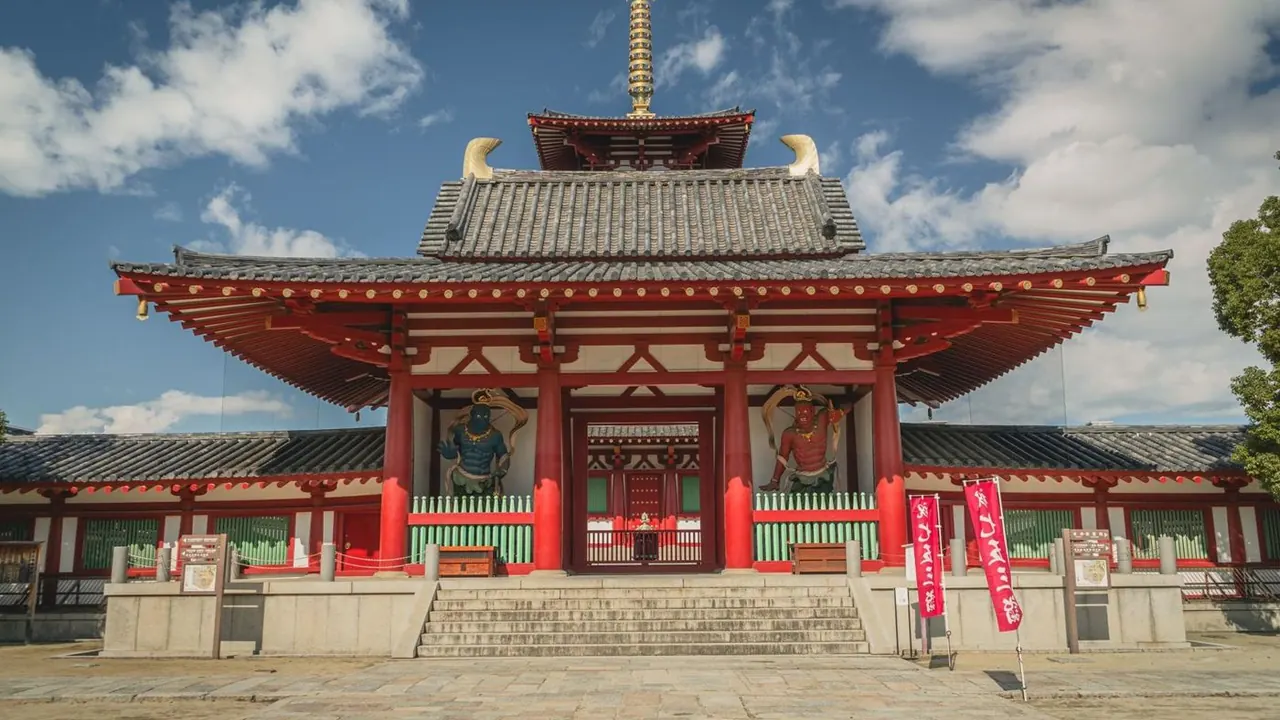
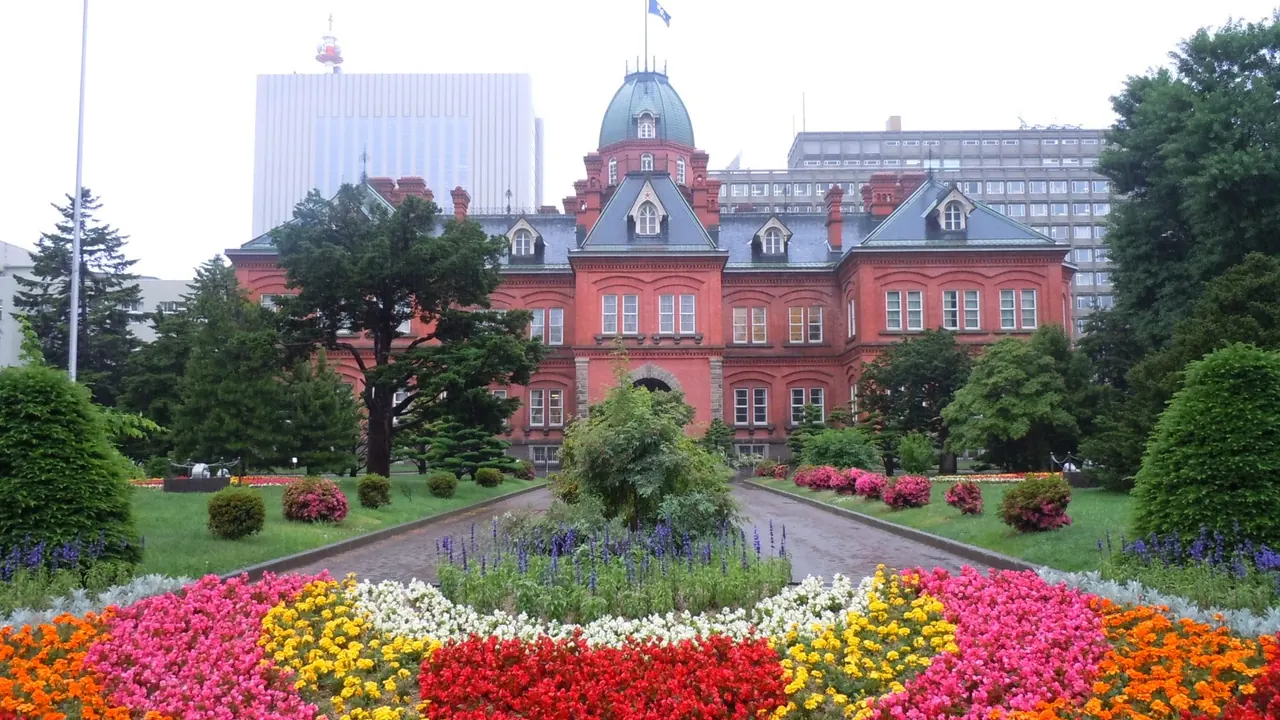
Photos: Osaka by Sarmat Batagov, Pexels License; Sapporo by Feri88, CC BY 3.0, cropped.
Osaka or Sapporo?
Our verdict in twelve categories, each scored against the same fixed benchmark cities, and the climate month by month, so you can choose for your trip.
Choose Osaka for
- day trips
- culture and sights
- shopping
Pick Osaka if you want a city to eat, drink and travel out from. It has the deeper food scene, the livelier bars, more to buy and the stronger family attractions. Its biggest advantage is location: Kyoto, Nara, Kobe and Himeji are all a short train ride away, so a week here can take in much of Japan's historic heartland.
Choose Sapporo for
- nature and the outdoors
- wellness
Sapporo is the better choice when the landscape matters more than the city. Ski slopes start inside the city limits, Niseko's powder snow is close, and in summer you have caldera lakes, volcanoes and the flower fields of Furano. The onsen of Jozankei and Noboribetsu are an easy trip for long soaks. Expect a calmer and more spacious pace, with Hokkaido seafood in place of Osaka's street-stall bustle.
Scoreboard
Twelve categories on one fixed scale from 0 to 100. The shaded stretch is the gap between the two.
Your match
Pick a travel style or drag the sliders, and both match scores follow your weighting.
Wins on day trips and culture and sights with your weighting.
Wins on nature and the outdoors and wellness with your weighting.
What matters to you?
Category by category
What the scores mean for a trip.
Beaches & swimming
Neither city is a beach destination, but Osaka has a slight edge for a summer swim. Its bathing beaches at Suma, Nishikinohama and Tannowa are about an hour away by train and are open through July and August, when the water is properly warm.
Sapporo's nearest sand at Ishikari and around Otaru is wider and less built-up. However, the swimming season is a few weeks long and the water is noticeably cooler. In both cities, a beach is a summer afternoon out rather than a reason to visit.
Food & drink
Both are excellent places to eat, but Osaka goes further. Its dishes are cheap street-stall and counter food such as takoyaki, okonomiyaki and kushikatsu, eaten in Dotonbori, Kuromon Market and the izakaya alleys of Ura-Namba and Tenma. For refined dining, Kitashinchi has kaiseki and sushi counters of the highest standard.
Sapporo's cooking is built around Hokkaido produce: miso ramen, soup curry, lamb grilled for jingisukan, and bowls of sea urchin and crab at Nijo Market in the morning. It also has a strong beer tradition. The range of food is narrower than Osaka's, but the seafood is outstanding.
Culture & sights
Osaka has more to see. The castle stands on its original stone walls, Shitennoji and Sumiyoshi Taisha are ancient religious sites, and the Museum of Oriental Ceramics and the Nakanoshima galleries add depth. Its neon districts, Dotonbori and Shinsekai, are sights in their own right.
Sapporo was only laid out in the 1870s, so its landmarks date from the pioneer era: the wooden Clock Tower, the red-brick government building and the Historical Village of Hokkaido. The Hokkaido Museum's coverage of Ainu culture and Noguchi's Moerenuma Park are what make it distinctive.
Nightlife
Osaka is the livelier night out. It has a reputation across Japan for chatty, good-humoured bars. Minami's standing bars, Amerikamura's small clubs and the lanes around Umeda give you several districts to move between, and many people stay out until the first train in the morning.
Sapporo's nightlife is concentrated almost entirely in Susukino, a dense block of towers with tiny bars, karaoke and late ramen counters stacked floor upon floor. It is great for bar-hopping even in deep winter, but there is less variety, and you have to steer around the touts and hostess bars.
Nature & outdoors
This is where Sapporo pulls clearly ahead. Reliable deep snow falls from December to March, and the Olympic slopes at Teine are inside the city. The summer landscape of caldera lakes, volcanoes and fumaroles in Shikotsu-Toya National Park lies about an hour south, with Furano and Biei beyond.
Osaka itself is flat and concrete. Its outdoor options are day walks: the waterfall trail at Minoo, the ridges of Rokko above Kobe, and the easy wooded paths on Mount Ikoma. These are pleasant in cherry-blossom or maple season, but not enough for an outdoor vacation.
Day trips
Osaka is one of the best bases in Japan for day trips. Kyoto, Nara, Kobe and Himeji Castle are all within about an hour by train. Koyasan, with overnight stays in monasteries, and the tea town of Uji extend the list to well over a week of outings.
Sapporo's day trips are mostly to landscapes rather than to other cities. Otaru's canal, the Yoichi whisky distillery, Upopoy's Ainu museum at Shiraoi and the volcanic valley at Noboribetsu are all worthwhile, but beyond these the options are lakes and mountains.
Good for families
Osaka is the easier choice with children for most of the year. Universal Studios Japan, the Kaiyukan aquarium with its whale sharks, the Tempozan Ferris wheel and the Kids Plaza museum give you several full days of entertainment. Stations and department stores are well set up with lifts and baby rooms.
Sapporo is best for families in winter. The Snow Festival sculptures and slides fill Odori Park, and the city's ski hills offer beginner lessons. In summer, Moerenuma and Takino parks give children plenty of space. The cold in January and February can be hard on small children.
Getting around
Both cities are easy to manage without a car and use the same kind of IC card. Osaka's network is denser: the Midosuji line runs through every central district, and the same card takes you on to Kyoto, Nara and Kobe. The catch is the size of stations such as Umeda, where changing lines can involve a long walk underground.
Sapporo is simpler to find your way around, with a numbered street grid, three subway lines and a single streetcar loop. In winter, the underground walkway from the station to Susukino keeps you off the ice. Outlying sights such as Jozankei and Moerenuma require a bus.
Shopping & style
Osaka is the stronger shopping city. Shinsaibashi-suji's covered arcade, the long-established department stores of Umeda, the flagship stores on Midosuji Avenue and the vintage shops of Amerikamura cover most tastes. Den Den Town is the place for electronics and anime, and Sennichimae Doguyasuji is known for its kitchen knives.
Sapporo has the station malls, the department stores along Odori and the Tanukikoji arcade, but there is less fashion. Its best purchases are edible, such as Hokkaido chocolate, cheese and dried seafood, along with Ainu-patterned woodcarving.
Affordability
Costs are much the same in both cities. Comfortable business hotels, cheap counter meals and inexpensive transport make either one manageable. Where you spend more is different. In Osaka, the big expenses are rooms in cherry-blossom and autumn-leaf season and tickets for Universal Studios Japan.
In Sapporo, crab and sea-urchin dinners, ski passes and mountain resort stays push the budget up. Central hotel rooms become scarce during the February Snow Festival.
Live music & performing arts
Osaka has the richer stage. The National Bunraku Theatre puts on full seasons of the classical puppet theatre with English guides. Festival Hall and Symphony Hall bring in orchestras, and the Takarazuka Revue's home theatre is a short train ride away. Its manzai comedy is famous, though it is performed entirely in Japanese.
Sapporo is mainly a classical music city, centred on the acoustics of Kitara hall and its July Pacific Music Festival. Apart from that, it offers jazz bars in Susukino and the Yosakoi Soran dance festival in June.
Wellness & relaxation
Sapporo is the better place to slow down. Jozankei's open-air baths are in a forested river gorge within the city limits, and Noboribetsu, one of Japan's best-known onsen towns, is close enough for an overnight stay. The wide streets and snowy quiet of the city add to the calm.
In Osaka, bathing means neighbourhood sento and large super sento complexes. For a real hot-spring town you have to travel about an hour to Arima Onsen behind Kobe. Osaka itself rarely feels restful.
When should you go?
Pick your month. The climate figures are measured averages, not a forecast.
Osaka in July
Sapporo in July
Daytime high, °C
Rainfall in the month, mm
Temperature and rainfall are climate normals, averaged over the years shown. Osaka: 1991-2020 normals, Osaka (1.8 km from centre). Sapporo: 1991-2020 normals, Sapporo (2.2 km from centre).
The two cities are at their best at different times of year. Osaka is easiest in April and May and again in October and November, when it is mild enough to walk the streets all day. June brings the rainy season, with about 185mm, and July and August are hot and humid, with highs around 34°C that make sightseeing tiring. Those two summer months are also the time for a swim, with the sea at its warmest, about 27°C in August. Winters are cool, mostly dry and fine for walking around the city.
Sapporo's calendar works the other way round. Its most comfortable months are the high summer that wears visitors out in Osaka. July and August stay around 25°C, good for hiking and, for a few weeks, a short swim in the cooler Sea of Japan. From December to March, while Osaka has its cool, dry winter, Sapporo's daytime highs stay close to 0°C, the snow lies deep and the skiing is at its best. Late summer and September are the wettest stretch there, and from November the days grow short and grey.
Which traveller are you?
On a culture and arts trip, choose Osaka. Its own sights include the castle, Shitennoji and the bunraku puppet theatre. Kyoto's temples, Nara's Todaiji and Himeji Castle are each an easy train ride away. Sapporo's Meiji-era heritage can be seen in a couple of days.
For an outdoors trip, Sapporo is far ahead. You can ski at Teine inside the city or travel out to Niseko. In the warmer months there is hiking and canoeing in Shikotsu-Toya National Park. Osaka offers only day hikes in wooded hills around a flat, built-up city.
On a relaxing and wellness trip, Sapporo suits you better. Plan a night at an onsen inn, either in October when the leaves turn or in winter when you can soak as the snow falls, then come back to quiet, wide streets. In Osaka, rest means an evening at a bathhouse between crowded days.
Before you go
| Measure | Osaka | Sapporo |
|---|---|---|
| Official language | Japanese | Japanese |
| Currency | Yen (JPY) | Yen (JPY) |
| Sockets | AB100 V, 50 and 60 Hz depending on the region | AB100 V, 50 and 60 Hz depending on the region |
| Driving side | Left | Left |
| Time zone | UTC+9 | UTC+9 |
| Emergency number | Police 110, fire 119 | Police 110, fire 119 |
| Elevation | 20 m | 5 m |
| Main airport | Kansai International Airport (KIX)38 km from centre62 non-stop destinations | New Chitose Airport (CTS)42 km from centre42 non-stop destinations |
| Public holidays this year | 16 days | 16 days |
By the numbers
| Measure | Osaka | Sapporo |
|---|---|---|
| City population | 2,751,862 | 1,959,313 |
| People per km² | 12,340 | 1,747 |
| Museums within 10 km | 44 | 33 |
| UNESCO World Heritage sites within 50 km | 6 | 1 |
| Swim season, months above 21 °C | 5 months | 1 month |
Where else could you go?
Every comparison below shares a destination with this one, so you can follow Osaka or Sapporo somewhere new.